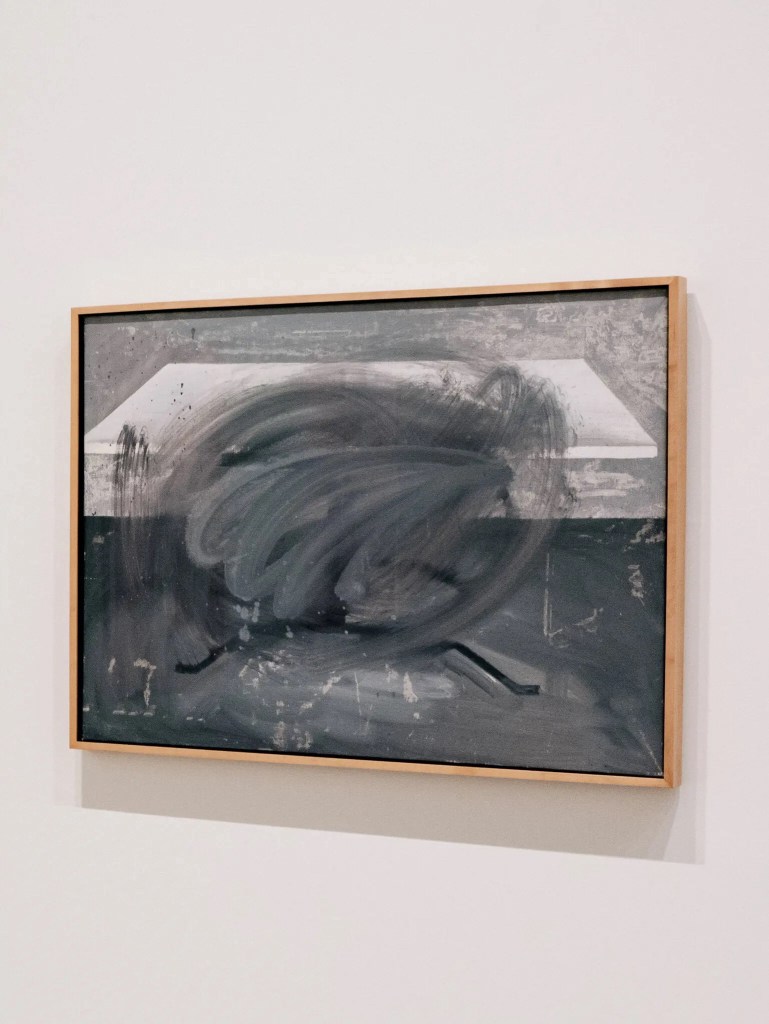
“Tisch” (1962) introduces Gerhard Richter’s trademark blur and use of found photographic imagery. [New York Times caption and illustration]
The only constants in his oeuvre, which takes in every traditional genre… are change, relentless curiosity and, perhaps most of all, an insistent question: What is an image?
(Emily LaBarge)
[Gerhard Richter’s] painting “Tisch” (1962), has the daunting catalog position of painting No. 1. It introduces the trademark blur and use of found photographic imagery for which Richter is now well-known. Based on an image sourced from a 1950s edition of Domus, an Italian design magazine…
The scene is, however, obscured: A roiling mass of sweeping, agitated strokes hovers over the center of the image like a cataract, or an accident, or an exasperated defacement, or all of the above.
A wall text tells us that the artist originally painted the table as it was, directly from the source image; dissatisfied, he smeared the magazine photograph with solvents and then reproduced the result, in which the table has all but disappeared.
Richter remains one of the greatest living artists because of his devotion to the complexity of images, to always asking what we are looking at and how we might remake it, again and again.
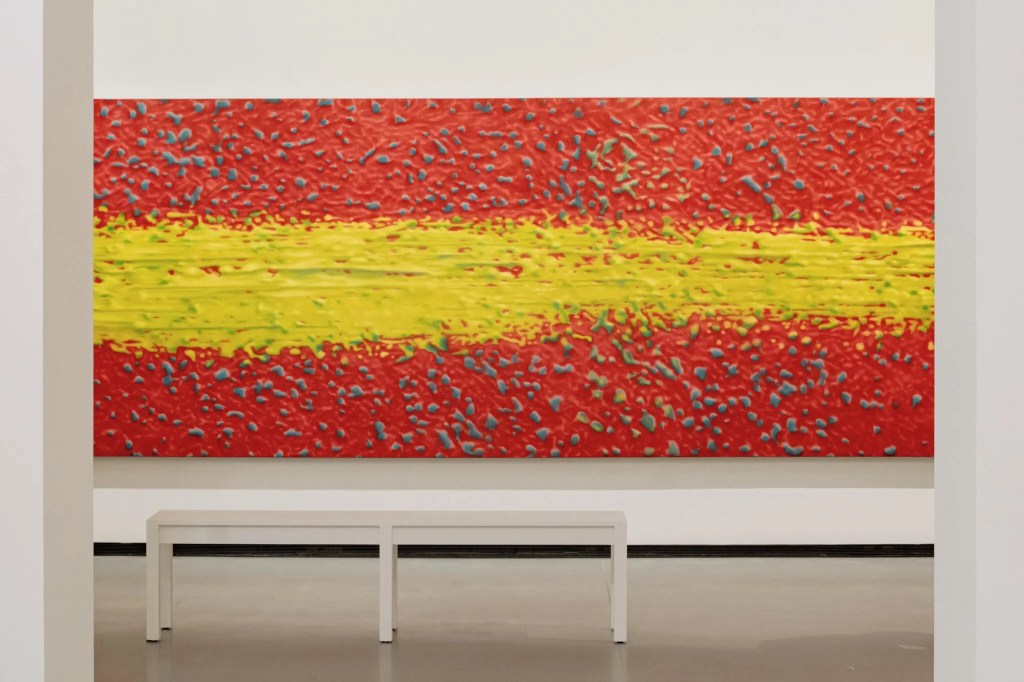
“Stroke (on Red)” (1980). [New York Times caption and illustration]
(c) 2025 JMN — EthicalDative. All rights reserved

 EthicalDative
What an apt post Jim. I hadn’t seen the Gerhard Richter ‘Tisch’ before (or maybe had but forgotten it). My current interest in erased images has obviously been done before! Drat. Nice post though. Best wishes Sue
LikeLiked by 1 person
Oops, I mentioned the Richter article in my other reply to you, Sue. I’m convinced that everything has been done, but when we do it ourselves, especially spontaneously, it becomes new. From the standpoint of the consumer of art, most of us have seen relatively little of what’s been done. You might be the first to show it to that audience. A recent Poetry magazine goes into erasure performed selectively on existing texts to elicit poems. The results were fascinating and made me take it seriously. If it can happen in language it can happen in image. (Was it Rauschenberg that practiced it in his picture making?) Don’t stop doing what you do! 🙂
LikeLiked by 1 person
Thanks Jim. Your comments are very reassuring. How interesting to think of erasure being used in language too. Now I think of it, erasure or selective quotes are used often in the media and political life …. we’re onto something here! Best wishes from here. Sue
LikeLiked by 1 person
Good point about political life. Part of our White House is being erased to make a ballroom. Just what we needed! 🙂
LikeLiked by 1 person
Ha! … and the ballroom will be gold too!
LikeLiked by 3 people