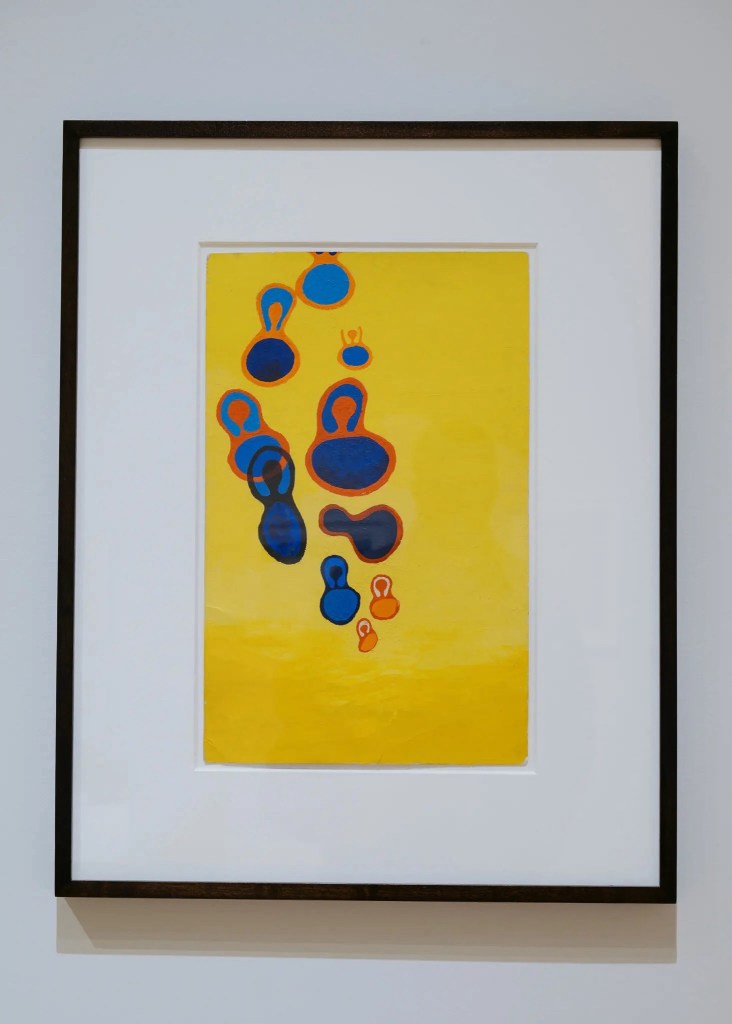
“Dance is joy, longing, crying, laughing, everything,” Asawa wrote. She translated this spirit into paintings and drawings of dancers — floating abstracted figure-eight forms. Credit… Ian C. Bates for The New York Times. [New York Times caption and illustration]
In 1948, American artist Ruth Asawa (d. 2013, age 87) took classes at Black Mountain College in North Carolina with the dancer Merce Cunningham. Her mentor there was the architect Buckminster Fuller.
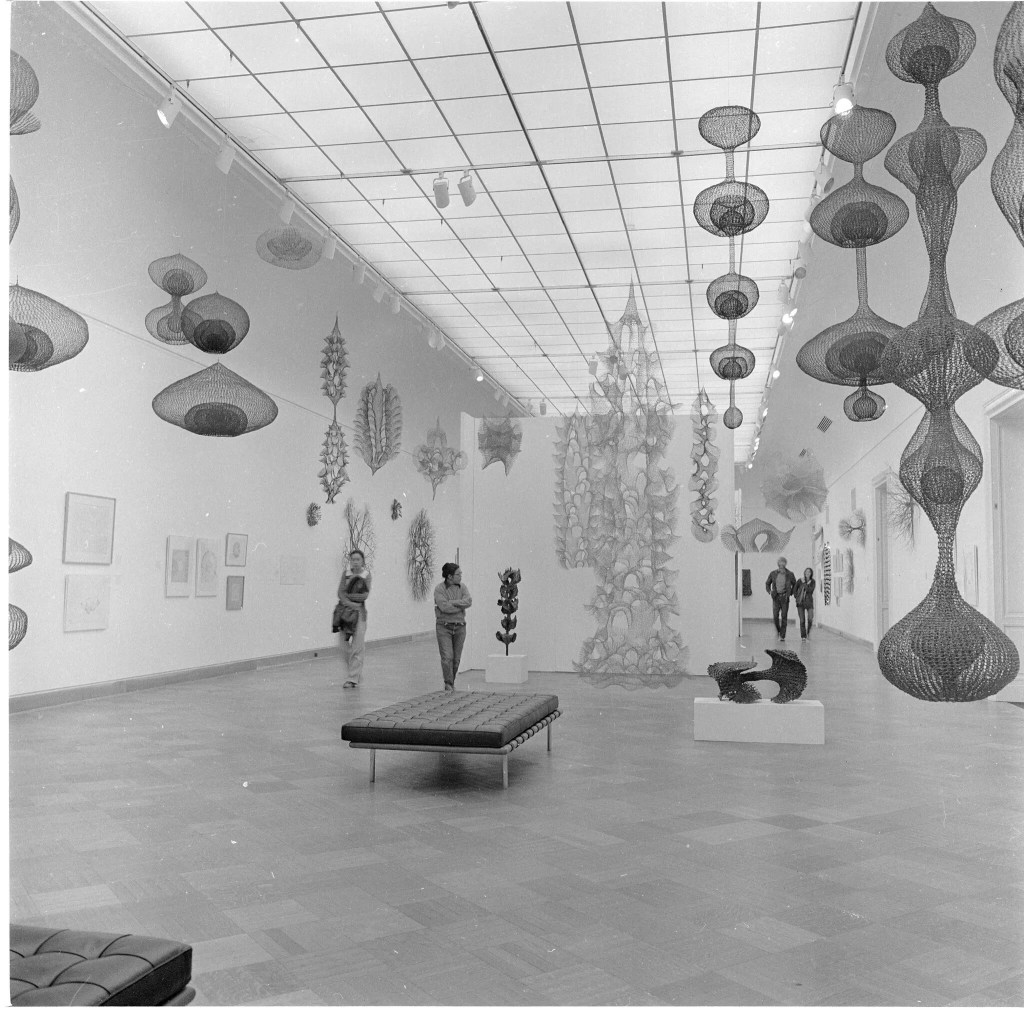
Ruth Asawa (second from left) with visitors to her 1973 retrospective at the San Francisco Museum of Art (now SFMOMA). Her looped-wire forms made of pliable copper, brass or steel resembled her early drawings of dancers, floating abstracted figure-eight forms, nipped at the center with spherical heads and bodies. Credit… Laurence Cuneo. [New York Times caption and illustration]
… Such works were described dismissively by one critic early on as “earrings for a giraffe.”
She used a knit stitch by hand, which she learned from a local wire-basket maker on a 1947 trip to Mexico, to draw in space and define volumes with a continuous line of pliable copper, brass or steel.
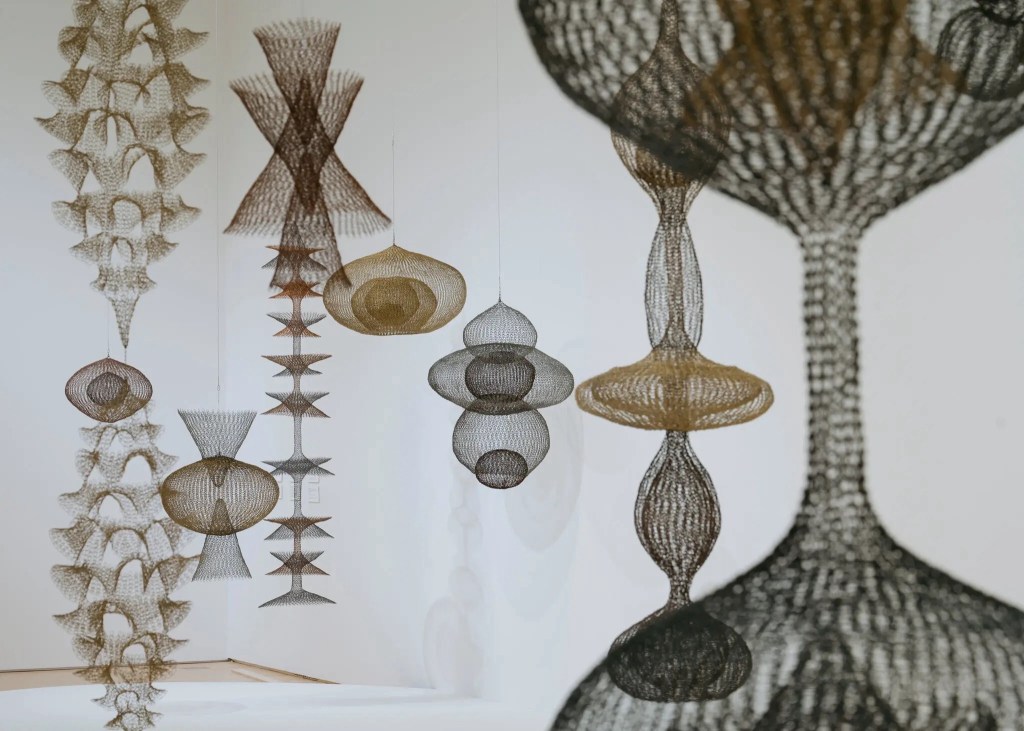
Ruth Asawa, “Untitled (S.046a-d, Hanging Group of Four, Two-Lobed Forms),” 1961. “We made endless hourglass figures that I now see as the forms within the forms in my crocheted wire sculptures,” she said of her youthful drawings in the dirt. Credit… Ian C. Bates for The New York Times. [New York Times caption and illustration]
Asawa maintained that artists weren’t special; they were just ordinary people who could “take ordinary things and make them special,” she said. “I always had my studio in my house because I wanted my children to understand what I do and I wanted to be there if they needed me — or a peanut butter sandwich.”
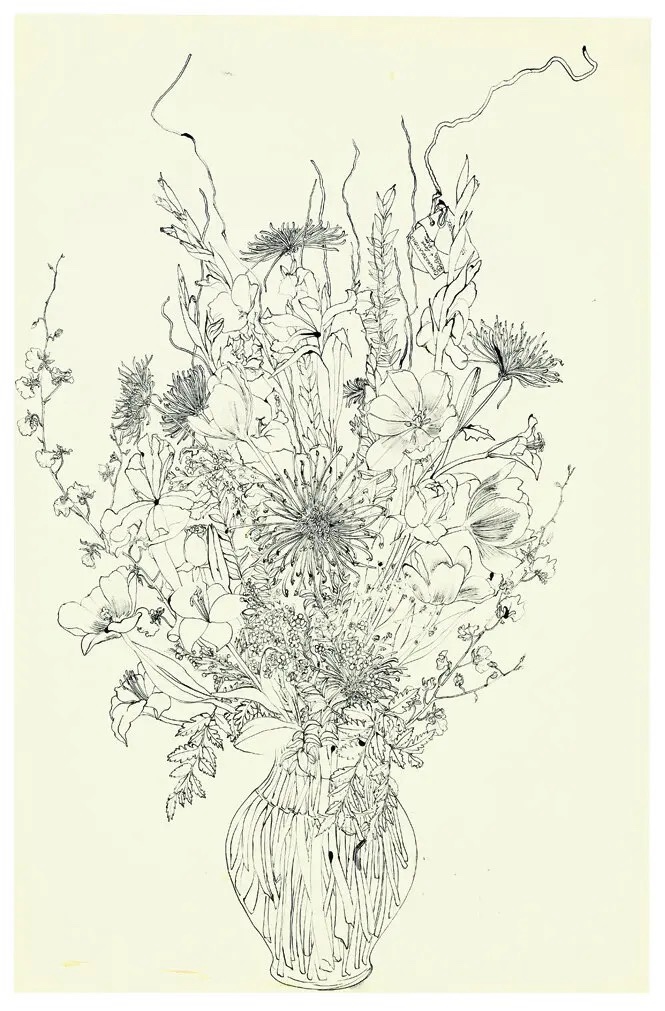
Asawa’s “Untitled (PF.293, Bouquet from Anni Albers)” is ink on paper from the early 1990s. Credit… Ruth Asawa Lanier, Inc./David Zwirner; via Christie’s. [New York Times caption and illustration]
(Hilarie M. Sheets, “Ruth Asawa’s Astonishing Universe Began at Her Door,” New York Times, 4-4-25)
(c) 2025 JMN — EthicalDative. All rights reserved

 EthicalDative
Wow! I love this work! Thanks for another great post Jim.
LikeLiked by 1 person
Thank you, Sue! I’m glad Asawa interests you, too.
LikeLiked by 1 person