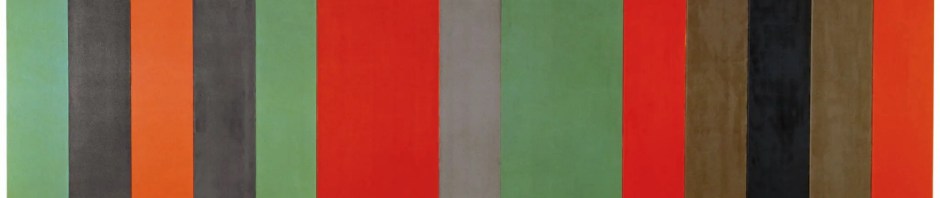
Again and again, he showed that art from any time or culture was contemporary and alive, if it offered artists something they could use.
(Roberta Smith)
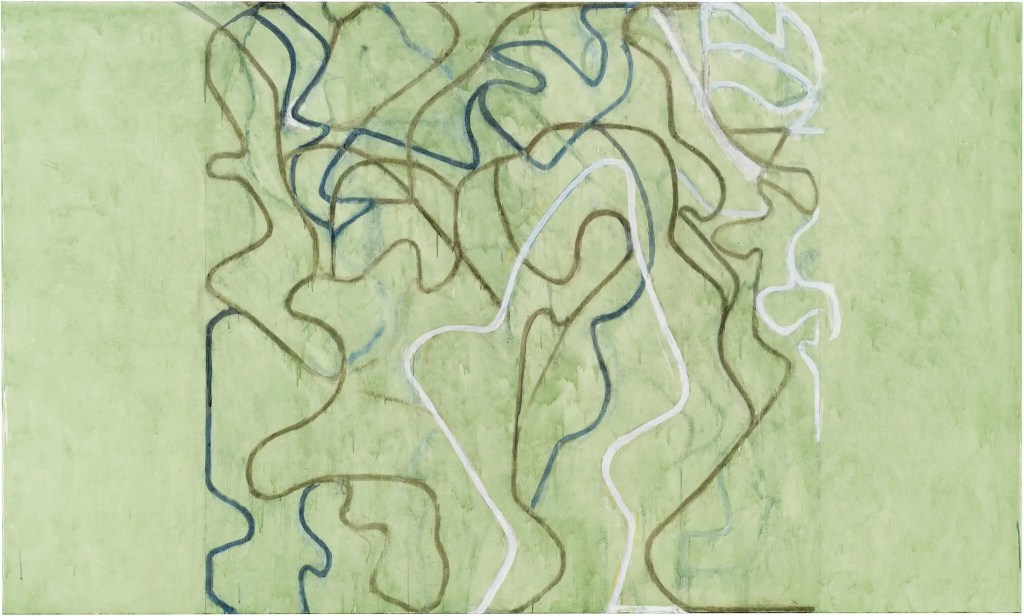
Brice Marden died in August 2023, aged 84. The illustration that concludes Roberta Smith’s tribute, a painting she describes as “bookending Marden’s 50-year career,” made me think of Mark Twain’s phrase about Wagner’s music (“better than it sounds”). Was Marsden’s work better than it looked?

I view abstract painting readily, however, and by then I had seen samples of the earlier work, which follow below.
In the mid 1960s, at the height of the painting-is-dead delusion, Brice Marden […] was making reductive monochrome works — horizontal and vertical canvases in a range of subdued tones of oil paint thickened with melted beeswax. […] He talked, like a traditional painter, of the importance of light and nature and reverentially considered the rectangle one of the great human inventions.
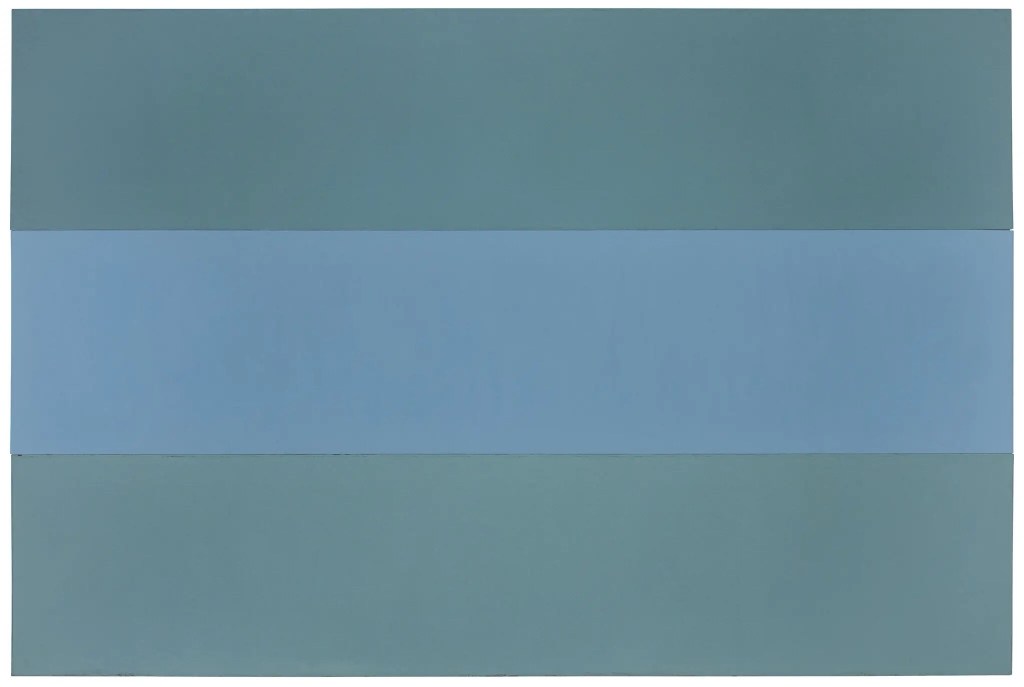
Smith’s descriptions of Marden’s process are bracingly low key. For example, Marden “[built] on his monochromes at first by adding panels and then by making marks.” In a zone of practice whose essence is making marks, whatever “inspired” a painting seems of little moment. That feels right.

Marden sketched in a small early notebook which he gave the lugubrious title “Suicide Notes.” Smith clarifies that “he saw his small scratchy ink drawings and their tentative attempts at mark-making as ‘left behind’ (as with a suicide note) — he could not develop them at the time.”

Other inspirations reflecting travels would include Greek sculpture and architecture; Indian sculpture and Japanese and Chinese calligraphy; and also Chinese landscape painting and scholar’s rocks.
Wikipedia tells me scholar’s rocks are rocks traditionally appreciated by Chinese scholars. Sometimes language and truth are congruent!
Smith poses Brice Marden’s legacy as a refusal “to accept the narrowness of modernism.” That’s over my head in terms of what I know about art. But she characterizes the refusal as “quietly intractable, constantly moving, looking and learning” — words I do understand.
(c) 2024 JMN — EthicalDative. All rights reserved

 EthicalDative
🧡
LikeLiked by 1 person
Interesting post indeed. I like your commentary Jim.
LikeLiked by 1 person
Thank you, Sue!
LikeLike
Thanks for bringing Brice Marden’s work to my attention. I wasn’t aware of it – really enthralling post!
LikeLiked by 1 person
Thank you and my pleasure. Your response makes my day.
LikeLiked by 1 person