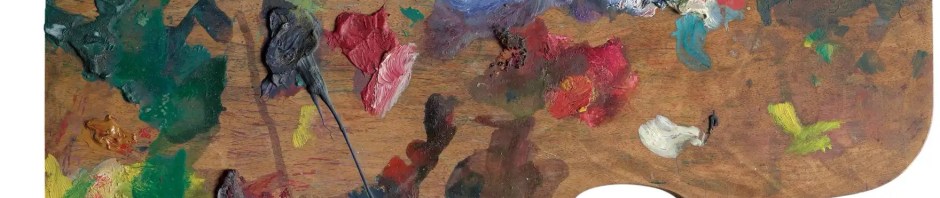
The phrase “smeared with [a] personalised spectrum of paint” snagged me. The palettes are interesting in relation to who used them and/or for what they suggest about the painter’s “attack,” for lack of a better word.
Fifty of these small artworks, smeared with their owners’ personalised spectrum of paint, have now been collected in a new book, many of them for the first time. “A palette is both a timeless blank canvas and the ultimate abstract work of art,” says the book’s author, Alexandra Loske, curator of the Royal Pavilion in Brighton. “It is the most intimate and personal of tools, and perhaps the closest we will ever come to connecting with a long-dead artist.”
Eleven palettes are shown in the article; I’ve chosen six of them to share here.
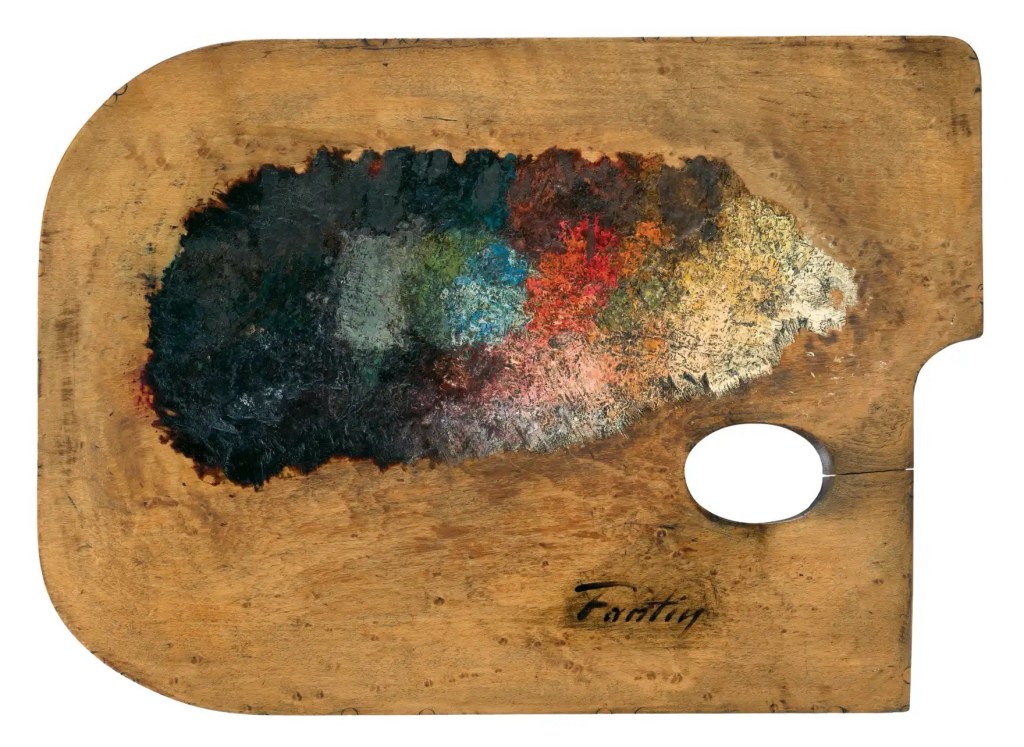
Henri Fantin-Latour, 1887. Photograph: Baltimore Museum of Art. [Guardian caption and illustration]
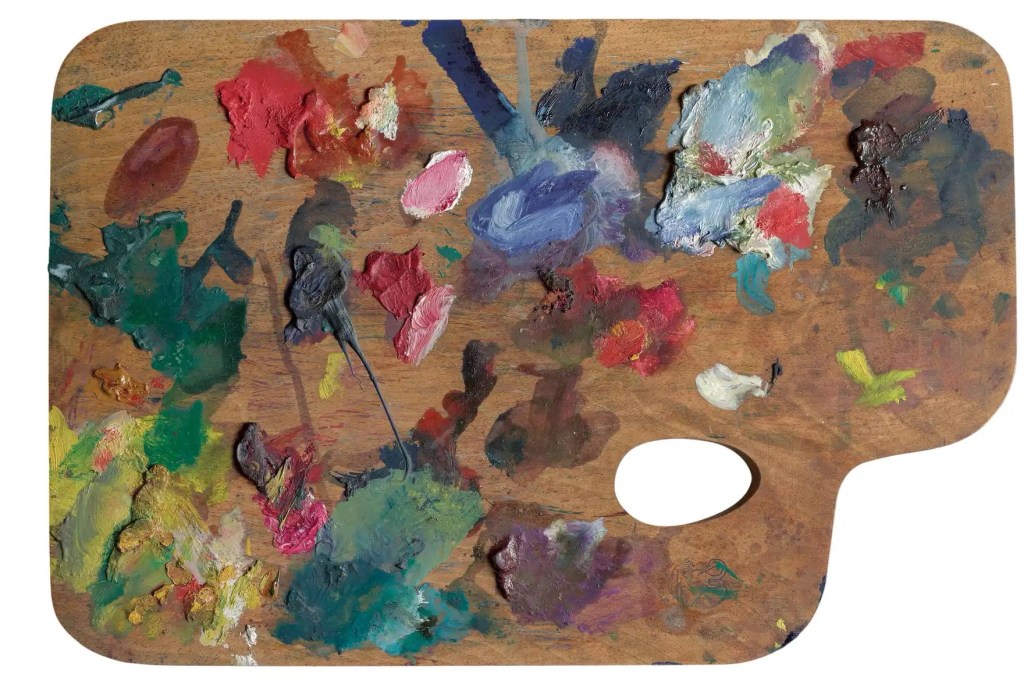
Edvard Munch, undated. Photograph: Munch Museum, Oslo. [Guardian caption and illustration]

Egon Schiele, 1918. Photograph: Courtesy of Ressler Kunst Auktionen, Vienna. [Guardian caption and illustration]

Edward Hopper, undated. Photograph: Edward Hopper House Museum & Study Center, Nyack. The Sanborn-Hopper Family Archive. [Guardian caption and illustration]
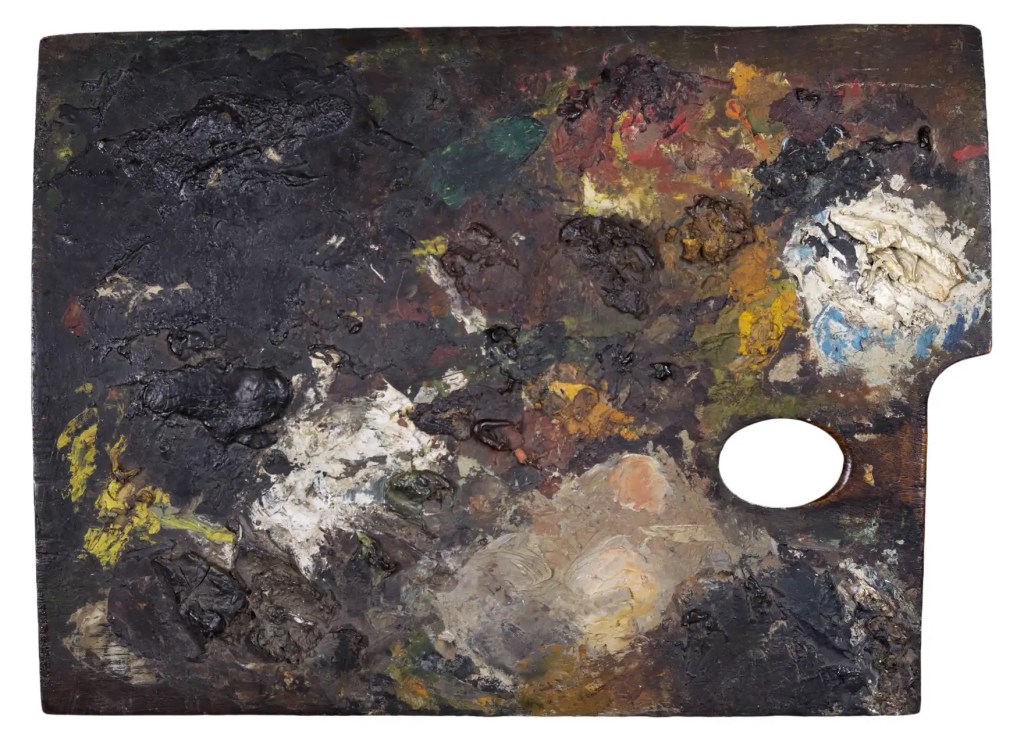
Gustave Courbet, undated. Photograph: Musée départemental Gustave Courbet, Ornans. [Guardian caption and illustration]

James Abbott McNeill Whistler, 19th century. Photograph: Colby College Museum of Art, the Lunder Collection, Waterville, Maine. [Guardian caption and illustration]
(Kit Buchan, “Board masters: artists’ palettes as works of art — in pictures,” The Guardian, 9-28-24).
(c) 2024 JMN — EthicalDative. All rights reserved

 EthicalDative
Very nice. I like the varied shapes of the palettes too. Great post!
LikeLiked by 2 people
Thank you, Sue. I was pleasantly surprised at how vividly the images turned out in posted form, just floating in their white space.
LikeLiked by 2 people
Fascinating. Especially the first one. Who’d have thought palettes could be so different.
LikeLiked by 2 people
Yes! I was stunned by the first one. Fantin-Latour was a very academic painter. I’m not sure why, but his palette seems to reflect that. It’s disciplined to a hallucinatory level, and wiped to death!
LikeLiked by 2 people
How fascinating to see the differences in these pallets of different artists. From tight and neat, light to dark, to chaotic and frenetic, to almost completely dark.
I love what you’ve chosen to feature here. I can’t be certain it says what I think it says about each artist and their work, I’d never be so bold as to think I could know what what’s on one pallet means about an artist’s work but I do find it extremely fascinating.
Thank you so much for sharing.
LikeLiked by 1 person
Thank you for your lovely comment. I agree that an artist’s palette can’t predict reliably what the paintings will look like. I appreciate your visit and your input. Best regards.
LikeLike