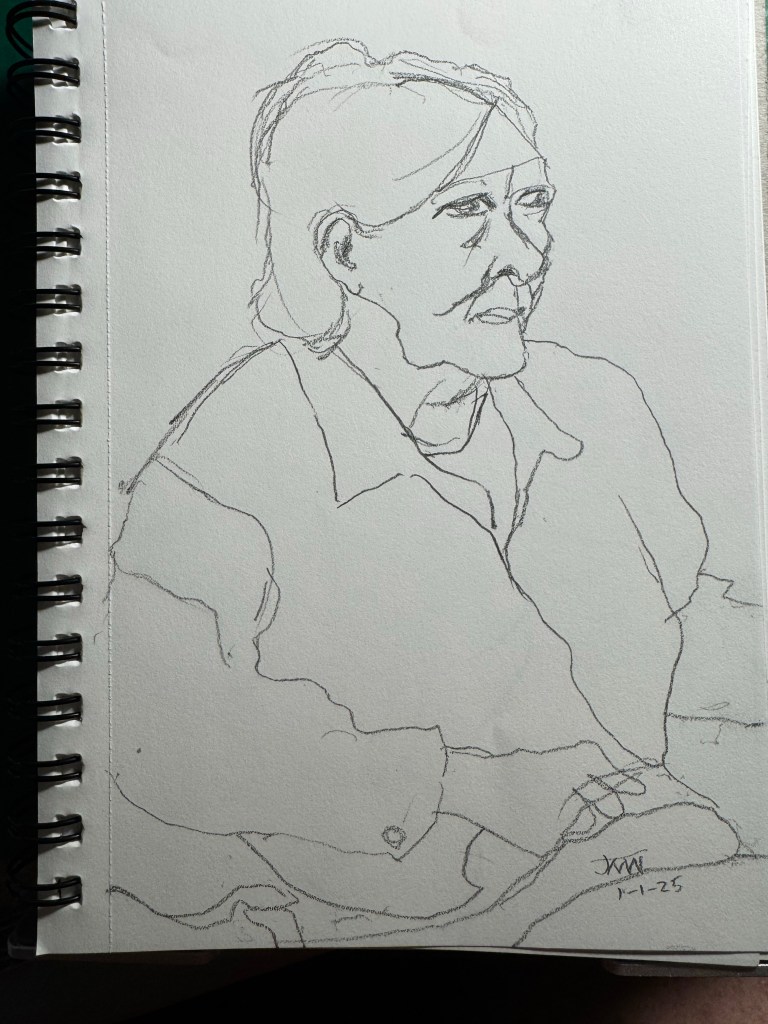
“She went to girls’ schools and was taught French, and history, and geography, and music, and painting, the usual things that a… middle class? You might say middle class. She was really more of the sort of upper yeoman peasant class. Her father was, at any rate.”
The quotation refers to Mary Anne Evans (1819-80), aka George Eliot, and is from the BBC4 podcast titled “Middlemarch” of April 19, 2018. The comment is by Rosemary Ashton, Emeritus Quain Professor of English Language and Literature at University College, London. (Should that be “Emerita Quain Profesoress”?)
(c) 2024 JMN — EthicalDative. All rights reserved

 EthicalDative
Well yes the British know just how to put you down (in your place perhaps). What a quote! – I wonder if the Emerita Quain Profesoress would use it today?
LikeLike
This reminds me of a wonderful scene in “Mrs Miniver” where she is at some ghastly social event and sitting next to someone she thinks must be called Lady Constance Burfish, or Mrs Charles Burfish who is a condescending snob of the type Mrs Miniver delights in describing to her husband over dinner. As it’s 1939 the conversation turns to the topic of billeting evacuee children:
“… it appeared that she lived in Gloucestershire: where did Mrs. Miniver live? In London, but they had a small house in Kent.
‘In Kent? How nice,’ said Mrs. Burfish. Her tone conveyed that Kent was not quite out of the top drawer.
The talk turned, inevitably, on to the evacuation and billeting of children. Mrs. Miniver said they had offered to take six at Starlings, or more if the Government would provide enough beds to turn the oast-house playroom into a dormitory.
‘Wonderful of you,’ said Mrs. Burfish. “But, you know, a small house is rather different. I mean, one doesn’t expect – does one? – to keep up quite the same standards.
…
Moreover, Lady Constance seemed bent upon giving good measure. For she went on:–
‘And, of course, I said to her before she left: ‘Even if the worst does come to the worst, you must make it quite clear to the authorities that I can only accept Really Nice Children.’
‘And where,’ Mrs. Miniver could not restrain herself from asking, ‘are the other ones to go?’
‘There are sure to be camps,’ said Lady Constance firmly.
The talk swung in the opposite direction. A few minutes later Mrs. Miniver heard Lady Constance’s other neighbour, who bore one of the famous Norfolk surnames, saying politely: ‘In Gloucestershire? How nice.’
Kent was avenged.”
LikeLiked by 1 person
Thank you for quoting this passage, Josie. I have some catching up to do re “Mrs. Miniver.” It has reminded me of verses called “Miniver Cheevy,” whose author I’ll have to remind myself of by Googling. Cheers to you. — Jim
LikeLiked by 1 person