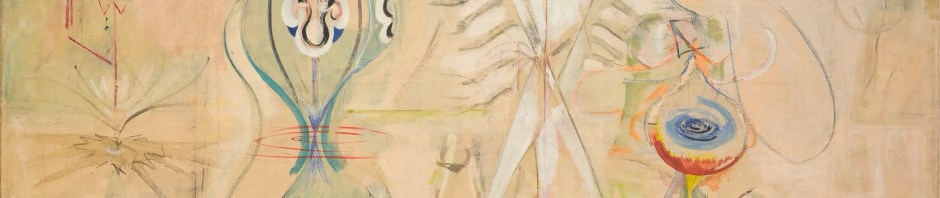
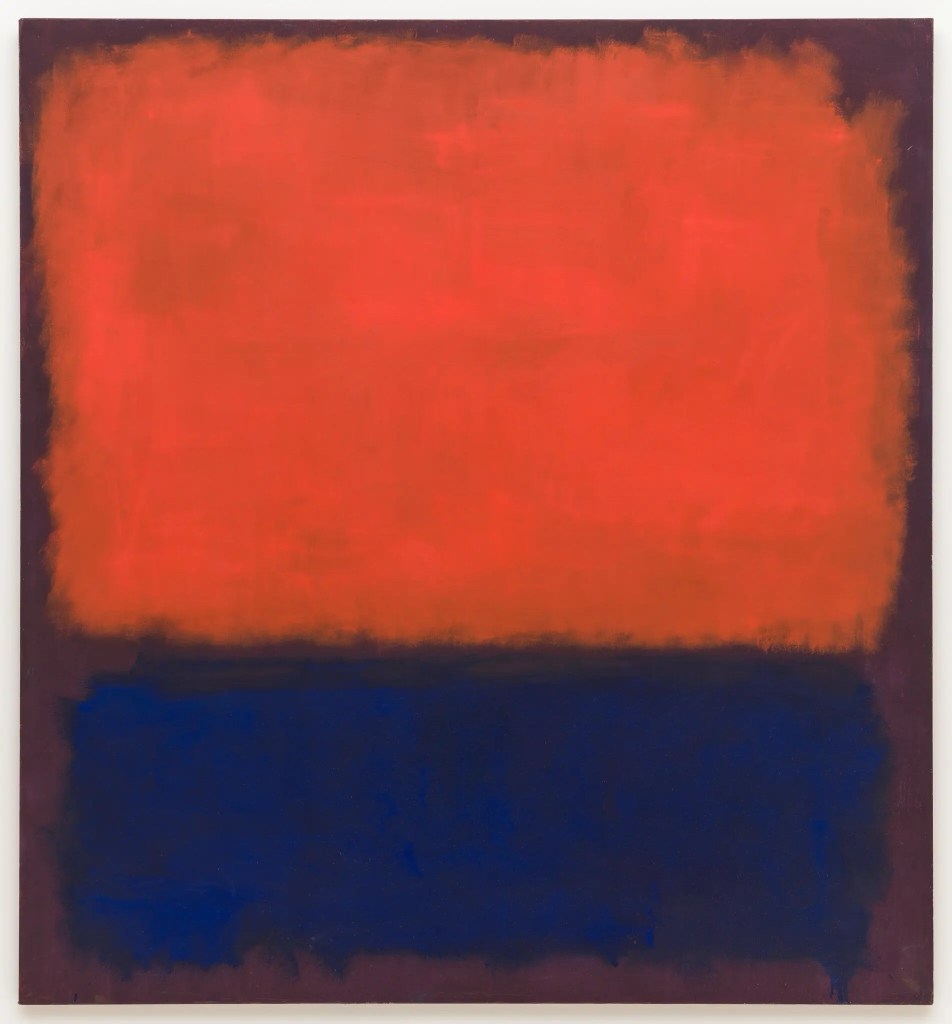
[Rothko] modeled a commitment to abstraction that charged at the hardest questions of life and art through refusal of the easy path… [He] never thought of [his paintings] as peaceable. “Behind the color lies the cataclysm,” he said in 1959 — a citation that rarely makes the auction preview catalogs.
(Jason Farago)
Abstract painting seems an excellent subject on which to apply Susan Sontag’s stricture against looking for hidden meanings in works of art and literature (Against Interpretation). Jason Farago reported late last year on a Mark Rothko retrospective at the Fondation Louis Vuitton in Paris. Farago is far from belittling Rothko’s oeuvre, but he does treat it at arm’s length.
For all that, may I grumble for a moment? I can coolly appreciate the artist’s modulations of color; I’m not a philistine. I have a sly admiration for how he imparted the highest seriousness to a few blurry stains. But there is a repetitiousness to this much Rothko, and a fair bit of pomposity to its metaphysical claims.

“I’m only interested in expressing basic human emotions — tragedy, ecstasy, doom, and so on,” Rothko said in 1957, denying any interest in the mechanics of abstraction or color. It was another aggrandizement, but maybe I should stop being such a hardhearted formalist and take him at his word.
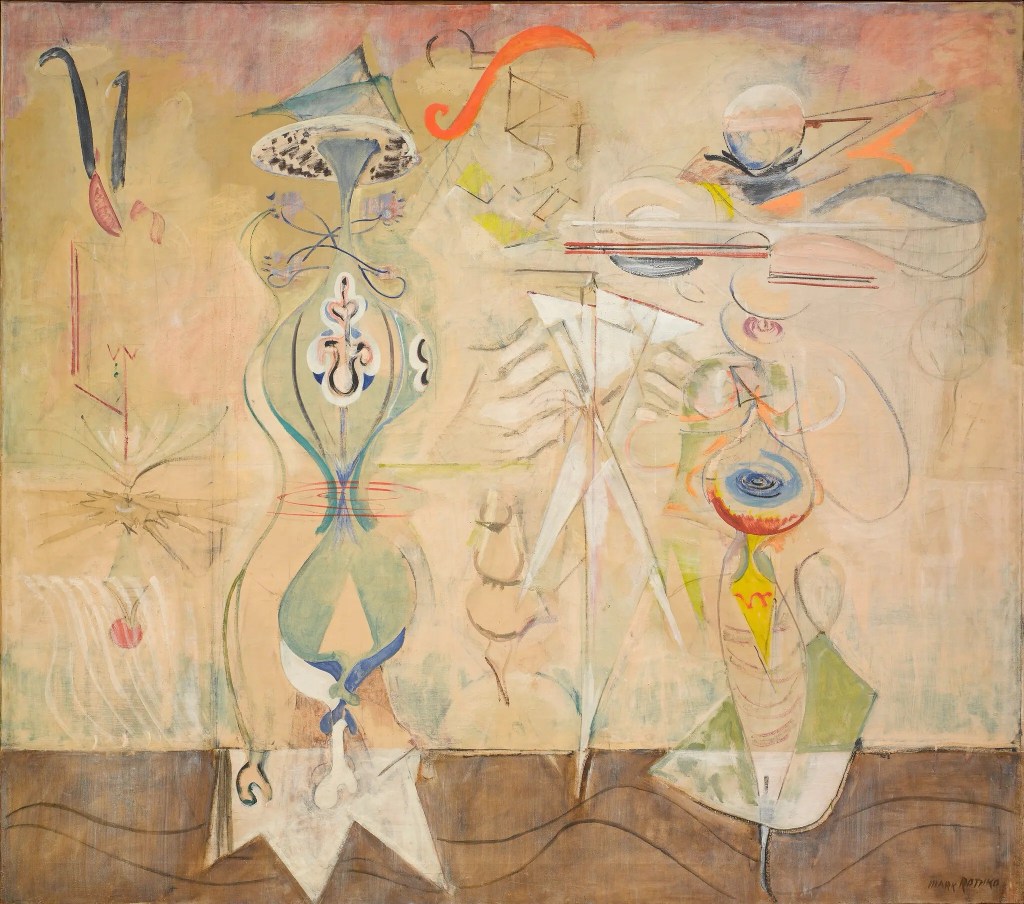
Awe, love, fear, faith, emptiness, immanence, infinity, eternity: Are these not the whole reason we bother with form in the first place? On most days I find it faintly ridiculous to try to locate such grand themes in a spume of green or a blood-red fog. On other days, days like now, I find it ridiculous to get through life without them.
(Jason Farago, “Mark Rothko at Full Scale, and in Half Light,” New York Times, 10-25-23)
(c) 2024 JMN — EthicalDative. All rights reserved


🤍🤍
LikeLiked by 1 person
How interesting to see the early Rothko, Jim. It seems like a huge leap from that to his abstracts (which I love!) Great post! cheers Sue
LikeLiked by 1 person
I’m glad you liked the post, Sue. Rothko’s earlier, less familiar (to me) work interests me, too. I often feel this way about artists who attain a well-known style: what modes and manners did they traverse along the way? Farago (rhymes with “Chicago”) writes so well about art, I enjoy extracting some of his language. I regretted there weren’t more reproductions of Rothko’s previous work, and discovered this good link if you want to see some of it. https://www.nga.gov/features/mark-rothko/mark-rothko-early-years.html. Cheers — Jim
LikeLike
I don’t think I’ve seen any early Rothko work like this. Very interesting. Reminds me of Miro, or possibly Paul Klee. Thanks for the post.
LikeLiked by 1 person
Well observed. Miro and Klee are good associations. Thanks for your response.
LikeLiked by 1 person