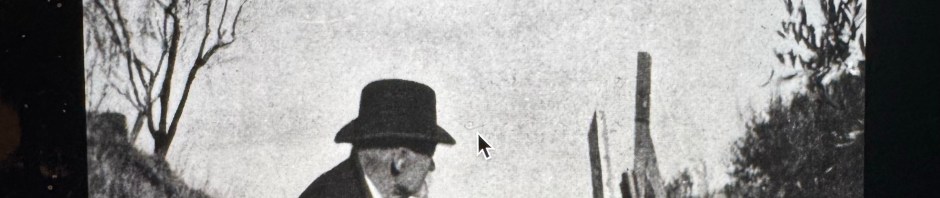

Jason Farago-rhymes-with-Chicago writes a deep, reflective appreciation of Cézanne’s work, calling Cézanne the first painter he ever loved.
BC*: For six centuries, ever since some scientifically minded Florentines had developed rules of perspective that made art look more like life, painters had put a premium on convincing illusions. At Cézanne’s breakfast table, starting in the mid-1870s, that all came to an end.
AC: More important than copying or simulating reality was being true to your experience of reality. Your marks, your style, your hand, your eye: These now had primacy and the world outside was secondary… What Cézanne understood is that the eye is not impassive — not a camera with its shutter open… No: The eye flits and darts, looks inwards as well as out… A “convincing” depiction was now just a facile replica. Painting, after Cézanne, becomes a series of strategies to render visible — to viewers, to yourself — whatever truly matters to the artist.
Farago situates painting within the larger context of the things that are worthy of our attention:
… Cézanne taught me how to read Virginia Woolf, with her own idiosyncratic perspectives and spatial ambiguity. / I was learning, year by year, a modern poetics: a theory of art, music, literature predicated on a perpetual break with tradition.
Regarding breaks with tradition, Farago does modulate:
This century — do you mind if I say this? — has shown that exalting your own voice over established principles doesn’t always end well.
But I tell myself, “Listen to this much, for now, and make truer pictures. Then see what’s next.”
*BC — “Before Cézanne,” etc.
(Jason Farago, “Cézanne and the Hard Facts of Time,” New York Times, 6-30-25)
(c) 2025 JMN — EthicalDative. All rights reserved

 EthicalDative