
Arturo, JMN.
Flight has been prominent in my life. Not the aerial kind but the fleeing kind.
I vaguely recall that Sartre’s play “Huis Clos” (No Exit) ends with several people enclosed in a room condemned for all eternity to talk at and past each other with no escape. Sartre concludes, “L’enfer, c’est les autres.” Hell is other people.
My personal take on the matter is that maybe Hell is not others but oneself. How would that go in French? “L’enfer, c’est soi-même”?
As a newly minted scholar in an abstruse field I landed an assistant professorship at the University of State-Somewhere, a hyphenated campus of a good school.
In year two I realized my destiny there was to teach basic language classes to students majoring in other disciplines. I should’ve gotten a masters in applied linguistics to do that, I told myself, not a doctorate in fuzzy studies
In year five I pitched translation as a new offering to ground my discipline in something practical. It was a hail Mary, and brutally swatted down in my annual performance review.
My tenured superiors had noticed by then that my student evaluations, glowing at first, were now in the toilet. I knew I was doomed. I gave notice, to spare them and me my firing, and limped lame-duckedly through year six while they searched for my replacement. I fled the scene but took myself with me.
In the last stage of my academic unraveling I convinced a good person to join me in having another go at marriage, the second one for both her and myself. What could go wrong?
In marital year three I wasn’t overtly suicidal but may have exhibited a symptom: I started throwing away my personal effects. I destroyed the typewritten original copy of my dissertation. I carted all my books to the curb to be picked up by the garbage truck. (My wife asked me if I really wanted to do that, and prevailed on me to bring them back inside.)
An insidious voice in my head whispered that I was lightening my load for the moment when I’d find an exit again. As it happened, that moment was still several years away.
[Copyright (c) 2018 James Mansfield Nichols. All rights reserved.]



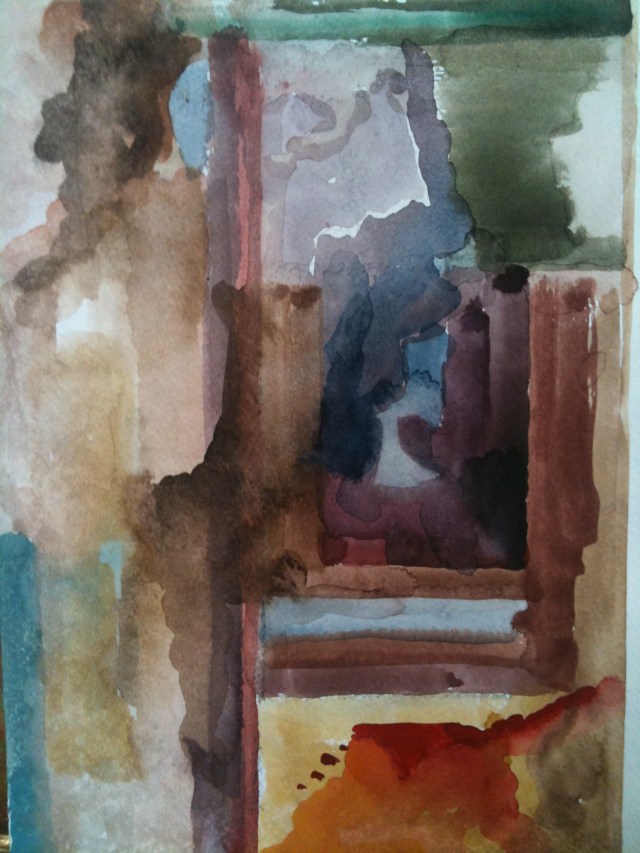


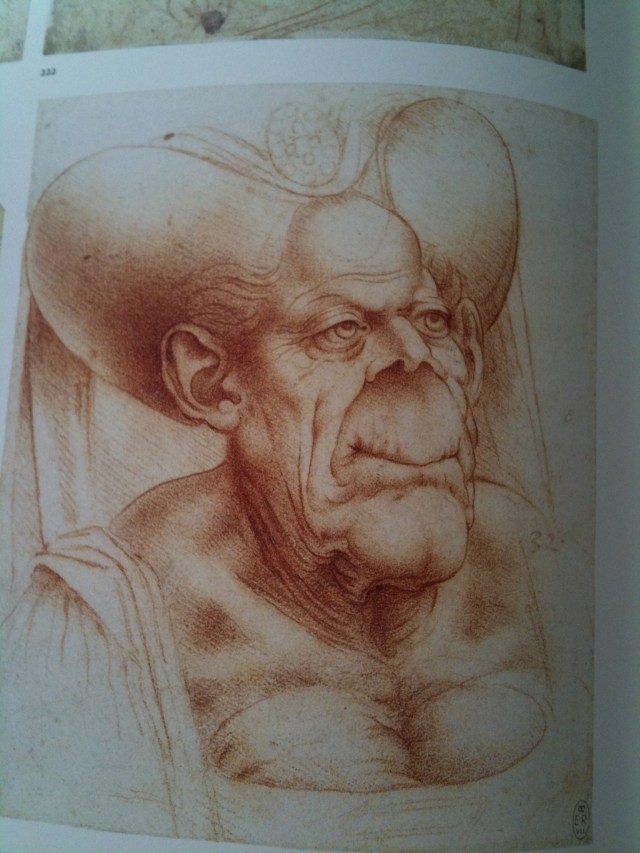


A Curtsy to the Cognoscenti
JMN2016, Puckering, oil on canvas, 16 x 20 in. (c) 2018 James Mansfield Nichols. All rights reserved.
The poetry editors of The Atlantic apologized recently for a poem they had accepted and printed. They say the poem “caused harm to members of several communities.” The author, a young white man named Anders Carlson-Wee, adopts the vernacular of a homeless black man in “How-To.” It drew outrage from readers who saw bad things at work in it. “Know your lane!” tweeted another poet. Carlson-Wee himself publicly apologized. I’ve read the poem.
It seems to me that a writer of fiction or poetry should be permitted to inhabit, to voice, and to body forth any persona that’s conceivable by human ingenuity. How much the effort succeeds or fails is another matter, but it’s an esthetic call, and one that may change for better or worse over time. There would be no guarantee against mockery or bad art, of course. Hatred and mediocrity are as endemic to the human condition as viruses are. Yes, Vachel Lindsay is much discredited. I’m not sure how John Berryman’s reputation is holding up. I was reading and admiring his “Dream Songs” when he jumped off the bridge. But it seems reductively censorious to condemn out of hand an artist’s good-faith effort to occupy an imaginative space in another dimension as an act of straying from his or her “lane.” Do such efforts in the best instances tread in the domain of empathy somehow? The heaven I’d like to live in is where invention runs free.
In the purgative, quandary-infested world I do live in, rabid debate and snarkery run free (amplified by prominent voices on Twitter and elsewhere) around issues of race and gender. If it’s verboten to do voices across ethnic lines in writing, is it also damnable on stage and screen? In stand-up? It seems to me there could be potential value lost in popular and high culture if the answer is yes.
And so…, having spilled sententious highmindedness here in defense of artistic license, I still feel conflicted about the legitimacy (or wisdom) of trying to talk in another person’s dialect. I indulged in a hip-hoppish-sounding, tongue-in-cheeky bit of tomfoolery several years ago that makes me wince now. Not to mock but to garner a chuckle. I’ve given much of my life to mastering other tongues, but I’ll never try again to ape another American dialect. There’s trouble enough speaking in one’s own voice. I have a playlist of hip-hop music I enjoy, but I’ll leave the lingo to the cognoscenti and their adepts.
(Reference: Grace Schulman, “The Nation Magazine Betrays a Poet — And Itself,” NYTimes, 8-6-18.)
[Copyright (c) 2018 James Mansfield Nichols. All rights reserved.]