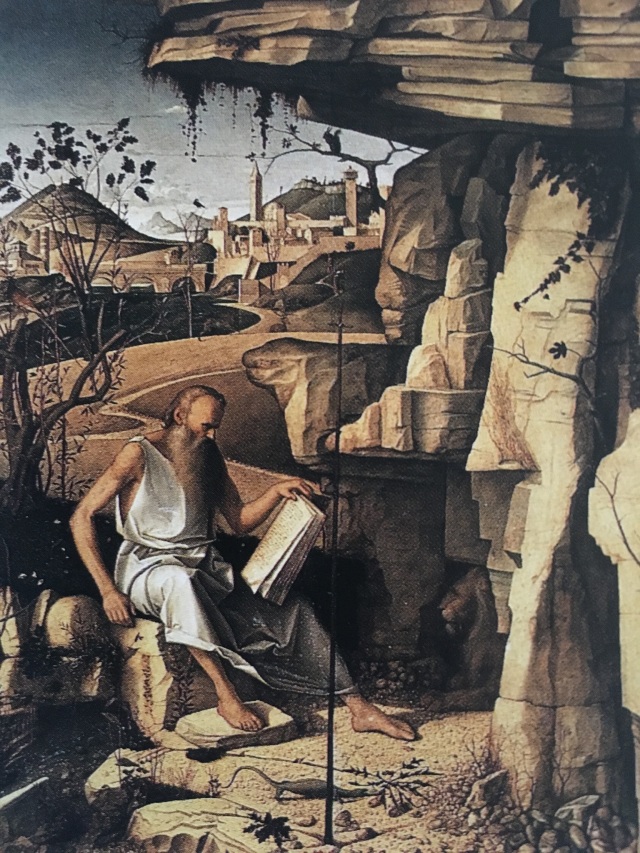
Saint Jerome, patron saint of translators, by Bellini
I’m nervous if a post of mine runs longer than a couple of scrolls, so I’m parceling the translation now into one stanza at a time until the end. I realize that I run the risk of confining myself to a vanishingly small audience if the requirement is that visitors must know or care about Spanish. I console myself, however, by reflecting that my including the source text (a common practice) means a passerby may at the very least taste a morsel of good English verse if nothing else. My sense of Yeats’s poem is that each stanza holds up well as a complete idea, so can repay a moment’s attention.
“A Prayer for My Daughter” by W. B. Yeats
(Spanish translation by James Mansfield Nichols)
https://www.poetryfoundation.org/poetrymagazine/poems/14635/a-prayer-for-my-daughter
A Prayer for My Daughter (3)
May she be granted beauty and yet not
Beauty to make a stranger’s eye distraught,
Or hers before a looking-glass, for such,
Being made beautiful overmuch,
Consider beauty a sufficient end,
Lose natural kindness and maybe
The heart-revealing intimacy
That chooses right, and never find a friend.
Una Oración para mi Hija (3)
Que se le conceda belleza, pero no
La belleza que a un desconocido le perturbe el ojo,
Ni a ella tampoco ante un espejo; porque tales,
Habiendo sido embellecidas sobremanera,
Estiman que la belleza basta en sí,
Pierden la bondad natural, y tal vez
Esa intimidad reveladora del corazón
Que escoge bien, y nunca hallan amigo.
[Copyright (c) 2018 James Mansfield Nichols. All rights reserved.]



Adverbs Beware
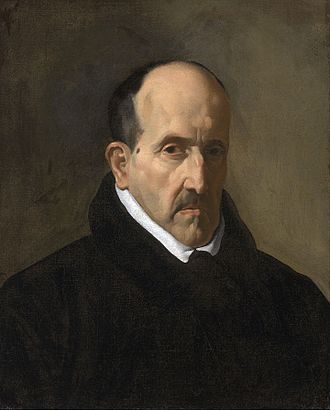
Tom Jones Drawing. Urban cowboy.
I read somewhere today that someone said that something “almost ought to be illegal.”
A statement like that always reminds me of how terrified I am, as a stylist, of adverbs. I estimate that at least half the time I spend in self-editing is in weighing which adverbs can be axed.
Of all the parts of speech, adverbs are the most unreliable, the most likely to corrupt and pollute and obfuscate straightforward utterance. They’re the quintessential weasel words. Their sole purpose is to put hedges and dodges and jukes around good old verbs and adjectives (and sometimes other adverbs). They’re the tool of speech that cowers behind plausible deniability. (I never said that.)
Almost ought to be illegal? Some things ought to be illegal that aren’t, undoubtedly. And vice versa. But is there anything that should be almost illegal, not quite? Or else, on the verge of being considered illegal, but not reaching a state of full consideration?
The slightest attempt to make sense of such bafflegab reveals how noxious and fatuous and perverse and subversive it is. It ought to be illegal.
[Copyright (c) 2018, James Mansfield Nichols. All rights reserved.]