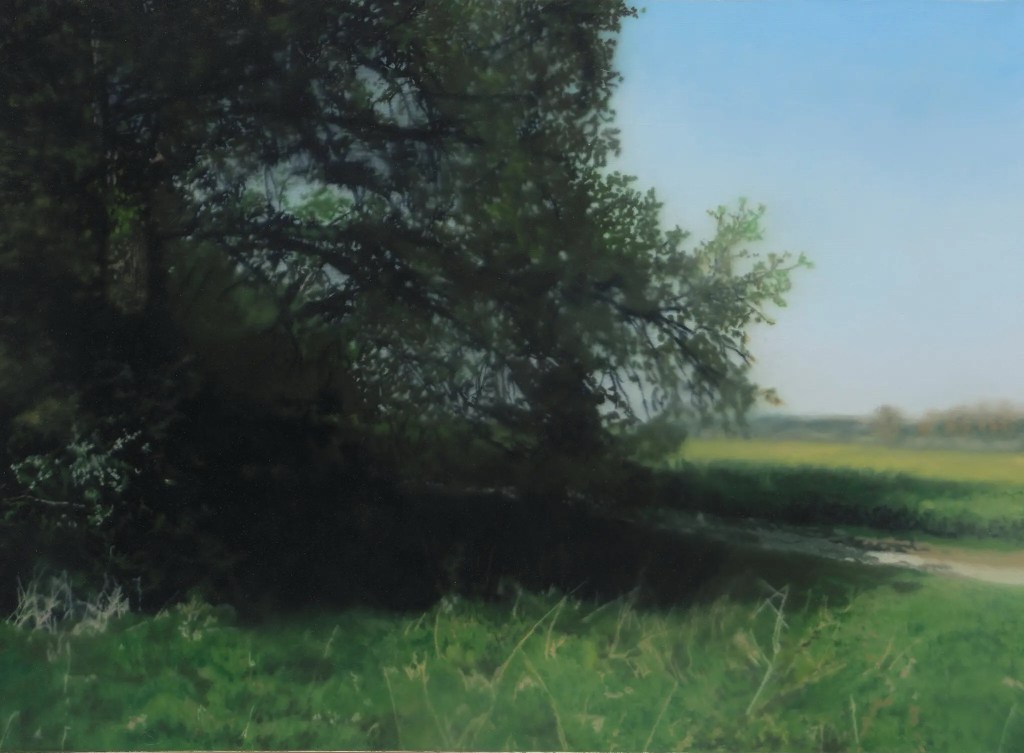
Gerhard Richter, “Buche (Beech Tree),” 1987. Credit… Gerhard Richter, via David Zwirner. [New York Times capition and illustration]
The beech tree [German Buche] is a witness, a bystander, a memorial. A collection of them would be a beech forest, or Buchenwald.
Today we are cursed… to live in a time of extreme image hyperplasia. Computationally produced pictures (there is nothing “artificially intelligent” about them) are now inundating every pipe and orifice of our personal and political lives. The image produced by prompting a large language model glitches as it propagates. It has no roots, no referents. And as these A.I. models produce imagery at a crazed clip, they are hollowing out the very basis of depiction — worming through the last little faith we once had in images to reveal us the world as it is.
But Gerhard Richter has already shown us (has made a life of showing us) how to keep our grip amid out-of-control image overproduction. He has modeled for us how to look seriously, and create legitimately, when the image is in perpetual question.
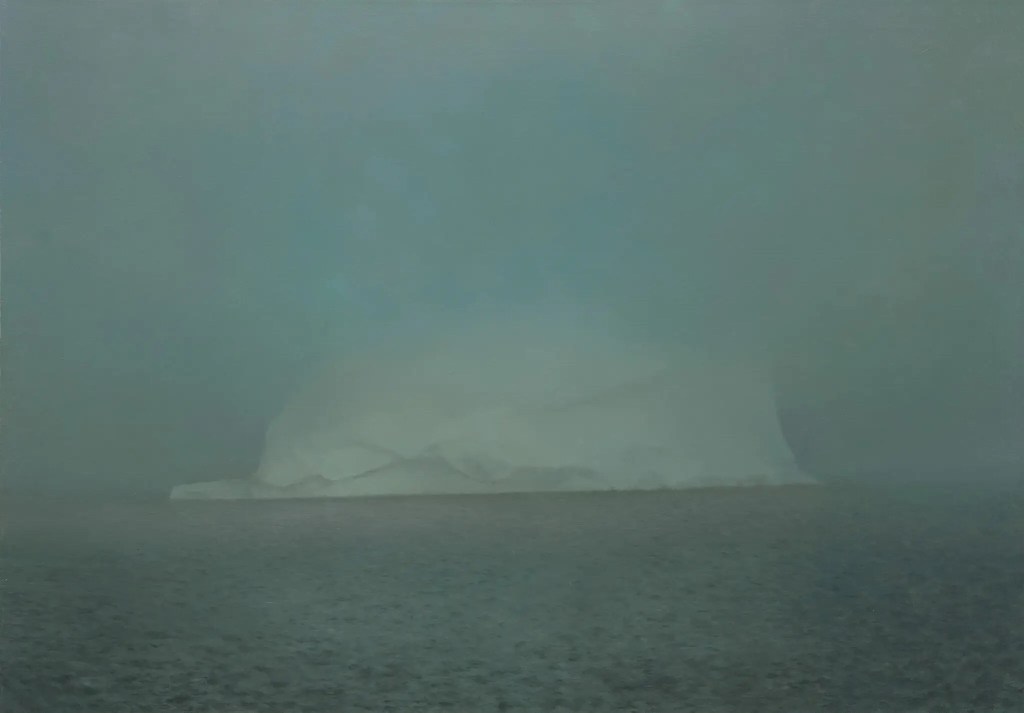
Gerhard Richter, “Eisberg im Nebel (Iceberg in Mist),” 1982. Credit… Gerhard Richter; via David Zwirner. [New York Times caption and illustration]
Where the sea meets the sky, where the eye fails and every word sounds artificial, he insisted that individual doubt could be the wellspring of a new mode of vision. This is a doubt that tests what the truth is, even as history passes into vapor.
(Jason Farago, “For Painting’s Great Skeptic, Gerhard Richter, History Is a Blur,” New York Times, 6-11-26)
(c) 2026 JMN — EthicalDative. All rights reserved


Great post, Jim. Could be a useful motto for our times: “a doubt that tests what the truth is“. I just hope that the hype about AI starts to unravel soon – like all other ‘bubbles’ in our history.
LikeLiked by 1 person
I’m afraid we’re stuck with some evolving form of A.I., which doesn’t have to be all bad. But I share your hope that the bad can be avoided! Thank you for keeping it human here, Sue! 🙂
LikeLiked by 1 person