Disquieting Skein

question-mark

It has dawned on me in the last few days that the model of government from above visited upon the yielding heads of the governed by an all-powerful executive comports somewhat with what I take to be certain tenets of Christian theology.

In the church I grew up in there is an unchallenged deity whose plan for his subjects is inscrutable and beyond question, whose might is absolute, whose is word is law, whose will is to be obeyed and exalted by his followers. God can do what he wants because he is God. Do but praise him.

On the human scale there has arisen at times a type of “leader” who is not “elected” in our sense of the term but rather “chosen” and anointed to be duce, caudillo, fuehrer, or whatever he may be called. Do but praise him.

Are the Christian God and the human “leader” of the sort I’ve mentioned comparable in any way? And does that congruency account for the substantial support lent by the religious community to an executive branch that asserts immunity from, and sovereignty over, its nominally co-equal branches of government?

It’s a skein of associations that has many strands, and I’m not sure I can follow them to a knot. But it exercises me.

(c) 2019 JMN

Posted in Commentary | Tagged , , | 2 Comments

Ascribe It to Editing Lapse

writing plume

Domestic terrorism includes violence by Americans who belong to anti-government militias, white supremacist groups or individuals who ascribe to similar ideologies not connected to Islamic extremism.

(Frank Figliuzzi, “I Predicted More Hate-Based Violence. El Paso Won’t Be the End of It,” NYTimes, 7-31-19)

I’ve no bone to pick with Mr. Figliuzzi’s message; only with his verb. It should be “subscribe” instead of “ascribe.”

Some may consider niceties of lexicon and syntax to be irrelevant in texts that deal with deadly matters. I choose to believe a text’s message gains force by being expressed accurately and with good form.

(c) 2019 JMN

Posted in Commentary | Tagged | Leave a comment

Fashion Landscape

fashion landscape

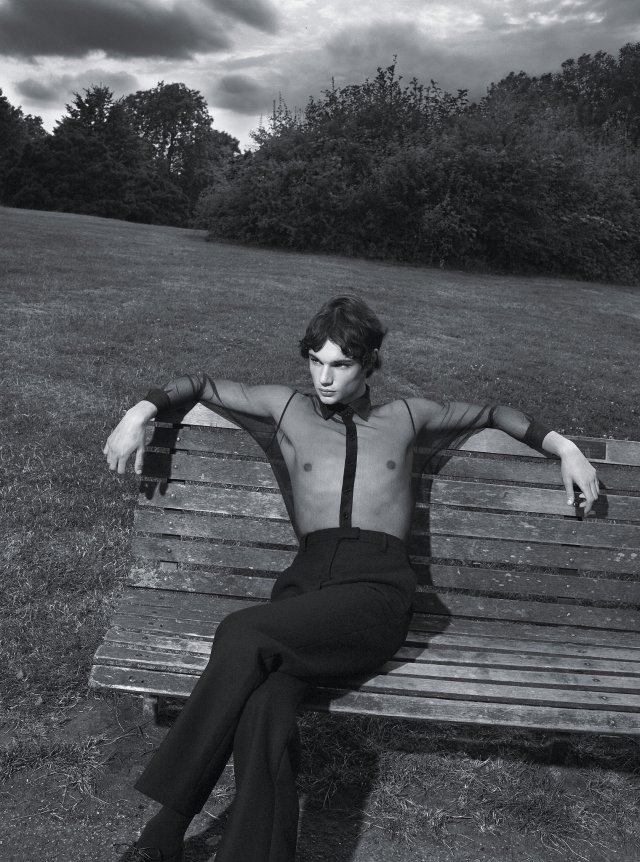
Dior shirt, $2,200, (800) 929-3467. Prada pants, $1,350, and socks, price on request. Church’s shoes, $750, church-footwear.com. Credit Photo by Mert Alas and Marcus Piggott. Styled by Olivier Rizzo.

Down to the details — jeweled buttons, transparent blouses and velvet trims among them — these fashions subvert gender lines.

(“Fall Fashion: The New Androgyny,” NYTimes, 8-5-19)

(c) 2019 JMN

Posted in Commentary | Tagged | 2 Comments

Ouch!

Adverbs Ahead

“Our problem was what laid underneath all that: the way things really were, despite what we taught in civics class.”

(James Comey, “Mr. President, Please Take a Stand Against Racism,” NYTimes, 8-4-19)

No disrespect to Mr. Comey, but what lay underneath his verbal peccadillo was the lack of a good editor. Come on, NYTimes, you can do better than this!

(Cc) 2019 JMN

Posted in Commentary | Tagged | 2 Comments

Today’s Useful Moral

math equation

A math equation recently stirred up trouble by seeming to offer two equally valid, and very different, solutions. Some software programs flatly refused to take the bait. Credit Dean Mouhtaropoulos/Getty Images.

If you want a clear answer, ask a clear question.

Adapted from Steven Strogatz, “That Vexing Math Equation? Here’s an Addition,” NYTimes, 8- 5-19)

Strogatz reprises an online debate about the answer to this equation:

8 ÷ 2(2+2) = ?

I got 16. The answer can be either 16 or 1 depending on two differing standards for order of operations that are equally valid. Mr. Strogatz concludes that his notation for the equation had a built-in ambiguity, which he intended.

(c) 2019 JMN

Posted in Commentary | Tagged , | Leave a comment

Morbid Rumination

exclamation-mark

The violence that erupts continually in an “advanced” country has trapped me in a morbid rumination that has two horns.

First: Given our pervasive gun culture, along with the persistence of capital punishment as a remedy-at-law, why is the firing squad not used more widely outside Utah as an instrument of execution? A well-aimed volley of shots to the head or heart is quicker than the electric chair, gas chamber, or lethal injection.

Second: The current measure for an American “mass” shooting is three fatalities. Under that standard, given the firepower available to almost everyone, we will keep having mass shootings every few days. Let the count be five. Or ten. Anything less can be dismissed as a “group” shooting!

We have little apparent recourse but to adapt our idiom to the folly we abet.

(c) 2019 JMN

Posted in Commentary | Tagged , | Leave a comment

What We Are Just

parrot lucy jones

Lucy Jones.

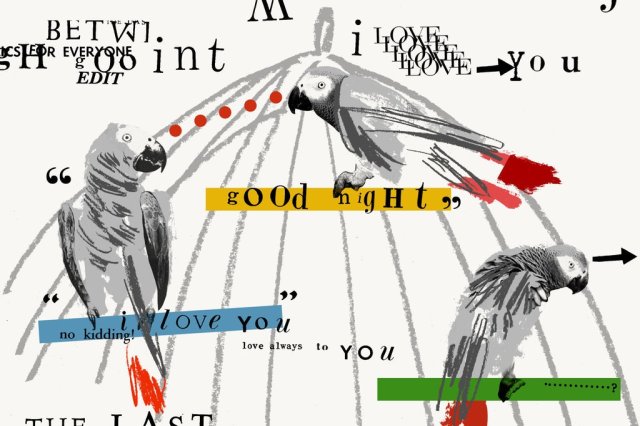
In this essay Sara Nolan affirms with wit and grain her sense of the “godliness of the everyday” brought home by the birth of babies of any species. I glimpsed it with sugar ants.

We are just creation playing its long dice game, no better or more important than anything with wings, hind legs, scales.

(Sara Nolan, “What Parrots Taught Me,” NYTimes, 8-2-19)

(c) 2019 JMN

Posted in Quotations | Tagged , | Leave a comment

Feminine Manet

manet1

One of Manet’s last paintings, “Jeanne (Spring),” from 1881, is the centerpiece of the exhibition. The J. Paul Getty Museum in Los Angeles acquired it in 2014 after more than a century in the shadows. Credit The J. Paul Getty Museum.

My favorite touch on this painting is the mauve-against-yellow bonnet garnish — purple-yellow adjacencies enthuse me. Otherwise, the mannequin with the bee-sting pucker and doe-stupid gaze is both masterful and tiresome.

Jason Farago writes about the exhibition “Manet and Modern Beauty,” on view at the Art Institute of Chicago. The exhibition “focuses on the art of Manet’s last six or seven years before his early death in 1883, at the age of 51.”

Farago says art historians tended to dismiss these later genre scenes, portraits and still lifes “with the three Fs: frivolous, fashionable and (worst of all) feminine.”

The trouble I have with Farago’s art criticism is in keeping excerpts from it lean and crisp — my standard for blogging. His comments tend to be maddeningly on point vis-à-vis my personal tastes — making it difficult to omit things.

manet2

Manet’s “Olympia” (1863) set off a nearly riotous scandal when it was first displayed at the 1865 Salon. It resides in the Musée d’Orsay in Paris. Credit Francois Guillot/Agence France-Presse — Getty Images.

This peep of history on how Manet’s “Olympia” was received in its day is amusing for what it reveals of the perennial clueless bawling of mobs:

Visitors shouted and bawled… Art students threw punches. Security guards had to be called in… Newspapers published brutal caricatures of Manet… Art critics savaged [the painting] as “vile,” “ugly,” “stupid,” “shameless”….

manet3

“Flowers in a Crystal Vase,” circa 1882. Credit National Gallery of Art, Washington, DC.


Manet had always been an adept of women’s fashion, and “Manet and Modern Beauty” looks carefully at how clothing and accessories work to signal modernity in the artist’s late work.

… Even the curators’ choice of walls of muted rose and dusky lilac signals their embrace of the “feminine” epithet that opponents of the late work once hurled.

manet4

“The Café-Concert,” circa 1879. Jason Farago writes that Manet treated the cafes and parks of Paris as “venues where new life was made from scratch.” Credit The Walters Art Museum.

The received history of modern Western painting… can feel like a succession of attacks on beauty by generations of arrogant men… But Manet knew that there is as much rebellion and insight in a dress, a bouquet or even a pile of strawberries if he could see past their surfaces to the richness within.

(Jason Farago, “Manet’s Last Years: A Radical Embrace of Beauty,” NYTimes, 8-1-19)

(c) 2019 JMN

Posted in Commentary | Tagged , | Leave a comment

Weaponized Food

bacon cheeseburger1

“Food is constantly implicated in economic and political processes, as well as in social and historical processes… Because of the recent events in the Middle East, even something as innocent looking as a ground chickpea ball can be used as a weapon of sorts.” (Yael Raviv)

(Quoted by Dene Mullen, “Does Egypt have the best falafel in the world”? BBC.com, 7-16-19)

Exploding falafel is on a par with the heart attack sandwiches flogged relentlessly by American fast food giants: stealth bombs targeting a population in the belly.

I wonder if the bacon cheeseburger will poison the West slowly but surely just as leached wine flagon lead is said to have poisoned Rome?

(c) 2019 JMN

Posted in Anthology, Commentary | Tagged | Leave a comment

“Auntie Colours”

biba1

The influence of fashion and grooming on art (and vice versa?) is of great interest to me. The mention of Sonia Delaunay brings back pleasant memories of being thrilled at a receptive age by her work and that of her husband.

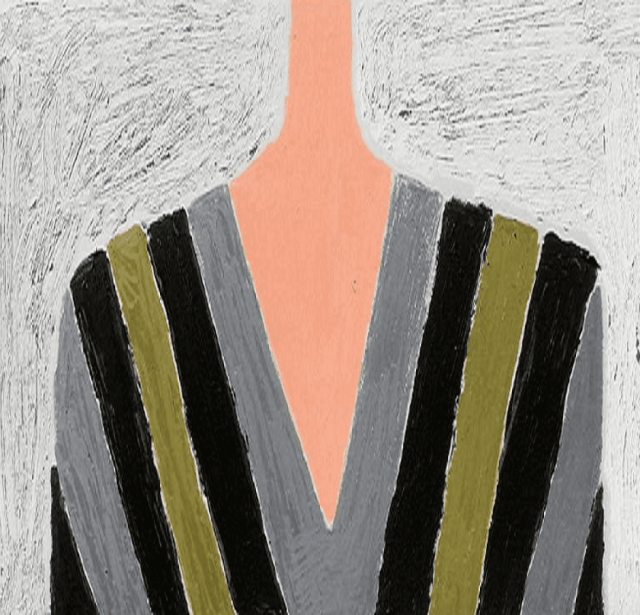
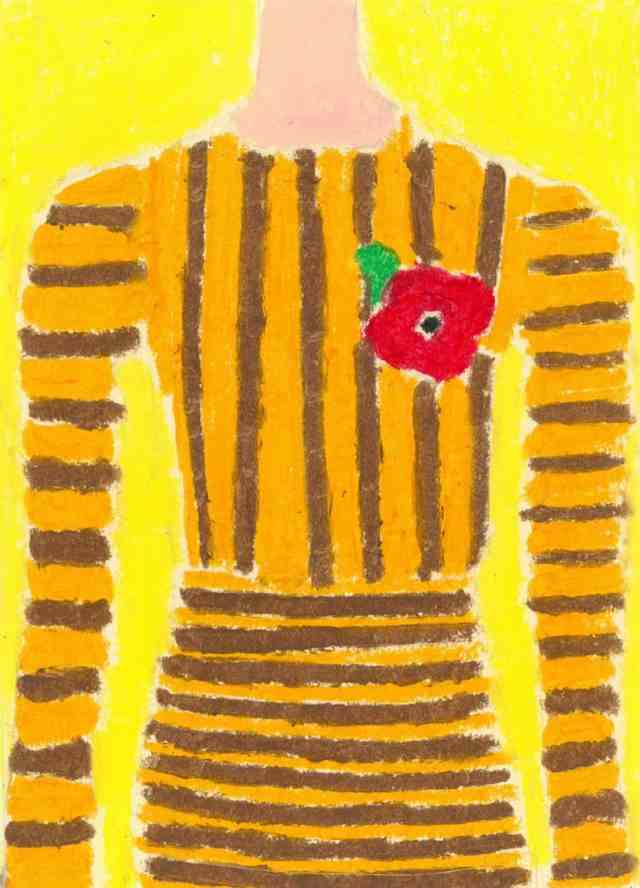
Italian artist Emanuela Di Filippo uses oil pastels to create sinuous images of women wearing bold outfits in the style of Biba, the swinging 60s fashion store set up by Barbara Hulanicki.

biba4

Influenced by the vibrant colours of artist Sonia Delaunay and the slender portraits of Modigliani, Di Filippo trained in fine art in Rome before moving to the UK.

biba3

“I was inspired by abstract, minimal, contemporary artists. But then I came back to my first loves: art and fashion,” she says.

Biba’s designs are reminiscent of the classic Italian fashion Di Filippo grew up with: “They have a simplicity of shape, and I loved the colours.” Hulanicki referred to these as “auntie colours”, such as olive, rust, and “bruised purple”.

biba2

(Dominic Holbrook, “Inspired by Biba: oil pastel fashion — in pictures,” The Guardian, 3-2-18)

(c) 2019 JMN

Posted in Commentary | Tagged , , , | Leave a comment