
“The eye of Texas is upon you…” (State Anthem modified)
If past experience (cough, blogs) is any indication, a shakeout is nigh.
(Jennifer Miller, “Have We Hit Peak Podcast?” NYTimes, 7-18-19)
A bigger shakeout than podcasting (cough, climate change) is nigh. I’m reminded of a New Yorker cartoon in which the iconic doomsday prophesier stands on the corner with a sign reading “The End is Nigh-ish.”
Disaster comes in its own good time but is always nigh-ish. Past experience is never an indication of anything. As Faulkner said, it’s not even past. There’s little evidence that humans have ever profited from experience. War, for example, is permanent.
Vogues, on the other hand, are vagaries that skitter and ripple over surfaces at click speed; they go, and sometimes they come.
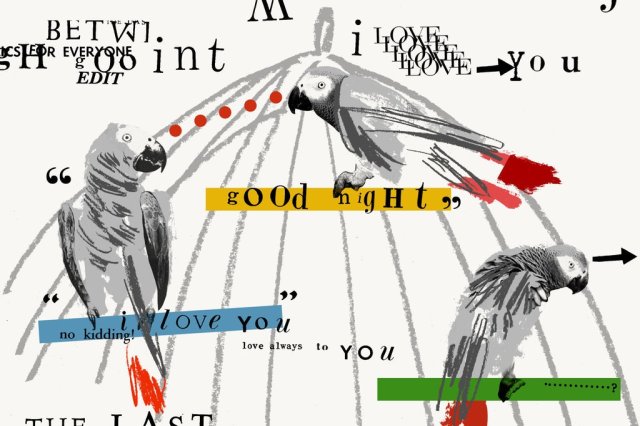
According to Jennifer Miller, podcasts are going and blogs are way gone. I’ve listened to only one podcast, and already podcasts are gone-ish. Email, it seems, is gone or close to it, having given way to messaging. Using smart phones as telephones is gone. Facebook, though obscenely wealthy, is gone; it’s the reduct of pensioners now, having given way to Instagram, which is probably close on getting gone by now.
The thing most nigh, next to death, is the next veering of the herd.
It’s comforting now to blog, to be a straggler, stranded in a stagnant backwater, a johnny-come-lately to the digital picnic. Blogging is intimate and viral-free. A conversation of adepts away from whom the herd has veered. A refuge from the toxic circle of narcissism that drives likeaholics to fall off cliffs and strangle porpoises while taking their selfies.
Goodbye, bloggers. And hello. Let’s keep going.
(c) 2019 JMN








 EthicalDative
Feminine Manet
One of Manet’s last paintings, “Jeanne (Spring),” from 1881, is the centerpiece of the exhibition. The J. Paul Getty Museum in Los Angeles acquired it in 2014 after more than a century in the shadows. Credit The J. Paul Getty Museum.
My favorite touch on this painting is the mauve-against-yellow bonnet garnish — purple-yellow adjacencies enthuse me. Otherwise, the mannequin with the bee-sting pucker and doe-stupid gaze is both masterful and tiresome.
Jason Farago writes about the exhibition “Manet and Modern Beauty,” on view at the Art Institute of Chicago. The exhibition “focuses on the art of Manet’s last six or seven years before his early death in 1883, at the age of 51.”
Farago says art historians tended to dismiss these later genre scenes, portraits and still lifes “with the three Fs: frivolous, fashionable and (worst of all) feminine.”
The trouble I have with Farago’s art criticism is in keeping excerpts from it lean and crisp — my standard for blogging. His comments tend to be maddeningly on point vis-à-vis my personal tastes — making it difficult to omit things.
Manet’s “Olympia” (1863) set off a nearly riotous scandal when it was first displayed at the 1865 Salon. It resides in the Musée d’Orsay in Paris. Credit Francois Guillot/Agence France-Presse — Getty Images.
This peep of history on how Manet’s “Olympia” was received in its day is amusing for what it reveals of the perennial clueless bawling of mobs:
“Flowers in a Crystal Vase,” circa 1882. Credit National Gallery of Art, Washington, DC.
“The Café-Concert,” circa 1879. Jason Farago writes that Manet treated the cafes and parks of Paris as “venues where new life was made from scratch.” Credit The Walters Art Museum.
(c) 2019 JMN