The Shed

alex poots the shed

The Shed will keep back 10% of the seats in every row for low-income visitors, who will be able to buy $10 tickets. Photograph: Christopher Lane.

[This April the Shed will be “the largest new art space to have opened in New York since the Lincoln Center in 1962.” Originally, it was to be called the Culture Shed.]

“I didn’t like the sound of [the name],” [Alex Poots, its director] says. “Culture Shed – it sounded a bit preachy.” He called a friend, one of the creative directors at Framestore, the company responsible for the CGI sequences in the Alfonso Cuarón film, Gravity. “And he said, ‘Why would you call it Culture Shed? It’s like a soap opera putting on a laugh track to tell your dumb audience when to laugh.’” Then he called Marina Abramovic, who … said: “Why call it that? When they made Apple, they didn’t call it the Apple Computer.” Finally, Poots went back to the board and suggested dropping “culture” from the title and just calling it the Shed. “I liked the idea of the Shed because it’s where you make things,” he said. Plus, “it would’ve been shortened anyway, like the Met, so you may as well save on rebranding costs in three years’ time.”

(Emma Brockes, “Alex Poots: The Scottish impresario opening NYC’s largest new art space,” The Guardian, 3-3-19)

(c) 2019 JMN.

Posted in Quotations | Tagged , | Leave a comment

How Rembrandt Worked

rembrandt

“Portrait of a Young Gentleman,” discovered by Jan Six XI in a Christie’s catalog as a likely Rembrandt. Credit René Gerritsen/Jan Six Fine Art.

I liked the detail quoted below of how Rembrandt painted lace — the “hieroglyphic jumble” that coheres from afar– as well as the notion that a painted copy of a repetitive pattern actually looks artificial. This is helpful to a striving painter.

[Jan Six, Dutch art dealer based in Amsterdam] was particularly drawn to the lace on the collar. Lace was a signifier of status throughout the 17th century, and Six believes Rembrandt had a signature way of depicting this variety, which is called bobbin lace. Other artists of the period painstakingly executed its intricacies in white paint on top of the jacket. Rembrandt did something like the opposite. He first painted the jacket, then over it the collar area in white, then used black paint to create the negative spaces in the collar. And where other painters were careful to create repeating patterns in the lacework, Rembrandt wove a freestyle design. For viewers standing a few inches away from such a painting, the collar appears as a hieroglyphic jumble; step back a pace, and it coheres. Six believes this was one aspect of Rembrandt’s genius. “He realized that a painted copy of a repetitive pattern, even if it followed the original, actually looked artificial.”

(Russell Shorto, “Rembrandt in the Blood: An Obsessive Aristocrat, Rediscovered Paintings and an Art-World Feud,” NYTimes, 2-27-19)

(c) 2019 JMN.

Posted in Anthology, Commentary, Quotations | Tagged | Leave a comment

Incorporates a Stretchy Sock

chloe gives highlands twist

Ramsay-Levi imagined the 2019 Chloé woman immersed into the Scottish Highlands. Photograph: WWD/REX/Shutterstock.

I have a vicarious affection for Scotland nurtured by family genealogy. Coupled with a weakness for spirited fashion talk, it leads me to share the following:

[Natacha Ramsay-Levi, Chloé’s creative director] joins many other European designers this season, including Riccardo Tisci at Burberry and Maria Grazia Chiuri at Dior, in looking to icons of British culture for inspiration for her autumn/winter 2019 outing. “I started this collection by putting her on a landscape, grounded in the Highlands with kilts, Prince of Wales checks and outdoor clothes to protect [her] from the storm,” Ramsay-Levi said of the woman she had in mind for this collection. It accounted for the enveloping ribbed knits, capes and drawstring anoraks for outerwear, and all manner of prints, which included a “Highlands Toile de Jouy”. Her square-toe leather boots, meanwhile – complete with a practical chunky heel – incorporated a stretchy sock.

(Scarlett Conlon, “Chloé gives Highlands twist to its traditional Parisian chic,” The Guardian, 2-29-10)

(c) 2019 JMN.

Posted in Anthology, Commentary, Quotations | Tagged | 2 Comments

A Painter’s Painter With Painterly Allure

Jasper Johns

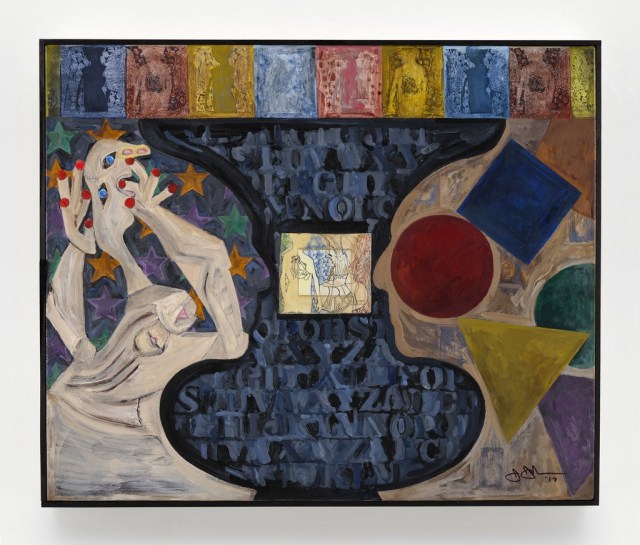
Jasper Johns’s “Untitled” (2017), acrylic over etching with collage on canvas. It’s among the works in his latest exhibition, “Recent Paintings & Works on Paper,” at Matthew Marks Gallery in Manhattan. Credit Jasper Johns/VAGA at Artists Rights Society (ARS), NY; via Matthew Marks Gallery.

… In its sheer variety and vitality, this exhibition is optimistic, and generous in spirit. It reaffirms Mr. Johns as, foremost, a painter’s painter and a working artist rather than an art historical subject. In it he revisits three or four previous series — extending, editing or recombining their motifs — and introduces two new ones that more than meet the Johnsian standards of mystery, suggestion and painterly allure.

(Roberta Smith, “Jasper Johns Stays Divinely Busy,” NYTimes, 2-26-19)

I’m drawn to the phrase “painter’s painter” (seen it before) and “painterly allure” (new to me) without knowing exactly what they mean but sort of what they mean or at least what they mean to me. I’ve also noted the term “Johnsian,” which I initially misread as “Johnsonian,” which sent me on a wild goose chase for quotations by Samuel Johnson about “mystery, suggestion,” etc., in painting. Having fetched up chastened on my Nicholsian rock of misunderstanding, I say here only that I’m attracted to Johns’s paintings, and in particular to what he does with stenciled-looking lettering. It has, for want of a better word, a painterly quality to it — brushy and overlapping and indistinct and modeled and luscious.

(c) 2019 JMN.


Posted in Commentary, Quotations | Tagged , | 2 Comments

Dress in Peace

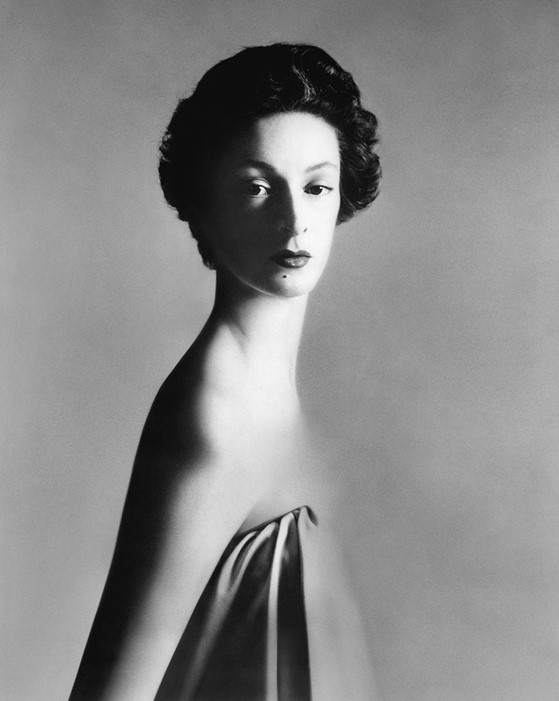
Marella Agnellis by Avedon

Photograph by Richard Avedon, © The Richard Avedon Foundation.

The couple’s closets were filled with immaculate clothes.

(Bonnie Wertheim, “Marella Agnelli, Society’s ‘Last Swan’ and a Passionate Gardener, Is Dead at 91,” NYTimes, 2-23-19)

All respect to the Agnelli family and condolences for their loss. The clothing reference struck me as a distinctive detail to include in an obituary, and thus needing quotation on this blog. The “couple” were Gianni Agnelli “of the Fiat car manufacturing empire,” who died in 2003, and Princess Marella Caracciolo di Castagneto.

(c) 2019 JMN.

Posted in Anthology, Quotations | Tagged | 3 Comments

Netflixing the World

netflix is shrinking the world Max Guther

Max Guther.

… Netflix has discovered something startling: Despite a supposed surge in nationalism across the globe, many people like to watch movies and TV shows from other countries… A list of Netflix’s most watched and most culturally significant recent productions looks like a Model United Nations: Besides [Marie Kondo’s “Tidying Up”] show, there’s the comedian Hannah Gadsby’s “Nanette” from Australia; from Britain, “Sex Education” and “You”; “Elite” from Spain; “The Protector” from Turkey; and “Baby” from Italy.

(Farhad Manjoo, “Netflix Is Shrinking the World,” NYTimes, 2-22-19)

(c) 2019 JMN.

Posted in Quotations | Tagged | Leave a comment

Dangerous Music

jazz band

The 369th Infantry Regiment band led by James Reese Europe playing in the courtyard of a Paris hospital for wounded Americans. Credit Library of Congress.

In 1919, jazz, or “jass,” as some still called it, was a peculiar word with musical and sexual connotations. It could be noun, verb or adjective, indicating pep, liveliness and noise. Jazz was the new counterculture dance music replacing ragtime — but more dangerous, disorderly and discordant, consisting of random, wrong-sounding musical obstreperousness and percussive turmoil. The music had been considered a scourge on polite society, particularly by whites, even if many of them had no idea what the word meant. Now, thousands — both white and black — cheered [James Reese Europe’s] “jazz” band [as they marched in a post-WWI victory parade in Manhattan].

(David Sager, “Jazz on the Edge of Change,” NYTimes, 2-18-19)

(c) 2019 JMN.

Posted in Anthology, Quotations | Tagged | Leave a comment

“What you see is what you see” (Frank Stella)

frank stella

Frank Stella will be selling some pieces from his personal collection at Christie’s. Credit The Renate, Hans & Maria Hofmann Trust/Artists Rights Society (ARS), New York; Christopher Gregory for The New York Times.

Explaining the works he has amassed, Mr. Stella said, “Artists collect differently from other people… I wouldn’t bother making art if I didn’t like what the people around me were doing, too. It wouldn’t be any fun.”

(Ted Loos, “The Surprising Tale of One of Frank Stella’s Black Paintings,” NYTimes, 2-17-19)

(c) 2019 JMN.

Posted in Quotations | Tagged | Leave a comment

Decree 349

cuban artistic freedom

María Hergueta.

The decree requires artists to obtain government approval before performing or displaying their work, while also regulating the artwork itself. For example, it prohibits audiovisual content that contains “sexist, vulgar and obscene language” or that uses “national symbols” in ways that “contravene current legislation.” Government inspectors can impose fines on offenders and confiscate their property.

One of the most eloquent voices against the decree has been that of [Anton] Arrufat, an 83-year-old poet, playwright and novelist who has lived through the ups and downs of the Cuban Revolution. “All attempts at censorship ultimately fail,” he told me, “because all they do is turn a work of art into a monument: They call attention to it and give it fame. In the end the censor will be forgotten and the work will live on.”

(Ruben Gallo, “Is This the End of Cuba’s Astonishing Artistic Freedom?,” NYTimes, 2-18-19)

(c) 2019 JMN.

Posted in Quotations | Tagged | Leave a comment

Massive Attack

massive attack

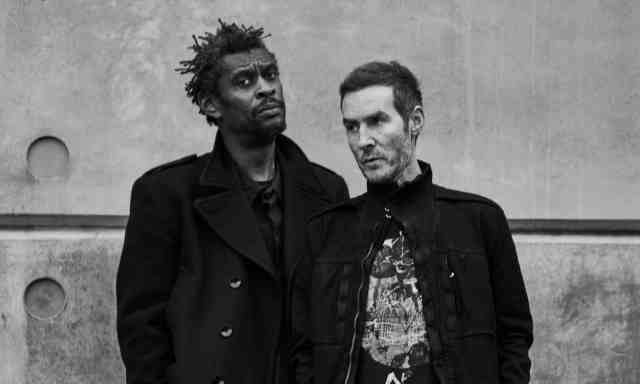
‘I felt that [with] Mezzanine, the procedure had to be ripped up, the rulebook had to be changed’: Robert del Naja, right, and Grant Marshall. Photograph: Warren Du Preez & Nick Thornton/Warren Du Preez & Nick Thornton Jones.

“Gigs have become very formulaic these days,” adds [Adam] Curtis. “Not just gigs but all of culture – and that’s the challenge. The way you make people look again is by finding a different sort of image. And so the overall aim is to show how over the past 20 years, we’ve gone into a very static, repetitive world that surrounds us with the same images that keep us from really looking.”

“… It’s just not the same world any more in terms of concentration. Attention span’s the biggest commodity of all now. Data is the new oil. It’s inside your head. That’s where the value is and so is the tension. I mean, trying to get anyone to concentrate on anything when people get excited if the audience swipes down a page. If you actually stop and click,… that’s gold.”

(Adam Curtis, documentary film maker, and Robert Del Naja, a founding member of British music group Massive Attack, quoted by Nosheen Iqbal, “Massive Attack: ‘I have total faith in the next generation,’” The Guardian, 2-17-19)

(c) 2019 JMN.

Posted in Quotations | Tagged , , | Leave a comment