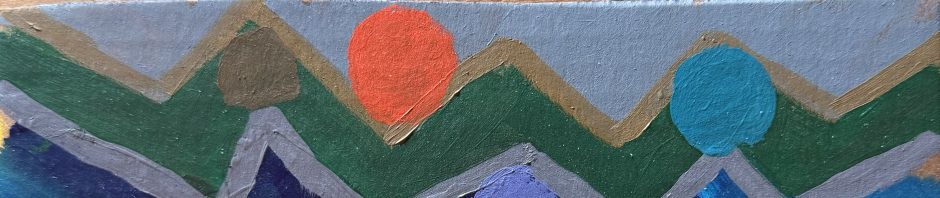
The largest exoplanet ever found
Is quite a marvel where marvels abound.
Theory holds it cannot be, they say,
But sometimes theory doesn’t have its way.
It is a type of planet they call puffy
That orbits its parent in just a jiffy.
Another is so light it would be floatable
Were such a tub of H2O available.
One planet takes the prize for poetry:
It’s called Epsilon Eridani B.
It’s closest to our Earth but no contender
For life support because of lack of water.
OGLE is yet another world most chilly,
While WASP is hotter than a hot tamale.
CoRot is rocky, but it takes the cake
For places whose sole purpose is to bake.
There is a three-star world whose triple suns
Put sundown in the shade on single ones.
A planet that is twice as dense as lead
May be a brown dwarf, or a star that’s dead.
HD has let its atmosphere be sniffed,
And glowing methane in its air was whiffed.
Coku Tau 4’s planet is very new.
The orbit of XO-3b’s askew.
There is a planet known to orbit backwards.
For this phenomenon I simply lack words.
GJ is thought to be a world of water,
A Super-Earth that has a solid center.
A year on SWEEPS is shorter than a day.
You would be ancient in one year that way.
A massive world that orbits a pulsar
Is made of diamond and was once a star.
How much more weirdness before you are made
Stark crazy by this alien parade?
Reference
http://www.space.com/159-strangest-alien-planets.html

The Hangover God, JMN, 2009. Photo. Copyright 2018 James Mansfield Nichols. All rights reserved.
(Copyright 2018 James Mansfield Nichols. All rights reserved.)

 EthicalDative
Goodbye, Philip Roth
“Looking back, in an afterword written on the 25th anniversary publication of “Portnoy’s Complaint,” Roth wrote, ‘I wished to dazzle in my very own way and to dazzle myself no less than anyone else.’ He recalled admonishing himself, ‘All you have to do is sit down and work.’ Aspiring writers might engrave those words.” (Roger Cohen, “The Liberation in Roth’s American Berserk,” NYTimes).
“… The misogyny isn’t really the problem. After all, if one policed literature for bigotry, there would be little left to read. The problem is literary: these caricatures reveal a lack of not only empathy, but curiosity.” (Dara Horn, “What Philip Roth Didn’t Know About Women Could Fill a Book,” NYTimes).
A female colleague once used a phrase in conversation that stuck with me — something like “Men just want to get their hoggin’s” or “He got his hoggin’s.” For me it was a colorful new instance of slang describing an outcome sought onesidedly by the unevolved male, like “He got his rocks off.”
I’ve tried to remember what I can about the two Philip Roth novels I read long ago. Of “Goodbye, Columbus” I recall that the title was cleverly revealed far along in the novel to be … from a school song? Nothing else. As for “Portnoy’s Complaint,” I retain only an image of a boy getting his hoggin’s into his gym socks. Dazzling himself?
Flaubert created Emma Bovary. The Bronte sisters and Jane Austen had some success writing in the male voice. Richard Jury and I have solved several mysteries together — he’s Martha Grimes’s handsome detective in “Man With a Load of Mischief” and other gumshoe yarns. Dara Horn’s column (cited above) triggered those reflections about authors projecting voice into the opposite gender.
Is a lack of curiosity about and empathy for women a willful state in an author? If so, it might expose Roth to an opprobrium able to be considered deserved by the caricatured party.
Or is a lack of curiosity about and empathy for women a congenital deficit in an author, one that can’t be overcome? If so, it could imply that Roth had a creative blind spot potentially limiting his scope as a novelist should he attempt to portray a convincing female character.
I don’t know if these are questions that even should be asked, much less answered. It’s a lame conclusion, but it’s what I’ve got. I’m too out of touch with Roth’s work to venture pronouncements, and I would like to avoid the pitfall of inflammatory bloviation swamping our discourse. As my female character, Garnet Belle Hatch of Stag City, sagely remarks, “In this town there are more opinions than people.”
Brick Struggling to Be Free, JMN, 2009. Photo. Copyright 2018 James Mansfield Nichols. All rights reserved.
(Copyright 2018 James Mansfield Nichols. All rights reserved.)