“The Pencil Is a Key”

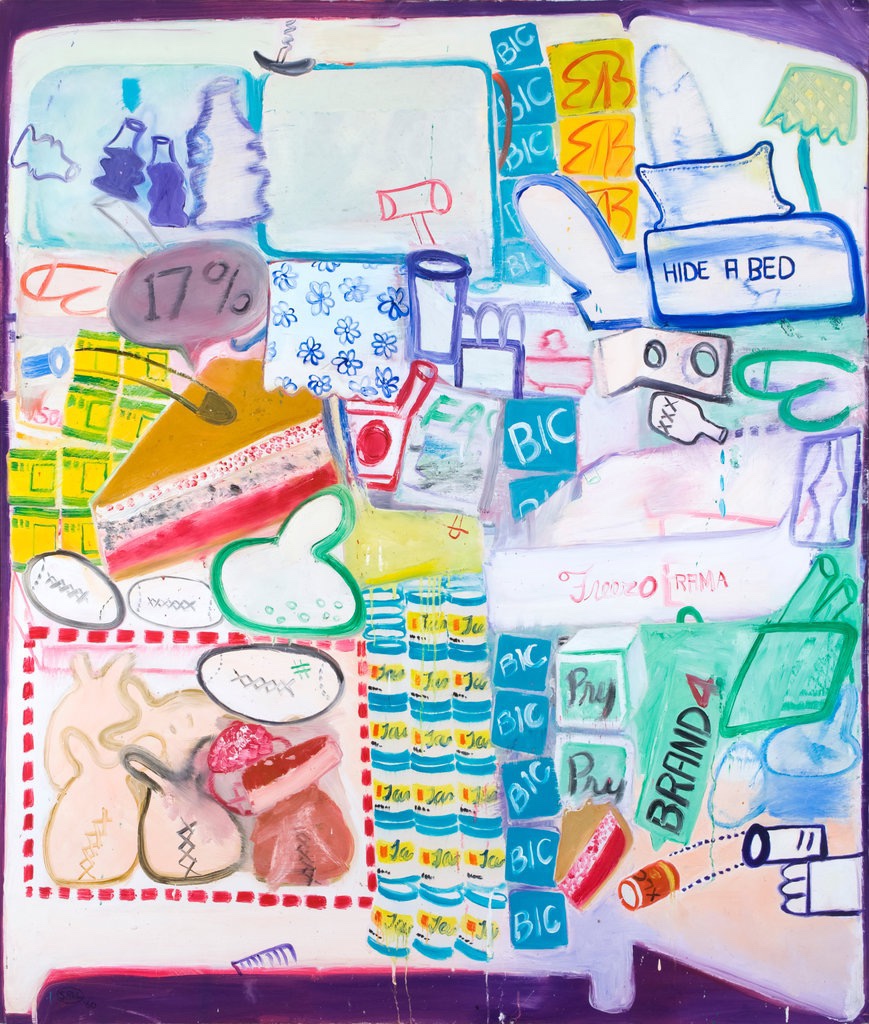
This is an article about drawings made by persons who were in prison. They were featured in an exhibition at the Drawing Center that ran through January 5, 2020. Author Jillian Steinhauer quotes cartoonist Lynda Barry, who sounds the familiar theme that we all draw as children and grow away from it subsequently.

In the opening of her new book, “Making Comics,” the cartoonist and MacArthur fellow Lynda Barry reminds her adult readers that they made art when they were young, even if they self-consciously stopped doing so long ago. “There was a time when drawing and writing were not separated for you,” she writes. “We draw before we are taught.”

(Jillian Steinhauer, “Prison Art: A Dark Place Where the Muse Never Leaves,” NYTimes, 12-12-19)

(c) 2020 JMN

Posted in Commentary | Tagged , , | Leave a comment

Balanced Learning

The “science of reading” approach is based on phonics, which sounds out the letters of words: Bit. Buh! Ih! Tuh!

The “balanced literacy” approach believes “exposing students to the likes of Dr. Seuss and Maya Angelou is more important than drilling them on phonics.”

One of the most popular reading curriculums in the country — used in about 20 percent of schools… was developed by Lucy Calkins, a professor at Teachers College, Columbia University. She is widely admired for her emphasis on helping students develop a love of reading and writing. (Dana Goldstein, “An Old and Contested Solution to Boost Reading Scores: Phonics,” NYTimes, 2-15-20)

Drills versus exposure. Science versus love. There’s no doubt which should prevail.

In teaching Spanish I learned to avoid grammar and drills in favor of instilling in students a passion for traveling abroad. I helped them imagine the many scenarios — airports, restaurants, taxicabs — in which they would spontaneously utter, “Do you speak English?”

In like manner the U.S. Army trains platoons to parade in flawless formation using an approach called “balanced marching.” Sergeants renounce drills; instead, they foster in new recruits a love of rhythmic walking and synchronized motion.

When exposure and love replace science and drills, almost anything you can imagine virtually teaches itself.

(c) 2020 JMN

Posted in Anthology, Commentary, Quotations | Tagged , , , , , | 5 Comments

World War Gucci

[Subheading] Whether designers acknowledge it or not, World War II still shapes their collections. Even at Gucci.
(Guy Trebay, “At Milan Men’s Week, the War Lives On,” NYTimes, 1-15-20)

I can’t resist marveling at the look of this Gucci lineup and quipping that the plaid background pulls it all together! The models evoke for me waifs who have had to dumpster-dive for remnants and cast-offs in order to clothe themselves.

High fashion is a mysterious and perplexing world to me. I enjoy keeping an eye on it, not to ridicule — that’s simplistic and counter-productive — but to see where it points. How do designers develop their ideas and make their choices? In what ways is World War II reflected here? I would love to converse with a Gucci insider to find out.

(c) 2020 JMN

Posted in Commentary | Tagged , , , | Leave a comment

“Tiepolo Meets Mad Magazine”

The 61 works in this exhibition… span the career of an American painter whose art has, for more than half a century, both diagnosed national maladies and been shaped by them. The result is work that’s virtuosically bizarre in style (Tiepolo meets Mad magazine) and ecumenically offensive in content. Whatever your ethnic, sexual or political persuasion, there is something here to give you ethical pause, to bring out an inner censor you didn’t know was there.
(Holland Carter, “The Wild, Anti-Authoritarian Art of Peter Saul,” NYTimes, 2-13-20)

I don’t warm to Peter Saul’s paintings a great deal, but I do find stimulation in the motivation behind them and in how he has chosen many of his subjects.

[When] Mr. Saul returned from Europe to California in 1964, he was clear on what he wanted, and didn’t want, from art… He didn’t want the pretensions — the ego, the angst — left over from Abstract Expressionism. And he didn’t want the social trappings associated with a mainstream career… What he did want was to be able to paint what he pleased and to have his work noticed. And one way to get people looking was to take subjects from a source they cared about: the news.

At 85 Saul is still hard at work, and claims in recent years, writes Holland Carter skeptically, “that all he’s ever really been interested in was opportunistically grabbing attention by being outrageous.”

(c) 2020 JMN

Posted in Commentary, Quotations | Tagged , , | Leave a comment

On Listening

I got a speeding ticket once, and took the option of sitting through a driver’s training refresher class in lieu of paying a fine. The instructor led off with a question: “How do you know when you’re completely stopped at a STOP sign?”

None of the dozen adults in the room could provide an answer that satisfied him. He finally answered it himself: “When your wheels aren’t turning!”

Whatever the exchange taught me was as much about language as about driving.

In her practical strategies for helping men become better listeners Kimberly Probolus has three suggestions: Stop talking; hear the words being said and take them at face value; and ask questions. (“Men, You Need to Listen to Women,” Letter to the NYTimes, 2-14-20)

The definition of “truism” as “a statement that is obviously true and says nothing new or interesting” shorts the potential of some truisms to be useful. A car with resting wheels is stopped. Stop talking to listen. First do no harm. Some truths are too clear to be obvious.

(c) 2020 JMN

Posted in Commentary | Tagged | Leave a comment

Flavorcide

I’m impaled by a witticism that wants outing. 

My dad died in an old folks’ home as he was foot-scooting himself to breakfast in his wheelchair one morning. Everyone foot-scooted, no one got pushed. It was promoted as therapeutic exercise. 

No one saw him die. Someone simply found him not breathing, and that was that. He didn’t make it to breakfast. I keep wondering what that transition was like for him.

 Prior to that I had joined him for various meals. The food was bland in the extreme. I said to myself, “This food has committed flavorcide,” adding, “This is where taste comes to die.”

(c) 2020 JMN

Posted in Anthology, Commentary | Tagged , | 5 Comments

Non Sequitur Clickbait

“This 26-year-old became a small-town California mayor. Then a jet dumped fuel on her snakebit city.” 

(Headline from the Los Angeles Times, latimes.com, 2-11-20)

In other news:

“A cook in Lafayette Parish, Louisiana over-salted his boudin. Then it rained in North Dakota.”

(Spurious clickbait concocted by the blogger)

(c) 2020 JMN

Posted in Commentary, Quotations | Tagged | Leave a comment

Firehose of Rage

I hope that none are offended when I say that I am nonplussed at Ross Douthat’s use of “conterminous” in his column.

Here are two scenes from the same drama. The first scene takes place in California, where the state’s public university system now requires prospective faculty members to make a statement affirming their commitment to “diversity, equity and inclusion” — an officially politically neutral trinity that is widely suspected to be conterminous with progressive notions of what counts as diversity and what sort of inclusion matters.
(Ross Douthat, “Trump’s De-Polarizing Architecture Plan,” NYTimes, 2-11-20)

At first reading I assumed Douthat meant “coterminous” — who wouldn’t? To make sure I was on a sound footing before braying my contempt for his ignorant slippage from my speck in the social medium I Googled “conterminous.” Worse luck, it’s a word!

As adjectives the difference between conterminous and coterminous is that conterminous is meeting end-to-end or at the ends while coterminous is (of property leases) linked or related and expiring together.
(“Conterminous vs Coterminous — What’s the difference” — WikiDiff)

Hey, Douthat, here’s a scene from my drama. You’ve slipped my noose this time, but keep your fancy words to yourself. Ignorance of the American constitution insulates good citizens from eloquence and erudition such as yours for a reason — to make America simple again. MASA! 

(c) 2020 JMN

Posted in Commentary, Quotations | Tagged | Leave a comment

De Gustibus…

I try to envisage EthicalDative as a safe space for saying that I like certain art. Tolerating tastes, especially other people’s, doesn’t come easily to our species. Persons with cultivated eye, especially, may compare it to defending people’s right to have opinions based on alternative facts. I myself, uncredentialed and untrained in art, experienced a fugitive thrill of specious superiority once when a man retired from 30 years of teaching art in the public schools told me his favorite artist was Norman Rockwell. De gustibus non est disputandum, I reminded myself. “There’s no arguing over tastes.”

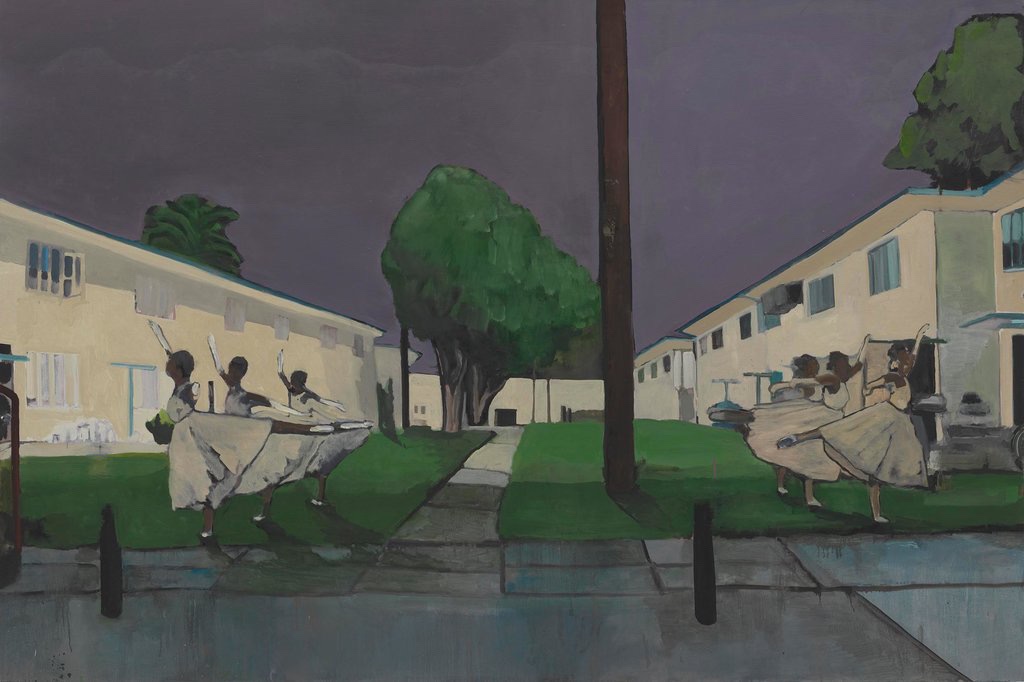
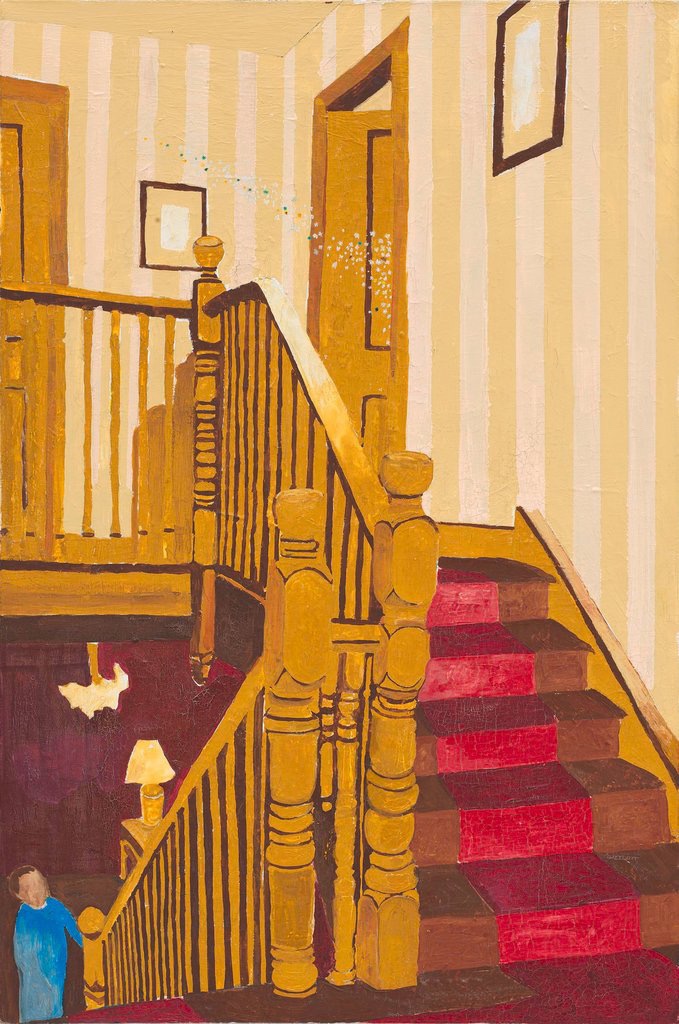
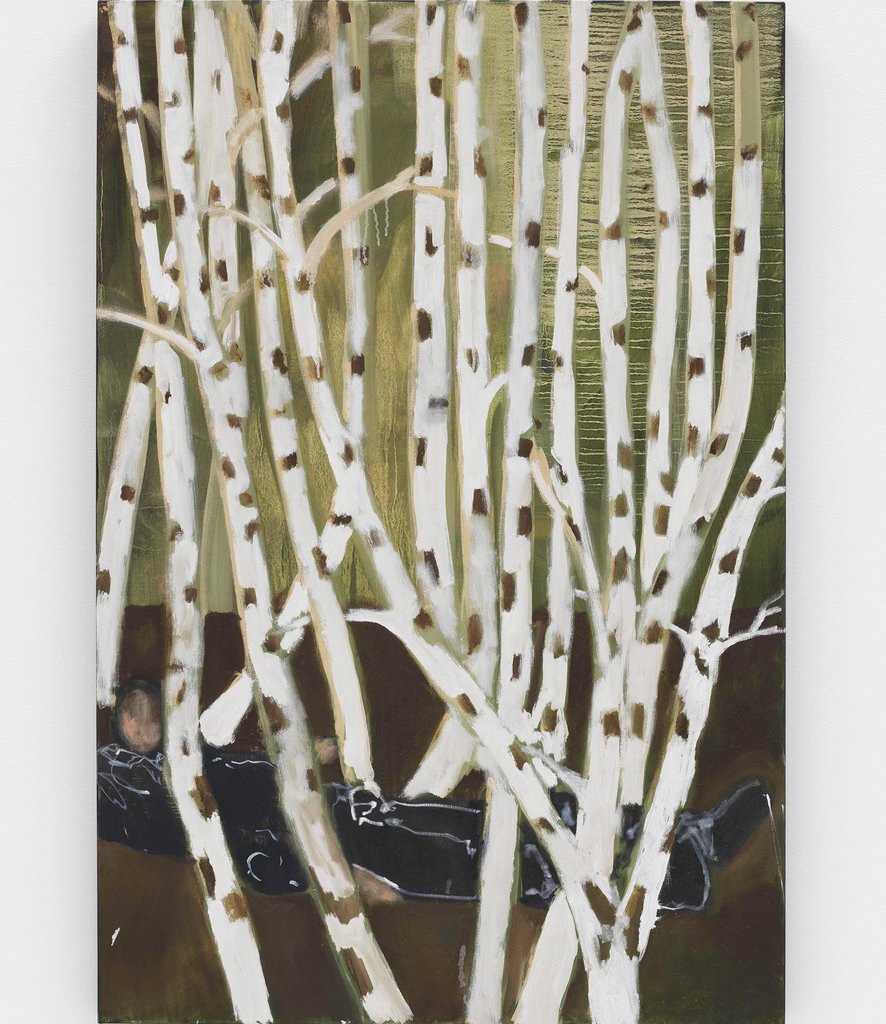
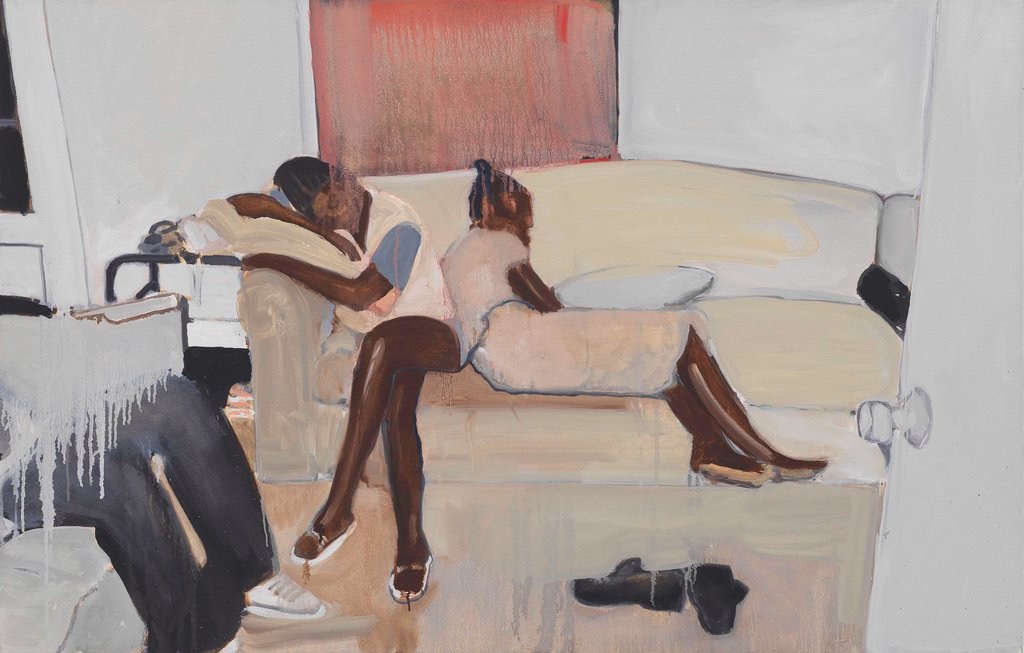
I find much to like about Noah Davis’s painting.

Also, I always find something to be intrigued by, puzzle over, and admire in Roberta Smith’s art commentary.

Davis once said he preferred to think of himself as a painter rather than an artist, and the 27 canvases here… back him up. He was immersed in the medium, its materials and its history, and although his work was ostensibly traditional, it was also subtly pushing at the envelopes of subject matter, psychological expression and painting technique.

For me the provocative notion of identifying as painter rather than artist has appeal. It makes a backhanded kind of sense; whereas adverbs almost always fog my windshield. Words such as “ostensibly” and “subtly” sap vigor from the traits and acts they qualify.

[Davis]… refused to commit to a single figurative style or to use photographic images in a formulaic way. Nearly every canvas here is different, and most have an interpretive and painterly openness. Your eyes and mind enter them easily and roam through the different layers of brushwork and narrative suggestion. There’s an unexpected optimism to all this. The paintings also dwell in silence, slow us down and hypnotize.

The bit about not using photographic images “in a formulaic way” gives me something to grope my way towards understanding. Also, paintings that “dwell in silence.”

(Roberta Smith, “Noah Davis Is Gone; His Paintings Continue to Hypnotize,” NYTimes, 2-6-20)

(c) 2020 JMN

Posted in Anthology | 3 Comments

Artie Shaw on Glenn Miller

I transcribed this snippet from the Ken Burns documentary about jazz. It inspires me to make mistakes at what I’m doing.

[Glenn Miller]… was sort of the Lawrence Welk of jazz. It was one of the reasons he was so big; people could identify with what he did, they perceived what he was doing. But the biggest problem: His band never made a mistake, and it’s one of the things wrong. If you never make a mistake, you aren’t trying, you’re not playing at the edge of your ability. You’re playing safely, within limits, and you know what you can do, and it sounds after a while extremely boring.

(c) 2020 JMN

Posted in Commentary, Quotations | Tagged | 2 Comments