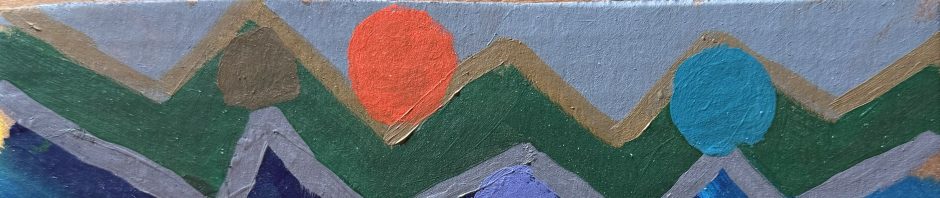

Artwork by Amy Sherald in her solo exhibition at Hauser & Wirth, clockwise from top left: “A single man in possession of a good fortune,” 2019; “The girl next door,” 2019; “When I let go of what I am, I become what I might be (Self-imagined atlas),” 2018; and “There is no charm equal to tenderness of heart,” 2019. Credit Artwork via Amy Sherald and Hauser & Wirth.
Roberta Smith situates artist Amy Sherald within a group of youngish painters
… who have broken with, absorbed or simply ignored modernist abstraction. Instead, they work with the figure as a way of reaching broader audiences; dealing with issues of identity, gender and sexuality… The many African-American artists working in this vein are also dismantling Western painting’s racial homogeneity, populating it as never before with images of black people.
(Roberta Smith, “Amy Sherald’s Shining Second Act,” NYTimes, 9-12-19)
Smith describes Sherald’s paintings as
… startlingly spare… paintings of confident, black people whose stylish clothes and backdrops contrast with their faces, which are uniformly grisaille… She also uses grisaille, she has said, because she wants to take race out of her paintings.
And yet for all that they are grayed, Sherald’s subjects are unmistakably African-American. And that seems to be an essential aspect of her art, the part she professes to take out.
(c) 2019 JMN






A Pioneer Gallerist
Jacob Lawrence “The Music Lesson,” from the “Harlem Series,” 1943. Credit The Jacob and Gwendolyn Knight Lawrence Foundation, Seattle/Artists Rights Society (ARS), New York; New Jersey State Museum.
Ms. Halpert gave African-American artist Jacob Lawrence his first show, “the famed ‘Migration’ series.” I’m drawn to his painting called “The Music Lesson” (1943) for the contrast between the extremely stylized figures of teacher and pupil and the meticulous depiction of the piano and the music they are playing.
(c) 2019 JMN