Epitaph

JMN Flowers

Like the blogs of yore, podcasts… are today’s de rigueur medium… And yet the frequency with which podcasts start (and then end, or “podfade,” as it’s coming to be known in the trade) has produced a degree of cultural exhaustion.
(Jennifer Miller, “Have We Hit Peak Podcast?” NYTimes, 7-18-19)

The cyber picnic, my friends, has moved on.

The Kardizzians and Kewdipies have pitched blanket in a far meadow. The Influenced track their spoor and veer thither like droves of skittish wildebeest.

Where moments ago blogs capered and podcasts tramped, sugar ants coat petit fours discarded in the bent grasses.

The wind hums on wire.

A dove coos.

Already the grass is unbending.

(c) 2019 JMN

Posted in Commentary | Tagged | Leave a comment

Bed Science

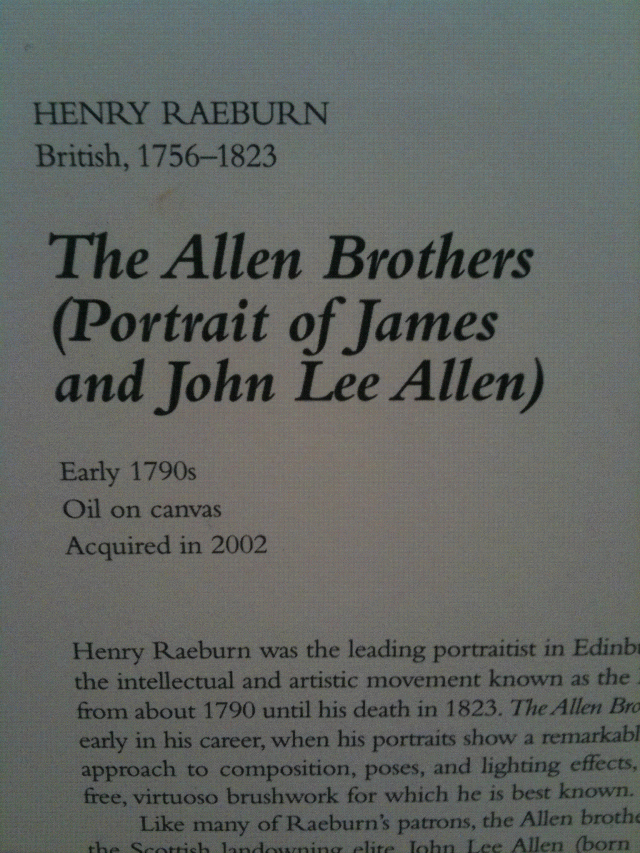
henry raeburn

The Bed Science Made Better
Can your bed make you feel this good?
(Ad in NYTimes online)

Can my bed make me feel that good?

Probably not. But the improved bed science created by an elided subordinating conjunction, and Henry Raeburn’s brushwork, are helping me feel pretty fine.

(c) 2019 JMN

Posted in Anthology, Commentary | Tagged | Leave a comment

Flock of Ties

Flock of Ties

(c) 2019 JMN

Posted in Anthology, Commentary | Tagged | Leave a comment

(Cough, Herd)

Eye of Mine 2

“The eye of Texas is upon you…” (State Anthem modified)

If past experience (cough, blogs) is any indication, a shakeout is nigh.
(Jennifer Miller, “Have We Hit Peak Podcast?” NYTimes, 7-18-19)

A bigger shakeout than podcasting (cough, climate change) is nigh. I’m reminded of a New Yorker cartoon in which the iconic doomsday prophesier stands on the corner with a sign reading “The End is Nigh-ish.”

Disaster comes in its own good time but is always nigh-ish. Past experience is never an indication of anything. As Faulkner said, it’s not even past. There’s little evidence that humans have ever profited from experience. War, for example, is permanent.

Vogues, on the other hand, are vagaries that skitter and ripple over surfaces at click speed; they go, and sometimes they come.

According to Jennifer Miller, podcasts are going and blogs are way gone. I’ve listened to only one podcast, and already podcasts are gone-ish. Email, it seems, is gone or close to it, having given way to messaging. Using smart phones as telephones is gone. Facebook, though obscenely wealthy, is gone; it’s the reduct of pensioners now, having given way to Instagram, which is probably close on getting gone by now.

The thing most nigh, next to death, is the next veering of the herd.

It’s comforting now to blog, to be a straggler, stranded in a stagnant backwater, a johnny-come-lately to the digital picnic. Blogging is intimate and viral-free. A conversation of adepts away from whom the herd has veered. A refuge from the toxic circle of narcissism that drives likeaholics to fall off cliffs and strangle porpoises while taking their selfies.

Goodbye, bloggers. And hello. Let’s keep going.

(c) 2019 JMN

Posted in Commentary | Tagged , , , | Leave a comment

Fuchsia Parabola

frank bowling

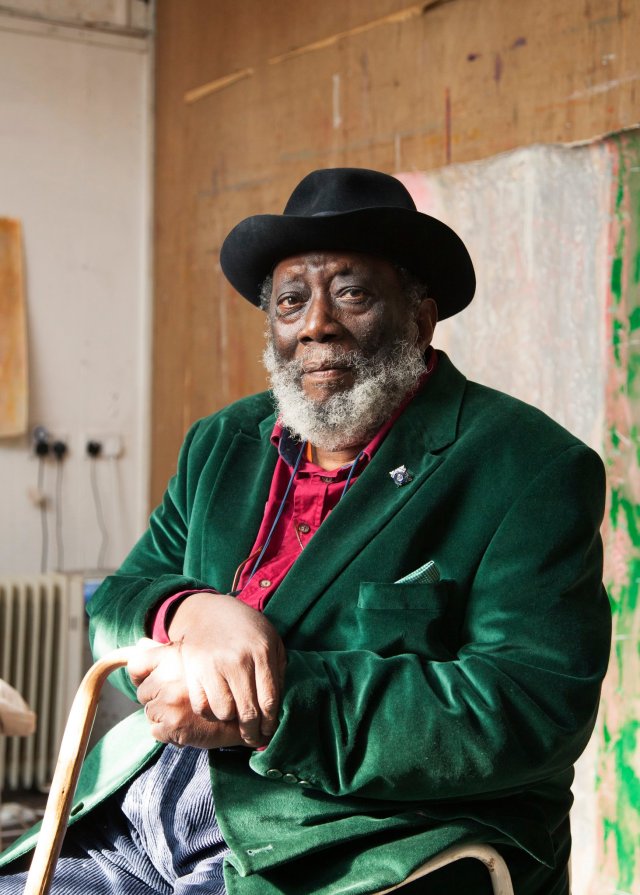
Frank Bowling in London in 2017. Mr. Bowling, 85, has finally netted a major retrospective, at Tate Britain. Credit Frank Bowling/Artists Rights Society (ARS), New York/DACS, London; Alastair Levy.

[Frank] Bowling, born in Guyana 85 years ago, has lived for more than five decades in the London district of Pimlico…

Jason Farago’s recent appreciation of Frank Bowling’s work is full of verbal spice. (Jason Farago, “A Trans-Atlantic Artist, Recognized at Home, at Last,” NYTimes, 7-10-19). The “show” refers to an exhibition of Bowling’s abstract paintings at Tate Britain.

[The show is]… a bit too eager to inscribe Mr. Bowling into a British practice of low-risk, landscape-fixated, not-quite-abstraction…

This characterization of British practice (“low-risk,” etc.) is new to me. I will keep it in mind and try to understand its derivation as I keep looking at British art.

Mr. Bowling is also a writer: a pugnacious one…

In his capacity as contributing editor to “Arts Magazine” Bowling engaged in a dialog with black artists “whose work foregrounded their racial identity.” I’m happy to “background” that scuffle and simply enjoy the notion of a “pugnacious” writer. It reminds me of Norman Mailer’s pugilism and John Updike’s comment about Mailer’s “puckish truculence.” When is pugnacity in a writer not chuckle-worthy?

frank bowling great thames

Mr. Bowling’s “Great Thames IV” from 1989. Credit Frank Bowling/Artists Rights Society (ARS), New York/DACS, London.

[Bowling’s] marbled abstractions of the early 1980s… are pretty at first glance, but unrewardingly dainty at second… “Great Thames IV” (1989)… [is] a handsome but conservative painting… offering the eyes too much and the mind too little…

Eyes too much, mind too little… Hmmm. This handsome assertion by a critic in firm command of his medium isn’t conservative, but it tracks his assessment of the painting.

frank bowling painting

Mr. Bowling’s “Iona Miriam’s Christmas Visit To & From Brighton” from 2017. Credit Frank Bowling/Artists Rights Society (ARS), New York/DACS, London; Hales Gallery.

Purple and orange splotches explode like land mines against a backdrop of whispering gray. A fuchsia parabola whips from the top right corner down and back, transmuting as it descends into a gray scar.

“Transmuting” is transitive and usually used with an object. For me it’s weighty and off key here — “changing” would do the trick — but otherwise this description of the painting pops loudly.

(C) 2019 JMN

Posted in Commentary | Tagged , | Leave a comment

TV America Breaks News

Talky talky head head, talky head, talky head.

Heady heady talk talk, heady talk, heady talk.

Talky head, talky head, screeny fully talky head.

Heady talk, heady talk, fully screeny heady talk.

Repeaty-peat, repeaty-peat, peat-peat, repeaty,

Peat-repeaty peat-peat, peaty-peaty poot.

(c) 2019 JMN

Posted in Commentary | Tagged , | Leave a comment

Parting Looks Video

Video by http://www.conceptsdigitalmarketing.com For information: Rox Slaughter, 361-571-1926. (c) 2019 JMN

More Galleries | Tagged | Leave a comment

“Bid for Connection”

borges

Jorge Luis Borges. Credit Charles H. Phillips/The LIFE Picture Collection, via Getty Images.

Frank Bruni has written about his personal confrontation with potential loss of vision. In this column he writes of Joel Burcat, an environmental lawyer who has published a debut novel, “Drink to Every Beast,” after becoming legally blind. Bruni celebrates other authors who were blind or partially so, including James Joyce, James Thurber, John Milton, and Jorge Luis Borges.

[Burcat’s] words remind and comfort me, as I contemplate my own uncertain future, that writing isn’t an act of stenography. It’s a bid for connection. A search for meaning. Oliver Sacks said it well in “The Mind’s Eye,” a book inspired by his partial loss of vision: “Language, that most human invention, can enable what, in principle, should not be possible. It can allow all of us, even the congenitally blind, to see with another person’s eyes.”

(Frank Bruni, “Writing With Your Eyes Closed,” NYTimes, 7-6-19)

(c) 2019 JMN

Posted in Quotations | Tagged , , | Leave a comment

Amazing Apology

Olney_vicarage

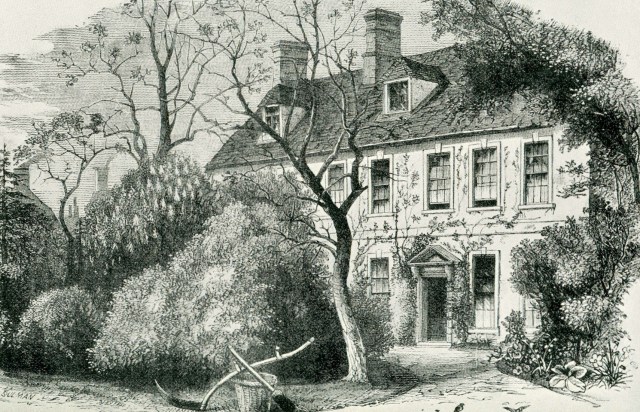
By T. Sulman – Martin, Bernard (1950), John Newton: A Biography, William Heineman, Ltd., illustration between pages 222 and 223., Public Domain, https://commons.wikimedia.org/w/index.php?curid=11258269

The man who wrote the words of “Amazing Grace” was a reformed English slave trader. He wrote the following:

“I am bound in conscience to take shame to myself by a public confession which, however sincere, comes too late to prevent or repair the misery and mischief to which I have formally been an accessory.” (John Newton, 1788)

It’s the most abject, poignant, unvarnished, soul-baring, unsparing, uncowardly and realistic apology uttered by mortal man that I have encountered. The moist evasions drooled through clenched teeth by today’s “men” reek of slobber by comparison. A world in which “I’m sorry that you were offended” is the excuse for so much offense is a sorry world.

If there’s a heaven, I hope John Newton looks down from it. Our misery and mischief are enduring, but his words were an atonement.

(c) 2019 JMN

Posted in Anthology, Commentary | Tagged , | Leave a comment

The Saving Grace of Dinghies

dinghy

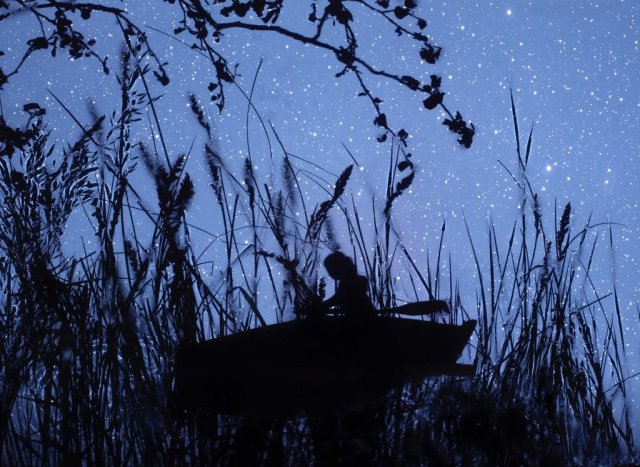
Photo illustration by Susan Derges.

I have had a soft spot in my heart for the humble dinghy since boyhood. At age 14 I ordered the plans for building a one-design sailing dinghy called the El Toro. Regrettably I never got the thing built, but I kept the plans for years. This essay on dinghy rowing by Heidi Julavits is sweet, clever, lyrical — a modest gem, like a dinghy.

Dinghies… demand humility, as well as a basic grasp of buoyancy and physics… They become unstable when incompetent, rash or hubristic people get into them…

Learning to row a dinghy requires surrendering to the illogical: You need to first accept the seemingly counterproductive fact that to move the dinghy forward, you have to face backward…

… Rowing provides an opportunity to regularly identify and assess my imbalances, many of them a result of years of unthinking behavior… You must learn to always correct for them…

Mornings are best, before the wind picks up, because the water is glassy and promotes reflection. You can ask yourself hard questions about everything as you watch your past recede… What awaits you, you cannot see. With the help of a rock or a tree, however, you can take aim. You can reassure yourself: This is not your last chance to get it right.

(Heidi Julavits, “Letter of Recommendation: Dinghy Rowing,” NYTimes, 7-3-19)

(c) 2019 JMN

Posted in Anthology, Quotations | Tagged , | Leave a comment