
Two Takes

If there were a muse named Ironia, it strikes me that she would be an inspiration for Rutene Merk and Lynn Hershman Leeson. The two images below have little in common other than depicting females. They both incite interest, however, by appearing to be what they’re not.

aki

“Aki” (2019), oil on canvas, by Rutene Merk in her new show, “Sprites.” Credit Rutene Merk and The Downs & Ross, New York; Jeffrey Sturges.

The gamey image of “Aki” with its “eerie, unpainterly appearance” had for me the initial impact of a velvet Elvis. It might beckon to teenagers from a video arcade. Then I read the following:

Ms. Merk, a Vilnius-born, Munich-based painter… manipulates the figures and backgrounds in her paintings, simulating techniques like masking and 3-D texturing mapping in computer graphics. Her paintings also look as if they might’ve been sprayed or digitally printed, but they were created the old-fashioned, analog way, by simply painting on canvas. — MARTHA SCHWENDENER

(“New York Art Galleries: What to See Right Now,” NYTimes, 5-23-19)

I still don’t warm much to the picture, but knowing how it’s made provoked a second look. When working as a programmer I dreamed of painting deadpan pictures of computer screens. For me it was an idle fantasy of kicking over the traces; artists like Merk have run with the notion in some sense. The digital world that worked so hard to look, act, and sound analog is impishly modeled with analog media made to look digital. Who gets to decide, by the way, that painting on canvas is old-fashioned?

roberta

Lynn Hershman Leeson’s “Roberta Getting Ready to Go to Work” (1976) portrays Roberta Breitmore, Ms. Leeson’s alter ego[,] in a multiyear performance piece that lasted throughout the ‘70s. Lynn Hershman Leeson and Bridget Donahue, New York.

“… [Lynn Hershman Leeson’s] alter ego, Roberta Breitmore, was a very living thing. She had a public life, she had a P.O. Box and Social Security number and I think even a passport. But she didn’t exist.” (Tilda Swinton)

(Ted Loos, “Inspired by Virginia Woolf, Curated by Tilda Swinton,” NYTimes, 5-22-19)

My experience of “Roberta Breitmore” begins and ends with this article. In the photo she has an appealing zaniness conveyed on several fronts: the big hair, the skewed spectacles, the quizzical stare, the title-driven context (“getting ready to go to work”), the studiously applied lipstick. Knowledge that she’s a meticulously contrived fiction boosted the wry kick I got from the image.

Whatever fizz both pictures generated was heightened, for me, by revelation from outside the picture space.

(c) 2019 JMN

Posted in Commentary | Tagged , , , | Leave a comment

“Strangeness”

gell-mann

Murray Gell-Mann, recipient of the 1969 Nobel Prize in Physics, in 2003. Credit Jane Bernard/Associated Press.

Science, art and language collide a lot in the field of theoretical physics, it seems. There are appealing language touches in the work of Nobel laureate Murray Gell-Mann profiled in this article.

He “mischievously” named his theory of elementary particles “The Eightfold Way” after a Buddhist doctrine of liberation.

He named formerly unobserved particles “quarks” after a term encountered in Joyce’s “Finnegan’s Wake.” He called force-carrying particles that hold quarks together “gluons.”

“He proposed a physical quantity — “strangeness” — that would explain why some particles lasted longer than others.”

Gell-Mann helped found the Santa Fe Institute, which is today “the world’s leading research center on complexity.” Novelist Cormac McCarthy is a Fellow in that institute.

Last but not least: “His final research program was an expansive project to study the evolution of human languages.”

He was the kind of language maven who would correct people on the pronunciation of their own names, and complain to servers at French and Spanish restaurants about misspellings on their menus.

(Sean Carroll, “The Physicist Who Made Sense of the Universe,” NYTimes, 5-28-19)

Only a consummate theoretician who was also a “wide-ranging polymath, well-versed in archaeology, history and ornithology” could pull off such majestic effrontery.

(c) 2019 JMN
Posted in Commentary | Tagged , , | Leave a comment

Parting Looks — Jack Moore

[Transcription] The Civil War battle scenes made in the oak forest on the Anita Baldwin ranch were made for stock use in any Civil War battle sequence for M.G.M. In the eighteen days of battle scenes on the “set” more … Continue reading

More Galleries | Tagged , , , , , | 1 Comment

Parting Looks — Tom Jones

James Thomas “Tom” Jones (1920 — 2000) (c) 2019 JMN

More Galleries | Tagged , , , , , | 2 Comments

Parting Looks — Tom Jones

James Thomas “Tom” Jones (1920 — 2000) (c) 2019 JMN

More Galleries | Tagged , , , , , | Leave a comment

A Lower Power

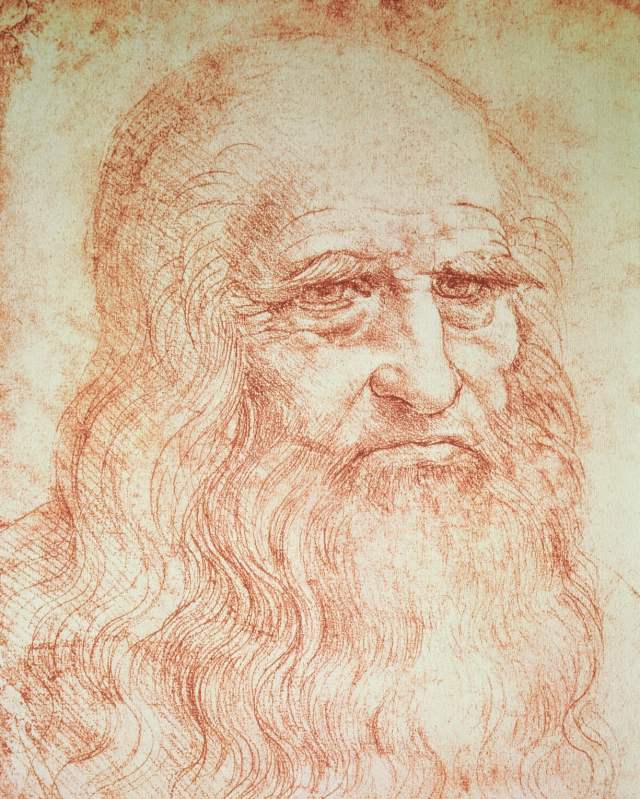
a leonardo

A self-portrait of Leonardo da Vinci. Photograph Christophel, Fine Art/UIG via Getty.

“My inside sources at the Louvre, various sources, tell me that not many curators think [the ‘Salvator Mundi] is an autograph Leonardo da Vinci.

“If they did exhibit it … they would want to exhibit it as ‘workshop’.

“If that’s the case, it will be very unlikely that it will be shown, because the owner can’t possibly lend it … the value will go down to somewhere north of $1.5m (£1.2m).” (Ben Lewis, art historian)

(Mark Brown, “The lost Leonardo? Louvre show ditches Salvator Mundi over authenticity doubts,” The Guardian, 5-26-19)

… And somewhere south of the $450m paid at auction.

(c) 2019 JMN

Posted in Commentary | Tagged , , , , | Leave a comment

Three Tiers!

jazzy fringe

For the reception, Ms. Geahan slipped into a cream-colored skirt with three tiers of jazzy fringe. Credit Anastasiia Sapon for The New York Times

The NYTimes chronicles the romance and nuptials of this couple in its “Vows” section. I never read this section, but a crafty flourish in the subheading of this particular installment trapped me. It illustrates an astute whoring for eyeballs:

Brian Nicholson thought Brooke Geahan was the most beautiful woman he had ever met. He also knew that she was very ill.

On first blush, the marriage profiled here has the trappings of a beautiful-people, privileged affair: She a Bard College graduate who had curated literary events attended by “boldfaced names.” He a graduate of Brown University who passed through investment banking on his way to founding a men’s apparel line. Wedded in Sonoma and settling down in NoCal wine country.

Only she is battling lyme disease, and both had suffered loss of close family members early in the relationship. This puts an affecting spin on their courtship:

Theirs was an easy connection. Throughout the weekend, while others played outside in fresh snow, they talked about literature and films and the complexities of their careers. “When you meet people this beautiful they usually talk about themselves, but Brooke was down to earth, intellectually curious, and interested in me,” said Mr. Nicholson, now 37.

(Louise Rafkin, “Living With Lyme Disease, Stronger With Love,” NYTimes, 5-24-19)

Death and disease don’t respect class lines, but three tiers of jazzy fringe among boldface-names can take some of the sting out of adversity.

(c) 2019 JMN

Posted in Commentary | Tagged , , , , , , | Leave a comment

Parting Looks — HJN

Harold J. Nichols (1924 — 2013) (c) 2019 JMN

More Galleries | Tagged , , | Leave a comment

Parting Looks — HJN

Harold J. Nichols (1924 — 2013) (c) 2019 JMN

More Galleries | Tagged , , | Leave a comment

Waters on Embracing the Infuriating

john waters

Mr. Waters with, from top, “Silver Clock” (2012), by Doug Padgett; “Untitled (Hammer)” by Lee Lozano (1962); and “Pier Paolo Pasolini and Mother” by Vittorio La Verde. Credit Eric Chakeen for The New York Times.

John Waters answers an interviewer’s question about the art he collects.

“Besides liking the work, what guiding principles do you follow in collecting?”

It has to sometimes, at first, make me angry. It has to delight me and surprise me and kind of like, put me off a little bit at first, and then I embrace it. The kind of art I like is the one that makes people angry, that hate contemporary art — the ones that easily fall for the bait of it. I always go to that first… So to me, each one of these pieces relaxes me and makes me tense at the same time — which is what art should do. All art that works infuriates people at first.

(Melena Ryzik, “John Waters, the Man Who Brought Us Divine and Loves Brown Art,” NYTimes, 5-23-19)

Petulant style note: In reading the article’s title I had to pause for a moment to recall that “Divine” was an actor in Waters’s film “Pink Flamingos.” A set-off such as quote marks — “Divine” — or italics — Divine — would add clarity. Just saying, as they say.

(c) 2019 JMN

Posted in Quotations | Tagged , , | 16 Comments