Parting Looks

This painting has some slight appeal for me. Maybe it’s better called a sketch, and its appeal is in its very sketchiness. It’s flat; there’s no hint of color perspective. The figures are suggested crudely. The paint is slathered on … Continue reading

More Galleries | Tagged | Leave a comment

Parting Looks

When I re-launched this blog a year ago, my father had died. I imagined one use for the blog as being an archive for images of some of his art works. That particular thrust of the blog faltered. Lately, with … Continue reading

More Galleries | Tagged , | 2 Comments

“Nulla dies sine linea”

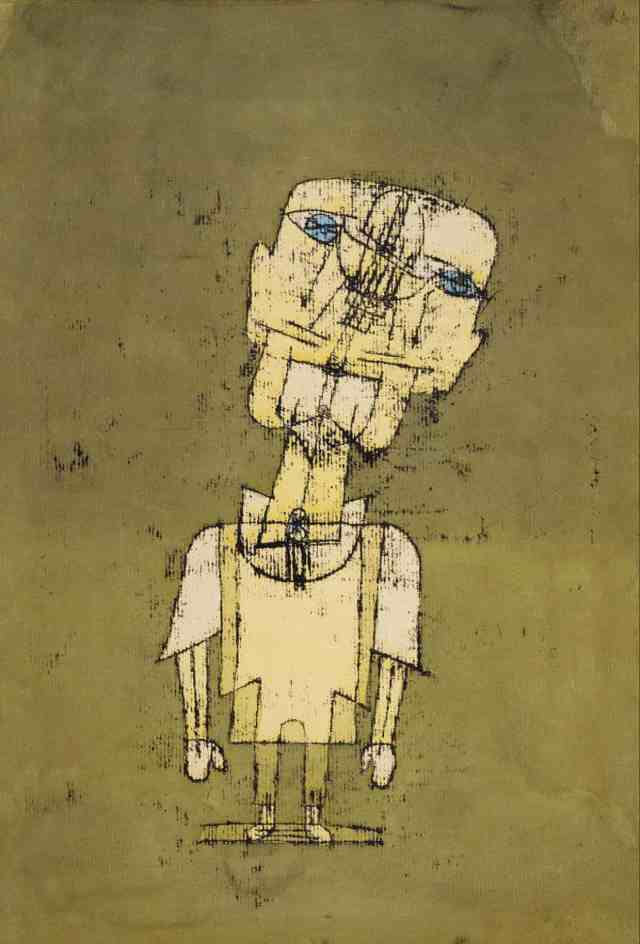
klee drawing

Gespenst eines Genies (Ghost of a Genius), 1922, by Paul Klee. Photograph: Archivart/Alamy.

I see almost daily in the work of fellow bloggers luminous evidence of the play of eye and hand across a surface with some object — pen, crayon, brush, mouse — that leaves expressive marks. Laura Cumming, art critic for The Guardian, says in her well illustrated essay that the impulse to draw is deeply ingrained in humans.

To draw is to see, to learn, to understand. It is thought on the page; pure discovery, in John Berger’s phrase. It may describe the story of its own making, the trials and errors and corrections, the line hurtling or slowing, hesitant or incisive, perhaps finally triumphant. It gets to the page live and direct, brain to nib or sharpened tip, without the encumbrances of any other media.

A sketchbook… is a world of infinite pardon where you can experiment for ever. Nulla dies sine linea – no day without a line, so says Pliny.

(Laura Cumming, “Make your mark: the enduring joy of drawing,” The Guardian, 4-21-19)

(c) 2019 JMN

Posted in Quotations | Tagged | 4 Comments

Haunted by the Undefined

exclamation-mark

Thank you, Maeve Higgins. I’m always glad for the rare journalist who doesn’t assume her reader is privy to novel slang. A term I knew only from sailing has headlined several unread articles recently. I assumed it had to do with haunting.

Ghosting, in modern dating parlance, is when your beloved vanishes without explanation, having taken what he or she needed. Rhiana Gunn-Wright, whose expertise helped shape the Green New Deal, says that humans are ghosting the planet. The joke is a perfect analogy: We’re in this fabulous life-giving relationship with Earth, this ideal planet, but we’re messing her around. We’re using her and we’re not answering her calls, and planning on leaving her for a cooler planet as soon as we figure out how.

(Maeve Higgins, “Life on Mars Should Not Look This Appealing,” NYTimes, 4-21-19)

(c) 2019 JMN

Posted in Anthology, Quotations | Tagged | Leave a comment

Bastard File

I went shopping online for a metal file with which to increase the gap of the hook on the support strap I use for my classical guitar. The hook engages with the sound hole of the instrument, and is too narrow on the strap I recently received as it comes from the factory.

I encountered on Amazon a “Stanley 21-106 8-Inch Mill Bastard File.” I needed to know if it was thin enough for my needs. One-hundred-forty-eight people have reviewed this 8-dollar tool on Amazon.

“Spencer in Seattle” went extra distance in his review by including useful information about tooth patterns. “Bastardd” once, shame on you for the typo. “Bastardd” twice, shame on me — maybe it’s a legitimate alternate spelling.

Files come in different tooth patterns, which fall into these groups: rough, middle, bastardd [sic], second cut, smooth, and dead smooth. This one is the bastardd [sic] file, which puts it right in the middle of the pack and means you can do most things with it.

2019 JMN

Posted in Quotations | Tagged , , , , , | 2 Comments

Ruination

atlantic city 1

Photograph: Brian Rose.

My first encounter with Texas writer Bruce Sterling was through a column he penned in the early nineties for one of the Houston newspapers. It proffered the notion that our very nature is to seek drugging; that if there existed a legal, performance-enhancing substance with no negative side-effects (a hypothetical), it would be unnatural for a person not to use it in order to gain the advantages it conveyed. It hit me as an impudent, bad-boy
bugle-toot from the contrarian fringes of our perpetual “war on drugs,” and hard to disagree with in a certain light.

Sterling’s column opened the door for me to the impudent, bad-boy fiction of the so-called cyberpunk novelists: Sterling himself, as well as William Gibson, Rudy Rucker, Vernor Vinge, and Roger Zelazny. (This isn’t an exhaustive list.) I was hooked when a character in one of the books hands a broken device to his companion and says, “Unfuck this.”

atlantic city 3

Photograph: Brian Rose.

I consumed their stories avidly. They limned a near-future dystopia in which basic institutions have cracked up for one reason or another. The hulks and remnants of a collapsed society are scavenged by mavericks with assorted nerdy knacks who dodge, juke, and improvise to eke out a living in the urban badlands. Their existence is contingent on unfucking the world they inherited.

I was working in the computer industry at the time. I lived in a sprawling urban jungle which I could easily imagine disintegrating around me. The view of ruination through my cyberpunk-tinted lenses — the wreckage left by feral commerce, the general
comeuppance of predatory civilization — was oddly exhilarating.

atlantic city 4

Photograph: Brian Rose.

I made a run at my own rendition of a post-catastrophe fantasia. My protagonist, descended from a programming family, had inherited much code savvy; he knew the ancient languages — Object Pascal, C++, Java. The quaint parking garage he lived in was a vestige of pre-Outbreak times when “cars” thronged the now-weedy streets of the Medical Center. He hunkered in the fortress-like structure along with a spunky cohort of eccentrics. It greatly resembled where I parked my car every morning in the “industrial park” that housed our offices.

Seeing the photos in the article cited here stirred my memories of the cyberpunks. Like scrappy flies those writers lit imaginatively on the pus and scabbiness of the world’s self-inflicted wounds and extracted engrossing stories from the vision. The images of
creeped-out decadence in Atlantic City are similarly pathetic and moving. The spectacle of the elements — aka Mother Nature — reclaiming turf from relics of tawdry rapacity and deluded self-aggrandizement is comforting in its way. The catastrophile in me dwells on it like a motorist rubbernecks a collision, craning for survivors.

atlantic city 5

Photograph: Brian Rose.

(Photos are from Thomas Hobbs, “Atlantic City: ‘Trump turned this place into a ghost town’,” The Guardian, 4-8-19)

(c) 2019 JMN.

Posted in Commentary | Tagged , , , , , , , , , , , , , , , | 2 Comments

“… This realm, this England.”

meal

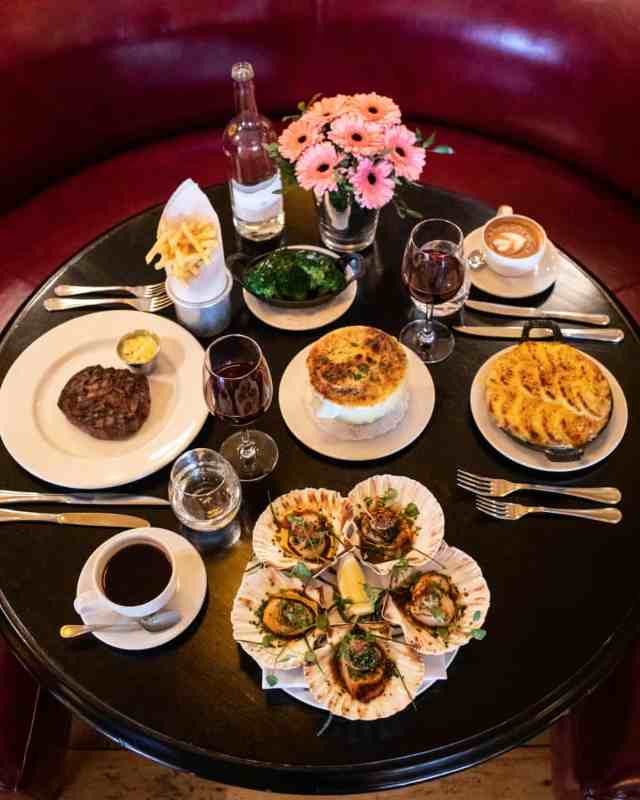
Kit: Onion soup gratinée, £9; fish pie, £19.50; broccoli £5; americano £3 Tim: Baked scallops, £24; steak frites, £27.50; flat white, £3 They shared: Carafe of Cotes du Rhone, £21; bottle of sparkling water, £4 Photograph: Antonio Olmos/The Observer.

I find the paragraph cited here interesting and amusing for its self-aware description of how the author and his interviewee, both of them writers, preen themselves competitively on their humble class origins to establish their bona fides while preparing to dine in a luxurious restaurant. Their ritual seems to involve a sort of what would be called “humble-bragging” in the States. The context is De Waal’s project to discover and publish new working-class voices in British fiction. The article includes a link to Monty Python’s Yorkshiremen sketch, which is wildly funny.

Before we’ve really sat down, De Waal has deftly established that I come from a significantly posher part of Birmingham than her and that I have a suspiciously “neutral accent”; while I have noted that she left her home city 22 years ago to live in Royal Leamington Spa, though she still says: “I live in Leamington, but I’m from Birmingham.” I see she has come in clutching several West End shopping bags and note the labels. She meanwhile trumps comprehensively my mumbled “first in family to go to university” with “left school – and home – at 16”. We both despise ourselves for doing this – we are in our 50s, after all, when will it stop? – but obviously accept it as our solemn English birthright.

(Tim Adams, “Kit de Waal: ‘Writing’s very solitary — you do it because you want to find readers’,” The Guardian, 4-14-19)

(c) 2019 JMN.

Posted in Quotations | Tagged | Leave a comment

Body Language

merce cunningham 2

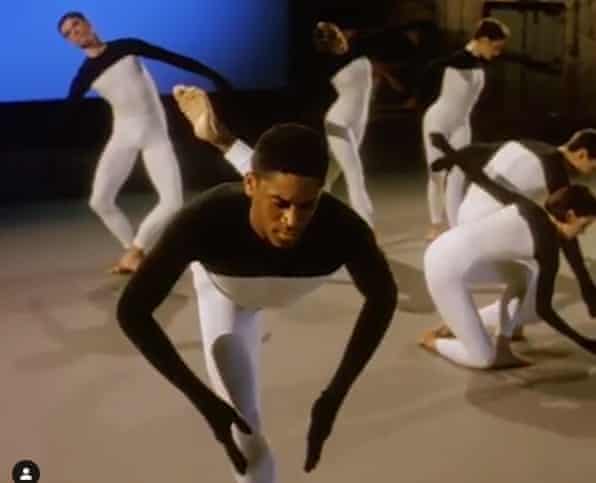
‘I’d never encountered anything like it’ … Michael Cole in Cunningham’s Beach Birds for Camera, with music by John Cage, 1991. Photograph: Merce Cunningham Trust.

I’ve had little opportunity to enjoy the spectacle of dance except vicariously through the writing of Joan Acocella in The New Yorker. I admire the discipline and athleticism that dance demands of its performers. The passage cited here charms me for how it expresses dance movements as “phrases,” as well as for its glimpse through the eyes of a dancer into the creative process. (Michael Cole, dancer)

[Merce Cunningham] would make a phrase just for the legs, say, then he would teach a completely different phrase for the arms, and then another for the torso and the head. It was up to us to put it all together and make sense of it. That’s where it really started to get crazy. (Michael Cole, dancer)

(Lindsey Winship [Interviewer], “’He said two things to me in five years. And one was thanks for the cheese’ – Merce Cunningham,” The Guardian, 4-15-19)

(c) 2019 JMN.

Posted in Quotations | Tagged , | Leave a comment

Not Ready for Answers

merce cunningham 1

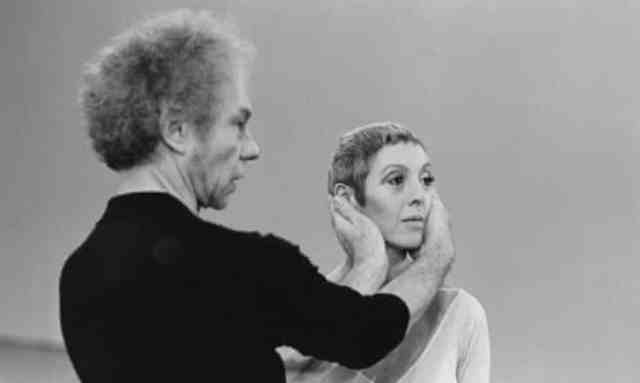
‘My new life began’ … Valda Setterfield with Merce Cunningham. Photograph: Babette Mangolte, courtesy of the WAC.

Merce Cunningham comes across in these recollections of his dancers as a man who spoke volumes in few words. “Don’t make everything so pretty” and the terse statement that answers demand questions cover about ninety percent of art and life, in my opinion.

My mother always said I should smile more, and my teachers said I’d get a job if I was more personable. But at one point Merce said to me: “Don’t make everything so pretty.” And I suddenly thought: “Thank God I can drop all that stuff.” I was lucky – Merce and I found ways to really talk to each other, and that wasn’t true for everyone. He always said: “I don’t tell people what to do. If they don’t ask me questions, they’re not ready to hear the answer.” (Valda Setterfield, dancer)

(Lindsey Winship [Interviewer], “’He said two things to me in five years. And one was thanks for the cheese’ – Merce Cunningham,” The Guardian, 4-15-19)

(c) 2019 JMN.

Posted in Anthology, Quotations | Tagged , | Leave a comment

The Heart Is a Pump

daelan 4-10-19

Daelan, March 31, 2019 —

I like what Terence McNally says about creating character through dialogue. His “heart” trope further in the interview, however, is hackneyed. I hope writers who survive this “age of calamity” find a new way to talk about courage, tolerance, empathy, affection, and zest for life — something that for me is glimpsed in this newborn’s face.

I realized very early that my descriptive powers — what a room looked like, what a person looked like — were scant. But I could write credible dialogue. And my characters sounded different from one another. I could define them better by how they spoke than by telling you how they looked… I decided if I really wanted to be a writer, I’d better focus on theater.

I’m working in an age of calamity, but also in an age of great progressive things happening, too… I think what’s required is an openness to them… These are tumultuous, rich times for a writer. All you need is ears and a heart.

My advice to artists is the same as I’d give to someone who wanted to be a better dentist or a better lawyer. Show up, listen, let your heart expand.

(Philip Galanes, “A Conversation With Terence McNally, the Bard of American Theater,” NYTimes, 4-10-19)

(c) 2019 JMN.

Posted in Quotations | Tagged | 2 Comments