Degas: Opéra Superfan

degas1

“Degas at the Opéra,” in Paris now and Washington in March, reveals the leering intensity rather than the sentimentality in Degas’s ballet and opera pictures. Credit…The National Gallery of Art.

This painter who “didn’t like women,” in van Gogh’s estimation, found at the Opéra [de Paris] an arena of desire and depredation that he could translate into pure form — beautiful and stifling, modern and cold. This is the truth about superfans: they smother what they love.

Jason Farago writes about the louche milieu that spawned images of dancers that are now “schmaltzy stalwarts of dorm-room posters.”

In the year 1885 alone, Degas went 55 times to the still-new Palais Garnier. He saw one opera… at least 37 times… In late 19th-century Paris, opera was a social spectacle that made it an ideal subject for a painter of modern life… Degas went as often as he could afford it… He trained his eye on both the stage and the audience…

degas2

Marie van Goethem, the model for Degas’s “Little Dancer Aged Fourteen,” was an example of the shaky social status of 19th-century dancers. Credit…RMN-Grand Palais; Musée d’Orsay; René-Gabriel Ojeda.

Belgian-born Marie van Goethem was the model for Degas’s statue “Little Dancer Aged Fourteen.”

Instead of capturing her mid-plié, Degas chose to sculpt her standing in the awkward fourth position, feet perpendicular to the torso and pointing in opposite directions. He gave her a sharp jaw and a forehead like a ski slope. To her body he affixed a real tutu, and real human hair… “Why is she so ugly?” wrote the critic for Le Temps…

degas3

Degas’s dancers appear more often like possessions than fellow artists. They are working girls, bent over, tying their slippers, slumped in the corner. Credit…National Gallery of Art.

… In Degas’s… superficially sunnier pastels, the dancers… are working girls, bent over, tying their slippers, slumped in the corner — rarely elegant, and always being watched… Degas was an intense misogynist, and the formal innovations of his art went together with an avaricious [?] focus on control… “I have perhaps,” he once confessed, “too often considered woman as an animal.”

(Jason Farago, “Degas: A Superfan at the Opera, Where Art Tips Into Obsession,” NYTimes, 11-15-19)

(c) 2019 JMN

Posted in Commentary | Tagged , , , | Leave a comment

Transatlantic Harmonies

diversity

There are parallels between Conservative “manifesto promises” outlined in this article and actions pursued by American Republicans.

… Redrawing constituency boundaries and legislating for voter ID checks, widely understood as locking in Conservative electoral advantage.
… Sweeping review of the Constitution, including the powers of the Supreme Court.
… “Update” of the Human Rights Act.
… Criminalization of Roma and Travellers… along with powers to confiscate their property.
… More draconian sentencing and ever harsher borders.

As Britain has learned before… Conservatives do not squander their majorities. Now they have a big one, and five full years to use it.

(James Butler, “Boris Johnson Will Change Britain Forever,” NYTimes, 12-13-19)

The author is a British journalist. “Forever” is a long time, though it may seem so to many.

(c) 2019 JMN

Posted in Commentary | Tagged , | Leave a comment

Benjamin Creme

benjamin creme

The Los Angeles Police Department recently recovered more than 1,300 pieces of Benjamin Creme’s stolen artwork. Credit…Michael Flaum, via Associated Press.

This article introduced me to Scottish artist Benjamin Creme.

Mr. Creme, who died in 2016 at 93, was born in Scotland and started painting at age 13. At 16 he dropped out of school to focus on his art… Inspired by modernism, Mr. Creme was known for his abstract expressionist work, employing vibrant colors and geometric shapes.

His biography and work can be seen here.

(Jaclyn Peiser, “Stolen Without a Trace, Artwork Turns Up 7 Years Later in Los Angeles,” NYTimes, 11-7-19)

(c) 2019 JMN

Posted in Commentary | Tagged , | Leave a comment

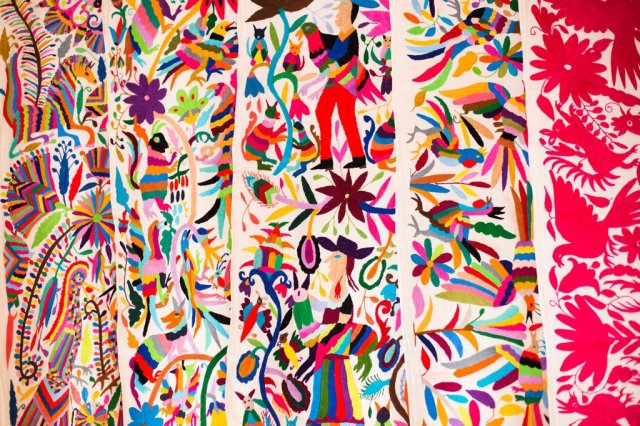
Tenangos

tenangos1

Shopping for the brightly colored thread used in the style of embroidery done in villages around Tenango de Doria, a town in the Mexican state of Hidalgo. Credit…Celia Talbot Tobin for The New York Times.

The tenangos, as the embroidered pieces are called, have evolved into richly detailed works reaching a worldwide market.

Tenango embroidery is made by the indigenous Otomí community in the Mexican state of Hidalgo, whose main town is Tenango de Doria. The people call themselves hñähñu, and speak Otomí, an indigenous tonal language, along with Spanish.

tenangos2

Textiles in the distinctive style of embroidery done in San Nicolás, Mexico. Credit…Celia Talbot Tobin for The New York Times.

The vivid tenango embroidery designs are inspired by local vegetation and wildlife, and perhaps by nearby cave paintings and shamanistic healing ceremonies.

International brands such as Nestlé, Benetton, and Carolina Herrera have used tenango designs, sometimes without crediting their sources.

(Elisabeth Malkin, “This Mexican Village’s Designs Are Admired (and Appropriated) Globally,” NYTimes, 11-13-19)

(c) 2019 JMN

Posted in Commentary | Tagged , , , , | Leave a comment

Kingsize Inference

exclamation-mark

… Parties that either oppose Brexit or want to rethink Britain’s departure won 52 percent of the total votes cast, while the Conservatives and other pro-Brexit parties won only 46 percent.

“Boris is part of the establishment,” [Thomas Wright, director of the Center on the United States and Europe at the Brookings Institution] said, “and Brexit is largely a Conservative establishment project.”

“This election means that getting Brexit done is now the irrefutable, irresistible, unarguable decision of the British people…” [Boris Johnson in his victory speech].

(Mark Landler, “Brexit Is Going to Get Done. But on Whose Terms?” NYTimes, 12-13-19)

(c) 2019 JMN

Posted in Quotations | Tagged , | Leave a comment

“Morally Murky World” Redux

le carre

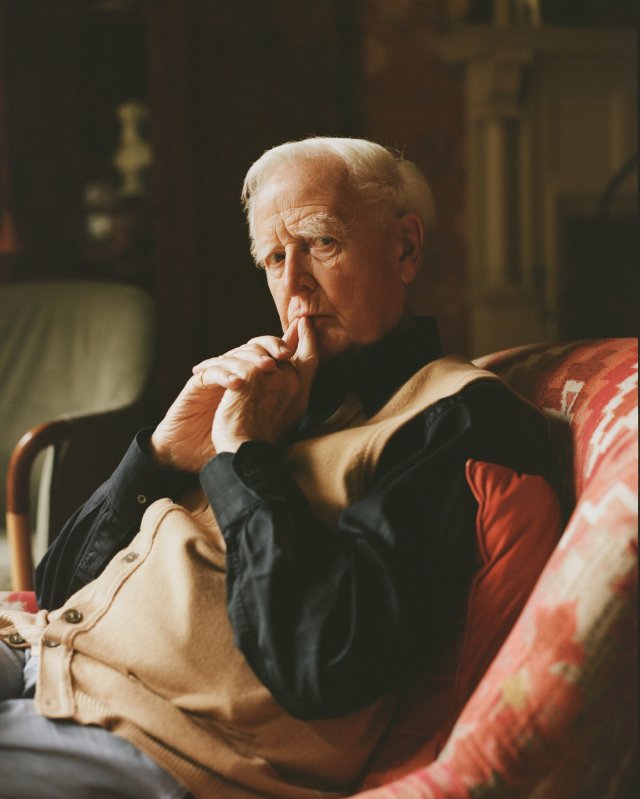
John le Carré at his home in London, 2019. Credit…Charlotte Hadden for The New York Times.

This morally murky world of spying is where le Carré continues to make his literary mark.

John le Carré’s 25th novel, “Agent Running in the Field,” was published on October 22, 2019. It came two years after the 88-year-old author’s last novel, “A Legacy of Spies.”

In the late 1950s le Carré taught foreign languages at Eton, Britain’s most elite all-boys’ boarding school. It gave him insight into a culture that has provided Britain with a production line of Old Etonian politicians, including [Boris] Johnson. “I’ve taught a dozen Johnsons,” le Carré says. “Eton does something extraordinary. It doesn’t teach you to govern. It teaches you to win. That’s what it’s about.”

eton motto

Floreat Etona: “May Eton Flourish” (School motto).

… “[Brexit] began in the big landed houses of England,” he says. “That’s where the Brexit fantasy, the nostalgia for the suspicion of your German and your Frenchman and those chaps who weren’t much use in the war, that’s where that was born.”

(Tobias Grey, “Tinker, Tailor, Writer, Spy,” NYTimes, 10-12-19)

(c) 2019 JMN

Posted in Quotations | Tagged , , , , | 1 Comment

A. O. Scott on Sontag

against by sontag2

“Susan Sontag alone on a bed. N.Y.C. 1965.” Photograph by Diane Arbus.

The credit on this piece says “A.O. Scott is a chief film critic at The Times and the author of ‘Better Living Through Criticism: How to Think About Art, Pleasure, Beauty, and Truth.’” I read him frequently. (Strictly as a side note, I’m intrigued that The Times calls him “a” chief film critic at that newspaper. Generally, can there be more than one “chief”?) His engaging essay about Sontag’s writings helps me understand my early infatuation with her “Notes on Camp.”

against by sontag

In the chapter of “Against Interpretation” called “Camus’ Notebooks” — originally published in The New York Review of Books — Sontag divides great writers into “husbands” and “lovers”…

[Quoting from Sontag:] Some writers supply the solid virtues of a husband: reliability, intelligibility, generosity, decency. There are other writers in whom one prizes the gifts of a lover, gifts of temperament rather than of moral goodness. Notoriously, women tolerate qualities in a lover — moodiness, selfishness, unreliability, brutality — that they would never countenance in a husband, in return for excitement, an infusion of intense feeling. In the same way, readers put up with unintelligibility, obsessiveness, painful truths, lies, bad grammar — if, in compensation, the writer allows them to savor rare emotions and dangerous sensations. [End of Quote from Sontag]

The sexual politics of this formulation are quite something. Reading is female, writing male. The lady reader exists to be seduced or provided for, ravished or served, by a man who is either a scamp or a solid citizen. Camus, in spite of his movie-star good looks (like Sontag, he photographed well), is condemned to husband status. He’s the guy the reader will settle for, who won’t ask too many questions when she returns from her flings with Kafka, Céline or Gide. He’s also the one who, more than any of
them, inspires love.

(A. O. Scott, “How Susan Sontag Taught Me To Think,” NYTimes, 10-8-19)

(c) 2019 JMN

Posted in Quotations | Tagged , , , , | 1 Comment

Robert Johnson

robert johnson

A photo booth portrait of the blues musician Robert Johnson. It was taken around 1930 and is one of two confirmed photographs of him. Credit…© 1986 Delta Haze Corporation. All Rights Reserved. Used by Permission.

It was in… popular juke joints — segregated stores or private houses that doubled, after hours, as recreational places — that his now legendary music career began… The young musician had trained on a diddley bow — one or more strings nailed taut to the side of a barn…

…The guitar playing on Johnson’s recordings was unusually complex for its time. Most early Delta blues musicians played simple guitar figures that harmonized with their voices. But Johnson, imitating the boogie-woogie style of piano playing, used his guitar to play rhythm, bass and slide simultaneously, all while singing.

(Reggie Ugwu, “Overlooked No More: Robert Johnson, Bluesman Whose Life Was a Riddle,” NYTimes, 9-25-19)

(c) 2019 JMN

Posted in Commentary | Tagged , , , , | Leave a comment

“Do Not Erase”

erase1

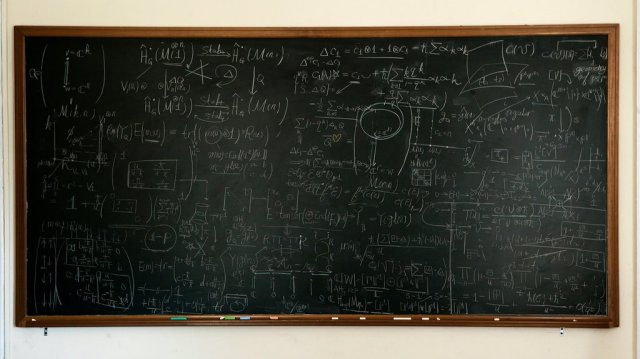
Sahar Khan’s blackboard at Columbia University.

For the last year, Jessica Wynne, a photographer and professor at the Fashion Institute of Technology in New York, has been photographing mathematicians’ blackboards, finding art in the swirling gangs of symbols sketched in the heat of imagination, argument and speculation. “Do Not Erase,” a collection of these images, will be published by Princeton University Press in the fall of 2020.

erase2

Amie Wilkinson, of the University of Chicago, at the Institut Poincare in Paris.

“I am attracted to the timeless beauty and physicality of the mathematicians’ chalkboard, and to their higher aspiration to uncover the truth and solve a problem,” Ms. Wynne said… “Their imagination guides them and they see images first, not words. They see pictures before meaning.”

erase3

Shuai Wang, Columbia University.

erase4

David Gabai, Princeton University.

(Jessica Wynne, Dennis Overbye, “Where Theory Meets Chalk, Dust Flies,” NYTimes, 9-23-19)

(c) 2019 JMN

Posted in Commentary | Tagged , | Leave a comment

Random Woke Affect & Filth Squirting

writing plume

A phrase from the past has pungent currency today. In 1896, an editorial in the Guardian mentioned a derogatory rumor about Lord Rosebery. Quoth the lord:

“… The allusion in the Guardian… gave me the opportunity that I had long desired of pulverising this lie… It is amusing to see how the squirters of this filth are now declaring that they never said or intended or thought anything of the sort.”

Wokeness: “an overly rigid commitment to identity politics and social justice ideology… a shorthand for puritanical political correctness… a pejorative wielded against liberal elitism.” (From African- American vernacular, where it meant “a broad awareness of anti-black oppression.”)

Affect (noun meaning “desire” or “emotion”): “A former vice president, Joe Biden, known for his centrist politics and blue-collar affect, leads the field.” (Would “affectation” be better here: “a studied display of real or pretended feeling”?)

Finally, a U.S. senator disremembers a potentially incriminating phone conversation.

“I’ll go back and check on my records… But it seems very unlikely that I would be taking calls from random people.”

The man illustrates why random voters need to show him and his fellow filth squirters the exit.

SOURCES
Paul Chadwick, “How The Guardian is moving on from a misjudged editorial,” theguardian.com, 12-1-19.
Jamelle Bouie, “Why the ‘Wokest’ Candidates Are the Weakest,” NYTimes, 12-6-19.
James Walker, “Lev Parnas’ Attorney Address Devin Nunes on Twitter: ‘Lev Remembers’,” Newsweek, 12-6-19.

(c) 2019 JMN

Posted in Commentary | Tagged | Leave a comment