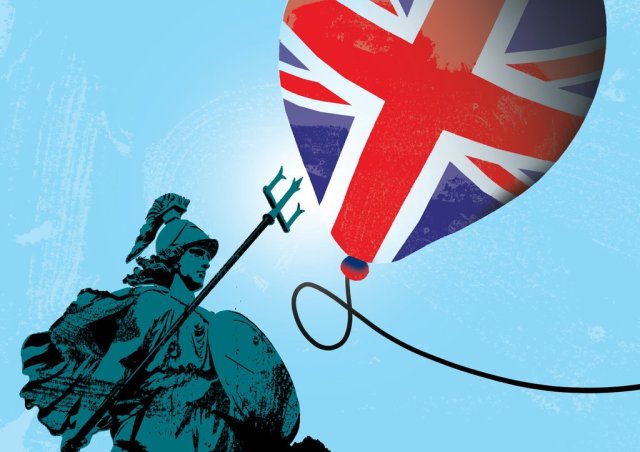
Shonagh Rae.
The young people of England, like those in the rest of Britain, … understand we need liberation from the practices of Westminster and Whitehall, not Brussels, and from the self-defeating rage of the old.
David Edgerton, a British historian, writes: “The ‘United Kingdom’ is neither ancient nor stable.”
After 1945, “Britain” — a national United Kingdom — was one of many post-imperial constructions that emerged from the ashes of the British Empire… This national United Kingdom was broken up economically starting in the 1970s by the closely related processes of globalization and deepening economic integration with Europe.
Edgerton argues that the U.K.’s dissolution, which may be likelier after Brexit, could ultimately be beneficial for each country — Northern Ireland, Scotland, Wales and England.
Despite its being the dominant nation in the United Kingdom, the arrangement hasn’t been good for [England]. It doesn’t have a sense of itself as a nation to be transformed and is divided between the vibrant, youthful and pro-European big cities — especially London — and the aging, stagnating and anti-European rest of the country.
(David Edgerton, “Boris Johnson Might Break Up the U.K. That’s a Good Thing,” NYTimes, 1-10-20)
This is my first encounter with a somewhat positive vision of a conceived post-U.K. future.
(c) 2020 JMN






 EthicalDative
Therianthropes
A humanoid with a bird-like head was among the eight therianthrope figures depicted in a cave painting on the island of Sulawesi. Credit…Ratno Sardi.
In December 2017, an Indonesian archaeologist discovered a cave painting on the island of Sulawesi that dates back at least 43,900 years — “the oldest pictorial record of storytelling and the earliest figurative artwork in the world.”
The author of this article writes: “… The original inspiration for the painting, as well as its significance to the humans who created it, is likely to remain a mystery.”
(Becky Ferreira, “Mythical Beings May Be Earliest Imaginative Cave Art by Humans,” NYTimes, 12-11-19)
Besides introducing me to the term “therianthrope” (werewolves are therianthropes!), the article suggests how archaeology itself is a science that treats mystery with projective storytelling and disciplined leaps of imagination.
(c) 2019 JMN