
Gabriele d’Annunzio after the occupation of Fiume. Credit Luigi Betti/Alinari Archives, via Getty Images.
The Italian poet Gabriele d’Annunzio declared himself ruler of the city of the Hapsburg city of Fiume (now Rijeka in Croatia) on Sept. 12, 1919. His “rule” lasted 15 months. “He mandated daily poetry readings, regular concerts and constant fireworks.”
But it was d’Annunzio’s canny ability to transform politics into an aesthetic — even religious — experience that proved most prescient. His narratives of bygone eras of glory, of virility expressed through violence, whipped an alienated and fractious populace into frenzy. His blithe disregard for truth allowed him to create — unfettered — his own reality.
(Tara Isabella Burton, “The Sex-Crazed Poet Strongman Who (Briefly) Built an Empire,” 10-18-19)
(c) 2019 JMN




 EthicalDative
Broomwork
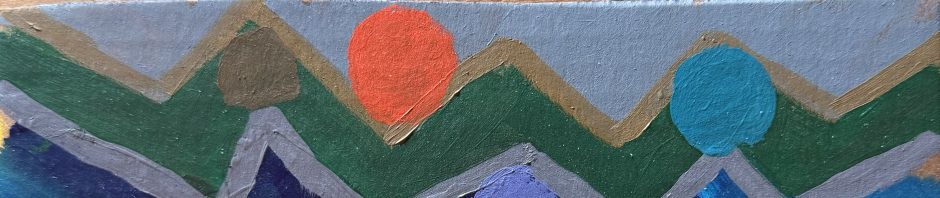
‘Elevation,’ painted in acrylic on canvas, was also among the works in the 2018 exhibit at the Mnuchin Gallery. Credit Agaton Strom for The New York Times.
Ed Clark, dead at 93, included brooms among his brushes, and was among the first artists to use a shaped canvas.
(Neil Vigdor, “Ed Clark, Pioneering Abstract Expressionist Painter, Dies at 93,” NYTimes, 10-19-19)
(c) 2019 JMN