I’m Like: Whoa

judy chicago

Judy Chicago’s “10 Part Cylinders,” 1966/2019, some near human in height and others even taller, made of fiberglass over sonotubes, at Jeffrey Deitch, Los Angeles. Credit Judy Chicago; Jeffrey Deitch; Elon Schoenholz.

All bets are off when a subject finds the interviewer’s question “very interesting.” There’s a likelihood that the answer will go its own way. I find that to be the case in this exchange between Jori Finkel, a contributor to the NYTimes and author of “It Speaks to Me: Art That Inspires Artists,” and artist and author Judy Chicago.

Unless I’m missing the boat, Chicago doesn’t quite answer the question that was asked. I find the question quite interesting, having admired work of the Delaunays in times past.

Sonia Delaunay, who with her husband, Robert Delaunay, developed this colorful, symphonic sort of abstraction called Orphism, has an interesting history. It was in 1911 that her painting went from figurative to abstract. She always said the turning point was making a patchwork quilt for her infant son. And she went on to work as a designer in fashion, costumes, stage sets and books. Could design and craft be one root of abstract painting?

That’s very interesting. I remember many years ago there was an article in an art magazine about the artist Liza Lou, who does beaded work, and instead of placing her work in the context of the history of beading, like Native American beading or women’s crafts, they put her in the tradition of Andy Warhol. Because the way to validate an artist, particularly a woman artist, is to put them in the context of the important male art. What you’re talking about now opens up the possibility of starting to see women in our own tradition. I’ve looked at so much work by other women to validate my own sense of form and also color. When I look at Hilma af Klint’s paintings and see all those pastels, I’m like: Whoa, I love that kind of color.

(Jori Finkel, “Judy Chicago on Rescuing Women From Art History’s Sidelines,” NYTimes, 9-19-19, Updated 10-14-19)

(c) 2019 JMN

Posted in Anthology, Commentary | Tagged , , , , | 2 Comments

Tofu vs. Jerky

Aphex Twin

Credit Aphex Twin.

Cheryl Thompson has a salutary take on bromides about the “strength of diversity” that are jawboned from various bully pulpits.

Diversity is also tough, challenging and sometimes outright frustrating because it requires listening, being open to what you don’t know, and letting go of what you think you do.

(Cheryl Thompson, “Trudeau Survived. Now Stop Pretending Canada Is a Diverse Paradise,” NYTimes, 10-23 -19)

The gap between the affirming of diversity and the effort to realize its benefit reminds me of the contrast between tofu and jerky. Both have essential protein, but one slides down the throat with minimal investment while the other needs effortful chewing. Diversity must ever buck the tepid conviction of its adherents and the passionate intensity of its enemies.

(c) 2019 JMN

Posted in Commentary | Tagged , | 3 Comments

The Power of Reading Aloud

adams

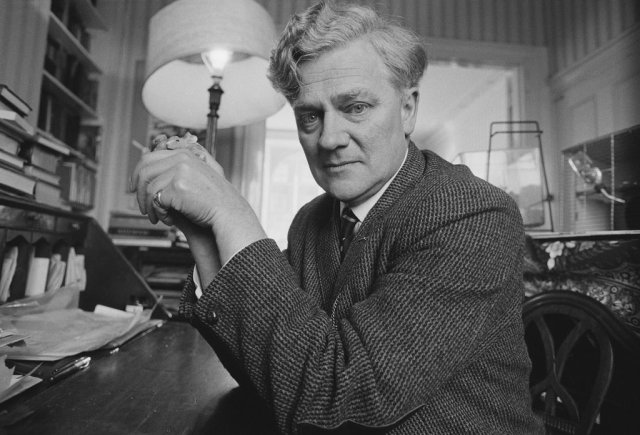
Richard Adams, author of “Watership Down,” in 1974. Credit Tom Smith/Daily Express, via Hulton Archive, via Getty Images.

One of the virtues of reading a narrative aloud, to children or indeed to anyone, is the way that vocalizing a story clarifies its power, especially in the quavering passion that you try to keep from your voice (because you don’t want your kids to think their dear dad is too emotional) but that bleeds through in spite of everything. And with a hundred pages to go I can already tell that when I get to the climax of “Watership Down,” I’m going to be a wreck.

(Ross Douthat, “‘Watership Down’ and the Crisis of Liberalism,” NYTimes, 10-22-19)

I join Douthat in being way in cahoots with reading aloud even if it’s to no one.

(c) 2019 JMN

Posted in Quotations | Tagged | 2 Comments

Drawing in Jail

Hilarie M. Sheets writes an article about how people have coped with incarceration by drawing (“For the Incarcerated, Drawing Is a Lifeline,” NYTimes, 9-20-19).

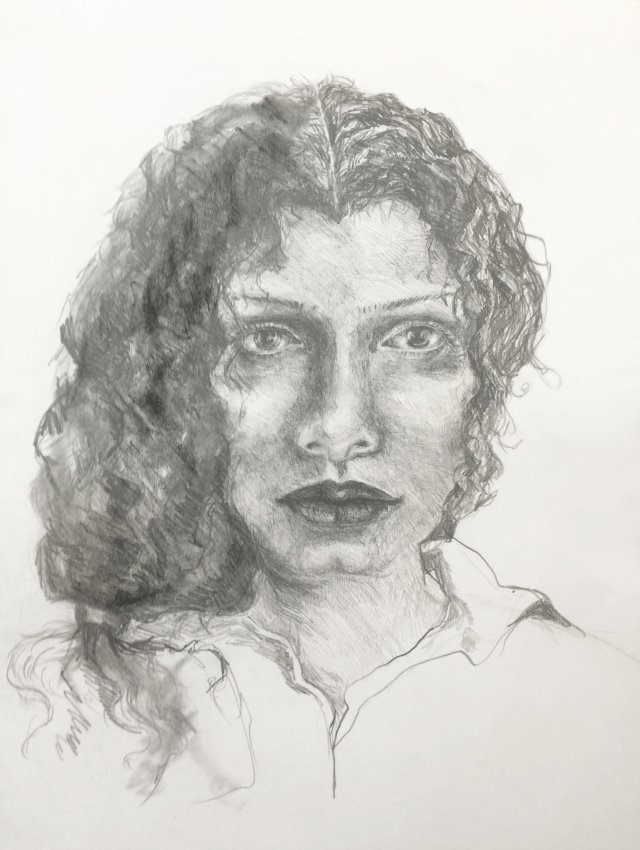
What interests me on the margins of this interesting article is the innocent tell favoring depiction of comeliness that the writer discloses in singling out this drawing among the eight illustrated in the article as being “beautifully rendered.”
drawing azza abo

Azza Abo Rebieh’s “Nayfeh,” 2016, one of the portraits she did of fellow inmates while imprisoned in Syria. Credit Azza Abo Rebieh.

Here are four more of the drawings that illustrate Sheets’s article along with her descriptions of them.

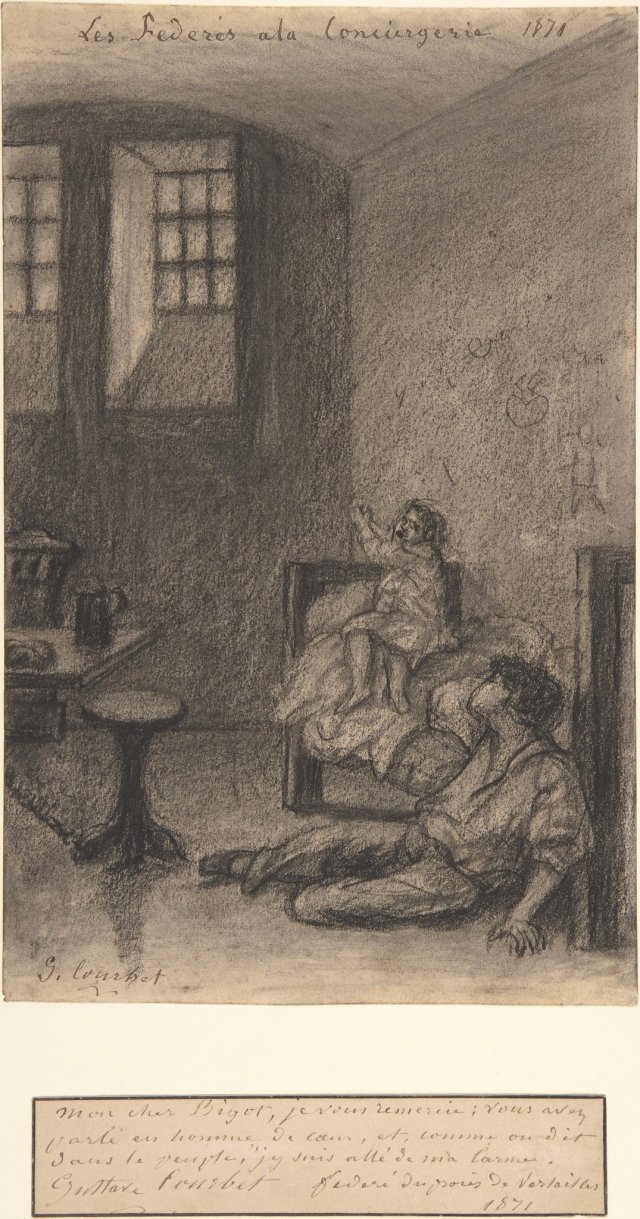
Courbet’s chalk study is “delicate.”
drawing courbet

Gustave Courbet’s “Les Fédérés à la Conciergerie (Young Communards in Prison),” 1871. Courbet, who was jailed in 1871 after being accused of complicity in tearing down the Vendôme Column, captures a cell and cellmates in this chalk study. Credit The Metropolitan Museum of Art, via Art Resource, N.Y.

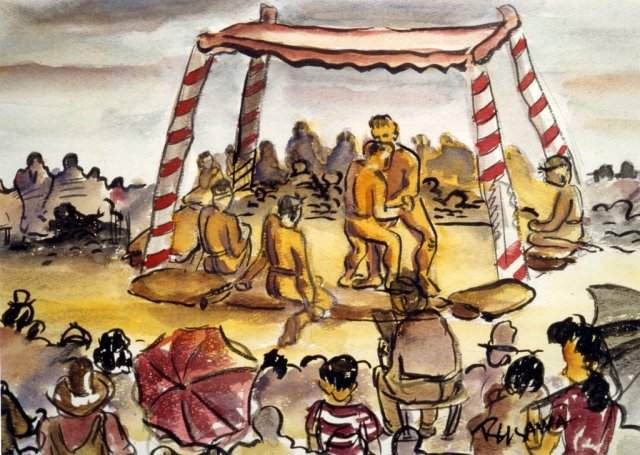
Ruth Asawa’s watercolor is “spirited.”
drawing ruth asawa

Ruth Asawa’s “Sumo Wrestlers,” 1943, a watercolor on paper she did while in an internment camp for Japanese-Americans. Credit Estate of Ruth Asawa, via David Zwirner.

Sheets does not characterize the portrait drawn by Jose Alvarez.

drawing jose alvarez

Mr. Alvarez’s “David H.,” 2012, a portrait he drew while detained for immigration violations. Credit Jose Alvarez and Gavlak Gallery.

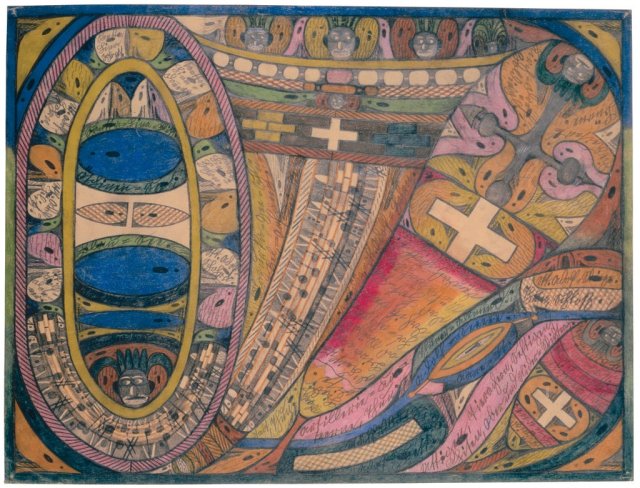
Adolf Wölfli’s pencil rendering “maps the geography of his alternate imagined universe.”
drawing wolfli

Adolf Wölfli’s “The Kander Valley in the Bernese Oberland,” 1926, pencil and colored pencil on paper. Credit American Folk Art Museum.

(c) 2019 JMN
Posted in Commentary | Tagged , , , | Leave a comment

Fellow Feeling

cassatt

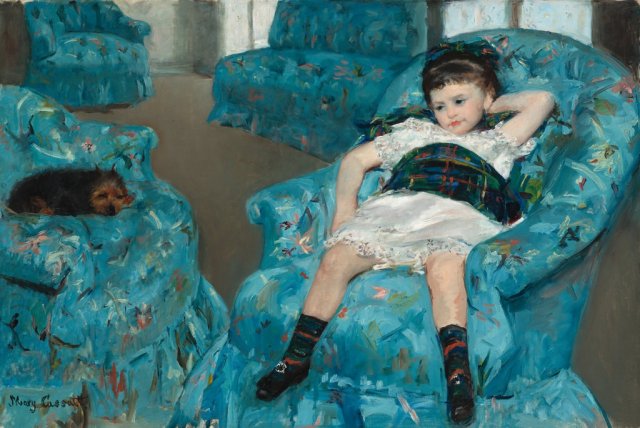
Mary Cassatt’s “Little Girl in a Blue Armchair,” painted in 1878 and shown at the Impressionist exhibition a year later. Credit National Gallery of Art.

So how did the daughter of an American stockbroker come to meet a surly, bourgeois French artist? Degas became aware of Cassatt, known for her sensitive portrayals of women and children, in 1874, historians said. He was strolling through the Salon exhibition in Paris that spring, a highlight of the social art season, when he came across a painting of a woman in a blue gown.

According to the art historian Nancy Mowll Mathews, Degas looked at the painting and remarked, “This is someone who feels the way I do.”

(Laura M. Holson, “When Mary Met Edgar: Exploring Cassatt and Degas,” NYTimes, 10-19-19)

(c) 2019 JMN

Posted in Quotations | Tagged , | 2 Comments

“Life Is a Racket” (Nick Tosches)

nick tosches

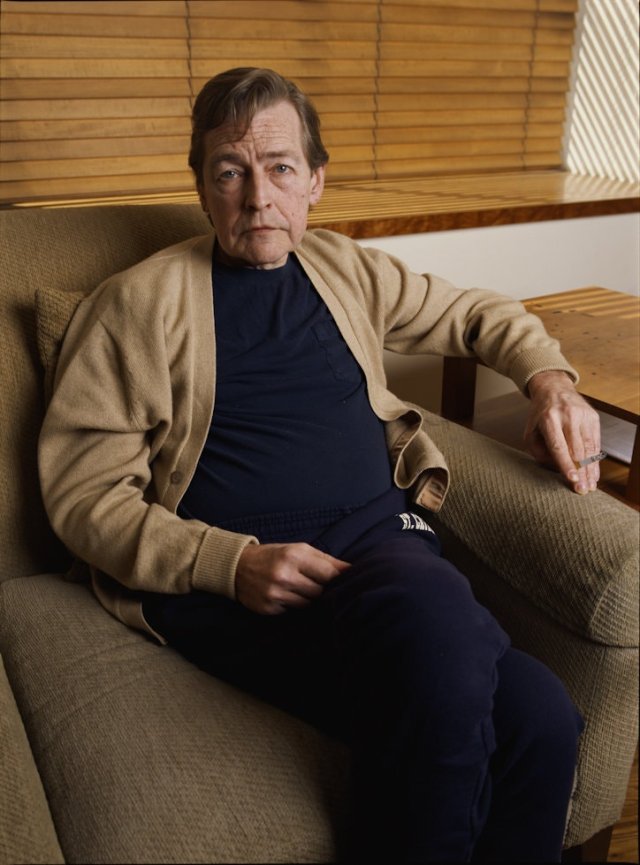
Nick Tosches was part of a group of music writers labeled “the Noise Boys” for their wild, energetic prose. A critic once wrote, “Reading Tosches is like being mugged.” Credit Kate Simon.

“The things I wanted to be when I was a kid were an archaeologist, because of dinosaur bones; a garbage man, because they got to ride on the side of the trucks; and a writer,” he told The Times. “If I had become a garbage man, I could have retired by now.”

(Neil Genzlinger, “Nick Tosches, 69, Fiery Music Writer and Biographer, Dies,” NYTimes, 10-20-19)

When I was a kid I wanted to drive the truck.

(c) 2019 JMN

Posted in Quotations | Tagged | Leave a comment

Denatured Pronoun Sighting

pronoun sighting

The artist in their archive room at their home in Brooklyn. Credit Scott J. Ross.

The NYTimes is walking the walk in the matter of language degendering. I confess to having initially groped for a plural antecedent when I encountered the following subheading:

“Nayland Blake’s one-bedroom apartment is filled from floor to ceiling with personal treasures and works by their community of queer artists.”

(Coco Romack, “An Artist’s Personal Museum in Brooklyn,” NYTimes, 10-14-19)

Then I resolved the momentary discordance in favor of a non-binary accommodation. Reporter Coco Romack doubles down on their neo-pronoun in the photo caption “The artist in their archive room at their home in Brooklyn.”

I seek my comfort level with this adjustment for now, but I resolve to follow the reporter where they leads in the new style.

(c) 2019 JMN

Posted in Commentary | Tagged | Leave a comment

The Queen’s Speech

queens speech

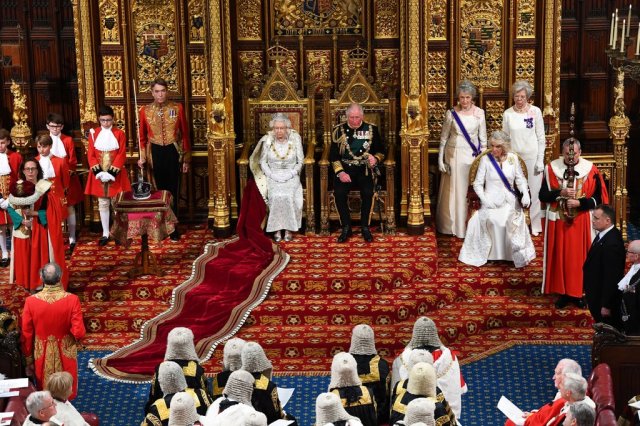
Britain’s Queen Elizabeth II and the Prince of Wales at the State Opening of Parliament on Monday. Credit Pool photo by Victoria Jones.

(Megan Specia and Allison McCann, “A Guide to the Queen’s Speech: Crown Jewels, Black Rod and a Mace,” 10-14-19)

(c) 2019 JMN

Posted in Commentary | Tagged | Leave a comment

I Feel It 100% in My Bones

salvator mundi

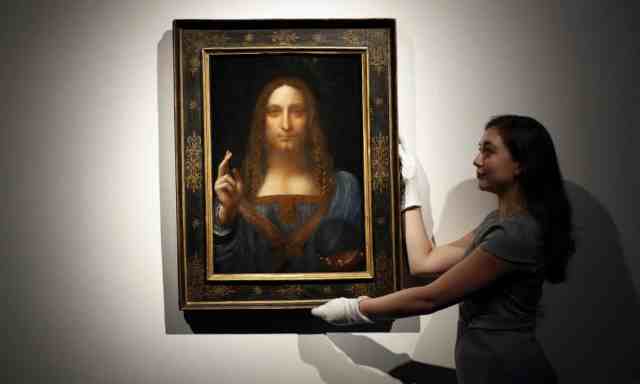
Questions over its authenticity have raged over Leonardo da Vinci’s Salvator Mundi for more than a decade. Photograph: Kirsty Wigglesworth/AP.

The story that keeps swirling around this mediocre painting whose whereabouts is now unknown is a punch line that keeps on giving. New York art historian and dealer Robert B. Simon bought the “Salvator Mundi” from a New Orleans auction house for $1,175 in 2005. It was attributed to Leonardo in 2011. It sold at auction in 2017 for $450 million. Mr. Simon’s appeal to profound spirituality conveyed across time as the most compelling evidence for attribution to Leonardo is droll. But I also understand it.

“There are a host of reasons why I believe 100% in Leonardo’s authorship of the Salvator Mundi – most of all the inimitable style, unique iconography and phenomenal quality of the painting,” Simon told the Observer. “To these one could add the peculiarities of Leonardo’s technique, the relationship of the painting to autograph drawings, and the evidence of the work’s history. However, for me the most compelling reason to believe in the painting is neither scholarly nor scientific: it comes from its sense of profound spirituality that is conveyed from artist to viewer across 500 years.”

(Jamie Doward, “The mystery of the missing Leonardo: where is Da Vinci’s $450m Jesus?” theguardian.com, 10-13-19)

(c) 2019 JMN

Posted in Commentary | Tagged , , | 4 Comments

Clearing Up His Confusion

exclamation-mark

The following are LeBron James’s words. They show why some professional athletes may not be the best role models for young people.

“I believe [Daryl Morey] wasn’t educated on the situation at hand, and he spoke. So many people could have been harmed, not only financially, but physically, emotionally, spiritually.”

“Yes, we do all have freedom of speech. But at times there are ramifications for the negative that can happen when you’re not thinking about others and you’re thinking about yourself.”

[Asked why he felt Morey had been ill-informed on the Hong Kong demonstrations] “That’s just my belief. I don’t know. That’s my belief. That’s all I can say. I believe he was misinformed or not really educated on the situation. And if he was, then so be it.”

“For me personally, I’ve always been welcomed [in China] with open arms. I’ve been to China probably over 15 to 20 times, and the main reason I’ve always wanted to go back to China is because of the game of basketball. The game of basketball has brought people together in so many different facets, in so many different countries — people you would never, ever expect.”

“Let me clear up the confusion. I do not believe there was any consideration for the consequences and ramifications of the tweet. I’m not discussing the substance. Others can talk about that.”

Scott Cacciola, “After Daryl Morey Tweet Backlash, LeBron James Says Executive Was Misinformed on China,” NYTimes, 10-14-19)

(c) 2019 JMN

Posted in Commentary | Tagged , , , | Leave a comment