Suffer the Sugar Ants to Come Unto Me

ants

The Divine in ant-drag is having a micro-tiny romp on my kitchen drainboard to remind me how wholly life expresses itself.

Sugar ants go everywhere at once in some inscrutable order, regroup around the task of tugging a crumb this way — no wait, that way! — then settle on just eating it. An hour later the crumb is gone and so are they — back through a nick in the caulk. A platoon of these hyperactive lilliputians can subsist on a speck.

I’m left with no recourse but to share with the sugar ants the space I occupy. I’ve no greater rights to it than they do, says whatever it’s called that stays my hand from dialing the pest control man.

(c) 2019 JMN

Posted in Commentary | Tagged | Leave a comment

An Unsocial Medium

ed1

Farhad Manjoo is a favorite journalist of mine. I’ve read him from when he wrote about tech on Slate before joining the NYTimes. He touts in this column an “unsocial” digital diary app called “Day One,” describing it as “a private social network for an audience of one: yourself.”

I use it to jot down my deepest thoughts and shallowest jokes; to rant and to vent; to come to terms with new ideas I’m playing with, ideas that need time to marinate in secret before they’re ready for the world; and to collect and reflect upon all the weird and crazy and touching artifacts of life in this bracing historical moment…
(Farhad Manjoo, “Why a Digital Diary Will Change Your Life,” 6-12-19)

I have to write to think. Before (re-)starting this blog I considered doing private journaling on Penzu instead. However, that seemed a bit too solipsistic. It risked trapping me in the echo chamber of my own head. EthicalDative is middle ground. Though theoretically anyone can view it, it feels private. Its readers are few, and likely to be persons to whom I would open my diary anyway.

(c) 2019 JMN

Posted in Commentary | Tagged , | 4 Comments

The Un-Rosie Side

montlaur1

Montlaur painted this self-portrait in 1969… Credit The National WWII Museum/Estate of Guy de Montlaur.

Twenty-five-year-old Guy de Montlaur was a heroic French commando in Normandy on D-Day. Having studied before that for a promising art career, he evoked his war-time experience on canvas until his death in 1977 at 58. The National World War II Museum in New Orleans has collected his paintings in an exhibit called “In Memory of What I Cannot Say.”

The canvases… are a stark departure for the sprawling museum, where displays tend to focus more on the triumph and carefully restored weaponry of World War II. There is no shortage of bombers, fighters, tanks and cheery newsreels showing Rosie the Riveter cranking out equipment on the home front. But little time is spent on the more than one million American troops killed or wounded, or the hard-to-count psychological casualties who struggled to move on from what they witnessed on the battlefield.

montlaur2

“On the Road Near Sallenelles, a Friend,” 1969. Credit The National WWII Museum/Estate of Guy de Montlaur.

The exhibit includes a 1946 documentary film about what it termed “battle neurosis.” Directed by John Huston, its title was “Let There Be Light.” The Army kept it classified for 75 years, releasing it in 1981.

(Dave Philipps, “He Couldn’t Talk About What He Saw in World War II. So He Painted It,” NYTimes, 6-12-19)

(c) 2019 JMN

Posted in Commentary | Tagged , , | 1 Comment

Prophecy Fire

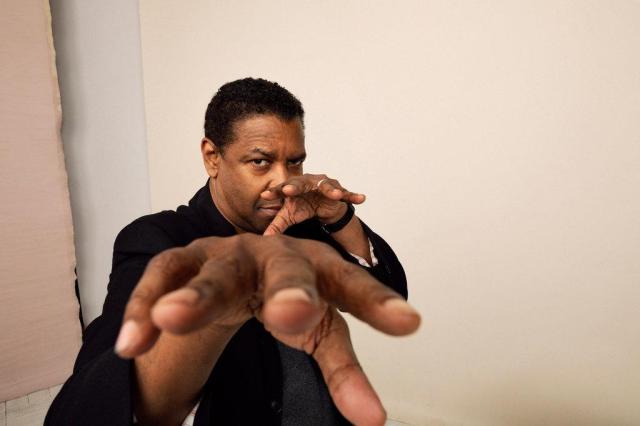
Denzel Washington, NYTimes

Denzel Washington, NYTimes.

Paul Theroux traveled in China in 1986 and 1987 for his book “Riding the Iron Rooster” published in 1988. He described police assaults on pro-democracy demonstrators that he witnessed. The book was dismissed by some reviewers “as alarmist and Sinophobic.” The Tiananment Square massacre in 1989 made it seem prescient. “… All I had done as a traveler was record what I saw: Writing the truth is prophetic,” Theroux adds in his letter to the NYTimes. He concludes as follows:

I have mentioned this in lectures I have given, in many Western cities as well as in Hong Kong, and each time I raise the subject, uttering the words “Tiananmen Square,” two or three Chinese people — sometimes more — rise and rush to the exits, as if I’d yelled “fire.”

The first time it occurred I was puzzled. When it continued to happen, I was told that all Chinese people connected to the government — which includes business people and academics — are under instructions to respond to any mention of the massacre by turning their backs on the speaker and fleeing the room.
(“Paul Theroux: Truth and Tiananmen [Letter],” NYTimes, 6-7-19)

(c) 2019 JMN

Posted in Quotations | Tagged , | Leave a comment

Parting Looks — HJN

Harold J. Nichols (1924 — 2013) (c) 2019 JMN

More Galleries | Tagged , , , | Leave a comment

Parting Looks — HJN

Harold J. Nichols (1924 — 2013) (c) 2019 JMN

More Galleries | Tagged , , | Leave a comment

Mistakes Were Made

flag_8

I’m haunted by that sentence in Lincoln’s second inaugural: “And the war came.”
(David Brooks, “The Racial Reckoning Comes,” NYTimes, 6-6-19)

David Brooks is well haunted. Lincoln could make words punch above their weight. His mastery lends killing clout to a simple declarative sentence. The banal, intransitive verb following the copulative conjunction and naked noun-of-war implies fatalistic, repetitive consequence. It has the passivity of “mistakes were made” but without the dodginess. Both constructions erase the agent, leaving mistakes and war as their own perpetrators.

(c) 2019 JMN

Posted in Commentary | Tagged , , , | Leave a comment

Parting Looks — HJN

Harold J. Nichols (1924 — 2013) (c) 2019 JMN

More Galleries | Tagged , , | Leave a comment

Elephant

elephant

A 1903 illustration shows President Theodore Roosevelt warning about protective tariffs going too far. Credit Photo12/UIG, via Getty Images.

I’m no connoisseur of illustration, but this one strikes me as having a distinctively painterly quality to it. It has introduced me to the work of J.S. Pughe (1870 – 1909), who is well documented in Wikipedia. The graphic appears in Margaret O’Mara, “Who Will Survive the Trade War?” NYTimes, 6-6-19.

(c) 2019 JMN

Posted in Commentary | Tagged , | Leave a comment

Vindication of Stuttering

darcey steinke

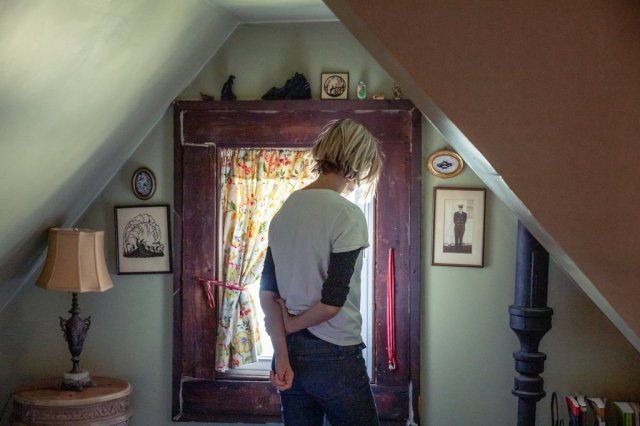
The author at home in Brooklyn. Credit Michael Kirby Smith for The New York Times.

The battle with speech impediment can equip persons like Darcey Steinke with fascinating insights into language.

It was around this time [in elementary school] that I started separating the alphabet into good letters, V as well as M, and bad letters, S, F and T, plus the terrible vowel sounds, open and mysterious and nearly impossible to wrangle. Each letter had a degree of difficulty that changed depending upon its position in the sentence.

Her article includes description of her experience recording the audio edition for her forthcoming book “Flash Count Diary: Menopause and the Vindication of Natural Life.”

As I started to read… I had no control over my vocal cords, adrift on waves of unpredictable sound… The young sound engineer was patient. His voice in my earphones was gentle and his expression open and empathetic… I explained that in the classroom as I teach and at my readings, my stutter brought intimacy to my listeners. He nodded. “They can hear your vulnerability…”

Steinke is the author of five novels and two memoirs.

The central irony of my life remains that my stutter, which at times caused so much suffering, is also responsible for my obsession with language. Without it I would not have been driven to write, to create rhythmic sentences easier to speak and to read…

(Darcey Steinke, “My Stutter Made Me a Better Writer,” NYTimes, 6-6-19)

(c) 2019 JMN

Posted in Quotations | Tagged , , | Leave a comment