Michelangelo Merisi (Caravaggio)

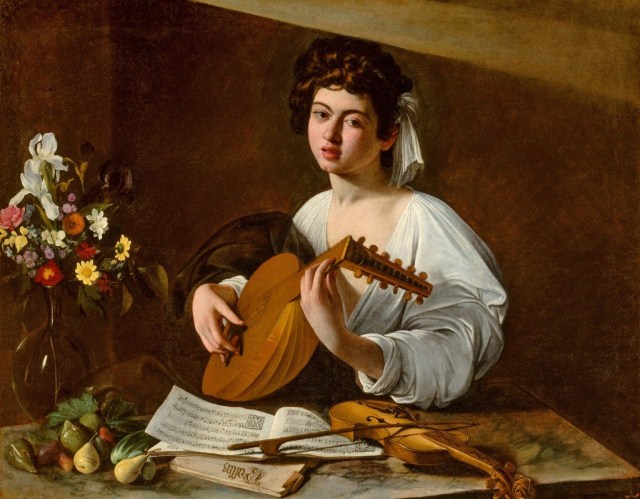
Caravaggio Lute Player

Caravaggio’s “Lute-Player” is from the Hermitage in St. Petersburg, Russia, where it had been restored. This is the first time it is being seen outside of Russia post-restoration.CreditThe State Hermitage Museum. Photo by Pavel Demidov.

The exhibition’s principal curator, Francesca Cappelletti, said her aim was to demonstrate “what Caravaggio’s intellectual legacy was, not only as a painter but as an inventor.” He found new ways of depicting age-old subjects, be they mythological or biblical, and of representing music and still life, which were not necessarily common themes in painting at the time, she explained.

(Farah Nayeri, “In Paris, a Celebration of Caravaggio’s Roman Days,” NYTimes, 10-10-18)

(c) 2018 JMN.

Posted in Anthology, Quotations | Tagged | Leave a comment

Julian Schnabel: Rudimentary Concerns

Julian Schnabel

Mr. Schnabel looking at a self-portrait by Vincent van Gogh at the Musée d’Orsay. The exhibition was like “a letter that is written from one painter to the next,” he said. Credit Julien Mignot for The New York Times.

“What the surface of a painting can be is an obsession of mine,” Mr. Schnabel said. “If you see how the plate paintings function, it’s very three-dimensional, both physically and spatially. I like dealing with physical problems and rudimentary concerns about trying to stick things to a surface.”

(Tobias Grey, “Julian Schnabel and the Great Painters, Side by Side,” NYTimes, 10-10-18)

(c) 2018 JMN.

Posted in Anthology, Quotations | Tagged | Leave a comment

Dystopia Myopia

Dystopian Fiction

[Image from article by Alexendra Alter, “How Feminist Dystopian Fiction Is Channeling Women’s Anger and Anxiety,” NYTimes, 10-8-18]

Quotation of the Day

One of the things about looking at the world through a feminist lens is that we are already in a dystopia.

— Leni Zumas, author of “Red Clocks,” part of a growing canon of female-written dystopian fiction.

(Mary Hui, “… Your Wednesday Briefing,” NYTimes, 10-10-18)

(c) 2018 JMN.

Posted in Quotations | Tagged | Leave a comment

Stag Country: The Endicotts weren’t from here…

Beer to Go, JMN, photo, 2009.

The Endicotts weren’t from here. They came in the fifties from one of those towns the other side of Buckwaller. Rowena Endicott was a flouncy thing, half silly, always showed more leg in her skirts than was necessary. Her and me co-captained the Lady Stags in volleyball our senior year, and she set her cap for Tommy Floyd Mallard. Tommy Floyd quarterbacked the Stags to Bi-District that year.

Rowena would lay in wait for Tommy Floyd at the Stagger Inn Friday nights after the games. One night Monty and me parked out at the gravel pit when the Inn closed. There were eight or ten cars out there as usual. I saw Tommy Floyd’s Studebaker over by the trees. I said, “Monty, let’s get out and chuck some rocks in the water.” He said, “Belle, it’s too cold,” and I said, “Monty, shut up.”

So we got out, and I could see that Tommy Floyd’s windows were all steamed up. I said, “Monty, get the flashlight and let’s shine it in Tommy Floyd’s car like we’re the police.” Monty said, “Belle, the cops don’t come out here.” He was right, of course, so we left and went home.

Come to find out, Rowena was sick in bed that night. It was Gretchen Frye, the undertaker’s daughter, that was with Tommy Floyd. Rowena acted like she didn’t care when I told her. We agreed Gretchen was way over her head with Tommy Floyd — she didn’t cheerlead or play a sport. Rowena said there was only one reason Tommy Floyd would date her. I said, “Rowena, shut up, that’s tacky,” and I thought to myself, Hmmm, the pot calls the kettle black, don’t it?

Glenn Ray Mallard jerked Tommy Floyd out of Stag High and sent him over to Mott when Spunk McGruder wouldn’t let him play starting pitcher for the Stags. Rowena had gotten over him by then. She was going steady with Gainer Wayne Jambley. They eventually married and divorced.

Tommy Floyd’s retired from the Mott bank now. Asked me to go dancing with him a while back. I said, “You old coot, my dancing days are over. Why don’t you ask Gretchen Meriwether, she’s a widow now, too.” Gretchen married Harkness Meriwether after she got her fancy degree from Tarquin. She’d still be over her head with Tommy Floyd, if you ask me.

(c) 2018 JMN.

Posted in Anthology | Tagged | 2 Comments

1987: A Mark Twain Anecdote

Mark Twain. HJN, drawing.

Mark Twain. HJN, drawing.

[In a letter to my mother I cite the following quotation from “God’s Fool,” the biography of Twain that I was reading. ]

I do seem to have a whole lot of interest in a lot of arts and things. The bill [a change to copyright law in 1906] is full of those that I have nothing to do with. But that is in line with my generous, liberal nature. I can’t help it. I feel toward those same people [the legislators] the same sort of charity of the man who arrived home at 2 o’clock in the morning from the club. He was feeling perfect satisfaction with life — was happy, was comfortable. There was his house weaving and weaving and weaving around. So he watched his chance, and by and by when the steps got in his neighborhood he made a jump and he climbed up on the portico. The house went on weaving. He watched his door, and when it came around his way again he climbed through it. He got to the stairs, went up on all fours. The house was so unsteady he could hardly make his way, but at last he got up and put his foot down on the top step, but his toe hitched on that step, and of course he crumpled all down and rolled all the way down the stairs and fetched up at the bottom with his arm around the newel post, and he said, “God pity a poor sailor out at sea on a night like this.”

(c) 2018 JMN.

Posted in Anthology | Tagged | 2 Comments

Leonardo’s Weird Faces

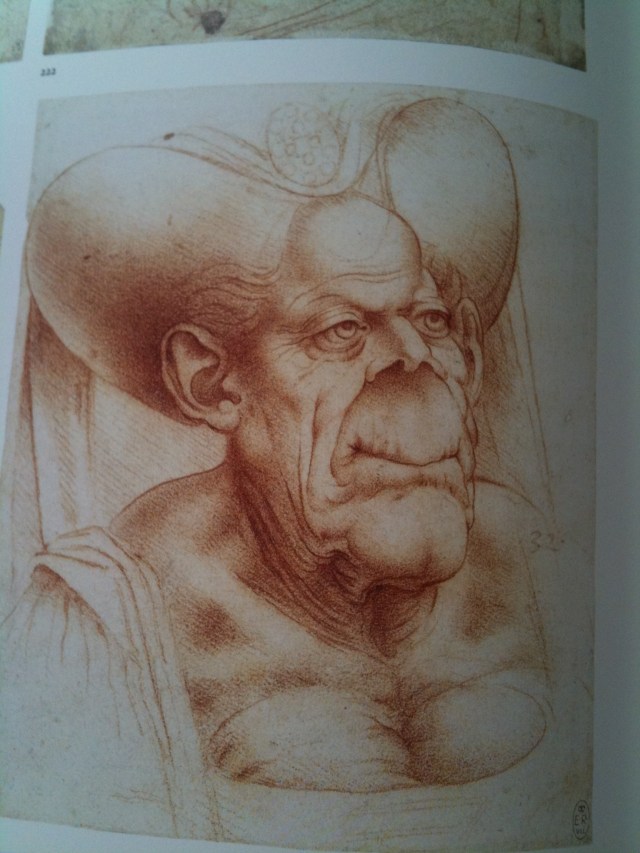
Leonardo Face1

Leonardo Face1

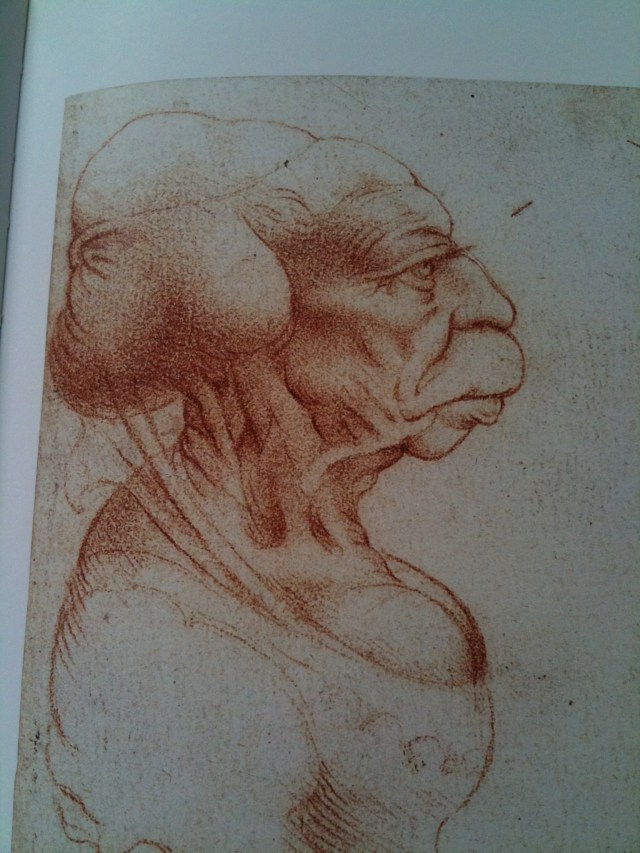
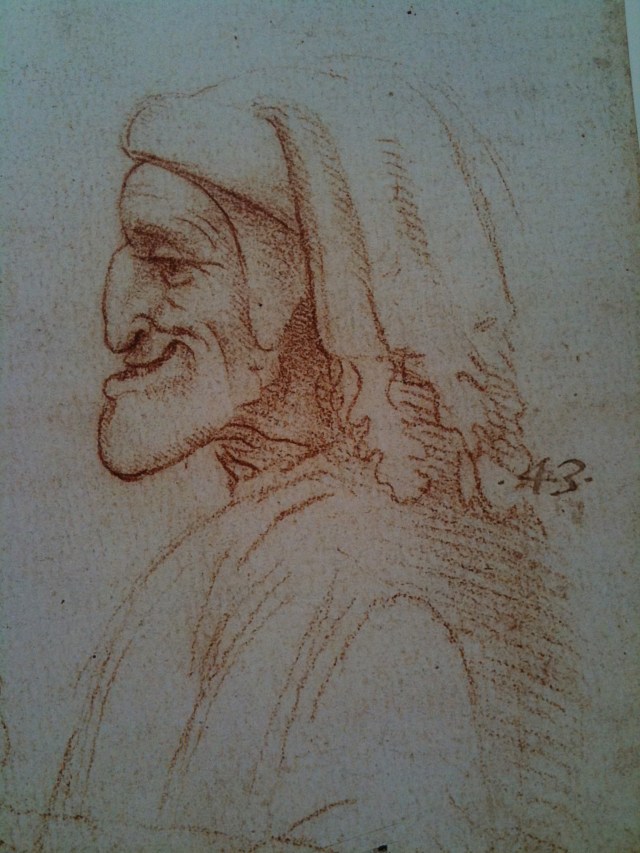
[All images are from Frank Zöllner, “Leonardo da Vinci: The Complete Paintings and Drawings,” Taschen]

[Leonardo’s] drawings often of men and women with strangely deformed or exaggerated features — which he called “visi mostruosi,” or “monstrous faces,” and which scholars call “grotesques” — were distributed widely, and avidly copied.

Leonardo Face2

Leonardo Face2

… One of his favorite private pastimes was to draw faces, either as scribbles in the margins of his notebooks or as fully conceived sketches….

Leonardo Face3

Leonardo Face3

… Leonardo would often follow strange-looking individuals to try to memorize their faces so that he could sketch them later.

Leonardo Face4

Leonardo Face4

“He was essentially interested in body language and how it’s related to emotions and character.”

Leonardo Face5

Leonardo Face5

Leonardo Face6

Leonardo Face6

(Nina Siegal, “Why Did Leonardo Draw These Weird Faces?” NYTimes, 10-7-18)

(c) 2018 JMN.

Posted in Quotations | Tagged | 2 Comments

The Scream

Diane Williams

Ms. Williams’s stories might be short but that is sleight of hand; they demand focus. “I don’t like to have it all wrapped up,” she said. “Hardly anything that matters in life is that easy.” Credit Molly Matalon for The New York Times.

There was a time I literally screamed in my own dining room, about something that didn’t warrant such a scream… It was so — to use a word I use a lot in my first book — *inappropriate*. There were some things, some anger or passion that was beyond my understanding and had been tamped down for too long.

“Rumaan Alam, Diane Williams, A Master of the Very Short Story, Has a Very Big New Book,” NYTimes, 10-2-18)

(c) 2018 JMN.

Posted in Quotations | Tagged | Leave a comment

Meatballs and Mothers

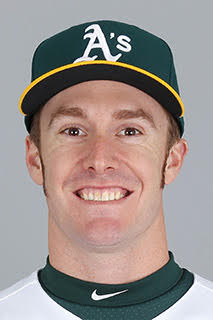
Mark Canha

Mark Canha.

Quotation of the Day

“There were a lot of things being said about my mother that day, a lot of it bad stuff and depressing. But the best one was ‘Hey, Canha, your mother’s meatballs aren’t that good.’ ”

— Mark Canha, a first baseman with the Oakland Athletics, on fan abuse at Yankee Stadium on Mother’s Day.

(NYTimes, “…Thursday Briefing,” 10-4-18)

(c) 2018 JMN.

Posted in Quotations | Tagged | Leave a comment

Fiction’s Mission

Michael Schur hands out philosophical readings with his scripts. Jeff Minton for The New York Times.

Michael Schur hands out philosophical readings with his scripts. Jeff Minton for The New York Times.

[Quotation from a 1993 interview of David Foster Wallace, one of several that Michael Schur, creator of sitcom “The Good Place,” keeps in his office.]

Look, man, we’d probably most of us agree that these are dark times, and stupid ones, but do we need fiction that does nothing but dramatize how dark and stupid everything is? In dark times, the definition of good art would seem to be art that locates and applies CPR to those elements of what’s human and magical that still live and glow despite the times’ darkness. Really good fiction could have as dark a worldview as it wished, but it’d find a way both to depict this world and to illuminate the possibilities for being alive and human in it.

(Sam Anderson, “The Ultimate Sitcom,” NYTimes, 10-4-18)

(c) 2018 JMN.

Posted in Quotations | Tagged | Leave a comment

1987 Correspondence: “The other topic…” [redacted]

Adverbs Ahead

Caution: Intemperate Dudgeon Ahead About Events From Long Ago Quoted Verbatim Except For Redactions

[Dear Mother,]

The other topic grabbed me almost as I was leaving Philadelphia. I picked up a hotel copy of the Inquirer and sort of skimmed the article about [Name] resigning as head of [Organization], which means, apparently, either “[Phrase]” or “[Phrase].” I re-read it and was so nauseated I had to tear it out to bring home. To me it epitomizes the contemptible dishonesty and cowardliness of the TV born-again money-hustlers. Here’s a man who fornicated, then paid a six-figure sum to keep it quiet. Look carefully at all the quotes from [Name] in the article. Does he take any responsibility anywhere? Does he express any sense of wrongdoing, or penitence?

I think where I began to be outraged was in trying to make sense of the literal language of the statement that he was “wickedly manipulated by treacherous former friends” who “conspired to betray me into a sexual encounter.” Now, having been caught, he realizes that “we ought to have exposed the blackmailers to the penalties of the law.” Then he makes a pathetic appeal to peoples’ sympathies by saying that “my and [Wife’s Name] physical and emotional resources have been so overwhelmed that we are presently under full-time therapy at a treatment center in California.” What craven [Epithet]! Poor, passive [Name] hideously victimized by Satan’s agents, then prostrated not by remorse but by paranoia and self-pity! We can probably look for him in six months back in front of the cameras fully redeemed and idolized by hordes of [Slang] who resent how negatively he was portrayed by the media.

(c) 1987 Correspondence, 2018, JMN.

Posted in Anthology | Tagged | Leave a comment