1987: “A Fable”

For C*** and H***

Bamboo blinds gentle the noonday, coastal sun. A Gulf breeze licks the south-east corner of Casa Ramico’s.

I take my usual table, nodding at the busboys who greet me deferentially. Eulalia brings me water and a menu. Her walk reminds me of Johnson grass in April. Her eyes remind me of huisache bloom mirrored in an unrippled tank at sundown on eight sections of Brewster County cattle land.

I order the daily special with onions and iced tea. A plate of hot corn chips and con queso materializes on my table. I reach for a bottle of green salsa redolent with freshly crushed cumin. The salsa has the purposeful kick of a single-shot four-ten. Remembering a field of whitewing near Crystal City a few years back, I irrigate the con queso with several generous squeezes of the salsa bottle.

Eulalia brings me sun-brewed tea with a wedge of lemon grown west of Mercedes. I tear the end off a pink envelope and sprinkle a powder of aspartame over the distilled ice cubes.

The speakers vibrate softly with the strains of a nortena. I take a deep draught of tangy tea and wink at Ramiro when he peers merrily from the kitchen. I know his abuelita is pounding the corn for my taco tortilla in the ancient family molcajete.

Three draughts later my special arrives. I knife a dollop of Country Crock onto a flour tortilla. I roll the tortilla into a tight cylinder, angling one end skyward, and dredge a load of refried beans onto the opposite tip. Chewing with closed eyes, I remember what Papa wrote while fishing off the Havana coast: “It was good.”

I turn to the enchilada swimming in a pool of homemade chili. Forked, it extrudes a golden lava of Longhorn cheese. I half it in three bites. Bedded on a mound of Spanish rice, the taco is a cornucopia of grass-fed beef and garden tomatoes. I spoon guacamole into the taco’s cleft. As it cracks between my teeth, a fallout of hand-picked lettuce hits the rice. The steamy revel of Toltec chilis and fresh coriander reminds me of the wetbacks who fried prickly pear over an open fire on Granddaddy’s ranch while I played mumbledypeg as a boy.

Eulalia comes to refresh my tea.

“You know what? I say, “It doesn’t get any better than this.”

The truth hits home. Eulalia’s eyes glisten for a moment.

“No, Ernesto, it doesn’t.”

(c) 2018 JMN.

Posted in Anthology | Leave a comment

1987: Twain: Tells a Lot

Mark Twain. HJN, drawing.

Mark Twain. HJN, drawing.

[Dear Mother,]

Another anecdote that tells a lot about the man is when he was allowed, with great reluctance on Clara’s part [one of Twain’s daughters], to attend a recital that she did manage to give. He was placed on the third row and ordered not to call attention to himself. When the recital was over he got on stage and gave a 20-minute speech. The next day, 75 of the 80 lines that the local newspaper devoted to Clara’s recital dealt with Mark Twain’s speech. No wonder he made the girls sick.

I hope you enjoy these snippets as much as I do. I guess sometimes sharing your readings is as dangerous as sharing your dreams. Have you ever been that interested in other people’s accounts of their dreams? I rarely have, unless it’s swapping common dreams, in which case you are trading information with someone else about your own dream life. To me the saddest and most incriminating side of Clemens’s behavior was toward Jean, the younger, epileptic daughter. She understood him and loved him more than Clara, but he relegated her to the margins of his life and couldn’t shoulder any real responsibility for her nor confront the implications of her illness. She was the only one of the women, apparently, with a real illness, yet comes across as the least morbid and hypochondriacal of them.

(c) 2018 JMN.

Posted in Anthology | Tagged | 4 Comments

Barbara Kingsolver

Barbara Kingsolver

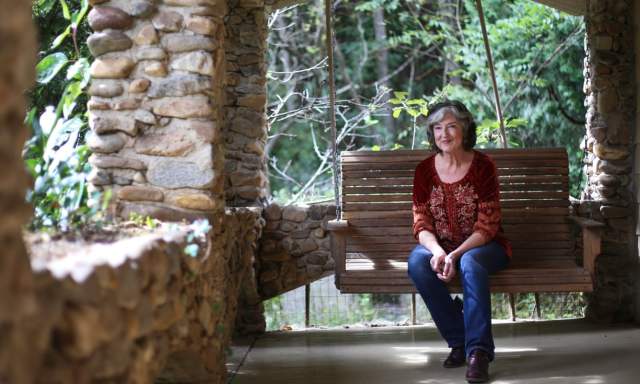
Barbara Kingsolver at home in Virginia. Photograph: Jessica Tezak for the Guardian.

“I’m in a really unusual position,” she says, “because I work as a literary writer. I work at the level of the sentence, at the level of the image, the metaphor, the theme, but I also have this commitment to accessibility, which I suppose comes from the fact I grew up here. It’s the same reason I sent my kids to public schools: I want to belong to people. I don’t want to be above them. So I would really like anyone who can read to be able to read my novels and I would like to give them a reason to turn every page.”

(Lidija Haas, “Barbara Kingsolver: ‘It feels as though we’re living through the end of the world,’” The Guardian, 10-8-18)

(c) 2018 JMN.

Posted in Quotations | Tagged | 3 Comments

Julia Dixit

Julia Child cake

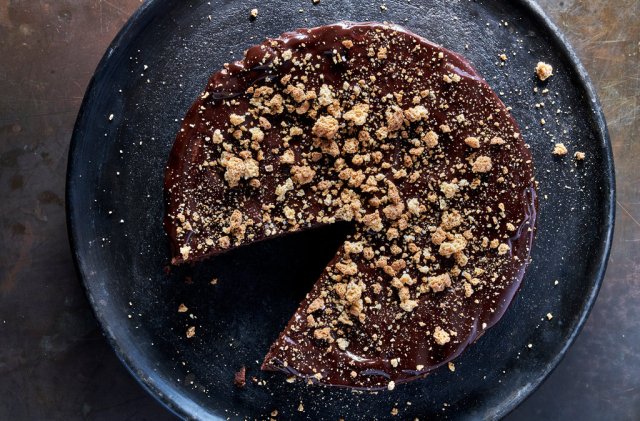
It might be mistaken for a brownie, if not for its powerful, sophisticated flavor. Credit Gentl and Hyers for The New York Times. Food stylist: Maggie Ruggiero. Prop stylist: Rebecca Bartoshesky.

Our project must be serious. This is not for fluffies!
— Julia Child

(Dorie Greenspan, “A Cake Fit for Julia Child,” NYTimes, 10-10-18)

(c) 2018 JMN.

Posted in Quotations | Tagged | Leave a comment

“A Weaver Who Changed Art”

Anni Albers wall hanging

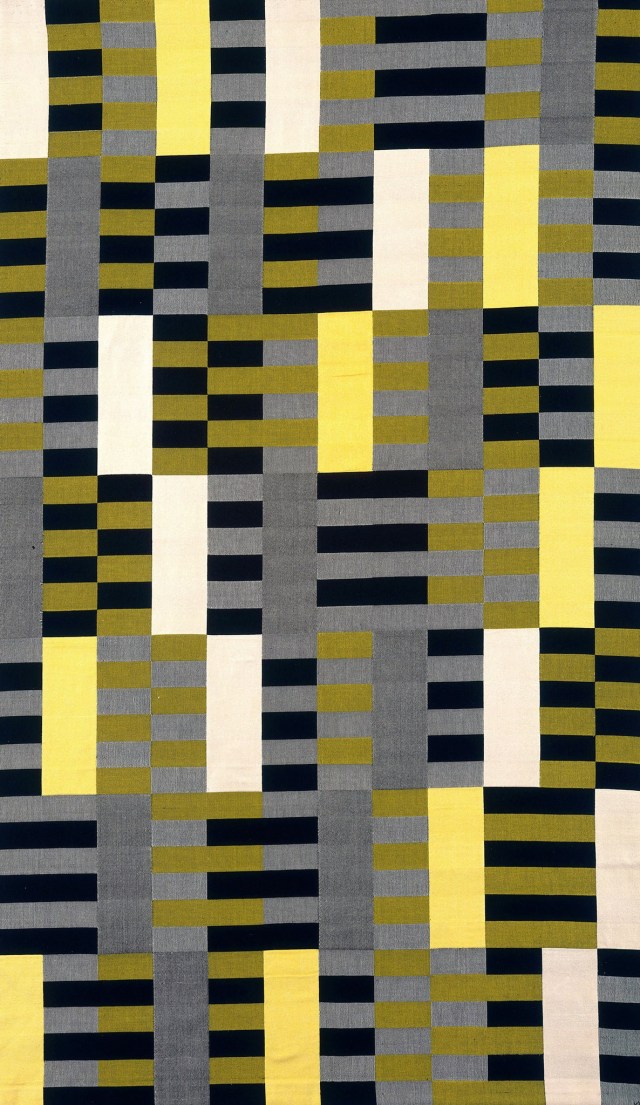
An Anni Albers wall hanging from 1926. Credit2018 The Josef and Anni Albers Foundation/Artists Rights Society (ARS), New York, via DACS, London.

“[Anni Albers] could’ve done painting later on, but she immersed herself in thread: Anni was a great person for working with limitations,” [Nicholas Fox] Weber said. “She used thread to make abstract art. Her best wall hangings from the Bauhaus and the rest of her weaving life are as great, and very similar to, work by Klee or Mondrian. They’re pure abstractions: It’s only the medium that’s different.”

(Farah Nayeri, “At Tate Modern, An Anni Albers Retrospective,” NYTimes, 10-10-18)

(c) 2018 JMN.

Posted in Quotations | Tagged , | Leave a comment

Michelangelo Merisi (Caravaggio)

Caravaggio Lute Player

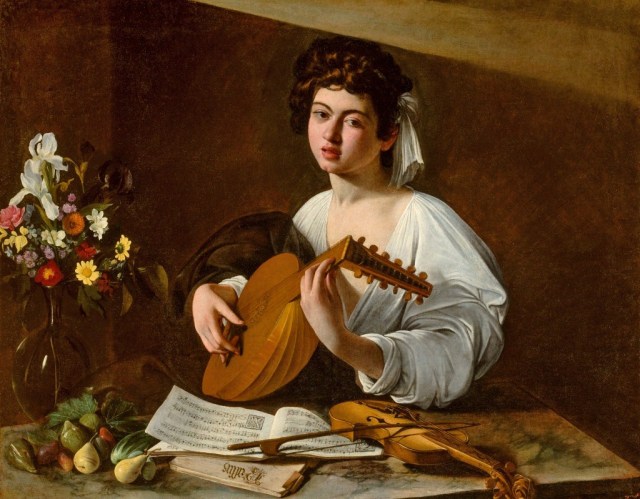
Caravaggio’s “Lute-Player” is from the Hermitage in St. Petersburg, Russia, where it had been restored. This is the first time it is being seen outside of Russia post-restoration.CreditThe State Hermitage Museum. Photo by Pavel Demidov.

The exhibition’s principal curator, Francesca Cappelletti, said her aim was to demonstrate “what Caravaggio’s intellectual legacy was, not only as a painter but as an inventor.” He found new ways of depicting age-old subjects, be they mythological or biblical, and of representing music and still life, which were not necessarily common themes in painting at the time, she explained.

(Farah Nayeri, “In Paris, a Celebration of Caravaggio’s Roman Days,” NYTimes, 10-10-18)

(c) 2018 JMN.

Posted in Anthology, Quotations | Tagged | Leave a comment

Julian Schnabel: Rudimentary Concerns

Julian Schnabel

Mr. Schnabel looking at a self-portrait by Vincent van Gogh at the Musée d’Orsay. The exhibition was like “a letter that is written from one painter to the next,” he said. Credit Julien Mignot for The New York Times.

“What the surface of a painting can be is an obsession of mine,” Mr. Schnabel said. “If you see how the plate paintings function, it’s very three-dimensional, both physically and spatially. I like dealing with physical problems and rudimentary concerns about trying to stick things to a surface.”

(Tobias Grey, “Julian Schnabel and the Great Painters, Side by Side,” NYTimes, 10-10-18)

(c) 2018 JMN.

Posted in Anthology, Quotations | Tagged | Leave a comment

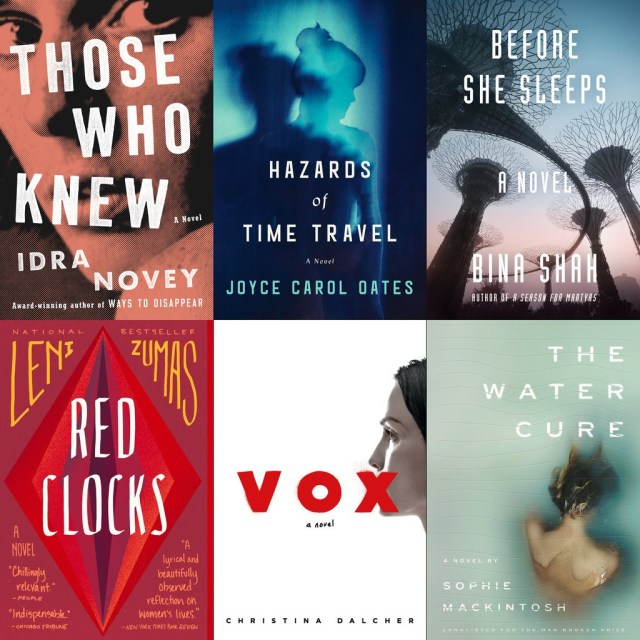
Dystopia Myopia

Dystopian Fiction

[Image from article by Alexendra Alter, “How Feminist Dystopian Fiction Is Channeling Women’s Anger and Anxiety,” NYTimes, 10-8-18]

Quotation of the Day

One of the things about looking at the world through a feminist lens is that we are already in a dystopia.

— Leni Zumas, author of “Red Clocks,” part of a growing canon of female-written dystopian fiction.

(Mary Hui, “… Your Wednesday Briefing,” NYTimes, 10-10-18)

(c) 2018 JMN.

Posted in Quotations | Tagged | Leave a comment

Stag Country: The Endicotts weren’t from here…

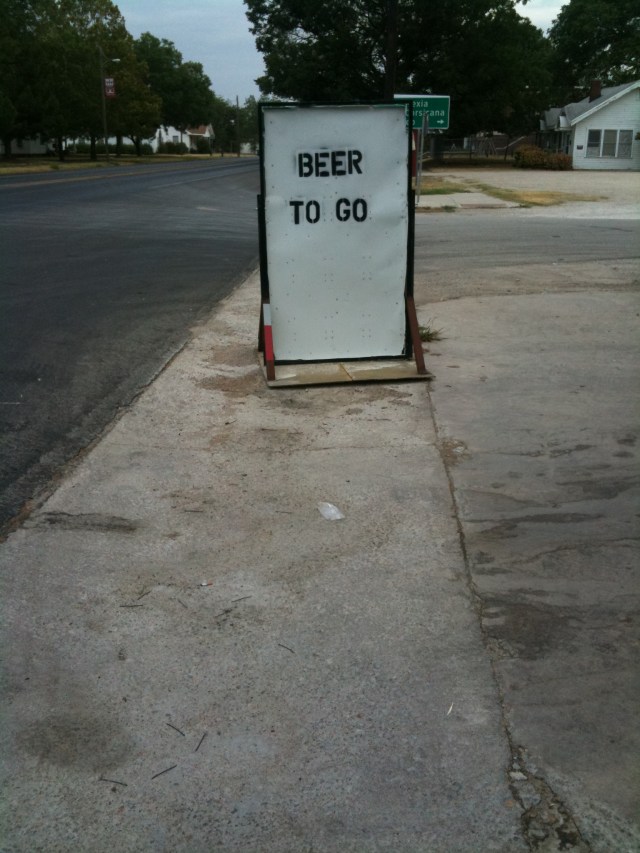
Beer to Go, JMN, photo, 2009.

The Endicotts weren’t from here. They came in the fifties from one of those towns the other side of Buckwaller. Rowena Endicott was a flouncy thing, half silly, always showed more leg in her skirts than was necessary. Her and me co-captained the Lady Stags in volleyball our senior year, and she set her cap for Tommy Floyd Mallard. Tommy Floyd quarterbacked the Stags to Bi-District that year.

Rowena would lay in wait for Tommy Floyd at the Stagger Inn Friday nights after the games. One night Monty and me parked out at the gravel pit when the Inn closed. There were eight or ten cars out there as usual. I saw Tommy Floyd’s Studebaker over by the trees. I said, “Monty, let’s get out and chuck some rocks in the water.” He said, “Belle, it’s too cold,” and I said, “Monty, shut up.”

So we got out, and I could see that Tommy Floyd’s windows were all steamed up. I said, “Monty, get the flashlight and let’s shine it in Tommy Floyd’s car like we’re the police.” Monty said, “Belle, the cops don’t come out here.” He was right, of course, so we left and went home.

Come to find out, Rowena was sick in bed that night. It was Gretchen Frye, the undertaker’s daughter, that was with Tommy Floyd. Rowena acted like she didn’t care when I told her. We agreed Gretchen was way over her head with Tommy Floyd — she didn’t cheerlead or play a sport. Rowena said there was only one reason Tommy Floyd would date her. I said, “Rowena, shut up, that’s tacky,” and I thought to myself, Hmmm, the pot calls the kettle black, don’t it?

Glenn Ray Mallard jerked Tommy Floyd out of Stag High and sent him over to Mott when Spunk McGruder wouldn’t let him play starting pitcher for the Stags. Rowena had gotten over him by then. She was going steady with Gainer Wayne Jambley. They eventually married and divorced.

Tommy Floyd’s retired from the Mott bank now. Asked me to go dancing with him a while back. I said, “You old coot, my dancing days are over. Why don’t you ask Gretchen Meriwether, she’s a widow now, too.” Gretchen married Harkness Meriwether after she got her fancy degree from Tarquin. She’d still be over her head with Tommy Floyd, if you ask me.

(c) 2018 JMN.

Posted in Anthology | Tagged | 2 Comments

1987: A Mark Twain Anecdote

Mark Twain. HJN, drawing.

Mark Twain. HJN, drawing.

[In a letter to my mother I cite the following quotation from “God’s Fool,” the biography of Twain that I was reading. ]

I do seem to have a whole lot of interest in a lot of arts and things. The bill [a change to copyright law in 1906] is full of those that I have nothing to do with. But that is in line with my generous, liberal nature. I can’t help it. I feel toward those same people [the legislators] the same sort of charity of the man who arrived home at 2 o’clock in the morning from the club. He was feeling perfect satisfaction with life — was happy, was comfortable. There was his house weaving and weaving and weaving around. So he watched his chance, and by and by when the steps got in his neighborhood he made a jump and he climbed up on the portico. The house went on weaving. He watched his door, and when it came around his way again he climbed through it. He got to the stairs, went up on all fours. The house was so unsteady he could hardly make his way, but at last he got up and put his foot down on the top step, but his toe hitched on that step, and of course he crumpled all down and rolled all the way down the stairs and fetched up at the bottom with his arm around the newel post, and he said, “God pity a poor sailor out at sea on a night like this.”

(c) 2018 JMN.

Posted in Anthology | Tagged | 2 Comments