
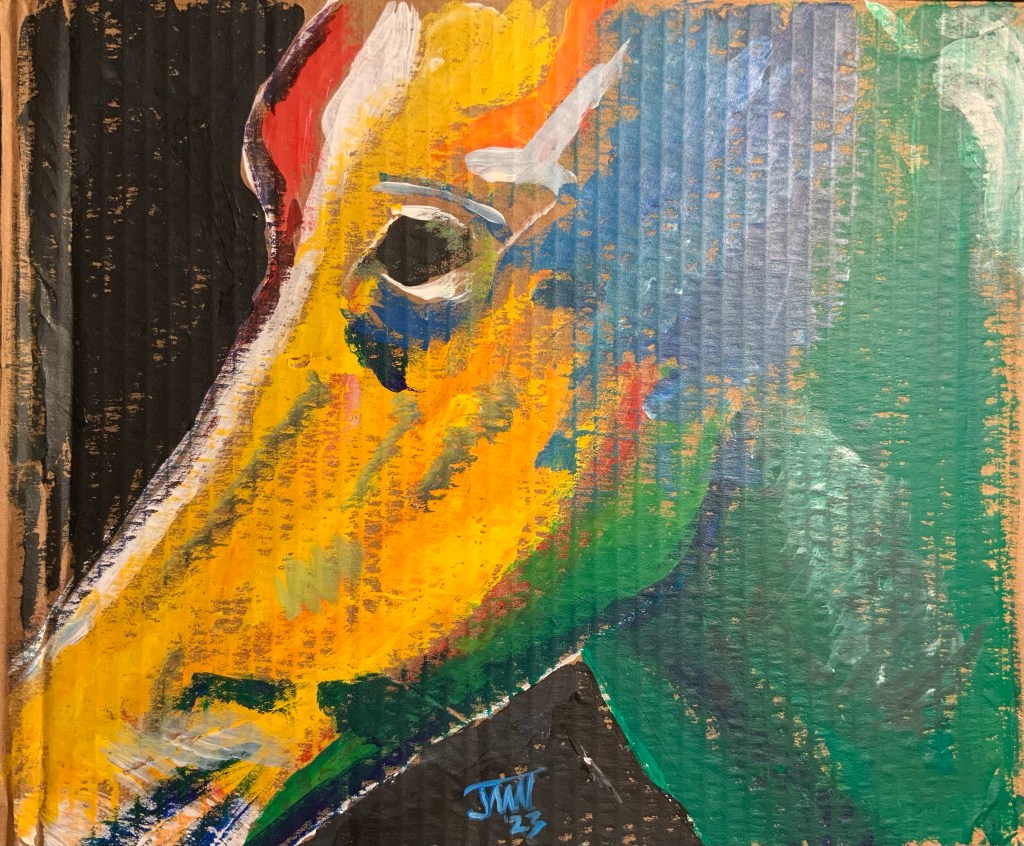
This is the second of 3 poems by Zakaria Mohammed published in the September 2023 edition of Poetry magazine. They date from 2013. (I noted the first one here). English translations by Lena Khalaf Tuffaha are in the Poetry issue as well.
The translation from the Arabic and transliteration of the Arabic text that follow here are mine.
2013-8-15
I await the expiry of August, September’s coup de grâce.
Hey, dawdling Fall, I am here, expectant. Cooked you
some porridge, kindled a fire. Come, wind-sweep the brazen sun
away. Lift its hand from my shoulder.
Summer crouches heavily on my chest. But my pale hand
swears by season’s turning, readies a saddle for it. Oh! — you piebald horse of Autumn, that carries me where my thoughts go: chainlink stone climbing the foot of the hill, unruly clouds climbing the foot of the sky. There’s nothing more than this, not a thing.
Of course, it’s possible to add a crash
of thunder so my bones are shaken, and the bones of the world.
As for all of you, believing fondly horses live in the hills
of Spring, know: Autumn’s promontories are their dwelling. They tense and gather muscle at the scent of rain, their nostrils flare, they bolt, clearing rocky hurdles toward the summit, where they will graze on the fringes of clouds.
Transliteration
‘antaḍir(u) nihāyaẗ(a) āb(a) wa-maqtal(a) ailūl(a).
‘ayyuhā-l-ẖarīf(u)-l-lāḏi yatalakka’(u), ‘anā hunā bi-‘intiḍār(i)-ka. ṭabaẖ(tu) la-ka
^aṣīdaẗ(an) wa-‘aš^al(tu) nār(an). ta^āla, w-‘uknus bi-rīḥ(i)-ka-š-šams(a)-
ṣ-ṣafīqaẗ(a). ‘irfa^ yad(a)-ha ^an katif(ī).
‘aṣ-ṣaif(u) yajṯim(u) ṯaqīl(an) fauqa ṣadr(ī). lakinna yad(ī)-l-baiḍā’(a)
taḥlif(u) bi-l-ẖarīf(i), wa-tu^idd(u) la-hu-s-sarj(a). ‘āh(i) yā ḥiṣān(a)-l-ẖarīf(i)-
l-‘ablaq(a). yā man yadrus(u) fikraẗ(ī) wa-yunaffiḏ(u)-hā: salāsil(un) ḥajarīyaẗ(un)
taṣ^ad(u) safḥ(a)-t-tallaẗ(i) wa-ḡuyūm(un) mušattataẗ(un) taṣ^ad(u) safḥ(a)-s-samā’(i).
wa-lā šai’(a) ḡair(a) hāḏā, lā šai’(a). bi-ṭ-ṭab^(i), yumkin(u) ziyādaẗ(u) haddaẗ(i)
ra^d(i) kai tataẖalẖal(a) ^iẓām(ī) wa-^iẓām(a)-d-dunyā.
‘ammā ‘antum fa-qad ẓanan(tum) ẖaṭa’(an) ‘anna-l-ẖail(a) taskun(u) fī tilāl(i)-
r-rabī^(i). lā, tilāl(u)-l-ẖarīf(i) hīya maskan(u)-l-ẖail(i). taštamm(u)
muhtājaẗ(an) rā’iḥaẗ(a)-l-maṭar(i), fa-tattasi^u manāẖir(u)-ha, wa-taqfiz(u) fauqa-
s-salāsil(i)-l-ḥajarīyaẗ(i) ṣā^idaẗ(an) naḥwa-l-qimmaẗ(i), kai taqḍam(a) ‘aṭrāf(a)-l-ḡaimaẗ(i).
(c) 2023 JMN — EthicalDative. All rights reserved




 EthicalDative
‘Somewhat Impenetrable to Outsiders’
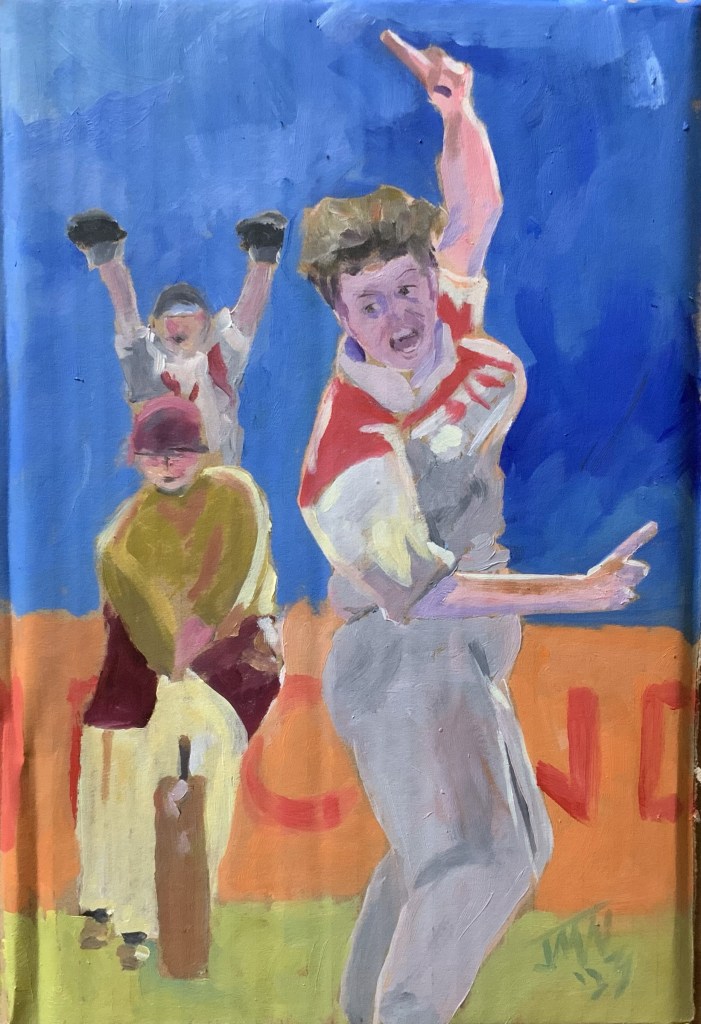
Cricket may be “somewhat impenetrable” to outsiders, per The Times, but only to those who resist penetration. The quadriennial Cricket World Cup, which started recently, “enraptures lovers of the game” from Durham to Durban, says the journal. I, for one, a perennial outsider, am spoiling for rapture.
The game’s lingo can be exotic: top-rated batter Babar Azam is said to average a “gaudy” 58 runs per game. More RPGs than 58 would qualify as “flamboyant.”
The lingo can wallop equally with understatement: veteran bowlers Trent Boult and Mitchell Starc “are expected to get more than their share of batters out.”
And a certain archly prim manière d’en parler can taste like apple pie: Ben Stokes, an ace at both batting and bowling, is an “all-rounder,” by gosh! The term could have issued from my grandmother’s lips.
EthicalDative isn’t a long-form blog, so I can’t précis the article’s whisper and promise on how cricket is played. A key to understanding the game is to forget baseball. The bowler gets a running start and usually bounces the ball to the batsman. The batsman is allowed to hit the ball in any direction, including backwards. There are two batsmen, not one, who take turns trying to hit balls. They may run between two low posts called wickets, or may decide not to.
That much I know.
(Victor Mather, “How to Become a Crickert Expert Just in Time for the Cricket World Cup,” New York Times, 10-4-23)
(c) 2023 JMN — EthicalDative. All rights reserved