
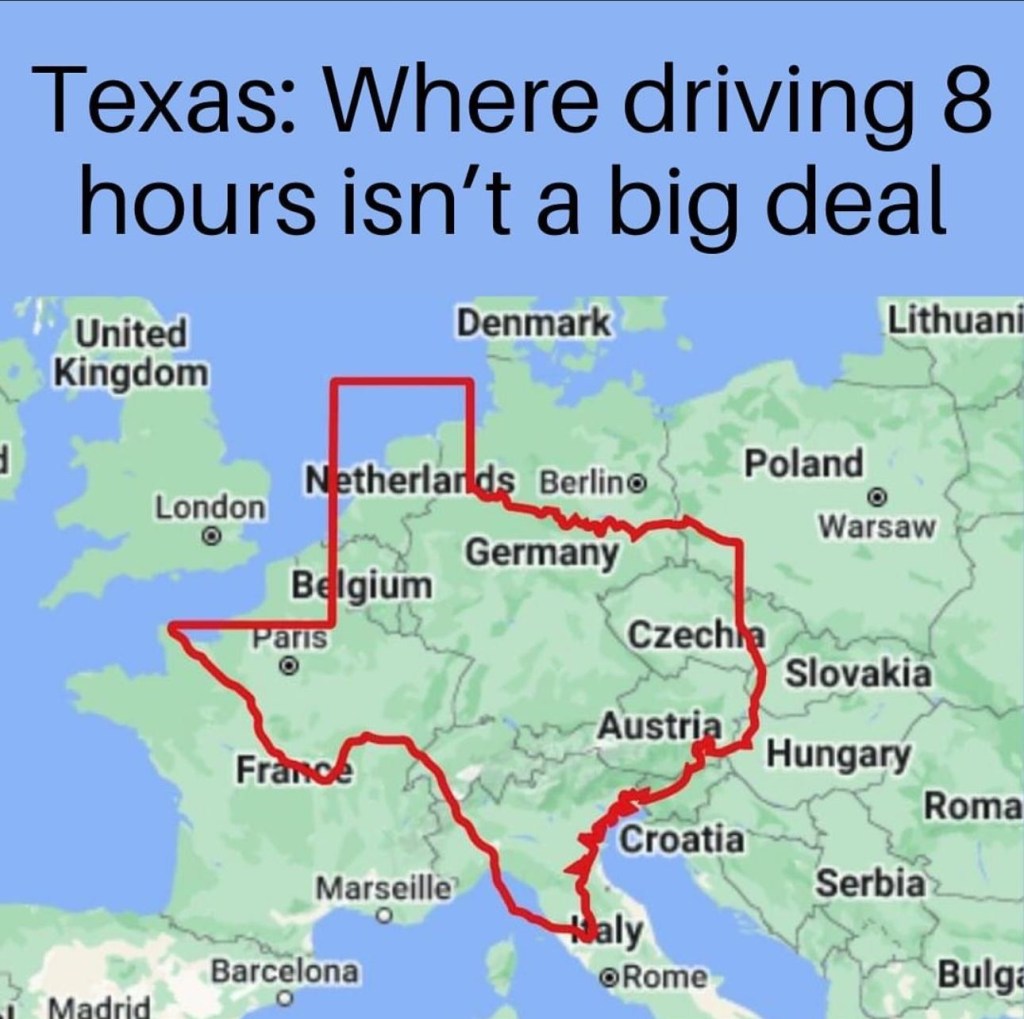
Last month, delegates to the [Texas Republican] state party convention approved a platform that would effectively require a kind of electoral college for statewide elections. To win the governor’s mansion, a candidate would need to carry a majority of Texas’ 254 counties. Democrats, concentrated in the state’s major cities, could never win, no matter the majority they scored at the polls. Republicans, who dominate the state’s vast rural expanse, would govern in perpetuity. (Bouie)
***
The Supreme Court overturned a ban on bump stocks enacted by the Trump administration, ruling that the government was wrong to classify the devices as machine guns… The bump stock allows a [semiautomatic] weapon to fire at nearly the rate of a machine gun without technically converting it to a fully automatic firearm.
Rates of fire:
2016 Orlando night club shooting — 24 shots in 9 seconds, 29 killed, 53 injured;
2017 Las Vegas shooting — about 90 shots in 10 seconds, 58 killed, almost 500 injured (lone gunman had bump stocks on 12 rifles);
Fully automatic firearm — 98 shots in 7 seconds.
(Buchanan, et al.)
***
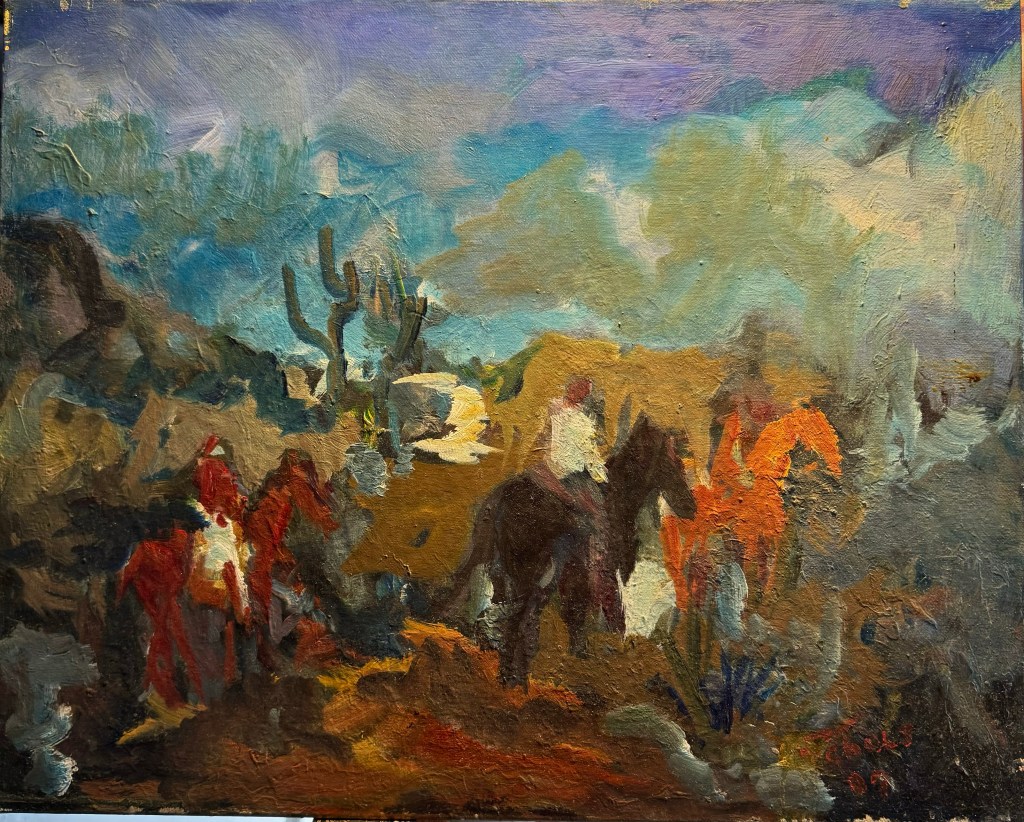
The title of the head of the judicial branch is chief justice of the United States, not chief justice of the Supreme Court… [Chief Justice William Rehnquist] once skipped the president’s State of the Union address because it conflicted with his painting class at the local recreation center. [I assume this happened during Bill Clinton’s presidency, but I can’t find the painting class story attested elsewhere. JMN] (Greenhouse)
Sources
Jamelle Bouie, “Justice Alito Is Right About One Thing,” New York Times, 6-14-24.
Larry Buchanan, Evan Grothjan, Jon Huang, Yuliya Parshina-Kottas, Adam Pearce and Karen Yourish, “What Is a Bump Stock and How Does It Work?, New York Times, published in 2017, updated 6-14-24.
Linda Greenhouse, “How John Roberts Lost His Court,” New York Times, 6-16-24.
(c) 2024 JMN — EthicalDative. All rights reserved






Protect the Rim, Kill the Note
I got a charge out of Ernie Barnes’s painting titled “Protect the Rim.” The surreally long figures, the lofty rustic hoop, and even the knocked-together frame all have a quirky charm.
In a parallel world, my grandmother’s capacious lungs powered Sundays in my childhood church. Her soprano anchored the choir and was audible from the street. Michael Frazier’s feisty “Mom” reminded me of her.
At Church, I Tell My Mom She’s Singing Off-Key and She Says,
I ain’t off-key. I just stepped out the key
so when I return
you can understand the key a little better.
The preacher isn’t the only
teacher. Why hit a note on the head
when I can kill it? You mean to tell me
you come here week after week
and want the same old Amazing
Grace? Just cause the Blood will never lose its power
don’t mean a melody won’t.
My ministry may not be song, but I got a song
to sing. I done made it from Sunday
to Sunday. You expect me not to celebrate
and thank God, with my hands raised,
my flats off, my full and open
throat?
(Will Heinrich, “Ernie Barnes Paints What It Feels Like to Move,” New York Times, 5-30-24,
Michael Frazier, “At Church, I Tell My Mom She’s Singing Off-Key and She Says,” Poetry, May 2024)
(c) 2024 JMN — EthicalDative. All rights reserved