This is the second of 3 poems by Zakaria Mohammed published in the September 2023 edition of Poetry magazine. They date from 2013. (I noted the first one here). English translations by Lena Khalaf Tuffaha are in the Poetry issue as well.
The translation from the Arabic and transliteration of the Arabic text that follow here are mine.
2013-8-15
I await the expiry of August, September’s coup de grâce.
Hey, dawdling Fall, I am here, expectant. Cooked you
some porridge, kindled a fire. Come, wind-sweep the brazen sun
away. Lift its hand from my shoulder.
Summer crouches heavily on my chest. But my pale hand
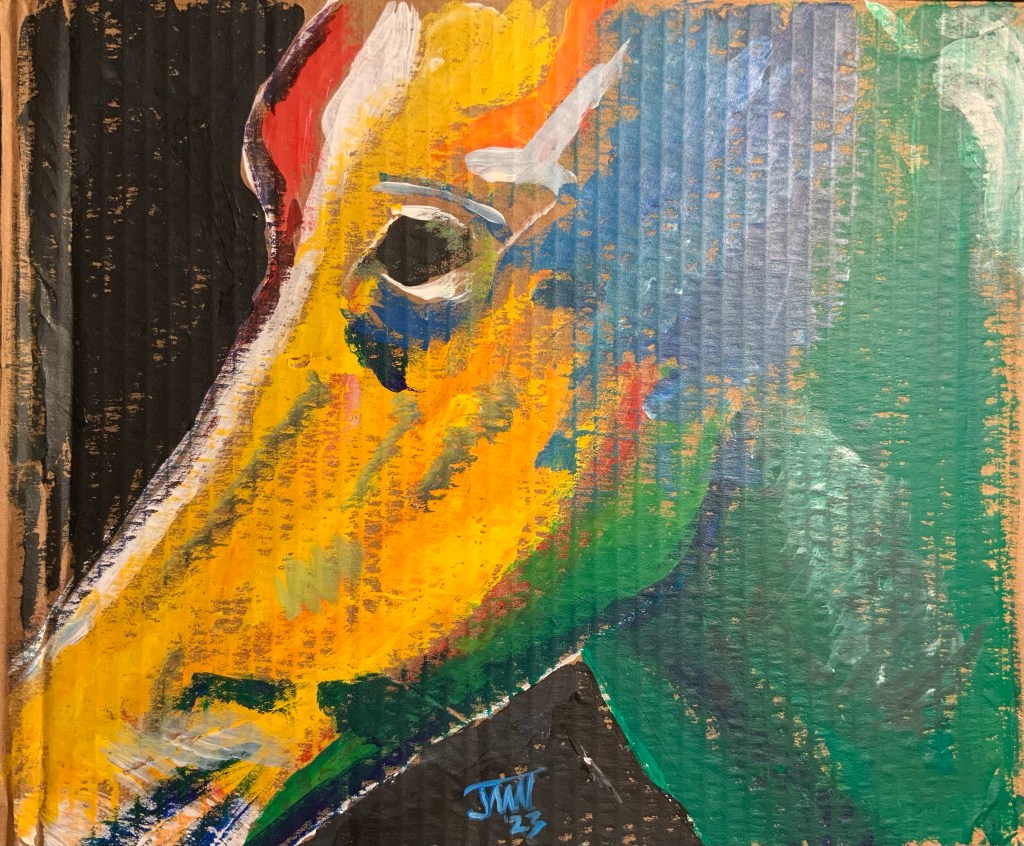
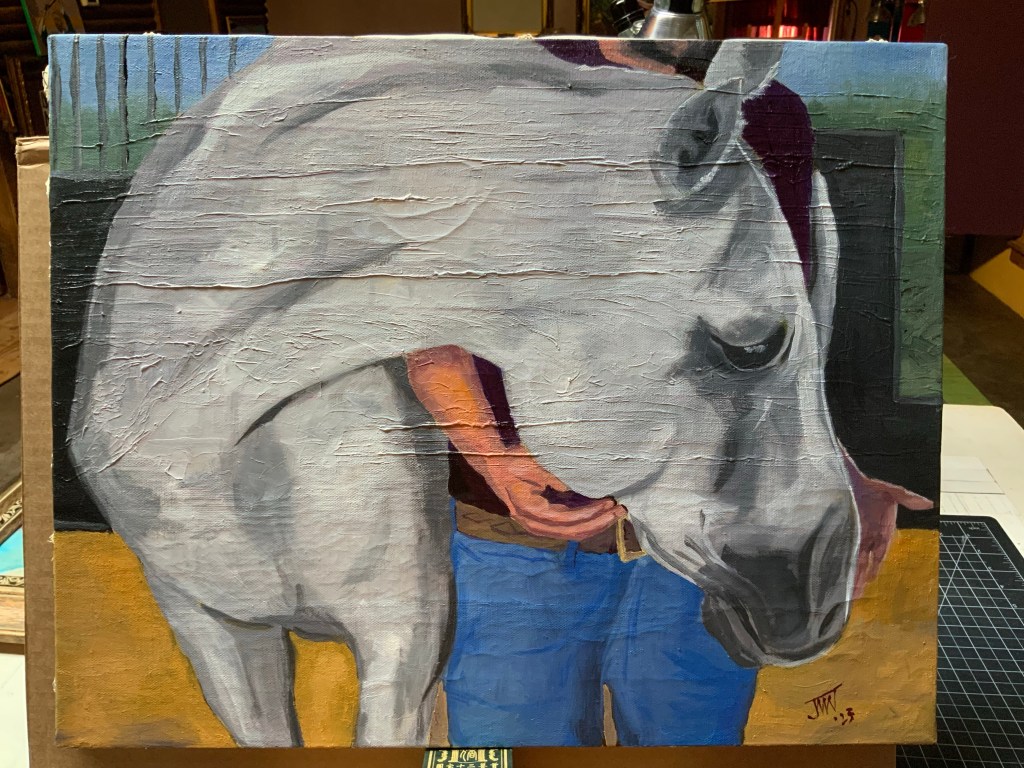
swears by season’s turning, readies a saddle for it. Oh! — you piebald horse of Autumn, that carries me where my thoughts go: chainlink stone climbing the foot of the hill, unruly clouds climbing the foot of the sky. There’s nothing more than this, not a thing.
Of course, it’s possible to add a crash
of thunder so my bones are shaken, and the bones of the world.
As for all of you, believing fondly horses live in the hills
of Spring, know: Autumn’s promontories are their dwelling. They tense and gather muscle at the scent of rain, their nostrils flare, they bolt, clearing rocky hurdles toward the summit, where they will graze on the fringes of clouds.
Transliteration
‘antaḍir(u) nihāyaẗ(a) āb(a) wa-maqtal(a) ailūl(a).
‘ayyuhā-l-ẖarīf(u)-l-lāḏi yatalakka’(u), ‘anā hunā bi-‘intiḍār(i)-ka. ṭabaẖ(tu) la-ka
^aṣīdaẗ(an) wa-‘aš^al(tu) nār(an). ta^āla, w-‘uknus bi-rīḥ(i)-ka-š-šams(a)-
ṣ-ṣafīqaẗ(a). ‘irfa^ yad(a)-ha ^an katif(ī).
‘aṣ-ṣaif(u) yajṯim(u) ṯaqīl(an) fauqa ṣadr(ī). lakinna yad(ī)-l-baiḍā’(a)
taḥlif(u) bi-l-ẖarīf(i), wa-tu^idd(u) la-hu-s-sarj(a). ‘āh(i) yā ḥiṣān(a)-l-ẖarīf(i)-
l-‘ablaq(a). yā man yadrus(u) fikraẗ(ī) wa-yunaffiḏ(u)-hā: salāsil(un) ḥajarīyaẗ(un)
taṣ^ad(u) safḥ(a)-t-tallaẗ(i) wa-ḡuyūm(un) mušattataẗ(un) taṣ^ad(u) safḥ(a)-s-samā’(i).
wa-lā šai’(a) ḡair(a) hāḏā, lā šai’(a). bi-ṭ-ṭab^(i), yumkin(u) ziyādaẗ(u) haddaẗ(i)
ra^d(i) kai tataẖalẖal(a) ^iẓām(ī) wa-^iẓām(a)-d-dunyā.
‘ammā ‘antum fa-qad ẓanan(tum) ẖaṭa’(an) ‘anna-l-ẖail(a) taskun(u) fī tilāl(i)-
r-rabī^(i). lā, tilāl(u)-l-ẖarīf(i) hīya maskan(u)-l-ẖail(i). taštamm(u)
muhtājaẗ(an) rā’iḥaẗ(a)-l-maṭar(i), fa-tattasi^u manāẖir(u)-ha, wa-taqfiz(u) fauqa-
s-salāsil(i)-l-ḥajarīyaẗ(i) ṣā^idaẗ(an) naḥwa-l-qimmaẗ(i), kai taqḍam(a) ‘aṭrāf(a)-l-ḡaimaẗ(i).
(c) 2023 JMN — EthicalDative. All rights reserved



 EthicalDative
‘She Didn’t Do Innocence’
She insisted on calling herself a writer. It was for posterity to judge if she was a “poet,” she averred in an essay. News of her passing hit me with a jolt on the very day of it. Louise Glück died on October 13, 2023, aged 80.
Her astutely acid critiques of my submissions in a writing seminar she conducted at Greensboro administered a salutary coup de grâce to my juvenile ambitions to write poetry. At seminar’s end I set sail to fail in other directions, and have since paid her the readerly devotion the genre exacts from me. An unsentimental, Olympian reserve I treasure in Glück’s work has provided a benchmark for how I prospect for poems in verse I consume.
Here’s another comment from Colm Tóibín’s tribute in The Guardian:
Glück was not afraid of using words like “soul” or “god”, or making use of primal images of forest and light and dark and sun and moon. But the poems were not abstract. They were poems of hard experience. She didn’t do innocence. The poems were filled with emotions that she knew only too well.
(Colm Tóibín, “Louise Glück: a poet who never shied away from silence, pain or fear,” theguardian.com, 10-17-12)
(c) 2023 JMN — EthicalDative. All rights reserved