
Author Yi-Zheng Lian, a professor of economics at Yamanashi Gakuin University in Japan and contributing Opinion writer for the NYTimes, makes a crucial point in this article about Covid-19:
Of course, the virus isn’t Chinese, even if its origin eventually is traced back to a cave in China; nor is the disease that it causes.
It makes as little sense to attribute nationality to a virus as it does to attribute it to plankton. The corollary that Yi-Zheng Lian states is equally crucial:
Epidemics, on the other hand, are often societal or political — much like famines are usually man-made, even though droughts occur naturally.
For me the distinction he draws brings a moment of clarity amid the maelstrom of obfuscation and fault-finding that’s abroad in the world. The agency of human beings in epidemics, as in famines, must be recognized.
From here Yi-Zheng Lian proceeds to enunciate the following point about Chinese culture and support it with observations about that culture:
Punishing people who speak the truth has been a standard practice of China’s ruling elite for more than two millenniums and is an established means of coercing stability.
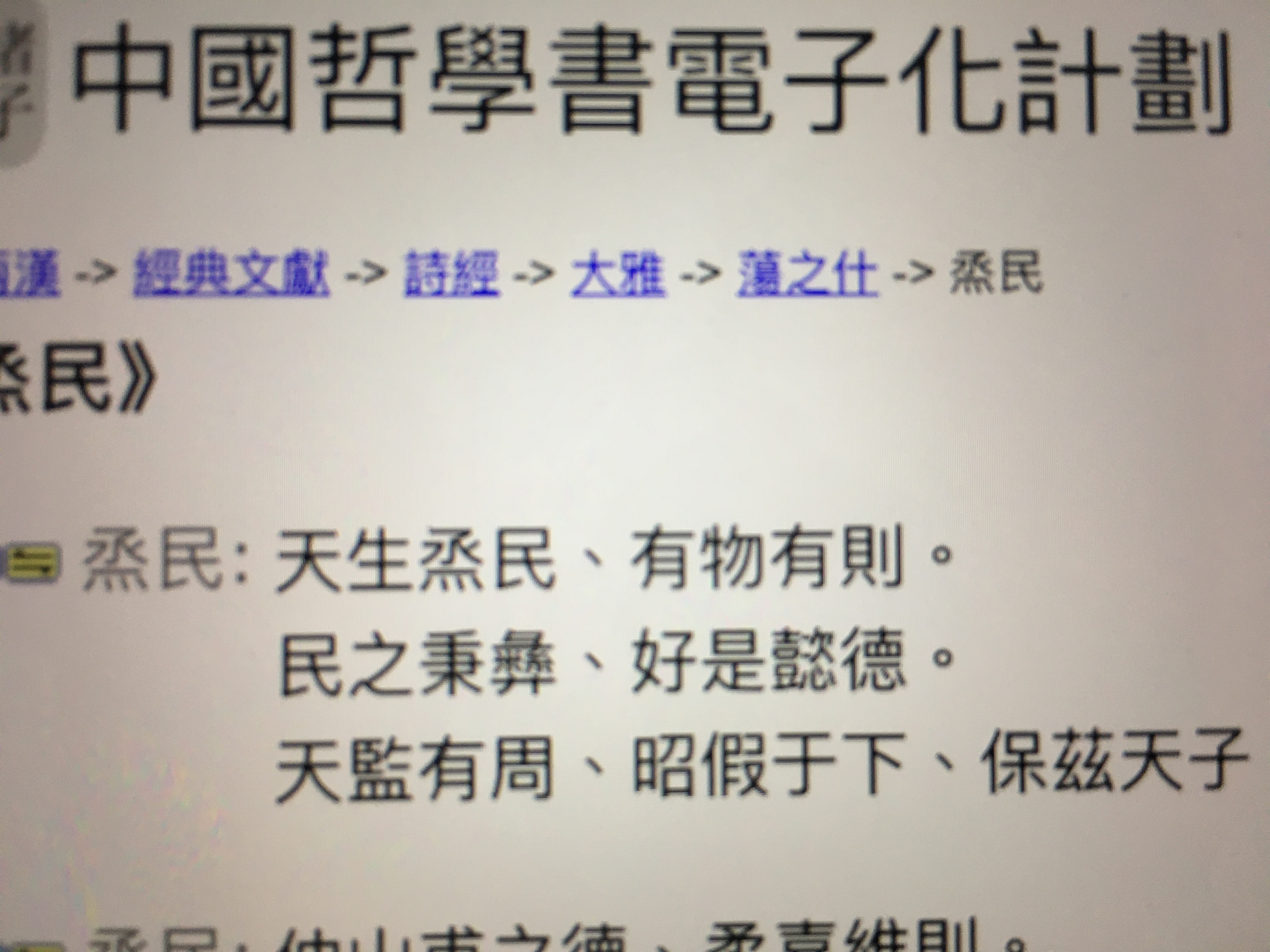
There are several handles to grab on this essay, prominent among them the themes of Chinese food culture and traditional medicine. Because it’s what I’ve least encountered, however, I was captured by the references to classical Chinese literature, including associated Chinese script.
Here’s a sample:
The sage [Confucius] took a page from… “The Classic of Poetry” (also known as “The Book of Songs”), a collection of songs and poems dating to the 10th century B.C. or before, and adopted a rule from it: “To Manifest the Way, First Keep Your Body Safe.” (明哲保身) That may sound innocuous enough, until you consider the fate of one of Confucius’s beloved students, Zi Lu (子路), also known as Zhong You (仲由), after he ran afoul of the precept: For trying to rebuke a usurper in a power struggle between feudal lords, he was killed and his body was minced. (It is said that Confucius never ate ground meat again.)
Others:
In the third century, the maxim took on some literary flair and a cynical didactic twist in an essay on fate by the philosopher Li Kang (李康): “The tree that grows taller than the forest will be truncated by gales” (木秀于林,風必催之). This, in turn, eventually gave rise to the more familiar modern adage, “The shot hits the bird that pokes its head out” (槍打出頭鳥).
(Yi-Zheng Lian, “Why Did the Coronavirus Outbreak Start in China?” NYTimes, 2-20-20)
(c) 2020 JMN







 EthicalDative
Bit of Lemonade
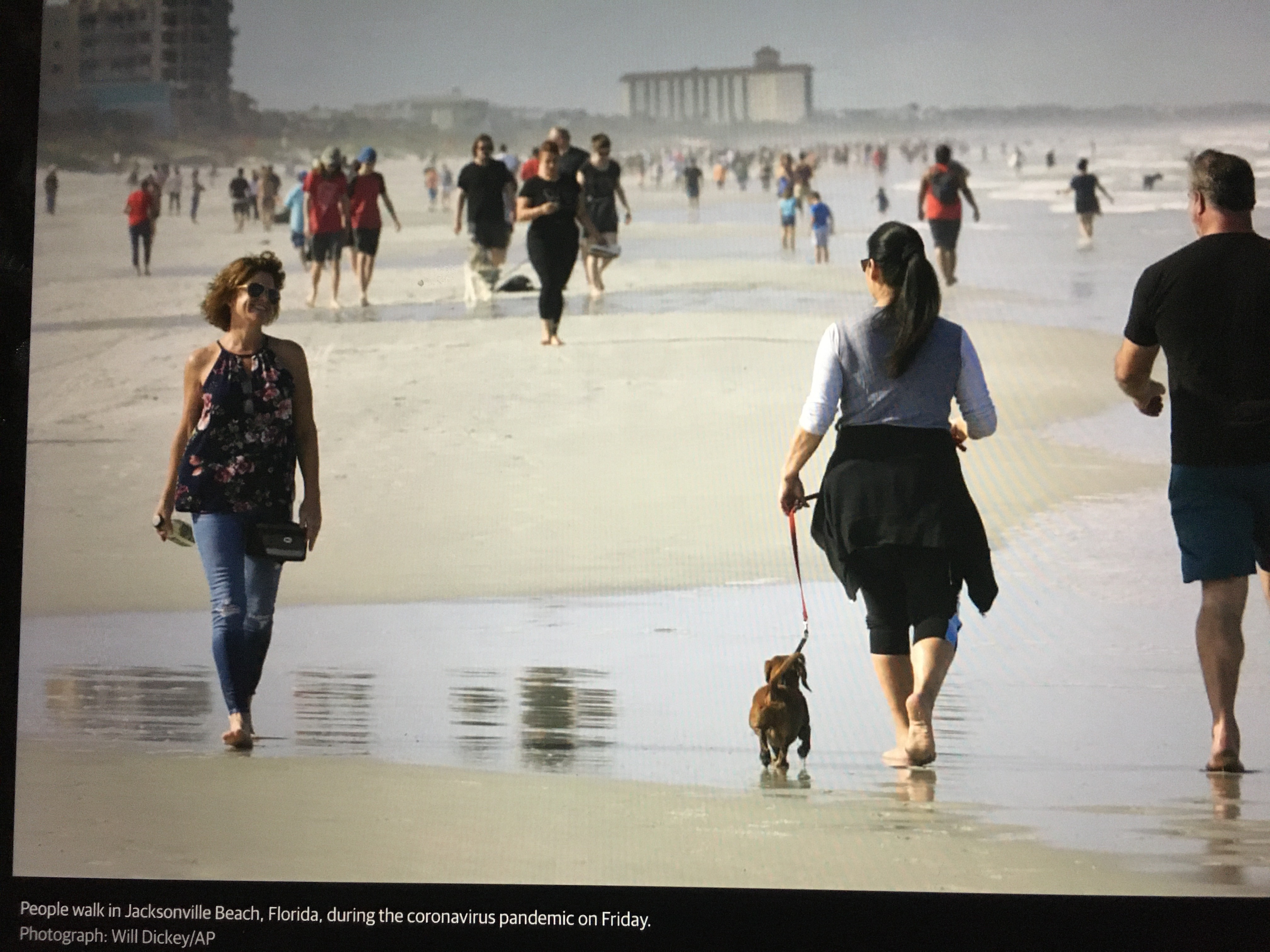
The restaurant business is suffering from the corona-crash like many other sectors of commerce. Legitimate concerns are expressed for the many workers in food and hospitality whose livelihoods are blighted now.
There’s a certain irony, therefore, in the thesis of this article: That many people are benefitting, healthwise, from eating out less.
A poor diet is the biggest underlying cause of mortality in America, and that poor diet is largely delivered by large food companies like Pepsi, Coca-Cola, Chick-fil-A and McDonald’s. Just 10 dietary factors (such as high intake of processed meat and refined grains) are estimated to cause more than 1,000 deaths per day from heart disease, stroke and diabetes alone. More than 100 million Americans have diabetes or pre-diabetes and 122 million have cardiovascular disease.
Frequent cooking could make a difference in outcomes — on average, people who frequently cook at home eat less fat and sugar than other people. Most restaurants and many large food companies, after all, use levels of salt, sugar and fat that would be inconceivable for home cooks. [my bolding]
(Hans Taparia, “How Covid-19 Is Making Millions of Americans Healthier,” NYTimes, 4-18-20)
I’ve been in several relationships in which my partner has been averse or indifferent to cooking, leaving it to me to assume the chef’s hat in the domestic arrangement. As a living-alone person now, my private slogan has been: “The man who doesn’t cook for himself eats poorly and dearly much of the time.” The mantra helps me make lemonade from lemony circumstance, if you will; however, it may be truer than I realized.
(c) 2020 JMN