It’s a stretch, but the evolving Covid-19 moment seems a good time to pause injury and death from shooting where possible.
In Mexico it would abet the diverting of already shaky personnel assets from cartel warfare to virus containment, potentially lessening misery for the 40%-plus of the population living in poverty who will bear the plague’s brunt.
Mexico registered2,585 homicides in March – the highest monthly figure since records began in 1997 – putting 2020 on track to break last year’s record total for murders.
(David Agren, “Mexico murder rate reaches new high as violence rages amid Covid-19 spread,” theguardian.com, 4-3-20)
Elinore Kaufman outside Penn Presbyterian Medical Center in Philadelphia. Credit… Mark Makela for The New York Times.
In the U.S. it would free up trauma surgeons like Dr. Kaufman (above) to assist more victims of the pandemic.
Firearm injuries are calamitous for the more than 120,000 people shot each year in the United States and their families. But the consequences for our health system are even more dire as we fight the coronavirus.
We need I.C.U. beds, we need ventilators, we need personnel to care for the wave of Covid-19 patients. But gunshot victims are now fighting for space and resources inside America’s overcrowded I.C.U.s.
(Elinore Kaufman, “Please Stop Shooting. We Need the Beds,” NYTimes, 4-1-20)
To the NRA, currently lobbying to keep gun stores open, I say, “No time to argue with you, my Second Amendment friends. Firearm purchases are essential during a pandemic if you say so.”
To my fellow citizens waiting in long queus to buy firearms I say, “Buy your weapons and ammo, take them home, and put them in safekeeping. They are by your side when you choose to need them.”
I don’t dispute the quixotic nature of advocating a voluntary moratorium on shooting; absent any authority that could actually suppress the fire, however, delusion guides me as it did the Knight of the Mournful Countenance.
“To depict nature, we can only try. Nature doesn’t have any straight lines. It doesn’t follow the rules of perspective.” (David Hockney)
(Jonathan Jones, “David Hockney urges us to escape lockdown through a pencil,” theguardian.com, 4-4-20)
This comment by Hockney reminded me of the work of the Catalan architect Antoni Gaudí. The non-straightness of lines in nature was a dominating principle of his building designs, of which there are eminent examples in Barcelona and other Spanish cities.
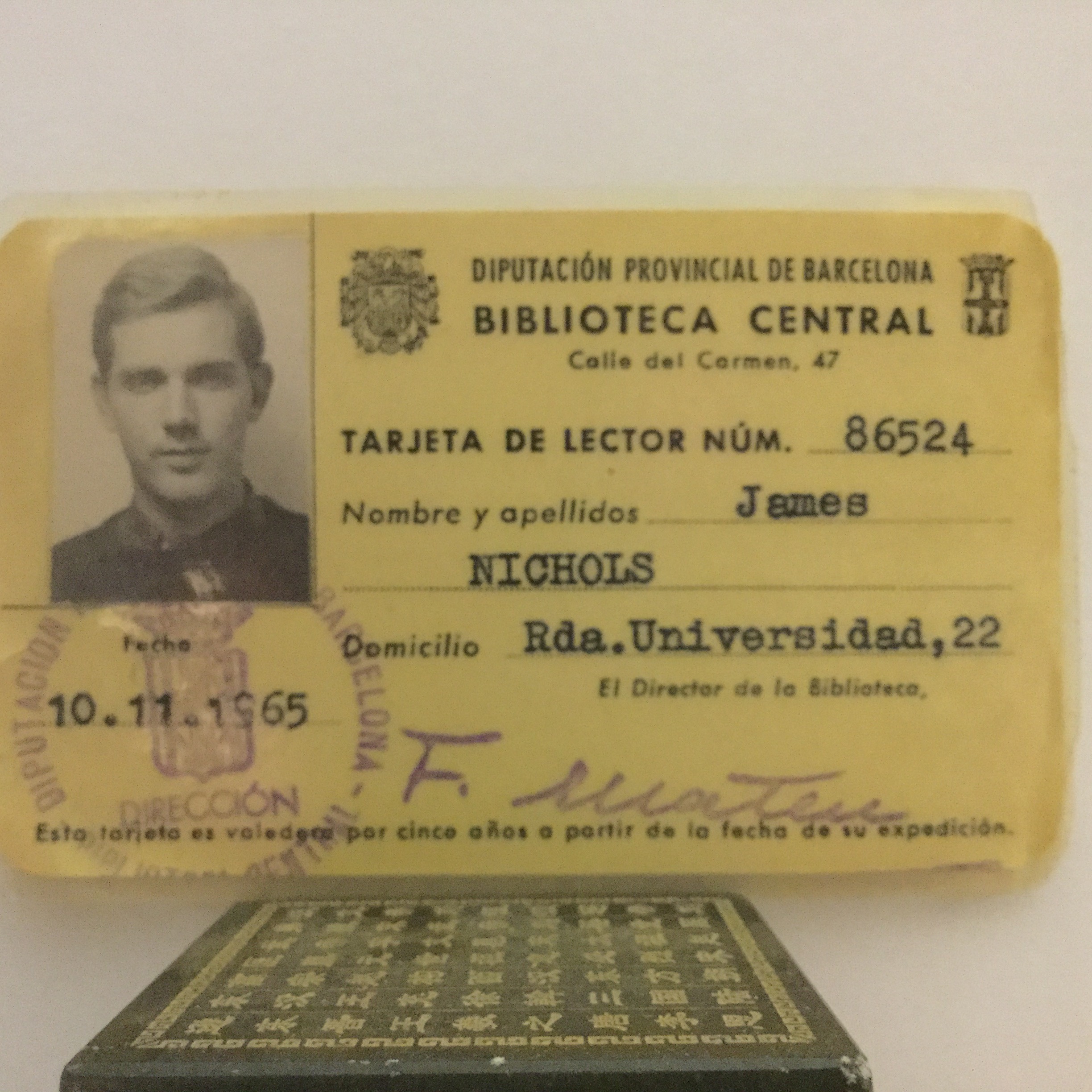
My first taste of a Gaudí creation was when I visited an acquaintance who lived in La Pedrera, an apartment building Gaudí designed. I had just arrived in Barcelona to spend my junior year in college there in the Facultad de Filosofía y Letras. I lived in a pensión at Ronda de la Universidad 22-B near the Plaza de Catalunya. It was a short walk to my classes.
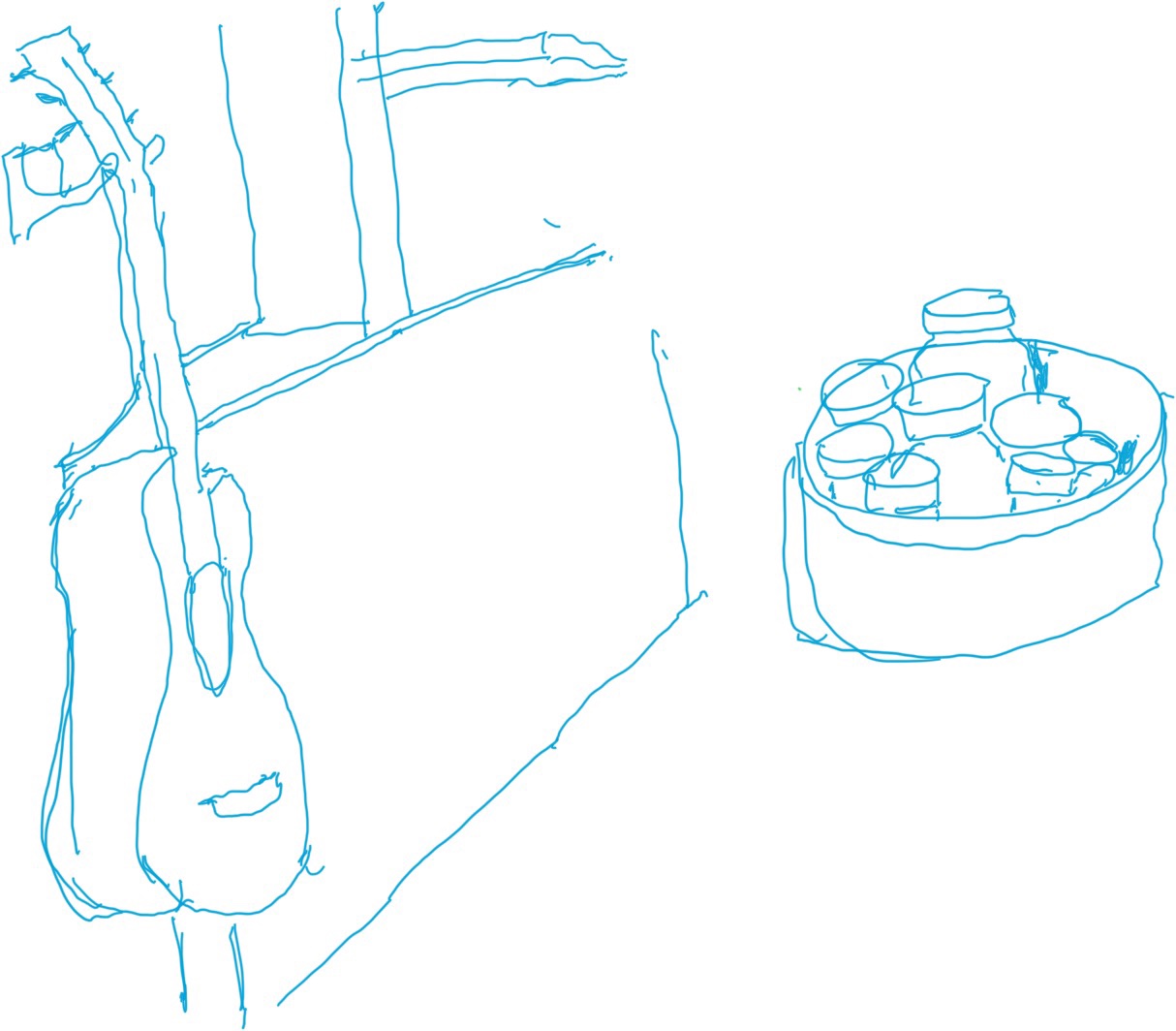
I have made a sketch, copied and pasted it into a “Notes” doc, then come here to add text. I “Shared” the sketch to my “Photos” by downloading it. From there I can import it into the WordPress Gallery, then insert it into a blog post. Leaps and bounds in the direction of sharing unfortunate sketches are being made in this picayune reduct of artistic malfeasance, rumors of rumors, and effete misspokenness called Ethical Dative.
The tactile feedback of the digitizing “pencil” on the iPad Pro screen is dominated by an overwhelming sense of SLICKNESS. The point glides over the surface willy-nilly and higgledy-piggledy with no resistance, registering inexorably and unmercifully every pulsation, fidget, vacillation, and herky-jerky linear travesty of the hand.
This has been a test, and only a test, but a testy test from the rigors of isolation. Should it have been a reality rather than a test — a “real” sketch, God help us — that would have been made manifest from the outset. It’s only pixels. Pixels to pixels, ether to ether, dust to dust.
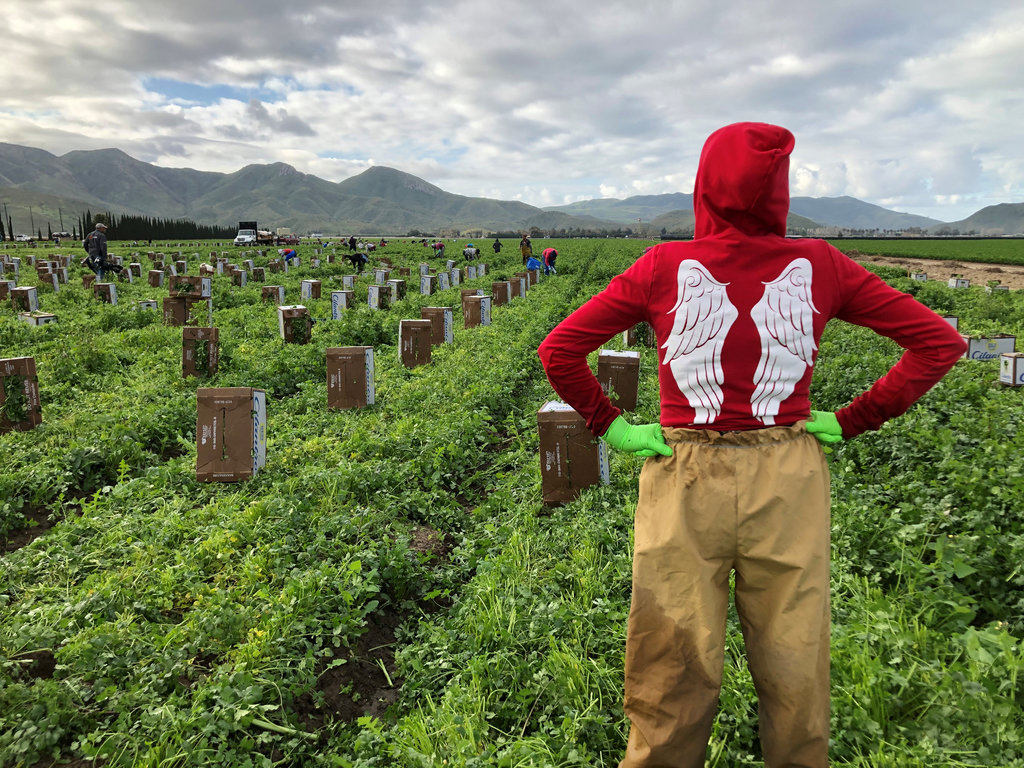
Like health care workers and emergency medical workers, America’s farmworkers, like these in Oxnard, Calif., are putting themselves in harm’s way for the rest of us. Credit… Norma Galeana/Reuters.
America’s 2.5 million farmworkers are among the groups most at risk of contracting the coronavirus. And if they are at risk, our food supply may be too.
Picture yourself waking up in a decrepit, single-wide trailer packed with a dozen strangers, four of you to every room, all using the same cramped bathroom and kitchen before heading to work. You ride to and from the fields in the back of a hot, repurposed school bus, shoulder-to-shoulder with 40 more strangers, and when the workday is done, you wait for your turn to shower and cook before you can lay your head down to sleep. That is life for far too many farmworkers in our country today.
(Greg Asbed, “What Happens If America’s 2.5 Million Farm Workers Get Sick?” NYTimes, 4-3-20)
Greg Asbed, a founder of the Coalition of Immokalee Workers, received a MacArthur Foundation fellowship in 2017 for his role in developing the Fair Food Program to protect farm workers’ human rights.
Reading this article gave me a visceral boost, because it gives a name to what I happen, unforeseeably, to have with another person: deep reciprocal attunement effortfully gained.
Bonnie Badenoch, quoted by David Brooks, says disconfirming experiences are experiences of “deep reciprocal attunement with others that make you feel viscerally safe.” They are the best way to combat a “visceral sense of fear and disassociation.”
Creating these experiences takes effort. “Being together is not the same as being connected,” Columbia professor Martha Welch told me. She recommends that people engage in deep intentional and vulnerable conversations… She and the other experts I spoke with endorse anything rhythmic. Anything that will create an experience of attunement: singing, dancing, yoga, deep eye contact, daily rituals and games.
(David Brooks, “Mental Health in the Age of the Coronavirus,” NYTimes, 4-2-20)
I read “Being together is not the same as being connected” as implying that being together isn’t necessarily required for being connected.
Physical separation: Check!
Deep intentional conversations: Check!
Shared rhythmic pursuits: Check!
It’s arresting and gratifying when language catches up with life.
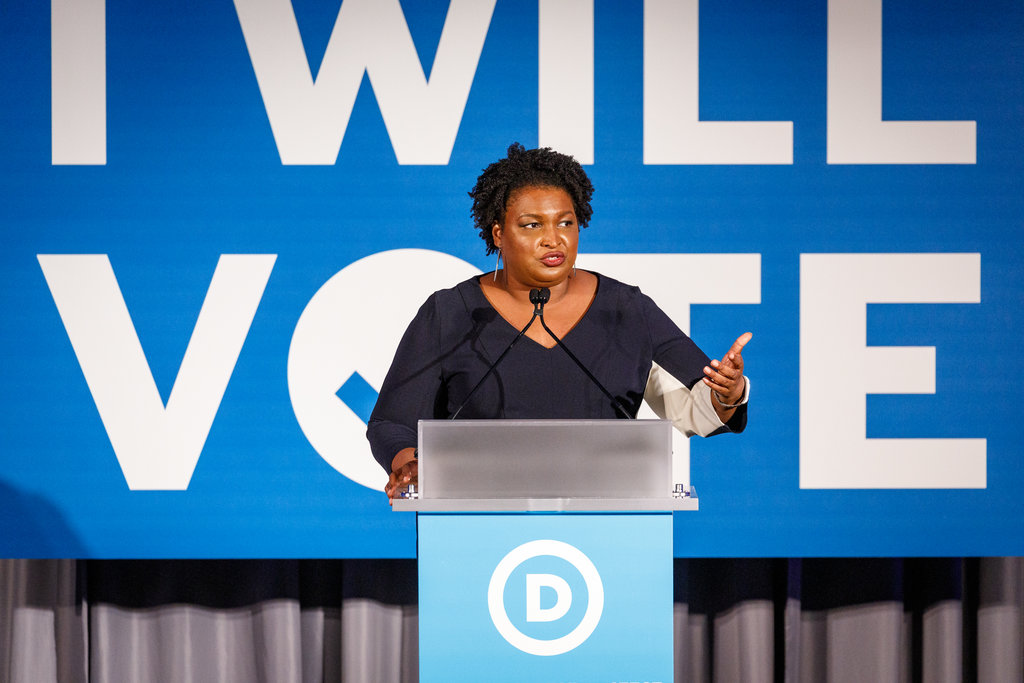
Stacey Abrams at a Democratic National Committee gala last June to raise money for a program aimed at registering voters. Credit… Dustin Chambers/Getty Images.
“Opportunity definitely died on election night 2016 for federal court reform,” said Scott Greytak, a lawyer who worked at Free Speech for People… Now, he said, “All the energy and attention has been pushed down to the state and local level…”
… “There is more energy on democracy reform now than 10 years ago,” when practical, direct policies were mostly stopped in their tracks. “People realize we can’t get there with the democracy that we don’t have[my bolding].” (Dorian Warren, head of the nonprofit Community Change)
(Talmon Joseph Smith, “Legalized Bribery by Elites Is Here to Stay. Now what?” NYTimes, 1-25-20)
Let’s change where here is, then. Hope is there, closer to home.
A woman offering a prayer at a church in Milan. Credit… Alessandro Grassani for The New York Times.
A column in The Times by Bret Stephens got POTUS’s attention recently. There is conjecture that it may have contributed to the “cure-worse-than-the-disease” propaganda that trumpets against efficient pandemic control.
My mom puts the groceries away and we sit down to talk on her patio, keeping our chairs far apart. She didn’t think much of my last column, in which I argued that we need to balance the public-health risks of pandemic against the risks of a global depression.
“I don’t remember your degree being in medicine or epidemiology,” she observes.
Stephens is a thoughtful, informed, and sensitive voice for conservatism. I sense that he is offsetting here what may have been his inadvertent contribution to fostering indifference to the virus’s potential toll on the more vulnerable segments of the population.
So I sit on my mom’s patio and listen. Not out of filial deference or compassion, but because deep down I know there’s usually more wisdom in my mother’s instincts and perceptions than there are in my clever (or not-so-clever) concatenations of facts, concepts and hypotheticals. And while I can’t hug her, I can at least try to honor her by paying close attention — as we should all of our elderly loved ones, now so vulnerable, never more precious[my bolding].
Stephens’s mother is a Jewish refugee born in Milan who fled Nazi control of northern Italy.
(Bret Stephens, “In This Emergency, Mom Knows Best,” NYTimes, 3-27-20)
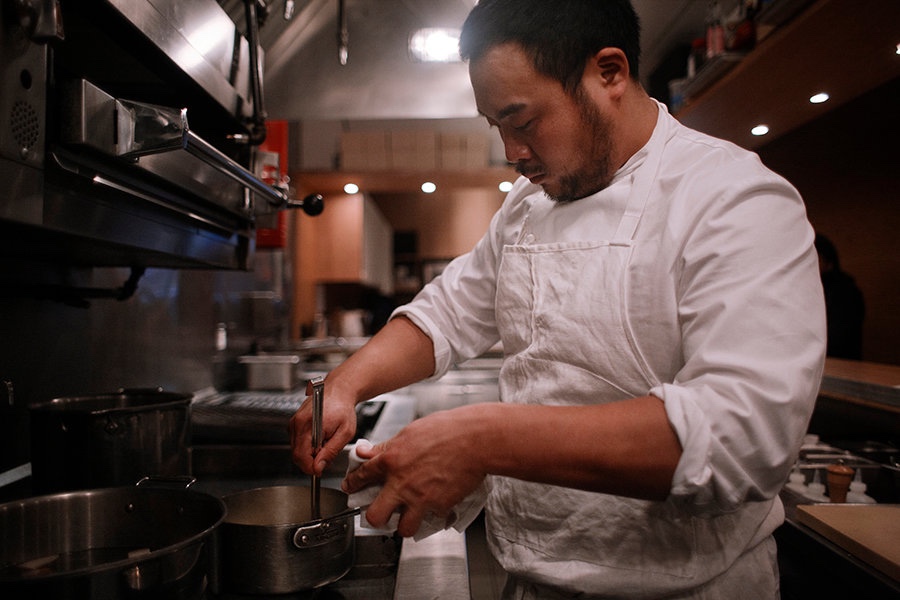
A streak of pluckiness, or at least a commitment to persist, as well as a capacity to think deeply and grow out of the shallows — these traits peek through David Chang’s glimpse into his personal tribulations and his sober take on the plight of his industry.
We’re still a conservative steak-and-potatoes country, and that bums me out. There’s less risk-taking. That’s OK if you want to be a craftsman, but there’s fewer people that want to do that, too.
What would the alternative to a steak-and-potatoes country look like? Every country has its staples.
That’s a great question. I guess for me it’s: How do we find openness? So much of my life is because of the hell I experienced as a kid. [Chang is a son of Korean immigrants. He grew up with three siblings in suburban Arlington County, Virginia.] A lot of it was like, as silly as it seems, Oh, Chang, you eat dog, or you eat poo, or your house smells. All of these things. What bothers me about steak and potatoes — and I love steak, I love potatoes, I love them together — is when people don’t want to try anything else. That myopic viewpoint scares me. If I learn to appreciate something, then it better allows me to understand someone else’s culture.
(David Marchese, “David Chang Isn’t Sure the Restaurant Industry Will Survive Covid-19,” NYTimes, 3-27-20)
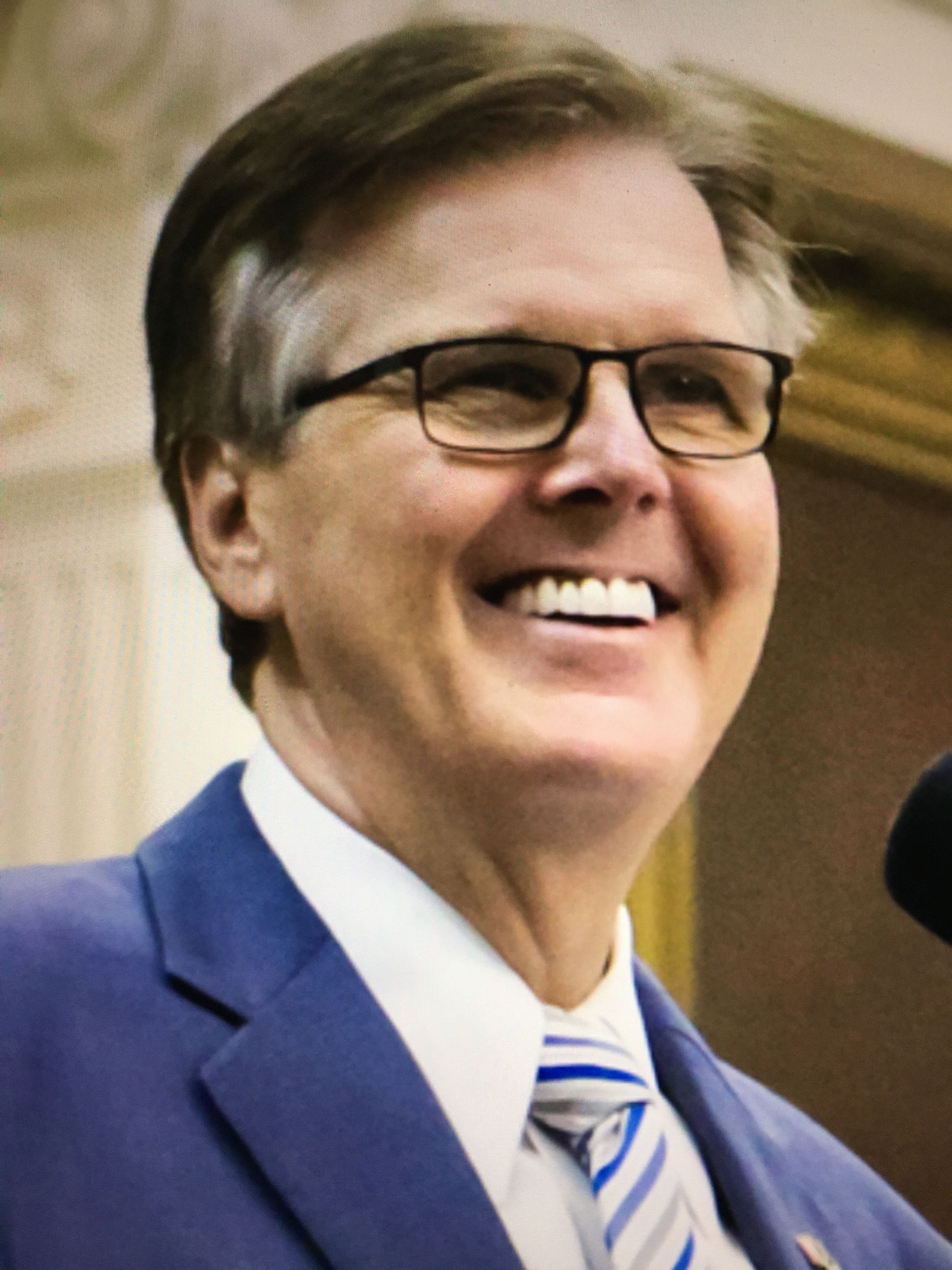
[Dan] Patrick, who said he will turn 70 next week, said that he did not fear COVID-19, but feared that stay-at-home orders and economic upheaval would destroy the American way of life.
No one reached out to me and said, ‘As a senior citizen, are you willing to take a chance on your survival in exchange for keeping the America that America loves for its children and grandchildren?’ And if that is the exchange, I’m all in,” Patrick said.
(Jamie Knodel, “Texas Lt. Gov. Dan Patrick suggests he, other seniors will be willing to die to get economy going again,” nbcnews.com, 3-24-20)




 EthicalDative
Stop Shooting for a Moment?
It’s a stretch, but the evolving Covid-19 moment seems a good time to pause injury and death from shooting where possible.
In Mexico it would abet the diverting of already shaky personnel assets from cartel warfare to virus containment, potentially lessening misery for the 40%-plus of the population living in poverty who will bear the plague’s brunt.
Mexico registered 2,585 homicides in March – the highest monthly figure since records began in 1997 – putting 2020 on track to break last year’s record total for murders.
(David Agren, “Mexico murder rate reaches new high as violence rages amid Covid-19 spread,” theguardian.com, 4-3-20)
Credit… Mark Makela for The New York Times.
In the U.S. it would free up trauma surgeons like Dr. Kaufman (above) to assist more victims of the pandemic.
Firearm injuries are calamitous for the more than 120,000 people shot each year in the United States and their families. But the consequences for our health system are even more dire as we fight the coronavirus.
We need I.C.U. beds, we need ventilators, we need personnel to care for the wave of Covid-19 patients. But gunshot victims are now fighting for space and resources inside America’s overcrowded I.C.U.s.
(Elinore Kaufman, “Please Stop Shooting. We Need the Beds,” NYTimes, 4-1-20)
To the NRA, currently lobbying to keep gun stores open, I say, “No time to argue with you, my Second Amendment friends. Firearm purchases are essential during a pandemic if you say so.”
To my fellow citizens waiting in long queus to buy firearms I say, “Buy your weapons and ammo, take them home, and put them in safekeeping. They are by your side when you choose to need them.”
I don’t dispute the quixotic nature of advocating a voluntary moratorium on shooting; absent any authority that could actually suppress the fire, however, delusion guides me as it did the Knight of the Mournful Countenance.
(c) 2020 JMN