Poisonous Language Travels (Like a Virus)

As news filtered from the Joaquín Rosillo nursing home on the outskirts of Seville that a few residents had tested positive for coronavirus, worried families scrambled for information.

But amid a nationwide lockdown, with their movements limited, there were no clear answers. Manuel Borrego, whose mother lives in the home, heard through contacts that people were dying. But the nursing home’s management told him that it was “fake news.” [my bolding]

On April 6, 2020, 24 people were reported to have died at the facility.

(“Families fight for answers from Spanish nursing home where dozens died,” NYTimes, 4-8-20)

(c) 2020 JMN

Posted in Commentary, Quotations | Tagged , | Leave a comment

Neck-Broken

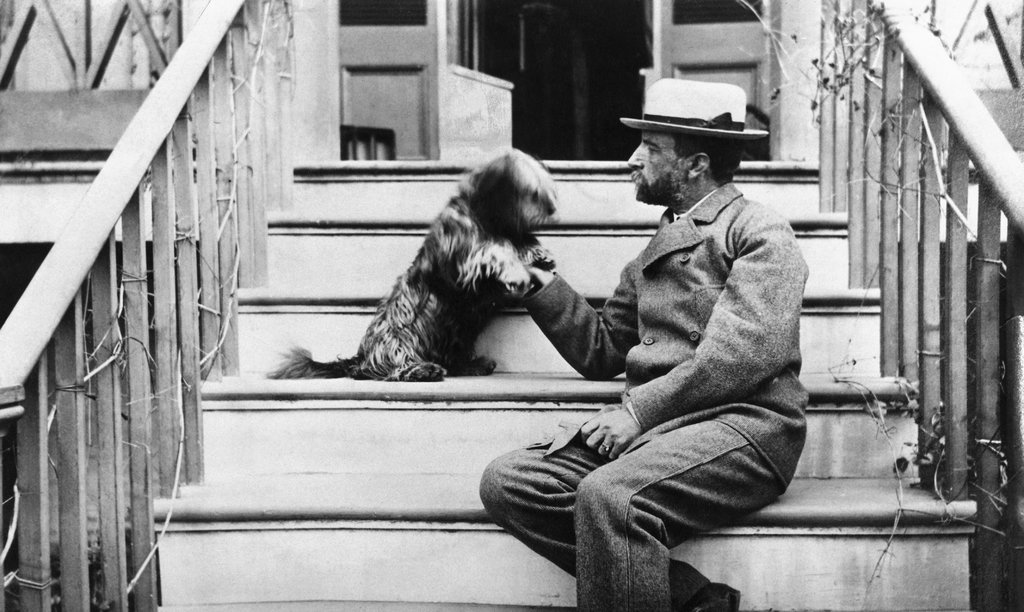
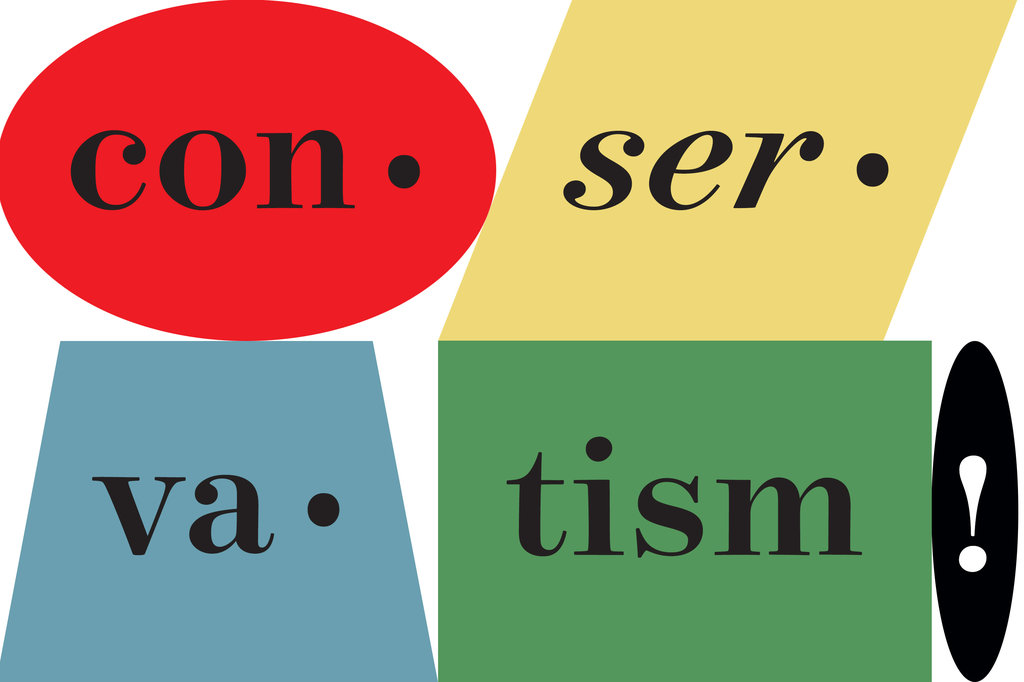
A photo of Henry Adams helped draw me into a review by George F. Will of an anthology of conservative thinkers (“American Conservatism: Reclaiming an Intellectual Tradition,” Edited by Andrew J. Bacevich).

In “The Education of Henry Adams (1907),” Adams recalled “visiting ‘the great hall of dynamos’ at a 1900 exposition of modern technologies.”

There he felt “his historical neck broken by the sudden irruption of force totally new.” This illustrates Bacevich’s theory that “modern” American conservatism “emerged in reaction to modernity,” by which he means “machines, speed and radical change — taboos lifted, bonds loosened and, according to Max Weber, ‘the disenchantment of the world.’”

(George F. Will, “The Mind of Conservatism,” NYTimes, 4-1-20)

My bond with Henry Adams’s work is not with his famous “Education,” but with his “Mont Saint Michel and Chartres,” privately published in 1904. Wikipedia describes it as

a pastiche of history, travel, and poetry that celebrated the unity of medieval society, especially as represented in the great cathedrals of France. Originally meant as a diversion for his nieces and “nieces-in-wish”, it was publicly released in 1913 at the request of Ralph Adams Cram, an important American architect, and published with support of the American Institute of Architects.

It’s good to be reminded during a plague of soulless conservatism that a sensibility and tongue such as Adams’s once stood and spoke for the better kind, even in disenchantment.

(c) 2020 JMN
Posted in Commentary, Quotations | Tagged , , , , , , | 1 Comment

Sauerkraut Ice Cream

George Will reviews “American Conservatism: Reclaiming an Intellectual Tradition,” Edited by Andrew J. Bacevich. Being susceptible to typography-based graphics I was drawn in by the illustration. Will’s opening statement added enticement.

When assembling an anthology of writings representative of a political persuasion, the challenge is to acknowledge the persuasion’s varieties without producing a concoction akin to sauerkraut ice cream, a jumble of incompatible ingredients.

Two passages of Will’s critique sum it up. In the first, note the “however”; it betokens serious preceding quibbles.

The volume is, however, a nourishing cafeteria of writers, many of them justly forgotten but still interesting because they once were interesting.

The second passage credits Bacevich’s most inspired selection to be Joan Didion’s “1972 stiletto of an essay ‘The Women’s Movement,’ which begins, ‘To make an omelette you need not only those broken eggs but someone “oppressed” to break them.’”

Didion, who long ago contributed to National Review and in 1964 voted for Barry Goldwater, here exemplified an analytical acuity, stylistic verve and unenthralled mentality that conservatism, like other persuasions, rarely attains.

(George F. Will, “The Mind of Conservatism,” NYTimes, 4-1-20)

I confess to having to be reminded that there are, or have been at least, capable minds behind conservatism. The current scene belies it.

(c) 2020 JMN

Posted in Commentary, Quotations | Tagged , , , , , | 1 Comment

If There’s a Heaven, It’s Parody

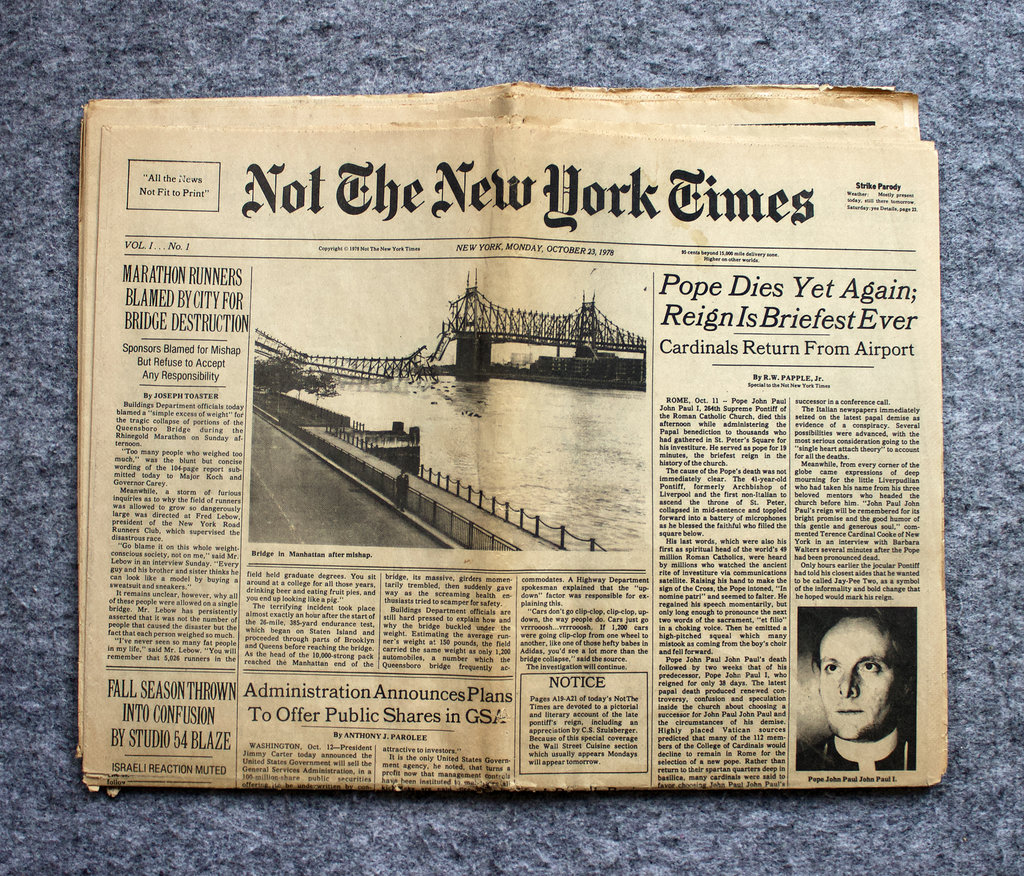
Your neologismic servant, a spastic parodic — or is it “parodian” —, speaks his title. For one crowning moment, the Gray Lady really was “fake news.” An October surprise, so to speak.

In September 1978, a strike by pressmen had shut down New York’s major newspapers. In the resulting vacuum, a “living room full of New York writers… wrote, designed and distributed a satirical replica of The New York Times.”

In one parody column, the writer, walking past a pile of skulls to interview Genghis Khan, praised his ability to “get things done.” It took a “six-month investigation by a team of 35 Not The Times reporters” to determine that cocaine “appears popular.”

“The first person I called was the New Yorker writer Veronica Geng…. She came over and handed me the piece on the front page, ‘Carter Forestalls Efforts to Defuse Discord Policy.’” (Rusty Unger)

“I wrote the James Reston column. It wasn’t entirely about him, but it was about [the foreign correspondent and columnist] Cy Sulzberger and people like that who have this rather elevated view of the world, and were always meeting with princes and presidents, and giving the authoritative word on what’s going on.” (Frances FitzGerald)

“There was an air of secrecy about my involvement. I’m sure I told my parents, but not many other people. There was a great fear that The Times was going to hate this, and they would go off on some Trumpian purge of employees who’d had anything to do with it.” (Steven Crist)

“Nobody was being paid and nobody was going to get credit, and there was never a better atmosphere of creativity and freedom and camaraderie. Where are you going to find those parameters again?” (Rusty Unger)

(Alex Traub, “When All the Zingers Were Fit to Print,” NYTimes, 4-1-20)

(c) 2020 JMN

Posted in Commentary, Quotations | Tagged , , , , , , | Leave a comment

Rare and Pastel

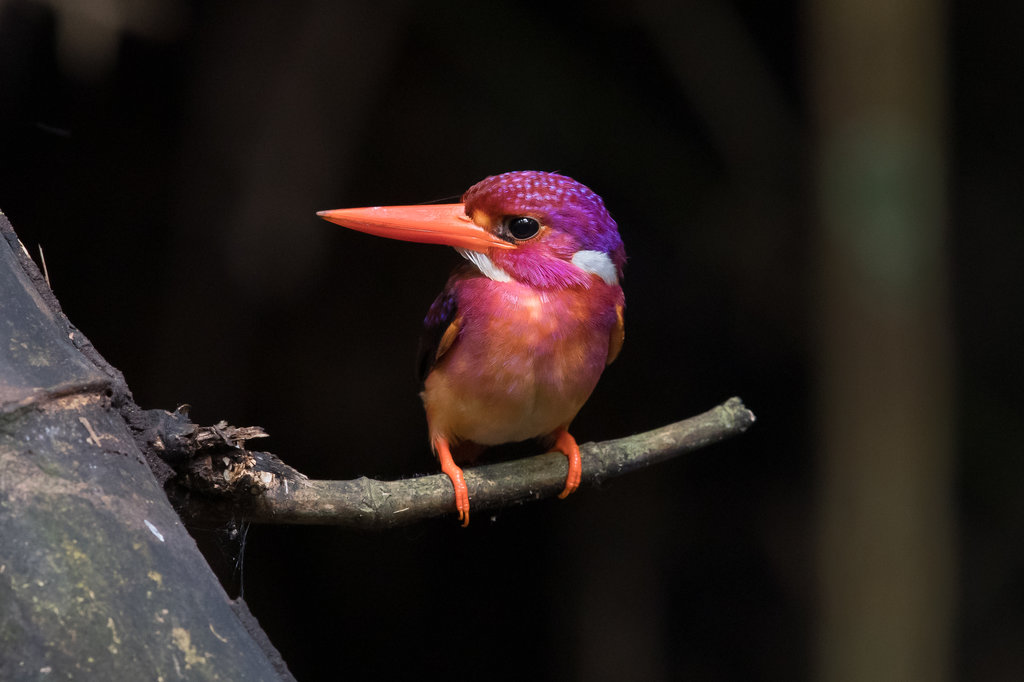
A friend likes birds and will see this. I like them too. This amazing bird will brighten the day of all of us who like birds. It impresses me how its young simply “rocket away” from the nest when ready to fly

… The South Philippine dwarf kingfisher is particularly hard to spot. “It perches quietly and darts invisibly from perch to perch,” Dr. Kennedy’s bird guide warns.

And as Dr. De Leon’s group soon found, the fledgling is even sneakier. While birds of other species often stay close to their nests while learning to fly, the young kingfishers rocket away. “Even if we’re watching them closely, they just disappear,” he said.

(Cara Giaimo, “How an Eye Surgeon Got a Picture of This Rare Pastel Bird,” NYTimes, 4-3-20)

Addendum: I read the article and jotted the above note on April 3. Today, April 5, my friend sends news of birds that are common in that country, and inquires as to birds common in mine. The state bird where I live is the mockingbird. It has a longish tail, drab coloring, a reputation for being peevish and for appropriating the abandoned nests of other birds for its own. There’s a hoary song called “Mockingbird Lane” whose title is all I know of it. We have hummingbirds, who are thrilling when they appear making free of the jatropha blooms. The mourning dove is a built-in bird here; its coo sounds halfhearted, resigned. A roadrunner lived near me once; he or she was a treat to behold and, true to form, never left the ground before diving into the bushes. There was a solitary owl nearby, the only one I’ve ever seen in the flesh. In Waco at springtime birds I called blackbirds literally — and I mean “literally” in a literal sense here, not as a bogus elative — blackened the sky in their swarms, and perched in ranks of thousands along telephone lines all over town. I’ve heard the honkings of geese passing over towards their southern roosting in the fall. Sparrows are ubiquitous. There’s a bird here called a jackdaw, which may be another name for that blackbird. I’m afraid I’m not equipped to distinguish birds that are black from black birds. There are robins and cardinals. And then there’s a “redbird.” Is that the cardinal?There are seagulls on the nearby coast; and in the fields there’s a long-legged white bird that hangs about herds of cattle and feeds off seeds in their droppings. I’ve always called them “dookie birds,” not the scientific name, I’m sure. There’s a preserve nearby that has been devoted forever to trying to keep whooping cranes extant. There are quail, though I never see them. There is a whitewing season, a kind of dove, I think, during which men go out and shoot masses of them. There’s also a duck season, so there are wild ducks to be shot. There’s a long tradition of baiting turkeys and deer with grain from feeders, and hiding in special blinds to shoot them. Called hunting.

(c) 2020 JMN

Posted in Commentary, Quotations | Tagged , , | Leave a comment

Stop Shooting for a Moment?

It’s a stretch, but the evolving Covid-19 moment seems a good time to pause injury and death from shooting where possible.

In Mexico it would abet the diverting of already shaky personnel assets from cartel warfare to virus containment, potentially lessening misery for the 40%-plus of the population living in poverty who will bear the plague’s brunt.

Mexico registered 2,585 homicides in March – the highest monthly figure since records began in 1997 – putting 2020 on track to break last year’s record total for murders.

(David Agren, “Mexico murder rate reaches new high as violence rages amid Covid-19 spread,” theguardian.com, 4-3-20)

In the U.S. it would free up trauma surgeons like Dr. Kaufman (above) to assist more victims of the pandemic.

Firearm injuries are calamitous for the more than 120,000 people shot each year in the United States and their families. But the consequences for our health system are even more dire as we fight the coronavirus.

We need I.C.U. beds, we need ventilators, we need personnel to care for the wave of Covid-19 patients. But gunshot victims are now fighting for space and resources inside America’s overcrowded I.C.U.s.

(Elinore Kaufman, “Please Stop Shooting. We Need the Beds,” NYTimes, 4-1-20)

To the NRA, currently lobbying to keep gun stores open, I say, “No time to argue with you, my Second Amendment friends. Firearm purchases are essential during a pandemic if you say so.”

To my fellow citizens waiting in long queus to buy firearms I say, “Buy your weapons and ammo, take them home, and put them in safekeeping. They are by your side when you choose to need them.”

I don’t dispute the quixotic nature of advocating a voluntary moratorium on shooting; absent any authority that could actually suppress the fire, however, delusion guides me as it did the Knight of the Mournful Countenance.

(c) 2020 JMN

Posted in Commentary, Quotations | Tagged , , , , , | Leave a comment

From Gaudí to Hockney in My Mind

“To depict nature, we can only try. Nature doesn’t have any straight lines. It doesn’t follow the rules of perspective.” (David Hockney)

(Jonathan Jones, “David Hockney urges us to escape lockdown through a pencil,” theguardian.com, 4-4-20)

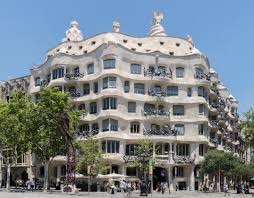
This comment by Hockney reminded me of the work of the Catalan architect Antoni Gaudí. The non-straightness of lines in nature was a dominating principle of his building designs, of which there are eminent examples in Barcelona and other Spanish cities.

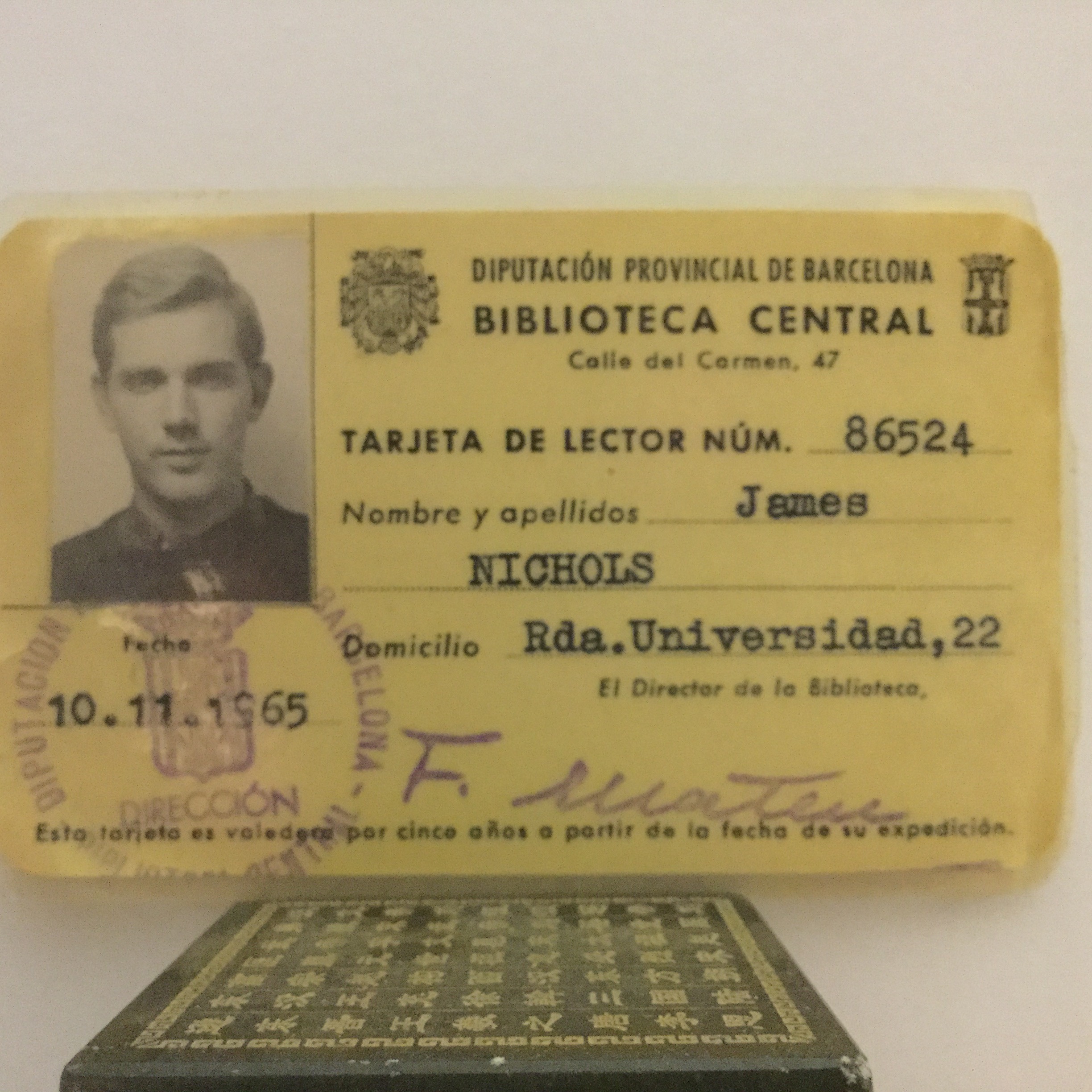
My first taste of a Gaudí creation was when I visited an acquaintance who lived in La Pedrera, an apartment building Gaudí designed. I had just arrived in Barcelona to spend my junior year in college there in the Facultad de Filosofía y Letras. I lived in a pensión at Ronda de la Universidad 22-B near the Plaza de Catalunya. It was a short walk to my classes.

(c) 2020 JMN

Posted in Commentary, Quotations | Tagged , , , , , , | 1 Comment

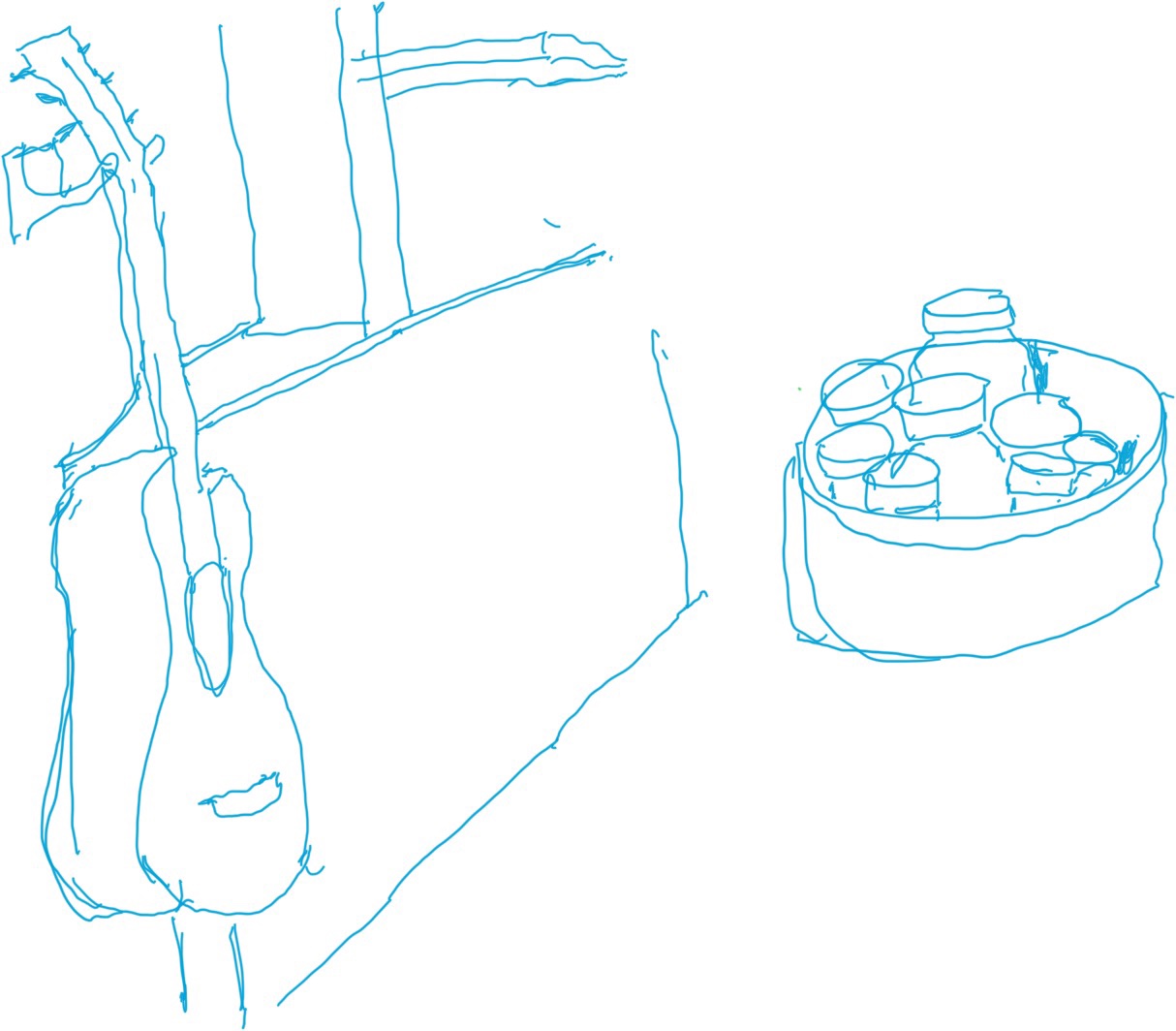
I Have an Apple Pencil for My iPad Pro!

I have made a sketch, copied and pasted it into a “Notes” doc, then come here to add text. I “Shared” the sketch to my “Photos” by downloading it. From there I can import it into the WordPress Gallery, then insert it into a blog post. Leaps and bounds in the direction of sharing unfortunate sketches are being made in this picayune reduct of artistic malfeasance, rumors of rumors, and effete misspokenness called Ethical Dative.

The tactile feedback of the digitizing “pencil” on the iPad Pro screen is dominated by an overwhelming sense of SLICKNESS. The point glides over the surface willy-nilly and higgledy-piggledy with no resistance, registering inexorably and unmercifully every pulsation, fidget, vacillation, and herky-jerky linear travesty of the hand.

This has been a test, and only a test, but a testy test from the rigors of isolation. Should it have been a reality rather than a test — a “real” sketch, God help us — that would have been made manifest from the outset. It’s only pixels. Pixels to pixels, ether to ether, dust to dust.

(c) 2020 JMN

Posted in Anthology | Tagged , | 5 Comments

Food Notes 2

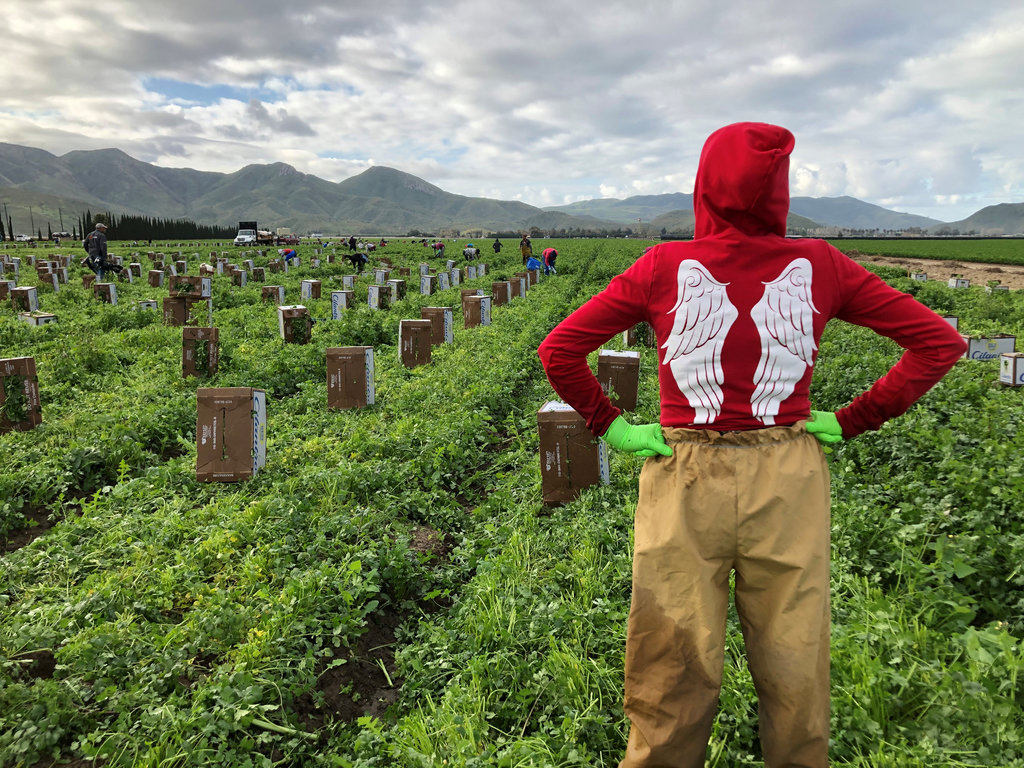
America’s 2.5 million farmworkers are among the groups most at risk of contracting the coronavirus. And if they are at risk, our food supply may be too.

Picture yourself waking up in a decrepit, single-wide trailer packed with a dozen strangers, four of you to every room, all using the same cramped bathroom and kitchen before heading to work. You ride to and from the fields in the back of a hot, repurposed school bus, shoulder-to-shoulder with 40 more strangers, and when the workday is done, you wait for your turn to shower and cook before you can lay your head down to sleep. That is life for far too many farmworkers in our country today.

(Greg Asbed, “What Happens If America’s 2.5 Million Farm Workers Get Sick?” NYTimes, 4-3-20)

Greg Asbed, a founder of the Coalition of Immokalee Workers, received a MacArthur Foundation fellowship in 2017 for his role in developing the Fair Food Program to protect farm workers’ human rights.

(c) 2020 JMN

Posted in Commentary, Quotations | Tagged , , | Leave a comment

Food Notes 1

California produces a third of the nation’s vegetables and two-thirds of its fruits and nuts…

The United States relies on foreign suppliers for almost 20 percent of its food…

The United States relies on foreign suppliers for 80 percent of its seafood, almost half of that coming from Asia…

About half of America’s imported dairy products come from Europe…

Almost 25 percent of America’s cheese comes from Italy…

Kazakhstan, a major exporter of wheat flour… has suspended exports of the product.

Vietnam, the world’s third-largest supplier of rice… has suspended exports of the product.

The United States no longer holds national grain reserves…

Significant parts of the food supply could be jeopardized should food protectionism accelerate.

Source: Shub Debgupta, “Will the Coronavirus Threaten Our Food?” NYTimes, 3-31-20.

Dr. Debgupta is an economist who focuses on food.

(c) 2020 JMN

Posted in Commentary, Quotations | Tagged , , | Leave a comment