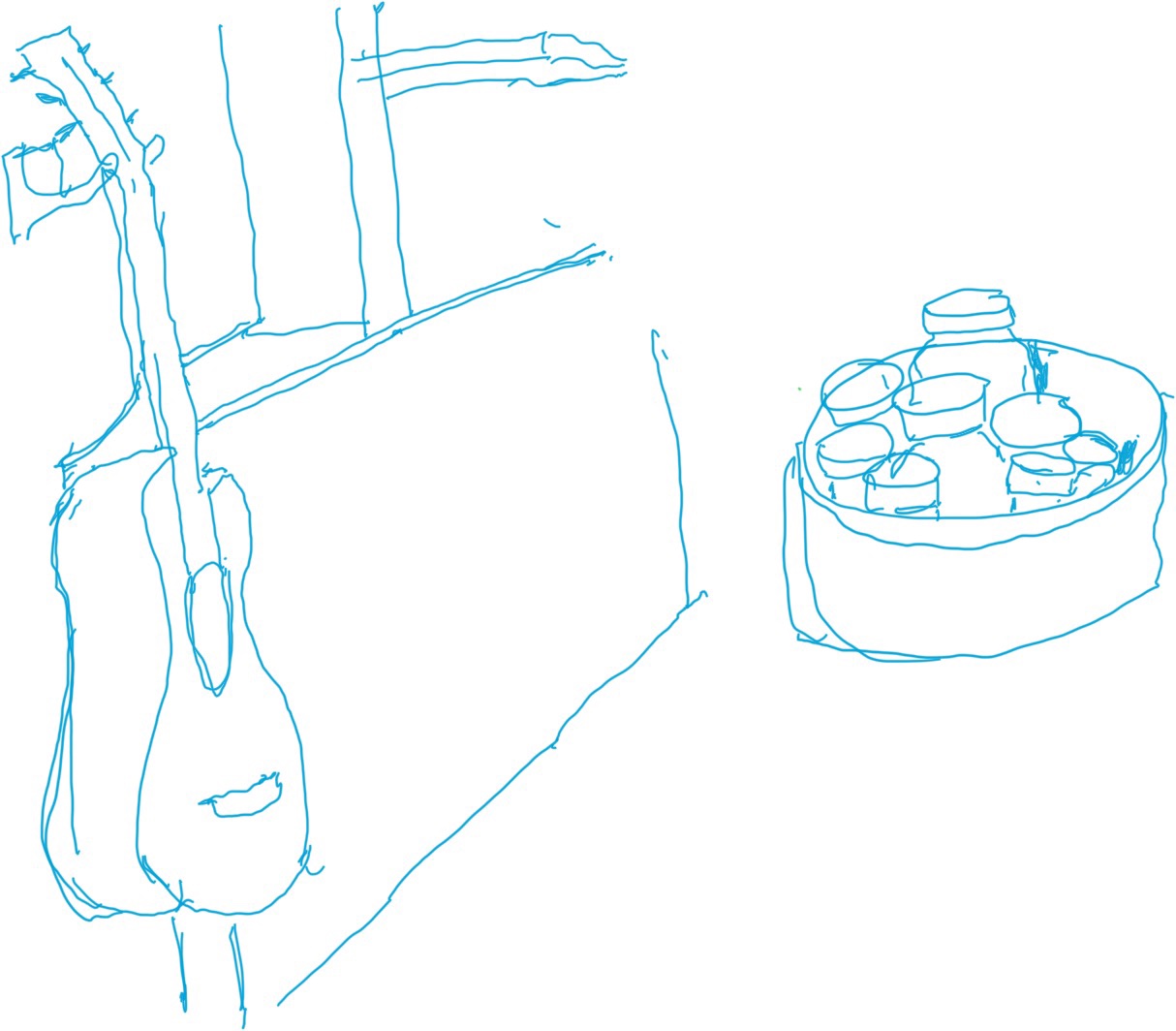
I have made a sketch, copied and pasted it into a “Notes” doc, then come here to add text. I “Shared” the sketch to my “Photos” by downloading it. From there I can import it into the WordPress Gallery, then insert it into a blog post. Leaps and bounds in the direction of sharing unfortunate sketches are being made in this picayune reduct of artistic malfeasance, rumors of rumors, and effete misspokenness called Ethical Dative.
The tactile feedback of the digitizing “pencil” on the iPad Pro screen is dominated by an overwhelming sense of SLICKNESS. The point glides over the surface willy-nilly and higgledy-piggledy with no resistance, registering inexorably and unmercifully every pulsation, fidget, vacillation, and herky-jerky linear travesty of the hand.
This has been a test, and only a test, but a testy test from the rigors of isolation. Should it have been a reality rather than a test — a “real” sketch, God help us — that would have been made manifest from the outset. It’s only pixels. Pixels to pixels, ether to ether, dust to dust.
(c) 2020 JMN







 EthicalDative
Food Notes 2
America’s 2.5 million farmworkers are among the groups most at risk of contracting the coronavirus. And if they are at risk, our food supply may be too.
Picture yourself waking up in a decrepit, single-wide trailer packed with a dozen strangers, four of you to every room, all using the same cramped bathroom and kitchen before heading to work. You ride to and from the fields in the back of a hot, repurposed school bus, shoulder-to-shoulder with 40 more strangers, and when the workday is done, you wait for your turn to shower and cook before you can lay your head down to sleep. That is life for far too many farmworkers in our country today.
(Greg Asbed, “What Happens If America’s 2.5 Million Farm Workers Get Sick?” NYTimes, 4-3-20)
Greg Asbed, a founder of the Coalition of Immokalee Workers, received a MacArthur Foundation fellowship in 2017 for his role in developing the Fair Food Program to protect farm workers’ human rights.
(c) 2020 JMN