Get Thee to a Nonery

Adverbs Ahead

Punning Ahead

Pew’s latest report found that nonbelievers are gaining ground fast. “Nones” — those with no particular religion — now account for more than one-quarter of the American population. There are substantially more nones than Catholics.

(Nicholas Kristoff, “We’re Less and Less a Christian Nation, and I Blame Some Blowhards,” NYTimes, 10-26-19)

(c) 2019 JMN

Posted in Quotations | Tagged , | Leave a comment

War and Art

In this article about Hilma af Klint two themes draw my attention.

First, not having been clobbered by twentieth-century wars is a sad and sobering distinction to apply to a city.

While there is not currently any comprehensive display of af Klint’s abstract works in Sweden… I discovered… that it is possible to move around Stockholm… and connect with her life… and its artistic context… It helps that Stockholm was untouched by the destruction of 20th-century wars….

(Andrew Ferren, “In Search of Hilma af Klint, Who Upended Art History, But Left Few Traces,” NYTimes, 10-21-19)

hilma2

Much of Stockholm still looks as it did in Hilma af Klint’s time, with ornate, low-rise buildings, many from the 19th century, and vessels darting to and fro on the city’s bustling waterways. Credit Erika Gerdemark for The New York Times.

An author whose name escapes me wrote some years ago in The Atlantic magazine that, although the twentieth century saw the advent of cars, planes and computers, what history will record most will be its wars.

Second, the report of persons bursting spontaneously into neutral tears (“neither happy nor sad”) upon viewing af Klint’s paintings is something to think about.

Iris Muller Westermann, who curated a 2013 af Klint exhibition at Stockholm’s Moderna Museet remembers leading tours “with very pulled-together bourgeois types who appeared completely in control of everything until they suddenly burst into tears. Neither happy nor sad, it was as if spending time with Hilma’s paintings spurred something inside them that needed an outlet.”

hilma1

Hilma af Klint was the unexpected star of last year’s cultural calendar with a show at New York City’s Guggenheim Museum that set attendance records. Credit George Etheredge for The New York Times.

Before shrugging off those bourgeois tears as not pulled-together, I reminded myself that only recently I got slightly soppy myself while describing to a friend the vocal stylings of Aretha Franklin in one of her songs. Art can spur.

(c) 2019 JMN

Posted in Anthology, Quotations | Tagged , , , | Leave a comment

Catch of the Day

brexit

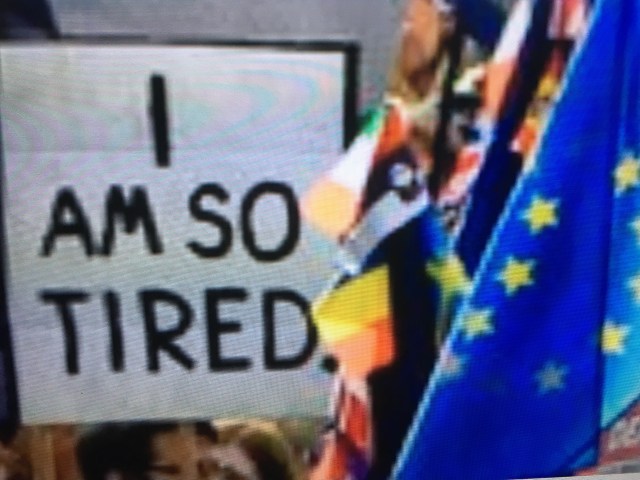
(Detail) Protesters in London on Saturday calling for a second referendum on Brexit. Credit Niklas Halle’N/Agence France-Presse — Getty Images.

I qualify only as a spectator to the Brexit scene; however, the informal allegory cited by Roger Cohen in his opinion piece travels well in other precincts.

As a British friend wrote me recently, “I’m just saying if I narrowly decided to order fish at a restaurant that was known for chicken, but said it was happy to offer fish, and so far I’ve been waiting three hours, and two chefs who promised to cook the fish had quit, and the third one is promising to deliver the fish in the next five minutes whether it’s cooked or not, or indeed still alive, and all the waiting staff have spent the last few hours arguing about whether I wanted battered cod, grilled salmon, jellied eels or dolphin kebabs, and if large parts of the restaurant appeared to be on fire but no one was paying attention to it because they were all arguing about fish, I would quite like, just once, to be asked if I definitely still wanted fish.”

(Roger Cohen, “An Election Is the Only Answer for Britain,” NYTimes, 10-23-19)

(c) 2019 JMN

Posted in Quotations | Tagged , | 3 Comments

I’m Like: Whoa

judy chicago

Judy Chicago’s “10 Part Cylinders,” 1966/2019, some near human in height and others even taller, made of fiberglass over sonotubes, at Jeffrey Deitch, Los Angeles. Credit Judy Chicago; Jeffrey Deitch; Elon Schoenholz.

All bets are off when a subject finds the interviewer’s question “very interesting.” There’s a likelihood that the answer will go its own way. I find that to be the case in this exchange between Jori Finkel, a contributor to the NYTimes and author of “It Speaks to Me: Art That Inspires Artists,” and artist and author Judy Chicago.

Unless I’m missing the boat, Chicago doesn’t quite answer the question that was asked. I find the question quite interesting, having admired work of the Delaunays in times past.

Sonia Delaunay, who with her husband, Robert Delaunay, developed this colorful, symphonic sort of abstraction called Orphism, has an interesting history. It was in 1911 that her painting went from figurative to abstract. She always said the turning point was making a patchwork quilt for her infant son. And she went on to work as a designer in fashion, costumes, stage sets and books. Could design and craft be one root of abstract painting?

That’s very interesting. I remember many years ago there was an article in an art magazine about the artist Liza Lou, who does beaded work, and instead of placing her work in the context of the history of beading, like Native American beading or women’s crafts, they put her in the tradition of Andy Warhol. Because the way to validate an artist, particularly a woman artist, is to put them in the context of the important male art. What you’re talking about now opens up the possibility of starting to see women in our own tradition. I’ve looked at so much work by other women to validate my own sense of form and also color. When I look at Hilma af Klint’s paintings and see all those pastels, I’m like: Whoa, I love that kind of color.

(Jori Finkel, “Judy Chicago on Rescuing Women From Art History’s Sidelines,” NYTimes, 9-19-19, Updated 10-14-19)

(c) 2019 JMN

Posted in Anthology, Commentary | Tagged , , , , | 2 Comments

Tofu vs. Jerky

Aphex Twin

Credit Aphex Twin.

Cheryl Thompson has a salutary take on bromides about the “strength of diversity” that are jawboned from various bully pulpits.

Diversity is also tough, challenging and sometimes outright frustrating because it requires listening, being open to what you don’t know, and letting go of what you think you do.

(Cheryl Thompson, “Trudeau Survived. Now Stop Pretending Canada Is a Diverse Paradise,” NYTimes, 10-23 -19)

The gap between the affirming of diversity and the effort to realize its benefit reminds me of the contrast between tofu and jerky. Both have essential protein, but one slides down the throat with minimal investment while the other needs effortful chewing. Diversity must ever buck the tepid conviction of its adherents and the passionate intensity of its enemies.

(c) 2019 JMN

Posted in Commentary | Tagged , | 3 Comments

The Power of Reading Aloud

adams

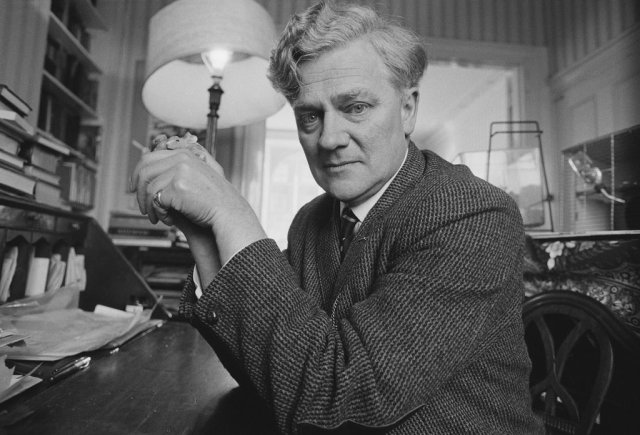
Richard Adams, author of “Watership Down,” in 1974. Credit Tom Smith/Daily Express, via Hulton Archive, via Getty Images.

One of the virtues of reading a narrative aloud, to children or indeed to anyone, is the way that vocalizing a story clarifies its power, especially in the quavering passion that you try to keep from your voice (because you don’t want your kids to think their dear dad is too emotional) but that bleeds through in spite of everything. And with a hundred pages to go I can already tell that when I get to the climax of “Watership Down,” I’m going to be a wreck.

(Ross Douthat, “‘Watership Down’ and the Crisis of Liberalism,” NYTimes, 10-22-19)

I join Douthat in being way in cahoots with reading aloud even if it’s to no one.

(c) 2019 JMN

Posted in Quotations | Tagged | 2 Comments

Drawing in Jail

Hilarie M. Sheets writes an article about how people have coped with incarceration by drawing (“For the Incarcerated, Drawing Is a Lifeline,” NYTimes, 9-20-19).

What interests me on the margins of this interesting article is the innocent tell favoring depiction of comeliness that the writer discloses in singling out this drawing among the eight illustrated in the article as being “beautifully rendered.”
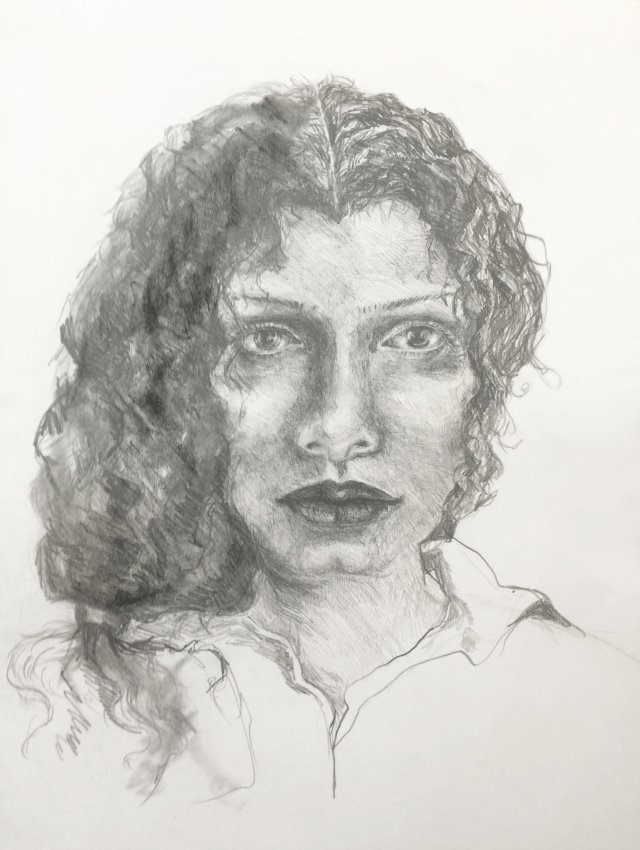
drawing azza abo

Azza Abo Rebieh’s “Nayfeh,” 2016, one of the portraits she did of fellow inmates while imprisoned in Syria. Credit Azza Abo Rebieh.

Here are four more of the drawings that illustrate Sheets’s article along with her descriptions of them.

Courbet’s chalk study is “delicate.”
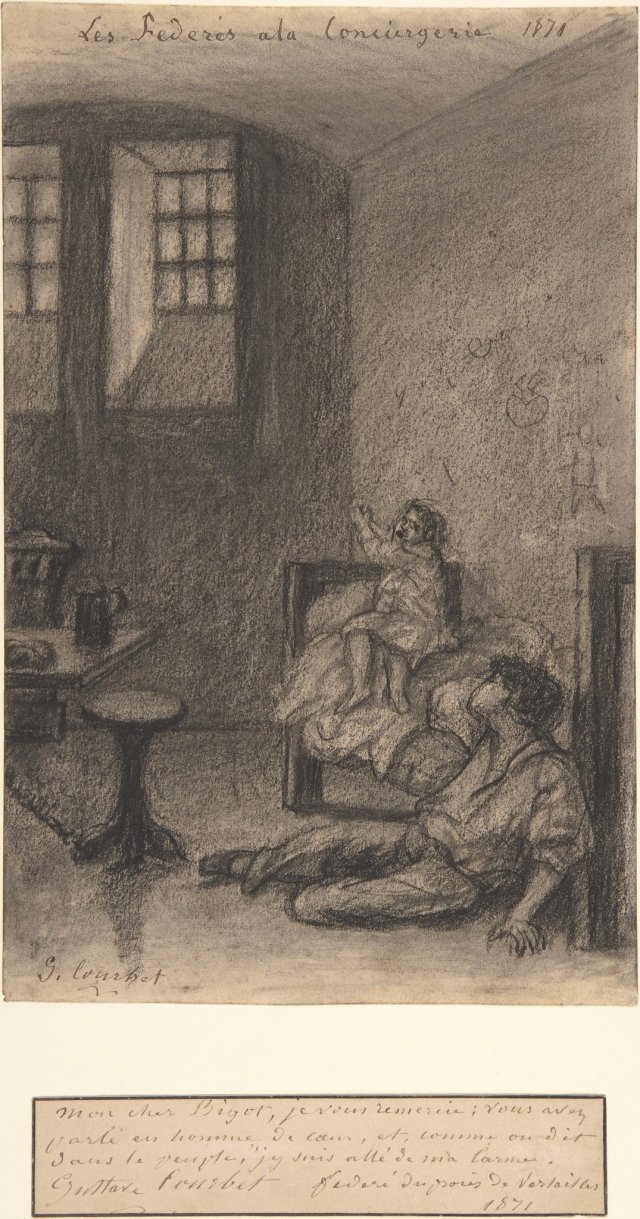
drawing courbet

Gustave Courbet’s “Les Fédérés à la Conciergerie (Young Communards in Prison),” 1871. Courbet, who was jailed in 1871 after being accused of complicity in tearing down the Vendôme Column, captures a cell and cellmates in this chalk study. Credit The Metropolitan Museum of Art, via Art Resource, N.Y.

Ruth Asawa’s watercolor is “spirited.”
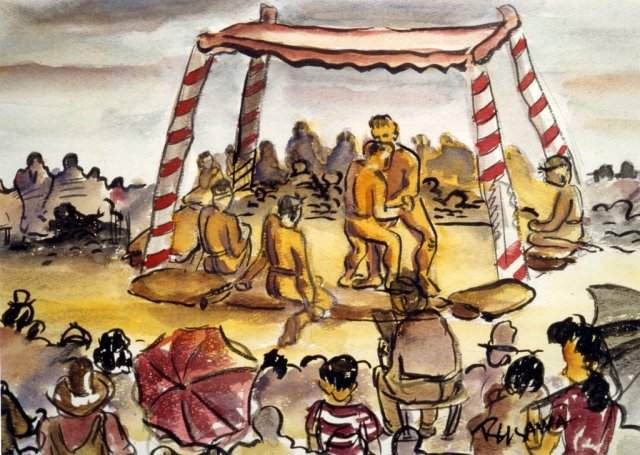
drawing ruth asawa

Ruth Asawa’s “Sumo Wrestlers,” 1943, a watercolor on paper she did while in an internment camp for Japanese-Americans. Credit Estate of Ruth Asawa, via David Zwirner.

Sheets does not characterize the portrait drawn by Jose Alvarez.

drawing jose alvarez

Mr. Alvarez’s “David H.,” 2012, a portrait he drew while detained for immigration violations. Credit Jose Alvarez and Gavlak Gallery.

Adolf Wölfli’s pencil rendering “maps the geography of his alternate imagined universe.”
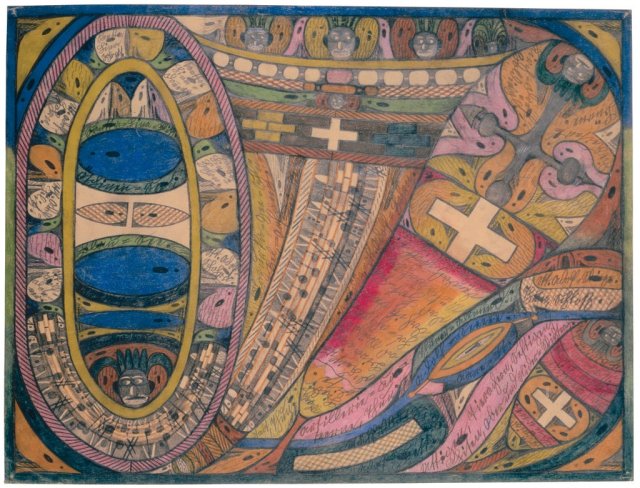
drawing wolfli

Adolf Wölfli’s “The Kander Valley in the Bernese Oberland,” 1926, pencil and colored pencil on paper. Credit American Folk Art Museum.

(c) 2019 JMN
Posted in Commentary | Tagged , , , | Leave a comment

Fellow Feeling

cassatt

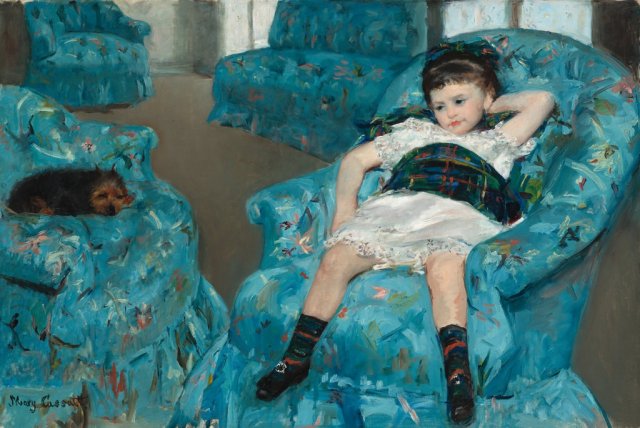
Mary Cassatt’s “Little Girl in a Blue Armchair,” painted in 1878 and shown at the Impressionist exhibition a year later. Credit National Gallery of Art.

So how did the daughter of an American stockbroker come to meet a surly, bourgeois French artist? Degas became aware of Cassatt, known for her sensitive portrayals of women and children, in 1874, historians said. He was strolling through the Salon exhibition in Paris that spring, a highlight of the social art season, when he came across a painting of a woman in a blue gown.

According to the art historian Nancy Mowll Mathews, Degas looked at the painting and remarked, “This is someone who feels the way I do.”

(Laura M. Holson, “When Mary Met Edgar: Exploring Cassatt and Degas,” NYTimes, 10-19-19)

(c) 2019 JMN

Posted in Quotations | Tagged , | 2 Comments

“Life Is a Racket” (Nick Tosches)

nick tosches

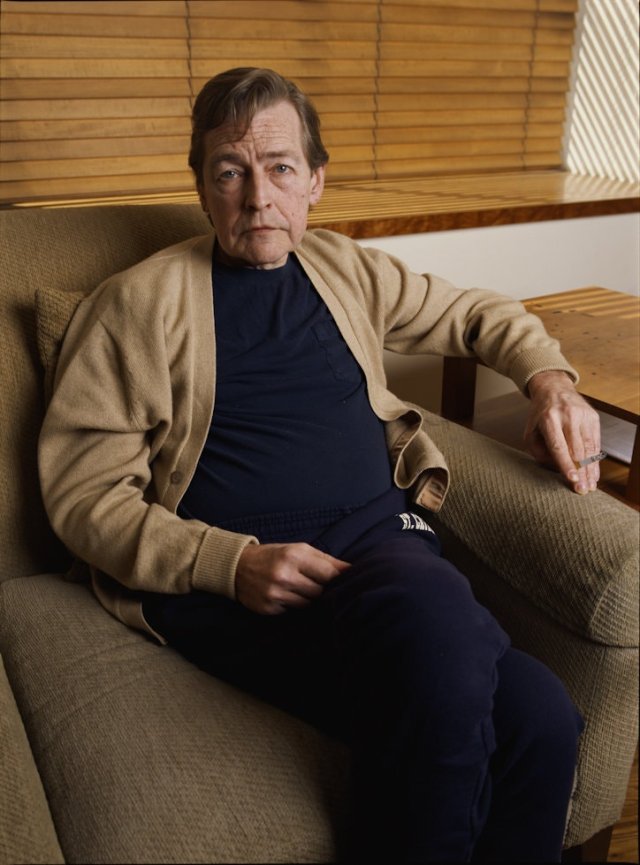
Nick Tosches was part of a group of music writers labeled “the Noise Boys” for their wild, energetic prose. A critic once wrote, “Reading Tosches is like being mugged.” Credit Kate Simon.

“The things I wanted to be when I was a kid were an archaeologist, because of dinosaur bones; a garbage man, because they got to ride on the side of the trucks; and a writer,” he told The Times. “If I had become a garbage man, I could have retired by now.”

(Neil Genzlinger, “Nick Tosches, 69, Fiery Music Writer and Biographer, Dies,” NYTimes, 10-20-19)

When I was a kid I wanted to drive the truck.

(c) 2019 JMN

Posted in Quotations | Tagged | Leave a comment

Denatured Pronoun Sighting

pronoun sighting

The artist in their archive room at their home in Brooklyn. Credit Scott J. Ross.

The NYTimes is walking the walk in the matter of language degendering. I confess to having initially groped for a plural antecedent when I encountered the following subheading:

“Nayland Blake’s one-bedroom apartment is filled from floor to ceiling with personal treasures and works by their community of queer artists.”

(Coco Romack, “An Artist’s Personal Museum in Brooklyn,” NYTimes, 10-14-19)

Then I resolved the momentary discordance in favor of a non-binary accommodation. Reporter Coco Romack doubles down on their neo-pronoun in the photo caption “The artist in their archive room at their home in Brooklyn.”

I seek my comfort level with this adjustment for now, but I resolve to follow the reporter where they leads in the new style.

(c) 2019 JMN

Posted in Commentary | Tagged | Leave a comment