-
Recent Posts
Archives
- April 2026
- March 2026
- February 2026
- January 2026
- December 2025
- November 2025
- October 2025
- September 2025
- August 2025
- July 2025
- June 2025
- May 2025
- April 2025
- March 2025
- February 2025
- January 2025
- December 2024
- November 2024
- October 2024
- September 2024
- August 2024
- July 2024
- June 2024
- May 2024
- April 2024
- March 2024
- February 2024
- January 2024
- December 2023
- November 2023
- October 2023
- September 2023
- August 2023
- July 2023
- June 2023
- May 2023
- April 2023
- March 2023
- February 2023
- January 2023
- December 2022
- November 2022
- October 2022
- September 2022
- August 2022
- July 2022
- June 2022
- May 2022
- April 2022
- March 2022
- February 2022
- January 2022
- December 2021
- November 2021
- October 2021
- September 2021
- August 2021
- July 2021
- June 2021
- May 2021
- April 2021
- March 2021
- February 2021
- January 2021
- December 2020
- November 2020
- October 2020
- September 2020
- August 2020
- July 2020
- June 2020
- May 2020
- April 2020
- March 2020
- February 2020
- January 2020
- December 2019
- November 2019
- October 2019
- September 2019
- August 2019
- July 2019
- June 2019
- May 2019
- April 2019
- March 2019
- February 2019
- January 2019
- December 2018
- November 2018
- October 2018
- September 2018
- August 2018
- July 2018
- June 2018
- May 2018
- April 2018
Categories
Meta
Twitter
Tweets by mansfieldnick
Pierre Puvis de Chavannes
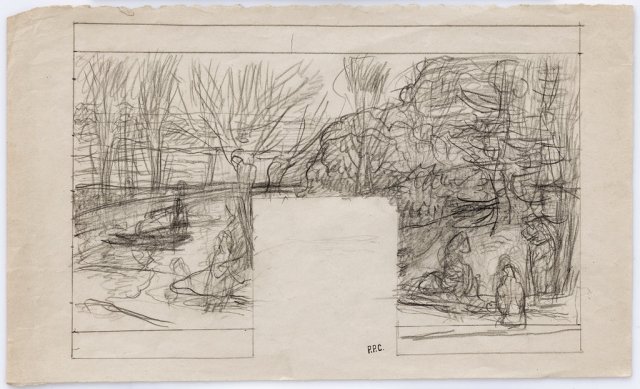
Puvis’s “Study for Summer,” circa 1890-91, pencil on paper. Credit via Michael Werner Gallery.
He was especially admired by Seurat and Gauguin, and also Cézanne, and later, Matisse and Picasso as well as the perennially underestimated American Maurice Prendergast. In their works and that of many others, you’ll find different combinations of Puvis’s carefully calibrated compositions; flat, unmodeled figures and restrained poses; shallow landscape space; chalky unified color; and unshowy yet remarkably lively brushwork. Van Gogh called him “the master of all of us.” Unsurprisingly, Puvis’s reputation was at its height at the time of his death, in 1898.
(Roberta Smith, “A French Painter, Fallen From Fame, Gains Historical Weight,” NYTimes, 1-31-19)
(c) 2019 JMN.
“The Artist’s Way”

Under the pines. Credit Ramsay de Give for The New York Times.
With “The Artist’s Way,” Julia Cameron invented the way people renovate the creative soul…
She will tell you that she has good boundaries. But like many successful women, she brushes off her achievements, attributing her unlooked-for wins to luck.
“If you have to learn how to do a movie, you might learn from Martin Scorsese. If you have to learn about entrepreneurship, you might learn from Mark” — her second husband. “So I’m very lucky,” she said. “If I have a hard time blowing my own horn, I’ve been attracted to people who blew it for me.”
(Penelope Green, “Julia Cameron Wants You to Do Your Morning Pages,” NYTimes, 2-2-19)
(c) 2019 JMN.
Fretwork

Detail from a painting by JMN.
I’ve been introduced by a friend to two good bands.
One is the Wave Pictures from Wymeswold, England near Loughborough in Leicestershire. For persons unfamiliar with Anglo-Celtic phonetic toponymy, Wymeswold is pronounced Maudlin, Loughborough is pronounced Chumley, and Leicestershire is pronounced Leicestershire.
I’m kidding.
The other is the Sleaford Mods from Nottingham. A Wiki-dip says the Mods are known for their abrasive, minimalist musical style and embittered explorations of austerity-era Britain, culture, and working class life, delivered in [Jason] Williamson’s thick East
Midlands accent. That works for me. I can’t get enough of accents, and I’m serious.
The appeal for me of these two bands is that they make music that doesn’t sound like it’s been heard before. They stretch me in a good way.
Music is on my mind. Frets are the slivers of metal on a guitar’s neck. Fretwork is how to finger notes on the slivers and grip chords on the neck. I’m afraid I’ll have more to say on this subject.
For now I’m enjoying the bands.
(c) 2019 JMN.
A Copy Editor’s Quibbles
And there are the words Dreyer currently dislikes most, even more than he dislikes “munch” and “nosh” and other distasteful eating-adjacent terms. Sitting recently in his book-crammed office at Penguin Random House, where he is vice president, executive managing editor and copy chief for Random House — a division within the larger company — Dreyer scribbled “smelly” and “stinky” on a card and slid it speedily across the desk, as if the card itself was emitting a foul stench. “I can’t say them out loud,” he said.
(c) 2019 JMN.
Tono Romo, Ex-Quarterback
“I just want to leave you with something I’ve learned in this process,” he said, referring to his quarterbacking years. “I feel like we all have two battles or two enemies going on. One with the man across from you. The second is with the man inside of you. I think once you control the one inside of you, the one across from you really doesn’t matter.”
(c) 2019 JMN.
I Can Just Hear Those Hands

“[***’s] just out making noise, ringing his hands and pouting in a corner,” Aguilar said Friday.
(Sarah Ferris, Heather Caygle, “Congress tunes out ***’s border wall threats,” Politico, 2-1-19)
(c) 2019 JMN.
An Interesting Painting
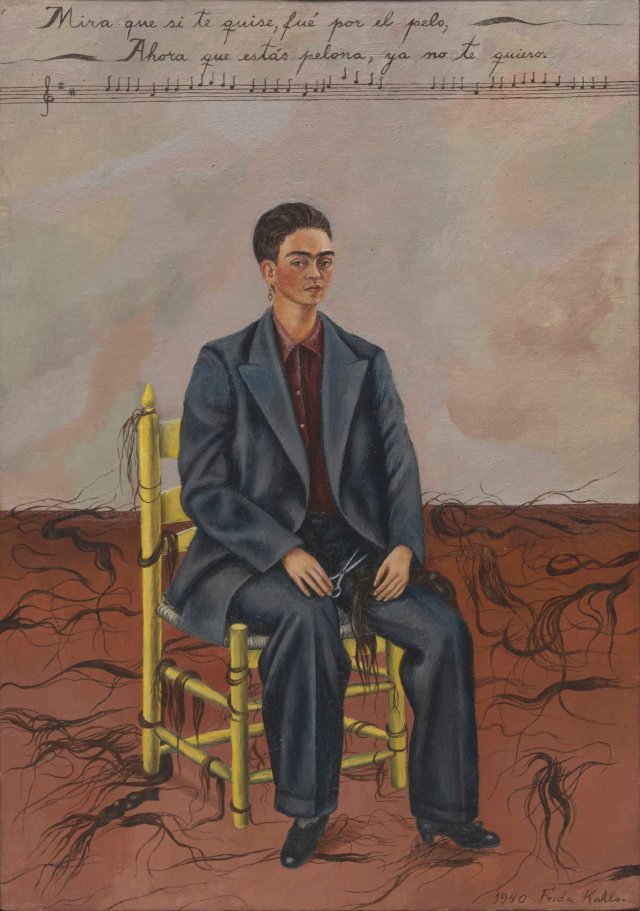
“Self-Portrait With Cropped Hair,” 1940, oil on canvas. Credit Banco de México Diego Rivera Frida Kahlo Museums Trust, Mexico, D.F./Artists Rights Society (ARS), New York; The Museum of Modern Art/Licensed by SCALA/Art Resource, NY.
This painting by Frida Kahlo appears in the article by Rebecca Kleinman, “Frida Kahlo Was a Painter, a Brand Builder, a Survivor. And So Much More,” NYTimes, 1-31-19. It’s interesting on many levels, not least for its depiction of the locks of shorn hair strewn about. What particularly got my attention was how it incorporates writing and a staff of music in D Major. (I may learn more about the music when I play it on guitar.) The writing, in Spanish, says the following:
Look, if I loved you it was because of the hair; now that you’re hairless I don’t love you any more.
Cruel words.
(c) 2019 JMN.
Remarkable Insights from Working with Translators
A connection between languages
A connection between languages
On this day in 1786, a Briton living in India delivered a discourse on a little-known proposition: that Sanskrit, Persian, Latin, Greek and other languages might have a common source.
The commentary set off the field of comparative linguistics. Its fruits are known today as the concept of Proto-Indo-European, a mother language for dozens of tongues. The idea revolutionized not only the study of language, but also the sense of human history.
(NYTimes, 2-1-19)
(c) 2019 JMN.
 EthicalDative
The Staff of Life. And Caviar.
[Photo by JMN — Reus, Catalonia]
From a piece a while back in the NYTimes on how to make good caviar sandwiches. I’ve lost the reference, but I saved the above quote because I want to try this Pepperidge Farm bread, though in general I favor whole wheat bread. I’ve tried baking my own bread, but it’s too much trouble. So I’m on the lookout for commercial brands that aren’t lurkingly sweet. I’ve just returned from a lengthy stay in Spain, and can never figure out why excellent, fresh-baked bread is so available there and not here. I doubt, by the way, that I’ll ever make a caviar sandwich. I’d rather eat it straight out of the jar.
(c) 2019 JMN.