Ms. Crump after a race at Churchill Downs in 1970. Credit… Associated Press. [New York Times caption and illustration]
“I never worry when I ride.”
(Diane Crump, age 21)
Many male officials considered women to lack the strength and composure to control a thoroughbred as it galloped along at 40 miles an hour.
It was an era in which aspiring female jockeys were often dismissed as “jockettes.” Six male jockeys withdrew from her first race and were replaced. “I didn’t care how the jockeys felt,” Crump told her biographer… “I figured they had to get over it.”
Crump, who later operated a sales service for horse buyers and provided her dachshunds as therapy dogs for the ill and the needy, described herself “as a hardheaded little nobody with a dream that I wouldn’t let die… Galloping a great racehorse gives you a powerful feeling,” she told The Times. “I gave all the horses I rode my heart, and they gave me theirs.”
(Jeré Longman, “Diane Crump, First Woman to Ride in Kentucky Derby, Dies at 77,” New York Times, 1-2-26)
Brylcreem, a little dab’ll do ya, Brylcreem, ya’ll look so debonair. Brylcreem, the gals will pursue ya. Just rub a little of it in yer hair!
Breaking the 4th Wall for a Moment In my experience, being followed (subscribed) here on EthicalDative by a fellow blogger is oftener than not a death knell for ever hearing from that blogger again. Perhaps I’ve been remiss in voicing the pleasure I receive from the not-too-frequent event. I would like to improve my performance in this respect as 2026 dawns. Maybe more “followers” will show up again. I’m keen always to explore a new followship straightaway, seeking common ground and new vistas. Where I find such and am confident I can commit to reading/viewing their output and paying faithful attention, I’m happy to enter into proactive two-way communion. Since I don’t take the commitment to follow lightly, it’s easier to do so for blogs which don’t post with extreme frequency or at great length. This is not to critique such practice, only to confess my own limitations.
This serves also to express gratitude and love to all who do me the honor of reading and looking at my stuff. You are what spirits this barque over the waters!
Can’t remember where, but recently I read that a functioning state must have a “monopoly on violence.” At first I found it shocking. It sounded so reductive. On reflection, it made sense.
A viable state has a military component for national defense and a policing component to counter criminality. Such institutions should be a prudently held state monopoly. Who wants to live in a country where private armies and private police forces exist?
The U.S. is impaired because a large segment of its populace is heavily armed. There are more arms and munitions in private American hands than there are hands. Policing is militarized as a result. Officers face being gunned down while performing their jobs. Life is more dangerous for everyone, including tourists.
Shall we pray for a no-shots-fired January? It would be revolutionary.
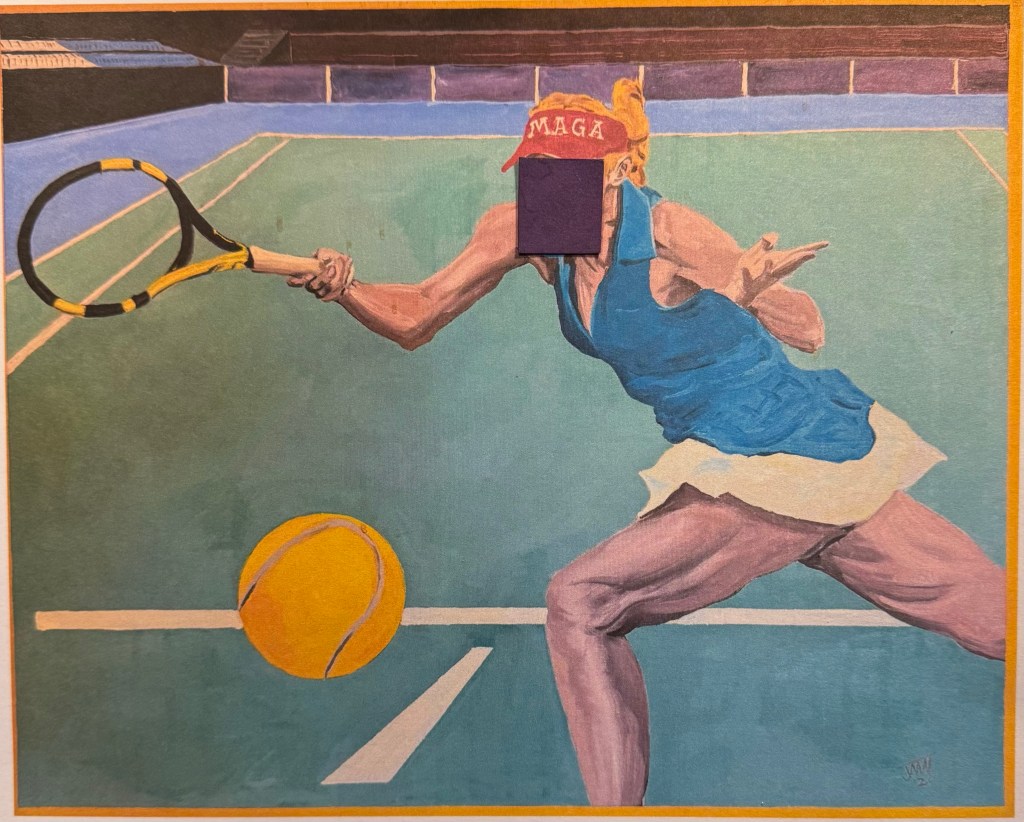
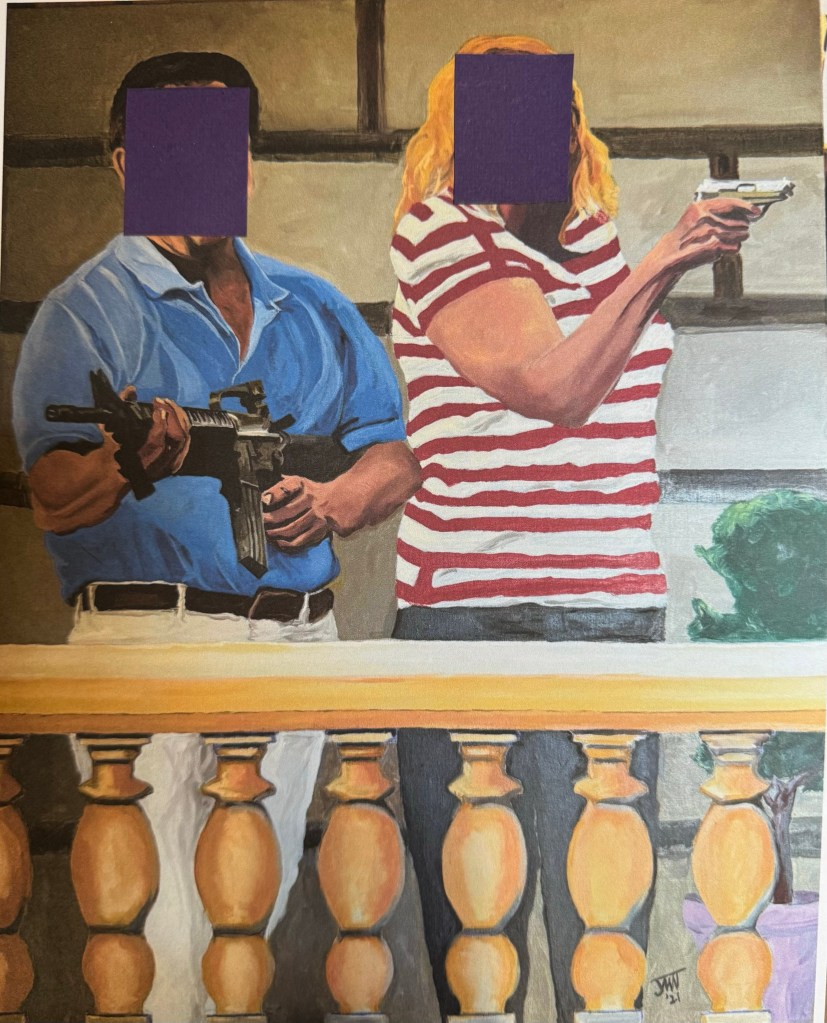
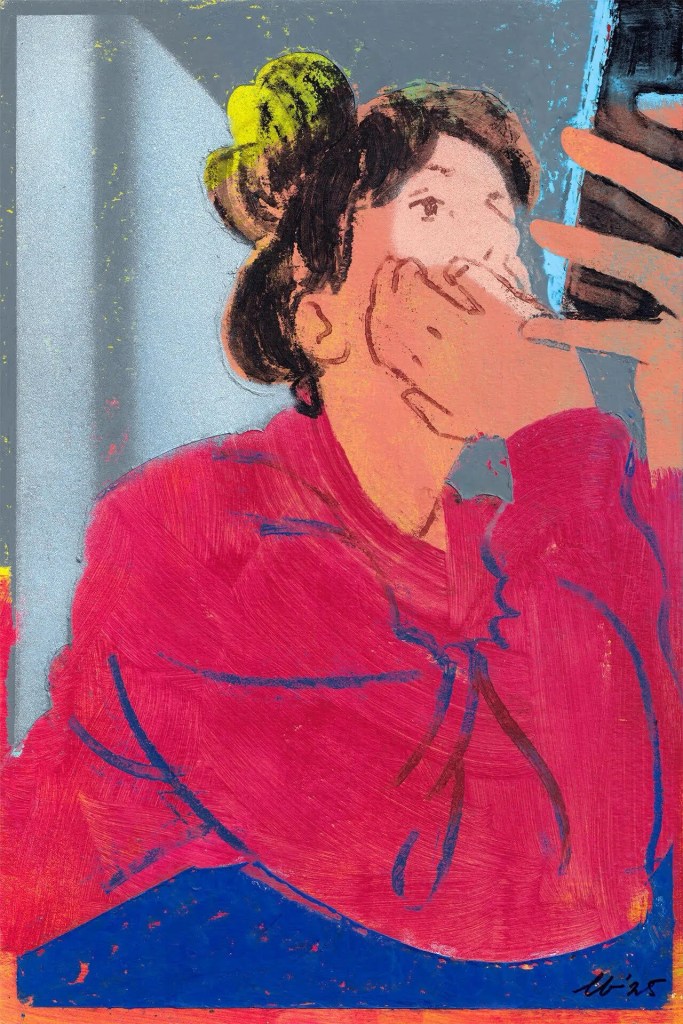
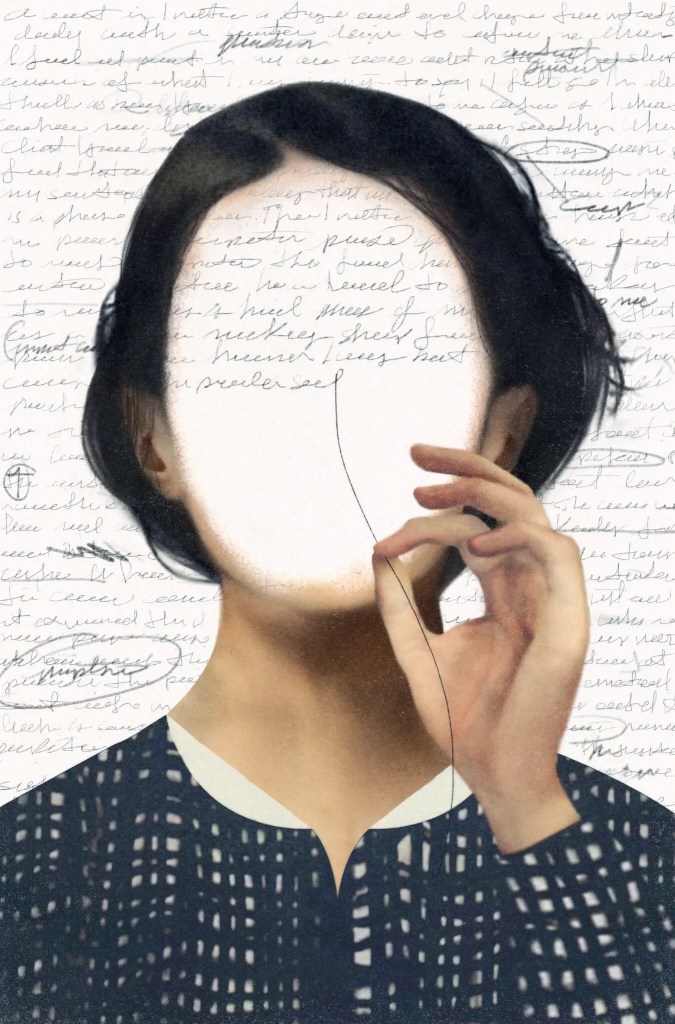
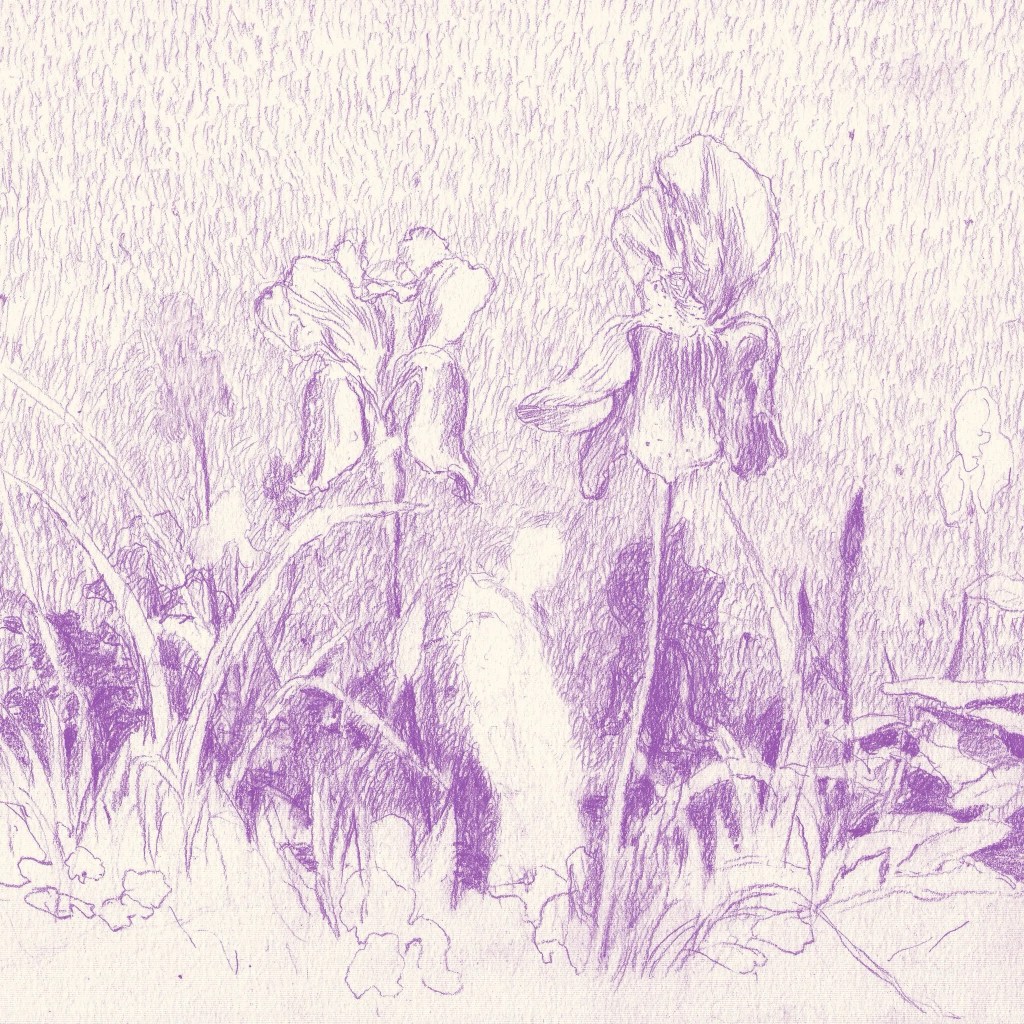
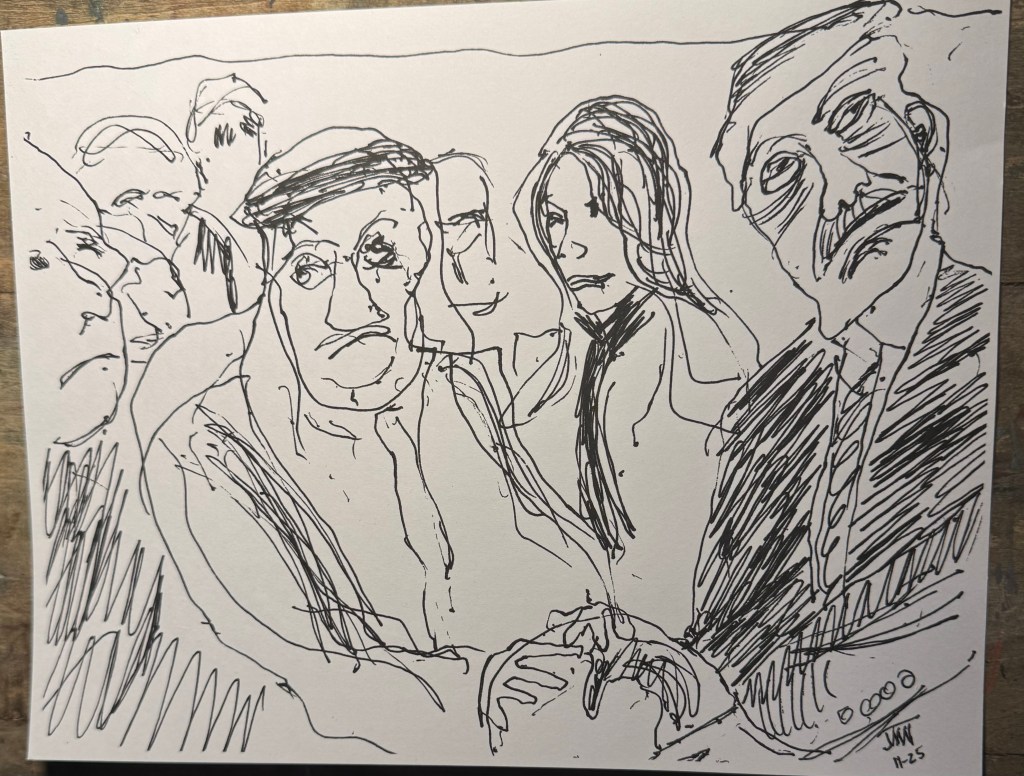
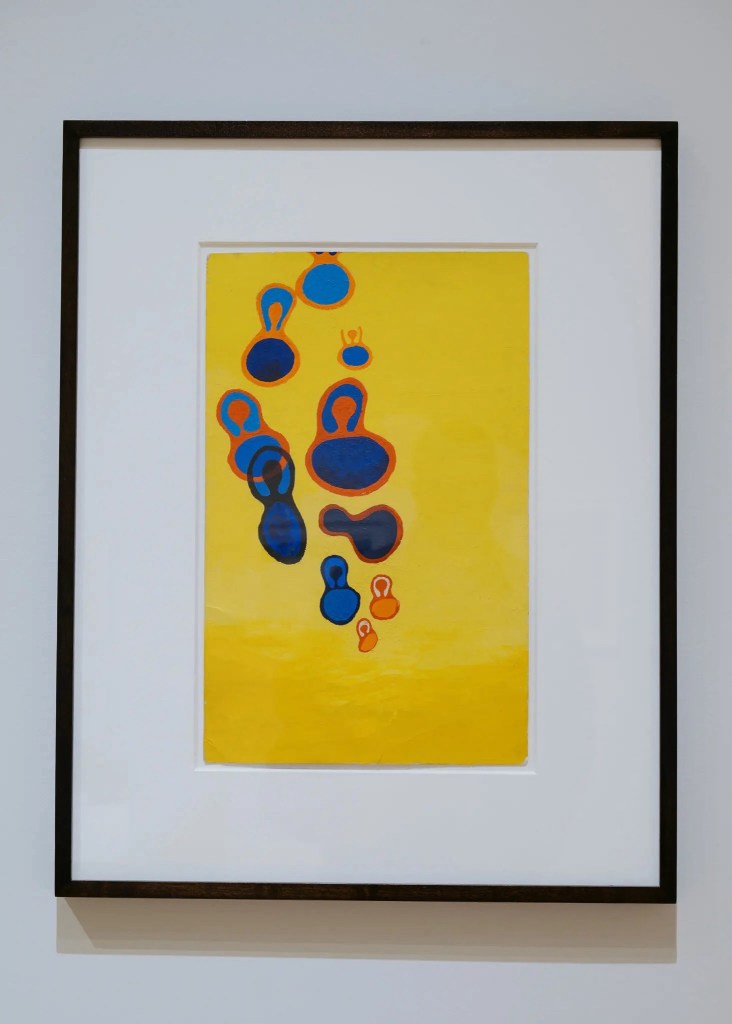
Sadly, many of the New York Times’s “best” Illustrations of 2025 are animated, removing them from consideration. Many others are merely garish, or negligible in diverse ways. Not a good year for illustration, but for the craver of artful graphics the following four specimens have legs.
“All shall be well, and all shall be well, and all manner of things shall be well.”
(Julian of Norwich)
Julian of Norwich, a contemporary of Chaucer, is credited with doing for prose what Chaucer did for poetry: Writing in English instead of Latin. She lived as an anchoress and wrote of her visions. She heard from God that all shall be well.
Next to Julian of Norwich, in a wishing season, is another woman grounded in what she terms “the simple rituals and practices that deeply connect us to the more-than-human world.”
”… I let the tree know about my presence before making contact by closing my eyes and whispering words — hola, ¿puedo acercarme? hello, can I approach?”
(Leonora Simonovis, Poetry, December 2025)
Leonora Simonovis’s mother died in Caracas, Venezuela in 2021. From San Diego, CA, Simonovis recalls her mother’s genius for nurturing plants: In the ravines around our neighborhood, she’d prop up weaker plants with stakes, so they were supported as they grew, and check on them periodically, softly whispering words of encouragement.
She concludes:
I live far from my roots, but I firmly believe this land where I live now is firmly connected to the one I once called home — by the roots of trees, by migrating species, by the mycorrhizal networks that expand and weave entire communities of living beings under the earth.
“Dance is joy, longing, crying, laughing, everything,” Asawa wrote. She translated this spirit into paintings and drawings of dancers — floating abstracted figure-eight forms. Credit… Ian C. Bates for The New York Times. [New York Times caption and illustration]
In 1948, American artist Ruth Asawa (d. 2013, age 87) took classes at Black Mountain College in North Carolina with the dancer Merce Cunningham. Her mentor there was the architect Buckminster Fuller.
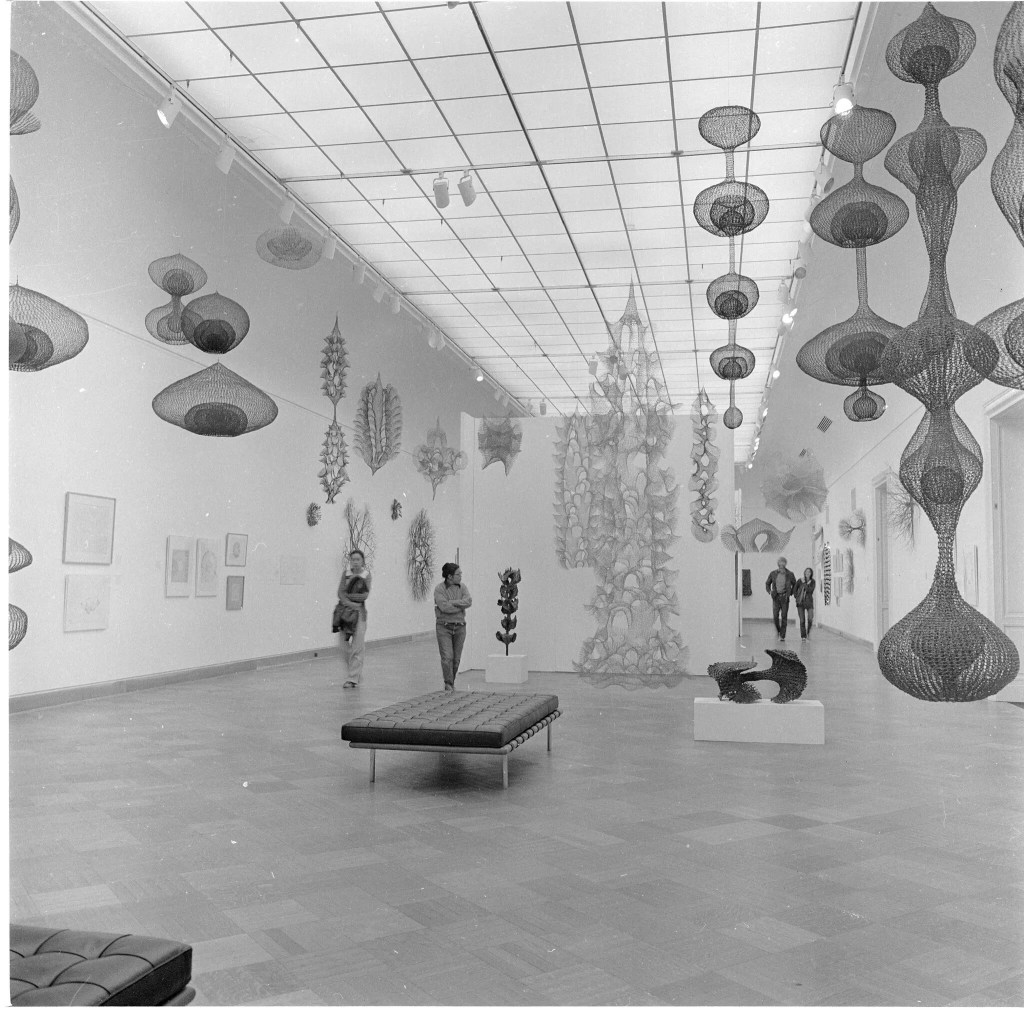
Ruth Asawa (second from left) with visitors to her 1973 retrospective at the San Francisco Museum of Art (now SFMOMA). Her looped-wire forms made of pliable copper, brass or steel resembled her early drawings of dancers, floating abstracted figure-eight forms, nipped at the center with spherical heads and bodies. Credit… Laurence Cuneo. [New York Times caption and illustration]
… Such works were described dismissively by one critic early on as “earrings for a giraffe.”
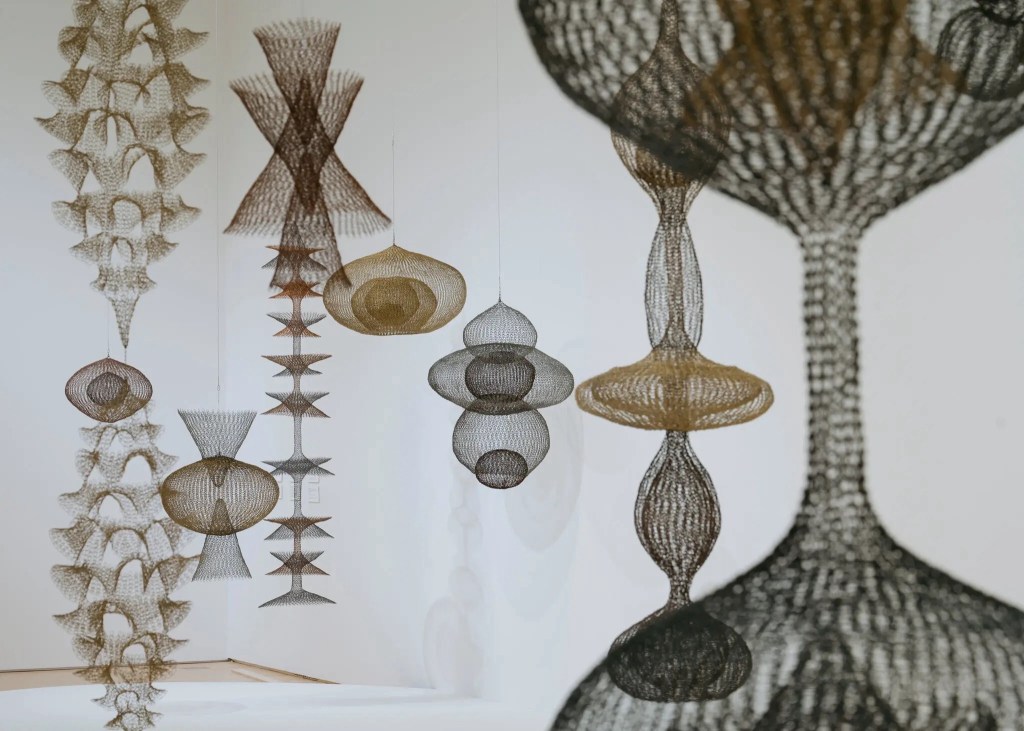
She used a knit stitch by hand, which she learned from a local wire-basket maker on a 1947 trip to Mexico, to draw in space and define volumes with a continuous line of pliable copper, brass or steel.
Ruth Asawa, “Untitled (S.046a-d, Hanging Group of Four, Two-Lobed Forms),” 1961. “We made endless hourglass figures that I now see as the forms within the forms in my crocheted wire sculptures,” she said of her youthful drawings in the dirt. Credit… Ian C. Bates for The New York Times. [New York Times caption and illustration]
Asawa maintained that artists weren’t special; they were just ordinary people who could “take ordinary things and make them special,” she said. “I always had my studio in my house because I wanted my children to understand what I do and I wanted to be there if they needed me — or a peanut butter sandwich.”
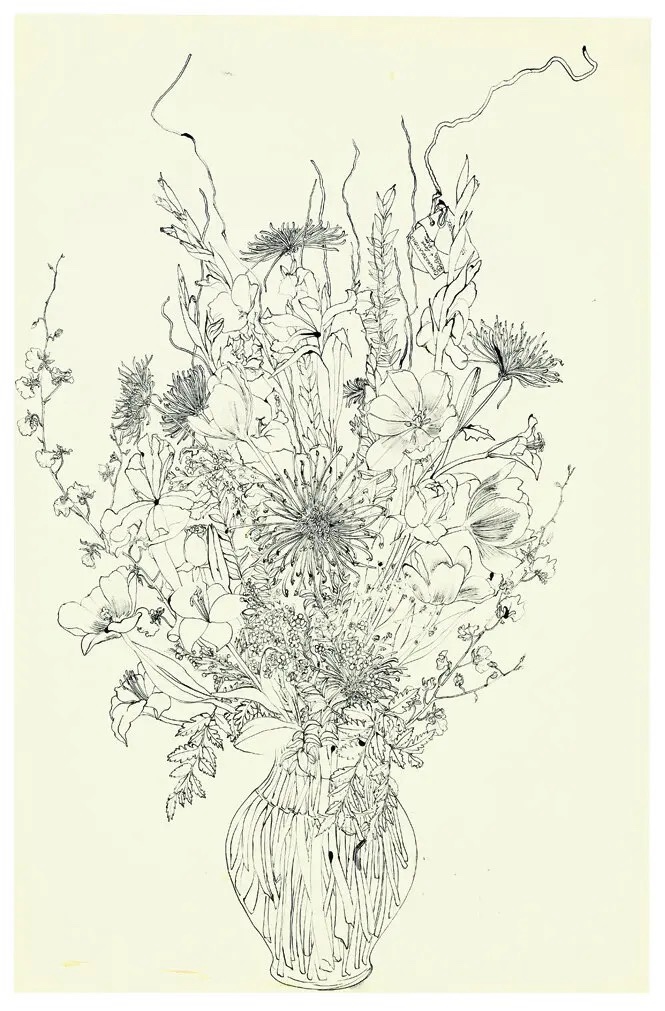
Asawa’s “Untitled (PF.293, Bouquet from Anni Albers)” is ink on paper from the early 1990s. Credit… Ruth Asawa Lanier, Inc./David Zwirner; via Christie’s. [New York Times caption and illustration]
(Hilarie M. Sheets, “Ruth Asawa’s Astonishing Universe Began at Her Door,” New York Times, 4-4-25)
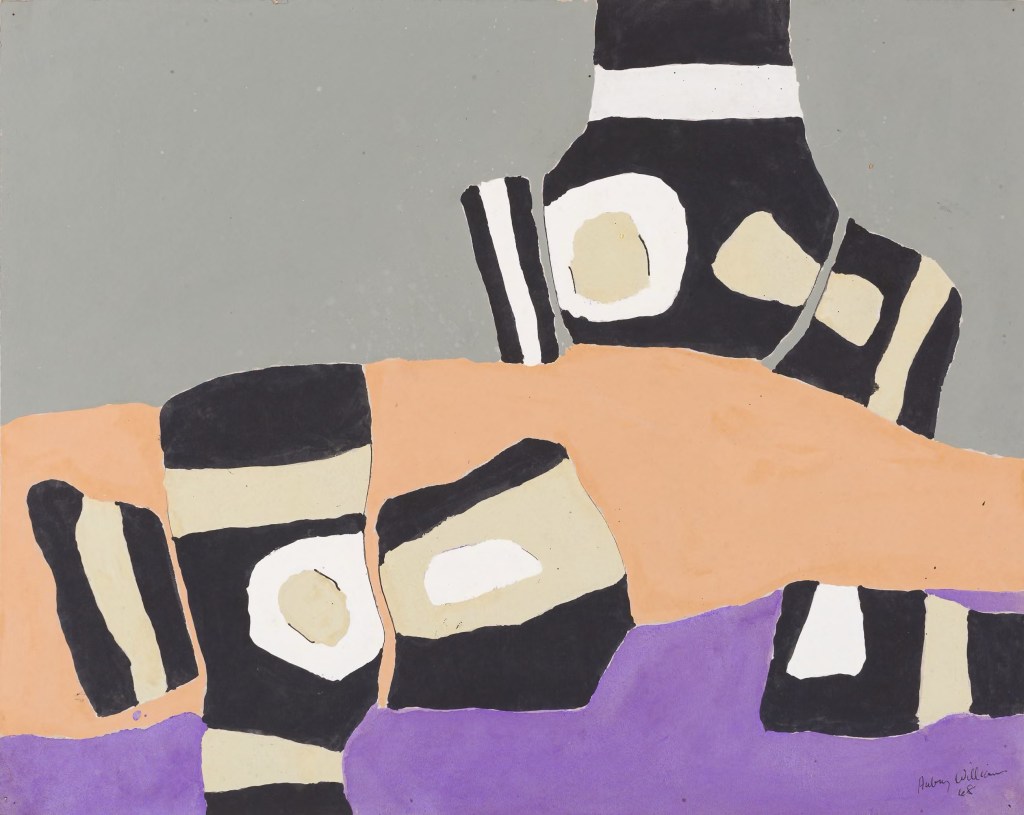
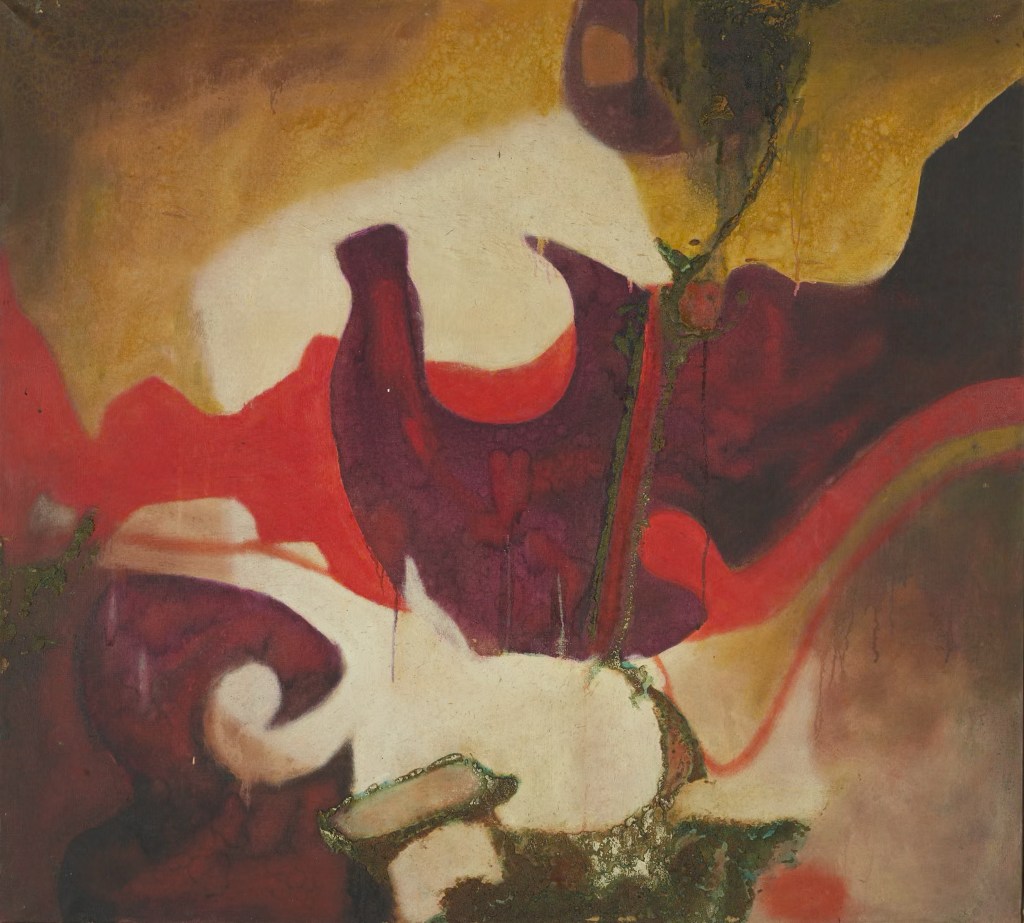
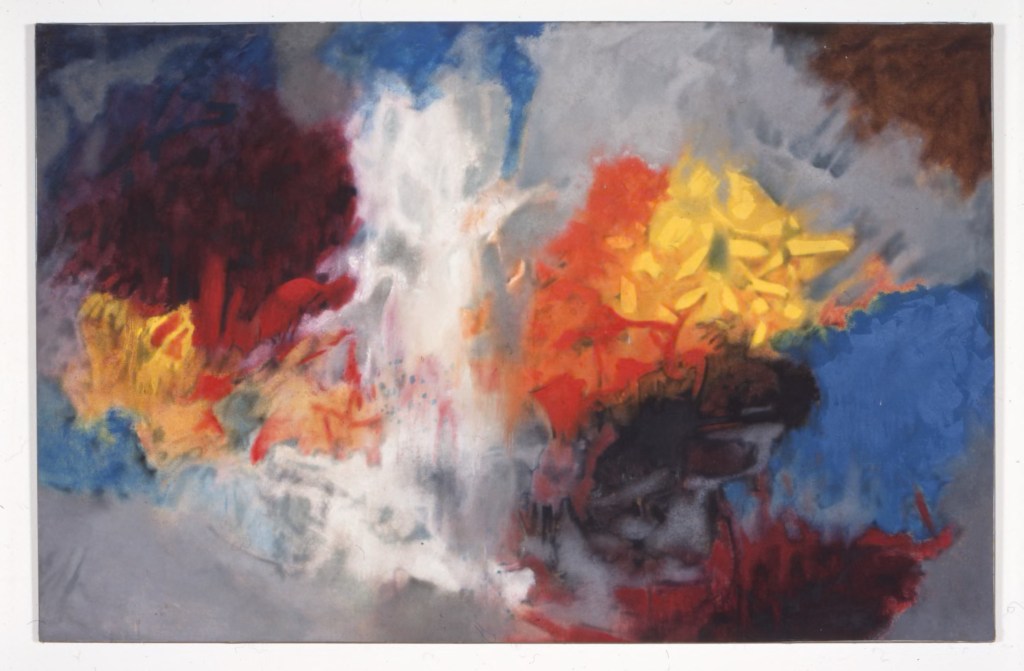
When I saved this Guardian article about painter Aubrey Williams (new to me) back in May, the write-up about him must have irritated me, because I made this note:
The least interesting art journalism is that which marinates in detail about the artist. The painting should do the talking; technique and studio practice are relevant. The rest is art journalism — put it in a book or something.
Yes, I repeated “art journalism.” Clumsy and circular, but stet.
Re-reading the article now I find this part interesting:
He initially came to Britain to study agricultural engineering at Leicester University, and his interests in ecological matters and the ancient cultures of the Mayan, Aztec and Olmec cultures [sic] was [sic] a regular feature in his art.
Still, irritation persists. The journalist wrote “cultures… of the cultures” and “interests… was.”
James Grashow’s “The Cathedral” is a five-foot-tall wood sculpture of Jesus Christ bearing a cathedral on his back while sinister creatures — many of them demons — flock around his feet. Credit… Bryan Haeffele. [New York Times caption and illustration]
James Grashow’s sculpture “The Cathedral” emblemizes poignantly for me how splendiferous churchiness weighs on the spirit of its namesake. But that’s an aside. What I like most is his enthusiasm for cardboard.
Grashow can wax poetic about the wonders of cardboard. “The great thing about cardboard is it’s mistake proof,” he said. Because “it knows it’s going to be trash,” it is “grateful to have the opportunity to become something more.”
A few of Grashow’s monkeys, which he sculpted from cardboard and then cast in bronze.l.. Credit… Bryan Haeffele. [New York Times caption and illustration]
“Beginnings are the most difficult,” he said. “Being in the process in the middle of the project is phenomenal.” He likened his creative experience to an enormous spiral. “The first steps are unbelievably sluggish, but as it quickens and the vortex keeps spinning around, you can’t wait to get up in the morning and approach the work.”
Grashow in his work space that is featured in the documentary “Jimmy & the Demons,” which follows his quest to complete “The Cathedral.” Credit…Jennifer Wastrom. [New York Times caption and illustration]
(George Gene Gustines, “James Grashow Documentary Focuses on Life, Death and ‘The Cathedral,’” New York Times, 6-1-2025)
It leaves more room to follow what’s actually happening on the paper.
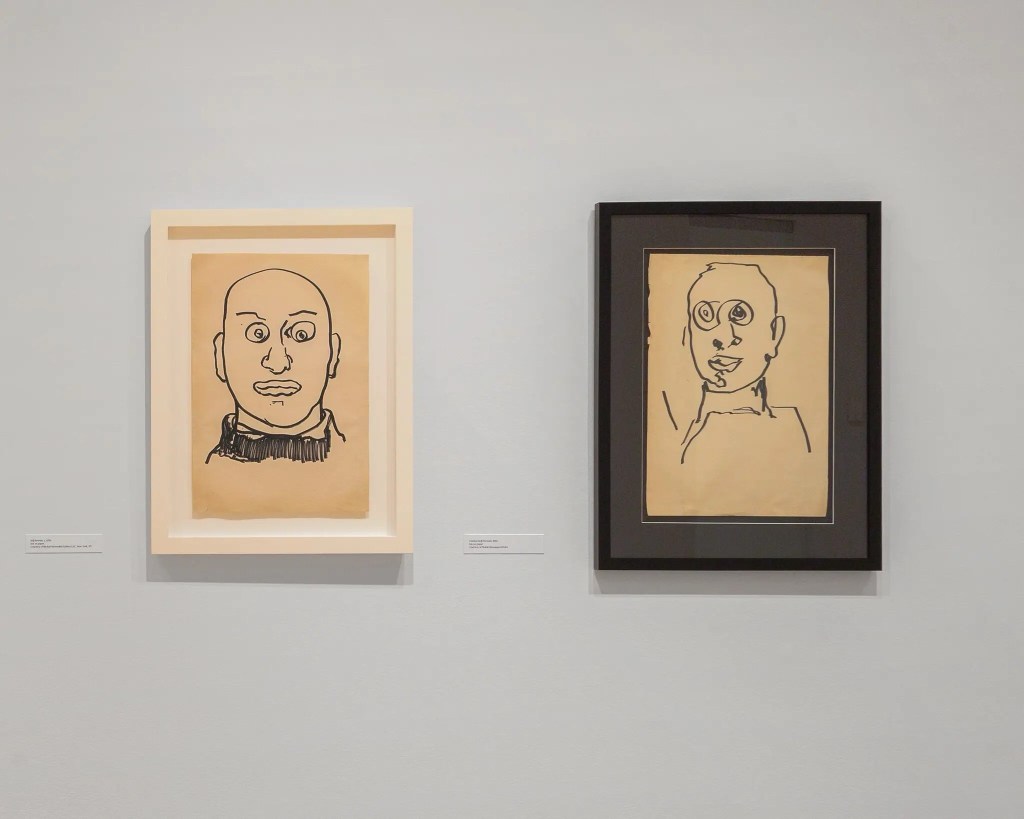
Installation view, “In the Medium of Life: The Drawings of Beauford Delaney.” Circa 1970 and 1965, these two self-portraits in ink demonstrate how powerful his line can be. Credit… via The Drawing Center, Estate of Beauford Delaney, and Derek L. Spratley; Photo by Daniel Terna. [New York Times caption and illustration]
… Though he drew them with confidence and care, you can see him yearning to ornament and exalt his subjects rather than just transcribe them.
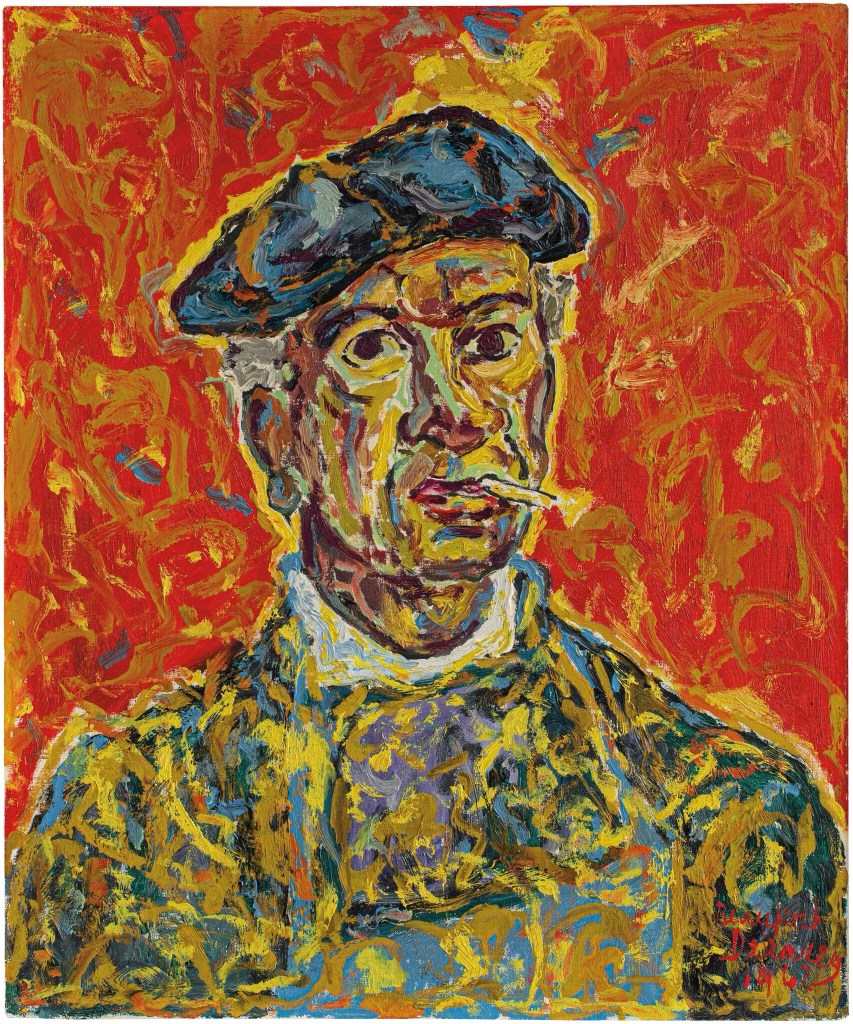
“Self-Portrait” by Beauford Delaney [1964]… Watercolor, gouache. Credit…Estate of Beauford Delaney and Derek L. Spratley; Michael Rosenfeld Gallery LLC. [New York Times caption and illustration]
… The pulsing heart of Delaney’s work was the intimate, tantalizing, constantly deferred flirtation of color and line — something on clearest display in his drawings. There’s plenty of background information in the wall labels and catalog essays, but the emphasis here isn’t on biography or even on art historical argument, which is all to the good. It leaves more room to follow what’s actually happening on the paper.
… 1962 self-portrait,.. Credit… Estate of Beauford Delaney and Derek L. Spratley; Michael Rosenfeld Gallery LLC. [New York Times caption and illustration]
In other ink drawings Delaney’s lines curl and multiply without containing recognizable shapes at all. A group of five from the mid-1950s are abstract calligraphy, or a very conceptual rainstorm. [I wish the article had illustrated these ink drawings! — JMN]
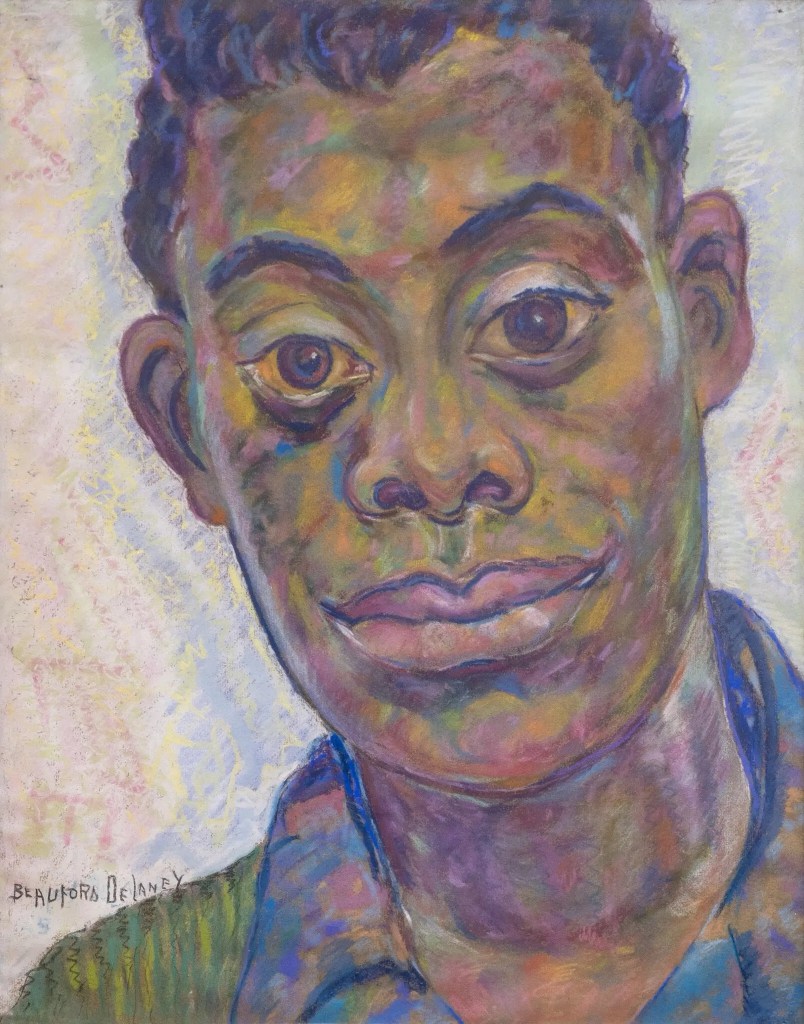
Delaney’s “James Baldwin,” 1945 pastel, at the Drawing Center in SoHo… Credit… Estate of Beauford Delaney and Derek L. Spratley; Michael Rosenfeld Gallery LLC. [New York Times caption and illustration]
What interests me in the pastel of James Baldwin is Delaney’s iridescent rendering of skin tone.
“Untitled (Traffic Signals),” 1945, oil on canvas. You can already see Delaney’s vibrant colors straining to overflow their borders in this surreal New York streetscape. Credit… Estate of Beauford Delaney and Derek L. Spratley; Michael Rosenfeld Gallery LLC. [New York Times caption and illustration]
I’ve no doubt that excellent photographs involve more than just a camera click by their creators. But it’s easier to see how a painter can pack additive vavoom into a subject.
(Will Heinrich, “In Beauford Delaney’s Luminous Watercolors, Color Flirts With Line,” New York Times, 7-10-25)







 EthicalDative
Nostalgia, or Afterglow Foretold
Greetings, Heart of Loia!
Brylcreem, a little dab’ll do ya,
Brylcreem, ya’ll look so debonair.
Brylcreem, the gals will pursue ya.
Just rub a little of it in yer hair!
Breaking the 4th Wall for a Moment
In my experience, being followed (subscribed) here on EthicalDative by a fellow blogger is oftener than not a death knell for ever hearing from that blogger again. Perhaps I’ve been remiss in voicing the pleasure I receive from the not-too-frequent event. I would like to improve my performance in this respect as 2026 dawns. Maybe more “followers” will show up again. I’m keen always to explore a new followship straightaway, seeking common ground and new vistas. Where I find such and am confident I can commit to reading/viewing their output and paying faithful attention, I’m happy to enter into proactive two-way communion. Since I don’t take the commitment to follow lightly, it’s easier to do so for blogs which don’t post with extreme frequency or at great length. This is not to critique such practice, only to confess my own limitations.
This serves also to express gratitude and love to all who do me the honor of reading and looking at my stuff. You are what spirits this barque over the waters!
(c) 2026 JMN — EthicalDative. All rights reserved