These are the generations of mice…
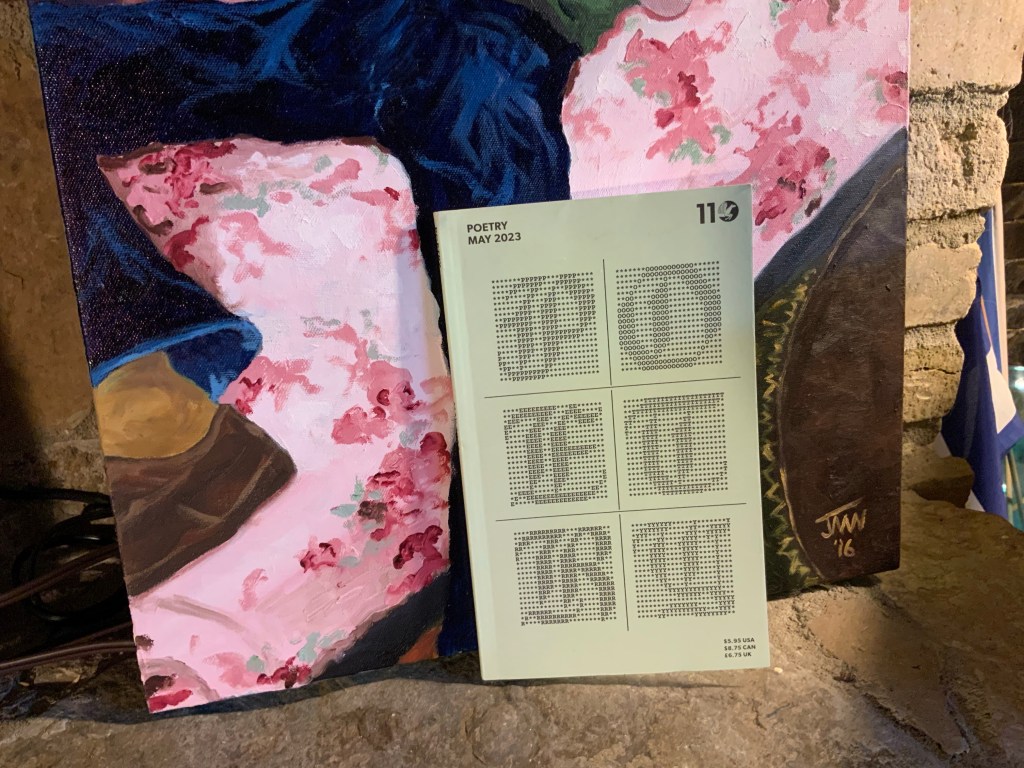
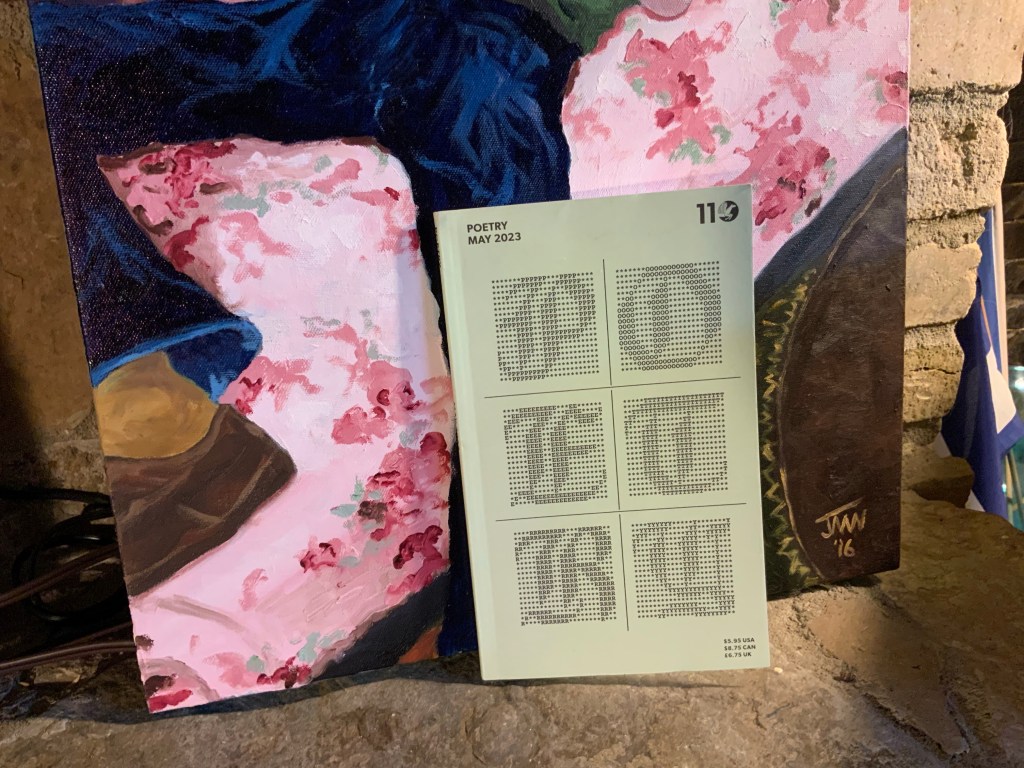
The phrase introduces each of three meaty stanzas in John Kinsella’s “Familiars” (Poetry, June 2023). The device, with its mock portentous sonority and homiletic repetition, has a pleasing (to this Jean-Luc Picard fan) Star-Trekkie smack. Syntactically the stanzas are clearly structured and marked, as if built of hewn and fitted stone. What a relief.
… I am their familiar, restless and emolliated
in sweat, something not quite right with my
body clock, my systems…
…
So we drywall to reinforce, almost a corbeling.
…
… The heat wears me down.
Wall spaces fluctuate. A haunting of the endocrine.
Two words are new to me: “emolliated,” which means “weakened,” and “corbeling.” A corbel is a structure jutting out from a wall to support a weight. I listened to the pronunciation of “corbeling” to know which syllable is stressed (the first).
I also confirmed my understanding of “familiar” (a spirit) and “endocrine” (relating to hormone-secreting glands), two words I recognize but rarely use. When reading verse, I do considerable look-up of words I think I already know!
Diction is a big deal to me, and I’ve been ridiculed as snooty for using language perceived as pretentious. A coach I subbed for once in the high school where I taught mocked me for reassuring him in a note that no student had misbehaved “egregiously” in his absence. It hurt me. That’s how I talk; he took it as affected and pompous. I felt emolliated.
When a writer of verse uses words of rare occurrence, I think of Louise Glück’s quip that “poets” are conventionally thought to be writers who are fond of words such as “incarnadine.” She writes that she herself is inclined to stick with common language, because it can have, she believes, the widest range of connotation. As a reader I’m of two minds on the matter; it’s how I roll.

(c) 2023 JMN — EthicalDative. All rights reserved








 EthicalDative