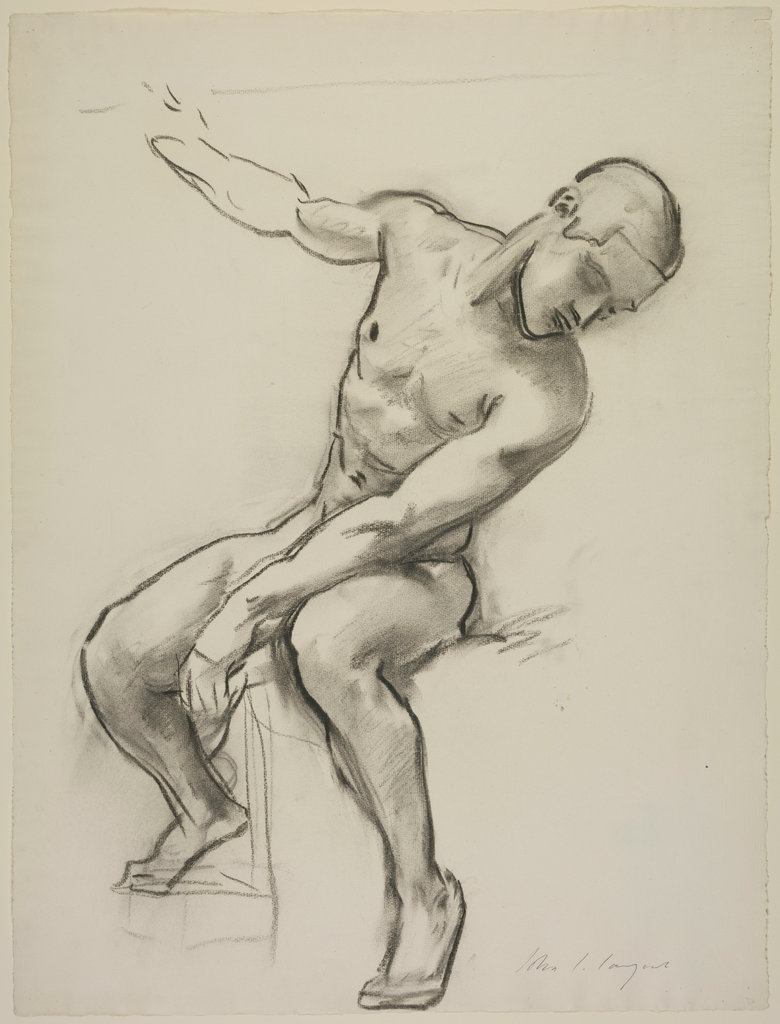

Assume the Position

[Illustration from Bret Stephens, “Trump Meets Nemesis, Punisher of Hubris,” NYTimes, 3-13-20]

(c) 2020 JMN

Posted in Commentary | Tagged , , , , | Leave a comment

Tummlers

Yes, it saw the invention of cars, airplanes, and computers, but the 20th century will be remembered most for its chronic wars.

However, a sweet vestige to preserve from then is what’s known as the “tummler,” a term introduced to me by this article.

Jessamyn West, a librarian who was a moderator for 10 years at MetaFilter, said the job [moderating content on the internet] is like what Catskill entertainers of the mid-20th century called a tummler, “the person in the room who isn’t quite the M.C. but walks around and makes sure you’re doing OK.” Tummlers were basically professional minglers at shows and social gatherings. If you were feeling shy, they’d even help you strike up a conversation with other vacationers at the resort.

(Annalee Newitz, “We Forgot About the Most Important Job on the Internet,” NYTimes, 3-13-20)

Ms.Newitz points out in her article that persons who wrangle comments on today’s internet perform much-needed and varied functions, often needing trauma therapy for the ugliness they confront. However, she reminds us why we needed human moderators in the first place, as old-fashioned tummlers “helping us have a good time.”

(c) 2020 JMN

Posted in Commentary, Quotations | Tagged , , , | Leave a comment

All Hail the Mighty State

“Texas, our Texas, so wonderful and great…” goes the song.

“Texas is one of the most prepared states for public health disasters in the U.S.” (Tweet by Governor Greg Abbott on March 9, 2020)

State with highest number of people lacking health insurance (5 million) in the nation: Texas.

State with per-capita number of hospital beds lower than the U.S. average because of hospital closures: Texas.
(Japan has around 13 hospital beds per one thousand people. South Korea has 12. The average rich country has about 5.5 beds. Texas has 2.3 beds.)

State ranking forty-first of fifty states in physicians per capita: Texas.

State with 28 percent of nursing homes given lowest possible rating (one star) by federal government in 2015: Texas.
(In California 7 percent received that rating.)

State with 25 percent of nursing homes cited for severe deficiencies by the feds in 2015: Texas

State whose health agency headquarters had to be vacated by hundreds of employees in 2018 because they were overrun with rats, mold, and vermin: Texas

(Abbott quotation and stats from Christopher Hooks, “Let’s Count the Ways Texas’s Dismal Health Care Landscape Could Make Coronavirus Worse,” Texas Monthly, 3-11-20)

(c) 2020 JMN

Posted in Commentary, Quotations | Tagged , , | 3 Comments

Davy’s Grey

“Boston’s Apollo” celebrates McKeller’s role in Sargent’s work but does not hide the artist’s racism. In her essay for the exhibition’s catalog, Professor Greene cites racial slurs Sargent used. “He’s an amazing painter — that doesn’t go away,” she said. “But we need to pause and rethink how he approached Thomas McKeller as a subject.”

(Alina Tugend, “John Singer Sargent’s Secret Muse,” NYTimes, 3-9-20)

I’ve heard Davy’s grey charmingly compared to the color of “goose poo.” I’m in cahoots with the tone scale ranging from dark white to light black, so have grappled “goose poo” to my lexicon with hoops of steel.

I mention Davy’s grey because Sargent lived from 1856 to 1925, and I imagine his world to have been goose-poo-colored. To live in it was to be a goose-pooist by default for most people. The standout would be someone who wasn’t.

Many call foul, but I personally deem it on my own recognizance a meet and licit reckoning to register goose-pooism in its historical sauce as well as in its present stew.

My maternal grandfather chastised his daughter for dating a “Jew-boy” American serviceman during World War II. Where I was born, the railroad still slices off “Mexican town” from the white neighborhoods. Like Sargent’s achievement as a painter, goose-pooism doesn’t go away either.

(c) 2020 JMN

Posted in Commentary, Quotations | Tagged , , , , | 1 Comment

Gerhard Richter Voiced

For 60 years, he has treated uncertainty as an ethical duty. …

That is the priceless example he offers today’s young artists, whose every mistake or hesitation gets pounced on by digital Savonarolas. So much dogmatism out there, so much high-volume moralizing. The voice we need to hear is the voice that says: I don’t know. I’m not sure. I’m still thinking. I’m still working.

(Jason Farago, “The Sublime Farewell of Gerhard Richter, Master of Doubt,” NYTimes, 3-5-20)

(c) 2020 JMN

Posted in Commentary, Quotations | Tagged , , , , , | 1 Comment

Tenseness Sought in Firm Times

But the president can still be reasonably held responsible for the urgency with which [etc.]… the speed at which [etc.]… the pressure brought to bear [etc.]… and the use of presidential rhetoric [etc.]….

Is it still necessary to point out that an infinitive phrase split by an adverb is not the best way?

Better to have written: “But the president can still reasonably be held responsible…

In tense times readers want a journalist firmly in control of his syntax.

(Quotation from Ross Douthat, “The Coronavirus Is Coming for Trump’s Presidency,” NYTimes, 3-7-20)

(c) 2020 JMN

Posted in Commentary, Quotations | Tagged , , , , , , | Leave a comment

Pouncing on “Pounded”

Many conservatives have gleefully pounded on Project Veritas’s disclosures, including one particularly influential voice: Donald Trump Jr., the president’s eldest son.

The gist of this article is that Project Veritas works for conservatives against liberals. I surmise that the writers may have intended “pounced” instead of “pounded.” Gleefully pounding on an organization that benefits you seems odd. Gleefully pouncing on its disclosures would convey embracing them with enthusiasm, which the context invites.

… According to internal Project Veritas emails, where the language of the group’s leaders is marbled with spy jargon.

“Marbled” — like a Wagyu ribeye, with veins of fat! I might have written “peppered,” but “marbled” holds its own and is less predictable. I savor this appealingly novel turn of phrase.

(Quotations from Mark Mazzetti and Adam Goldman, “Erik Prince Recruits Ex-Spies to Help Infiltrate Liberal Groups,” NYTimes, 3-7-20)

(c) 2020 JMN

Posted in Commentary, Quotations | Tagged , , , , | 1 Comment

Texas Exceeded Only By Itself

Since the US brought back capital punishment in the 1970s, the county has sent 129 men and women to the death chamber, more than any entire state except the rest of Texas.

(“Why a Texas county had a radical rethink on crime,” http://www.bbc.co.uk)

It appears that Harris County has donated more persons to the Huntsville death chamber 70 miles north of Houston than any of the 49 other states — except for the rest of Texas itself. Whatever the sum pointed to by the curiously inverted citation, calculating it is a dismal exercise.

On the plus side, the article’s theme is how liberal forces in Houston have recently overcome, for the moment, red-state headwinds in order to improve the local justice system.

(c) 2020 JMN

Posted in Commentary, Quotations | Tagged , , | 1 Comment

Such Ado About Something

Two bits in this opinion piece by Shmuel Rosner have an off ring, one solecistic, the other non-colloquial.

But most Israeli voters would support such move. Most of them voted for parties that support such move.

“Such” here is an adjective expressing similarity. To modify a singular noun it wants “a/an”: “such a move.” Otherwise, the noun must be plural: “such moves.”

The citation is interesting in that the structure is repeated, which means it’s likely to be intentional (an influence from Hebrew, perhaps? — the author is Israeli), and not an editorial slip. I can’t speak for Hebrew, but both Spanish and French would admit the equivalent of “such move.”

We learned that to win against a political opponent one has to have a message more profound than “everyone but him.”

“Everyone but him” is not incorrect grammatically; however, most speakers would say, “Anyone but him.” They seem to mean the same thing, though usage favors the latter.

Nevertheless, I’m given pause. So in a thought experiment I stand before a classroom and pose a question to my students. Confronted with silence, which of these do I say encouragingly with interrogative intonation to solicit an answer: “Everyone?” “Anyone?” The first invites all, the second one. I’ll go with “anyone” and take it as evidence that they’re not interchangeable.

“The medium is the message.” I don’t know what McLuhan’s ricocheting aphorism meant to him, but it emboldens me to posit grammar as the “medium” of language, and to assert that much message is encoded there for any who care to look. What you convey is embedded somewhat in how you say it. If your message matters to you, say it well.

(Quotations are from Shmuel Rosner, “The Indefatigable, Unbeatable Benjamin Netanyahu,” NYTimes, 3-3-20)

(c) 2020 JMN

Posted in Commentary, Quotations | Tagged , , , | 1 Comment

Grammatic Breakdown

It’s been a big week for what I refer to as “Hermit Tech.” Stock in technology companies that facilitate working from home have soared in a spiraling market otherwise anxious by an impending coronavirus pandemic. [This is where I stopped reading.]

(Charlie Warzel, “When Coronavirus Quarantine Is Class Warfare,” NYTimes, 3-5-20)

(c) 2020 JMN

Posted in Commentary, Quotations | Tagged | 1 Comment