2.
These lost and charnel thoughts
less thoughts than bits of stun
I suddenly find myself among;
that are the me I am when I am not
sleeked to reason and pacific despair
speak to me of a pain that saves,
some endmost ear to shrive the mind.
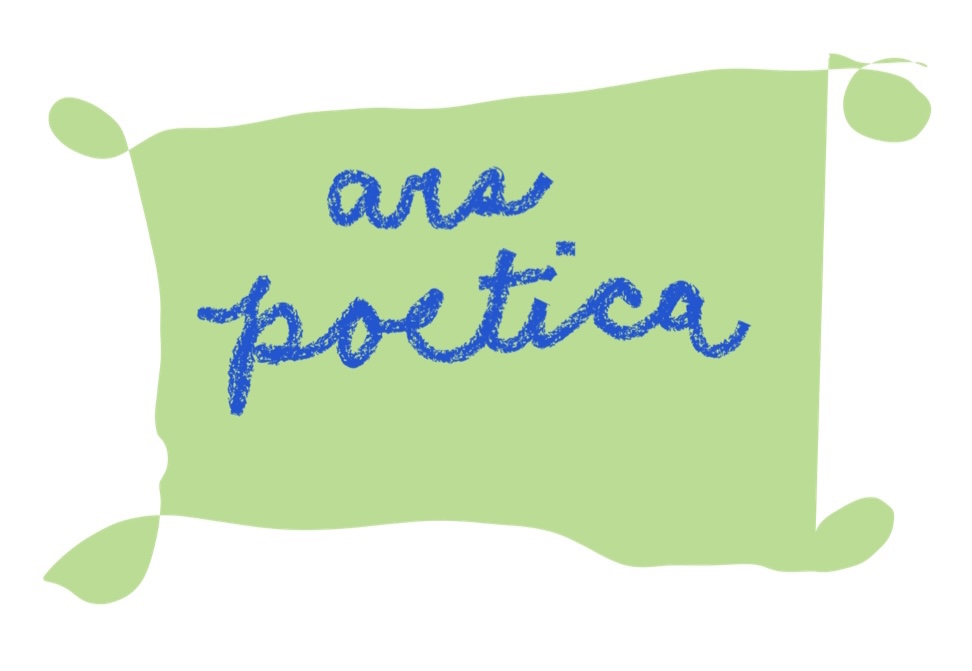
(From Christian Wiman, ‘Ars Poetica,” The New Yorker)
What’s the grammatical subject of “speak”?
In part 2 of Christian Wiman’s brief but diamond-dense poem, I deduced that the subject of “speak” in the penultimate line is “thoughts” from the first line. I couldn’t absorb the other messages until I had settled the matter. The strophe is tortured syntactically and salted with “bits of stun” such as “sleeked to reason” and “pacific despair.” The figure-me-out structure and stretched pairings echo the torture of a mind reckoning with mortality, that mind’s inkling of “a pain that saves,” and its cry for an “endmost” ear to broker absolution.
Absolution for what? Perhaps for the wavering of “the me I am,” triggered by contemplation of “a plum and othering dusk,” before the demands of a faith requiring that I “be the being this hard mercy means” — a state of renunciation evoked in the cascade of plangent “if” clauses terminating strophe 1:
…
If I could let go
If I could know what there is to let go
If I could chance the night’s improvidence
and be the being this hard mercy means.
In commenting, I’ve turned the poem upside down as it has turned me. Poems of this sort, read studiously, yield a measure of enlightenment and fulfillment. What exactly is chanced in the “night’s improvidence” sits beyond my candle power.
(c) 2023 JMN — EthicalDative. All rights reserved







 EthicalDative
‘The Tongue Has No Bones.’ Yeah!
There’s no mistaking a language which can uncork a grave accent, an acute accent, a circumflex accent and a dieresis, all in the space of a single written utterance, as not-French. As I coax these diacritic delicacies from my keyboard in frank extase of Francophilia, my fluent touch-typing slows to a tortoise gait.
French is called the “most Germanic” of the Romance languages, while English, intensely Gallicized, ranks as the most Roman of the Germanic languages. The swirls and eddies of the cross-tonguing, the churn and spurn of embrace, are involving.
Of questionable relevance, who doesn’t know that “yeah” isn’t written “yea”? A substantial few, it seems. Nay to “yea” except when voicing a vote, says the insufferable formalist.
The tongue has no bones is a Moroccan saying. I’m not sure what it means in that culture, but the truth of the organ’s bonelessness is non-negotiable in most circles.
That’s me for now.
(c) 2023 JMN — EthicalDative. All rights reserved