…chanting in unison, a mob of flightless birds, one timeless complicated psalm after another… (From “Transfiguration” by Michael Dumanis, Poetry, September 2025)
A poem reminded me of you, old friend. Judy, Judy, Judy. You came back from a summer’s Italy speaking of the Italian boys thronging street corners, half man, half beast, chanting catchy choruses, na na naaa na, na na naaa na, full-throated, insinuating.
I could tell you warmed to it, their glances the memory that would follow you in academe and spinsterhood.
Oh so inviting it would sweep you up into its arms, rescue you from the index cards of Juan Bautista.
Lane’s entry for root q-ṣ-d spans two pages (1). Lane’s entry for root q-ṣ-d spans two pages (2).
(Update, Oct. 26, 2025. Some time after writing what’s below I’ve encountered Mitch Teemley’s citation of Psalm 37:23. What’s a good word for how the Quran and the Bible interact? I’ve no expertise in either, but I see signs of their being in dialogue as I go. The idea of a deity “making firm” the steps of an individual “on his or her way” — “The” Way — to enlightenment has affinity with the phrase picked apart below.)
If you make it to the end of this post and are not a student of Arabic or scripture, you are an admirably straight-ahead, honor-bright, questing reader and receive my utmost doff of cap. I’m a short-form blogger. This entry breaks the mold, but I can’t make it any less than what it is if I’m to to lay bare the very marrow of the matter.
The phrase to ponder is at the beginning of a Quranic verse. Here’s my transliteration:
Which would you have chosen? Here are the translations I monitor as I read the Arabic text (my bolding):
It rests with Allah alone to show you the Right Way, even when there are many crooked ways. Had He so willed, He would have (perforce) guided you all aright. — A. Maududi (Tafhim commentary) Allah Se charge (d’indiquer) la direction menant à la juste voie [“Allah takes charge (of indicating) the direction leading to the right way”] dont certains s’écartent pourtant. S’Il voulait, Il vous y conduirait tous. — Montada Islamic Foundation A Dios le incumbe indicar el Camino [“Upon God it is incumbent to indicate the Way”], del que algunos se desvían. Si hubiera querido, os habría dirigido a todos. — Julio Cortés, El Corán
They all alight on the notion of “showing” or “indicating” for qaṣd. I don’t find this sense satisfactorily accounted for in Wehr’s listing. Such an outcome always sets the hares running in my mind. I want to know how the experts reached their outcome, especially when they’re in agreement.
It often helps to see what the verb from which a noun derives can mean. For qaṣadaWehr lists these possible meanings:
to go or proceed straightaway, make a beeline, walk up to s.o. or s.th.; to go to see, call (on); to betake o.s., repair, go (to a place), be headed, be bound (for a place); to seek, pursue, strive, aspire, intend, have in mind; to aim; to have in view, contemplate, consider, purpose; to mean, try to say; to adopt a middle course; to be economical, frugal, thrifty, provident; to economize, save.
Here again I do not see the notion of showing and indicating satisfactorily accounted for. Wehr documents Modern Standard Arabic and solves most problems, given how conservative the language has been in its evolution from pre-Islamic times to the present. For what may be lapsed or archaic usage my last resort is the big gun: Lane’s Lexicon. Lane draws from the copious commentaries and compendiums of classic Eastern lexicographers and grammarians.
I feel I’ve really struck paydirt whenever Lane happens to cite the very verse of the Quran which I’m trying to elucidate textually. That happens to be the case here. Lane provides the following glosses of the phrase in question. (I’ve expanded its parenthetical abbreviated references to their titles as provided in the “Indications of Authorities,” p. xxxi):
Upon God it rests to show the direct, or right way, (“The Moḥkam,” El-Beydáwee’s “Exposition of the Kur-án,” The “Lisán el-‘Arab”) [or the right direction of the way] which leads to the truth, (El-Beydáwee’s “Exposition of the Kur-án”) and to invite to it by evident truths: (“The Moḥkam,” The “Lisán el-‘Arab”) or upon God it rests to make the way direct, or right, in mercy and favour: or upon God depends one’s directing his course to the [right] way. (El-Beydáwee’s “Exposition of the Kur-án”) […]
Are you still with me? I hope this sticky chase we’ve shared (remember the hares?) sheds light on my title. Have any of the proffered translations helped you understand exactly what qaṣd meant, say, to a seventh-century Arabic speaker?
Translations don’t actually or necessarily “fail”; most are useful in their way, but are often inflationary, bending in the direction of what feels like interpretive assumptions conforming to the strictures of a target language as well as to creed. This is especially true with ancient scriptures where vast temporal and cultural chasms yawn. The Montada French translation seems to me most consistently to track the Arabic in a reasonably close manner. It also manages to be graceful. Go figure! Accurate literalness is the trait I value most in a translation. My motto, for better and (!) worse, is “Not what it means, but what it says.” Is there Latin for that? Non indicare sed dicere?
Thanks for keeping me company on this little outing! Your seat is on the left. 🙂
Nothing we do has the quickness, the sureness, the deep intelligence living at peace would have.
(Denise Levertov)
I had the unique experience of being exposed to a poem orally, recited by the poet no less, and of understanding her words enough to be moved by them. Denise Levertov’s poem is called “Life at War.” It was new at this reading. She recites it from her handwritten notebook here, in 1966, starting at minute 11:35 of the video. Her tone and inflection of voice are earnestly neutral, which allows the words to stun, the delivery not distract. Her enunciation has bell-like clarity; her phrasing is deliberate, scrupulous, unforced. The periods breathe and cohere unhesitantly. For my ear and taste, Levertov’s recitation is majorly how it’s done. Respect to a master.
I’ve transcribed what I heard on the fly. There may be an error in what’s typed here, and obviously it’s not her lineation. It will be in published form somewhere. What’s a poem for? To rusticate on a page or to fly into someone’s ear? This one flew into mine. It came at me straight and hard; I had to get it down and pass it on.
LIFE AT WAR by Denise Levertov (transcribed from recitation)
The disaster’s numb within us, caught in the chest, roiling in the brain like pebbles. The feeling resembles lumps of raw dough weighing down a child’s stomach on baking day. Or Rilke said it: My heart, could I say it overflows with business? But no, as though its contents were simply balled into formless lumps. Thus do I carry it about.
The same war continues. We have breathed the grit of it in, all our lives. Our lungs are pocked with it, the mucus membrane of our dreams coated with it, the imagination filmed over with the gray filth of it.
The knowledge that humankind — delicate men whose flesh responds to a caress, whose eyes are flowers that perceive the stars, whose music excels the music of birds, whose laughter matches the laughter of dogs, whose understanding manifests designs fairer than the spider’s most intricate web — still turns without surprise, with mere regret, to the scheduled breaking open of breasts whose milk runs out over the entrails of still-alive babies, transformation of witnessing eyes to pulp fragments, implosion of skinned penises into carcass gullies.
We are the humans! Men who can make, beings so lovely we have believed one another the mirror image of a God we felt as good, who do these acts, convince ourselves it is necessary. These acts are done to our own flesh. Burned human flesh is smelling in Vietnam as I write.
Yes, this is the knowledge that jostles the space in our bodies along with all we go on knowing of joy, of love. Our nerve filaments twitch with its presence day and night. Nothing we say has not the husky phlegm of it in the saying. Nothing we do has the quickness, the sureness, the deep intelligence living at peace would have.
“We keep moving. We keep putting one foot in front of the other and wanting to be here. It takes a lot for somebody to decide they don’t want to be here… The world’s kind of painful — but God, I can’t get enough of it. I just don’t want it to end.”
He devoted a second book, “How to Write One Song” (2020), to encouraging across-the-board creativity and to offering practical suggestions to aspiring songwriters. One is simply to devote at least 20 minutes every day to working on songs, good or bad. “If you tried to write a bad song every day, you’d end up writing a good song every once in a while, you know?” he said. “I just think it’s about putting yourself in the position of being in the way of a song.”
Remembrance of Virginia Giuffre. “It takes a lot for somebody to decide they don’t want to be here.” Virginia Roberts Giuffre killed herself in April at age 41. Her posthumously published book has just appeared, titled Nobody’s Girl: Memoir of Surviving Abuse and Fighting for Justice, published by Doubleday.
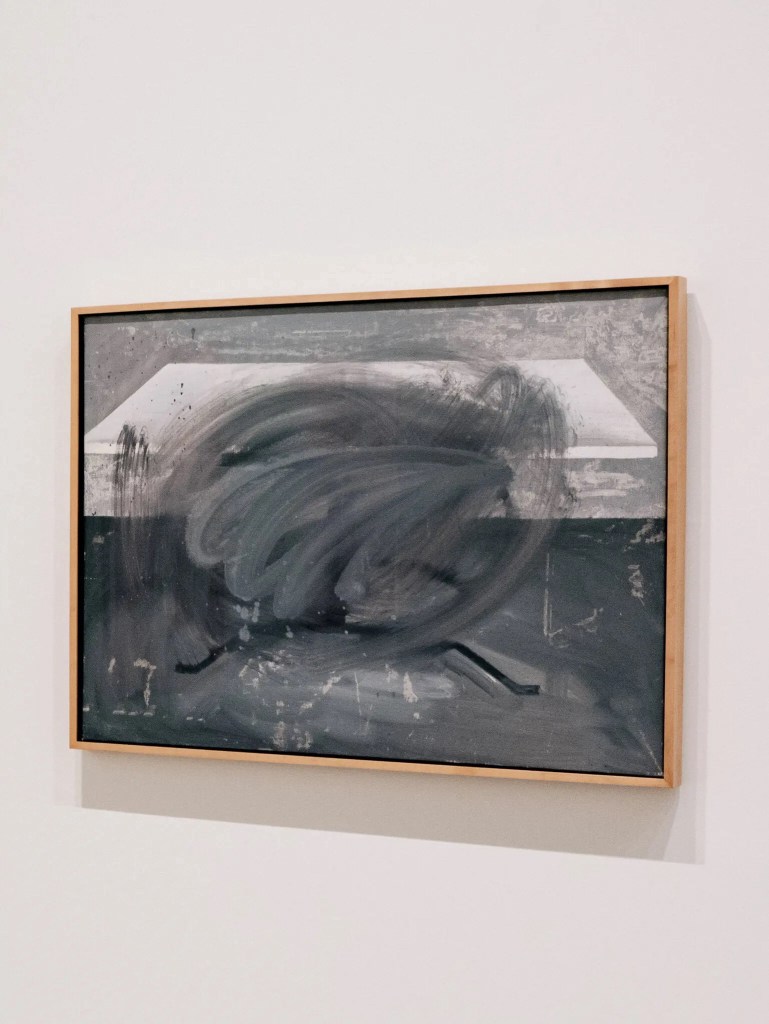
“Tisch” (1962) introduces Gerhard Richter’s trademark blur and use of found photographic imagery. [New York Times caption and illustration]
The only constants in his oeuvre, which takes in every traditional genre… are change, relentless curiosity and, perhaps most of all, an insistent question: What is an image?
[Gerhard Richter’s] painting “Tisch” (1962), has the daunting catalog position of painting No. 1. It introduces the trademark blur and use of found photographic imagery for which Richter is now well-known. Based on an image sourced from a 1950s edition of Domus, an Italian design magazine…
The scene is, however, obscured: A roiling mass of sweeping, agitated strokes hovers over the center of the image like a cataract, or an accident, or an exasperated defacement, or all of the above.
A wall text tells us that the artist originally painted the table as it was, directly from the source image; dissatisfied, he smeared the magazine photograph with solvents and then reproduced the result, in which the table has all but disappeared.
Richter remains one of the greatest living artists because of his devotion to the complexity of images, to always asking what we are looking at and how we might remake it, again and again.
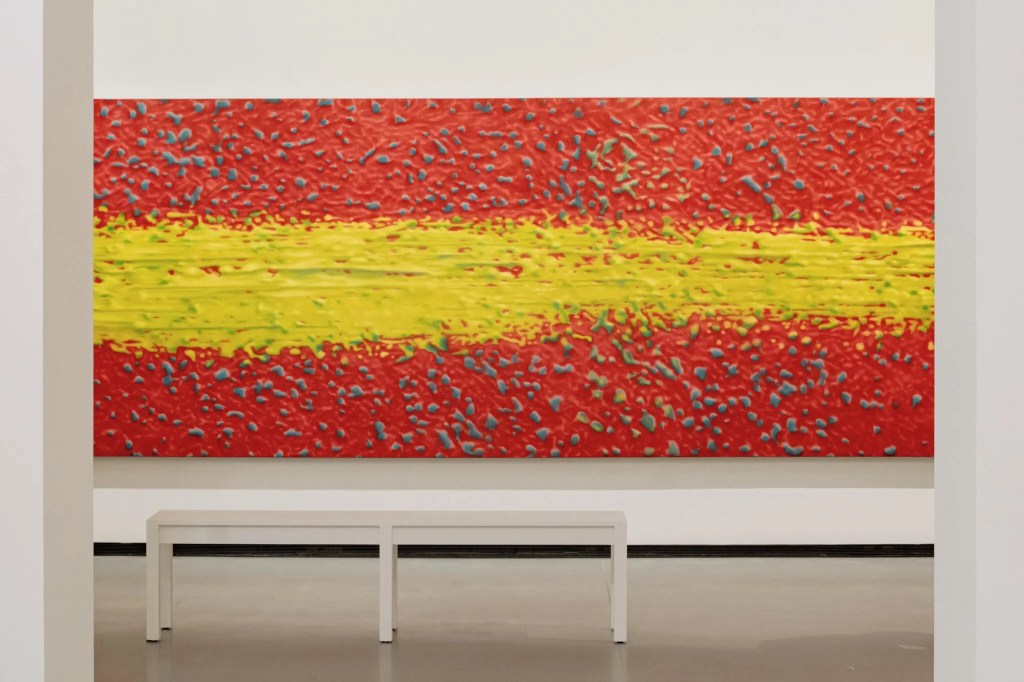
“Stroke (on Red)” (1980). [New York Times caption and illustration]
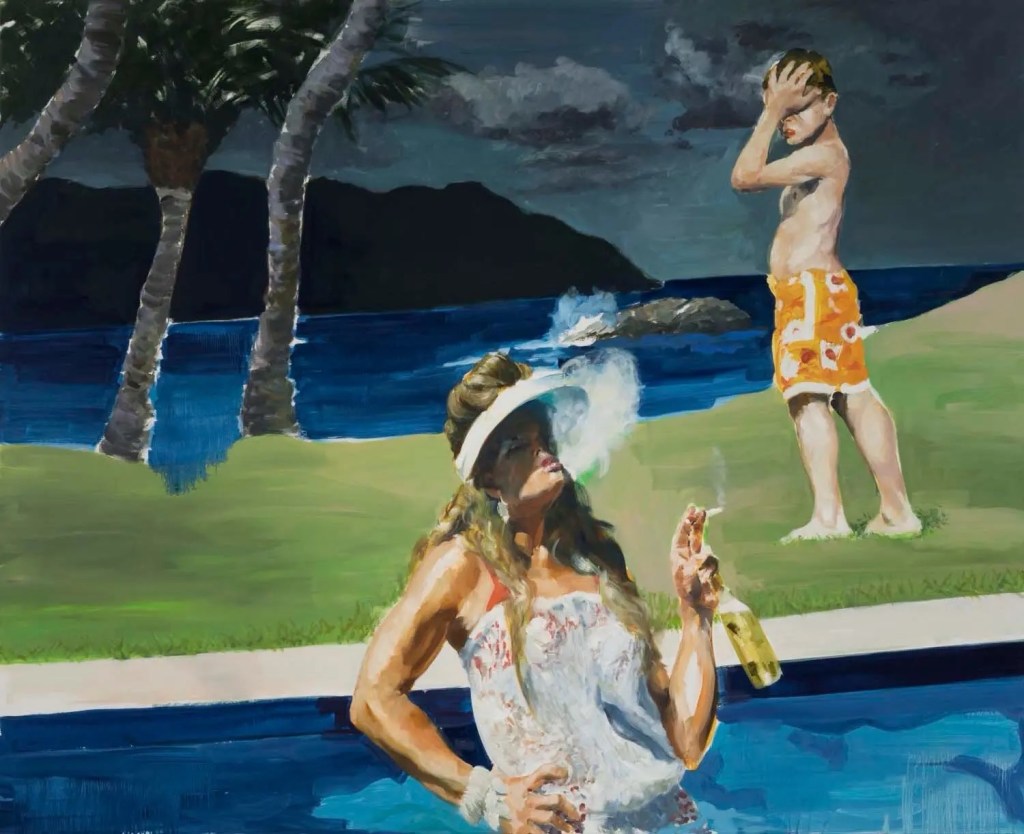
“Island of the Cyclops: The Early Years” (2018) by Eric Fischl. Credit… Eric Fischl. [New York Times caption and illustration]
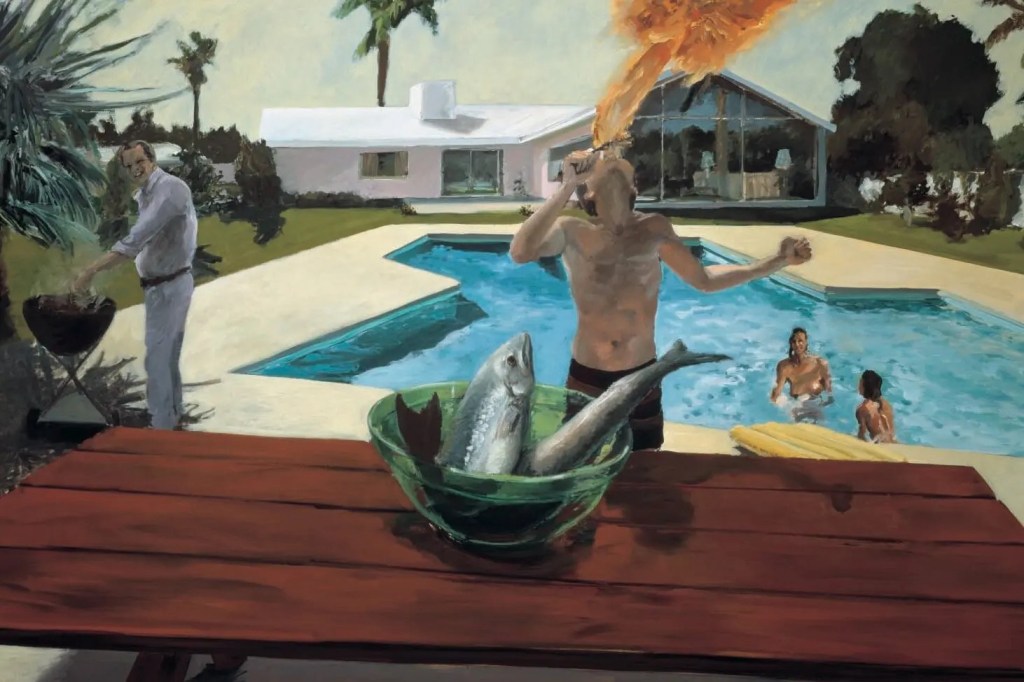
[Eric Fischl] “Eric Fischl: Stories Told” Featured here are about 40 large-scale works by the figurative painter Eric Fischl, created from the late 1970s to today. The artist largely had to teach himself traditional painting styles, studying early modern artists like Édouard Manet and Edgar Degas, because new art forms ruled during the ’70s and classic movements were out of fashion…
“Barbeque” (1982) by Eric Fischl is part of the exhibition “Eric Fischl: Stories Told” at the Phoenix Art Museum. Credit… Eric Fischl. [New York Times caption and illustration]
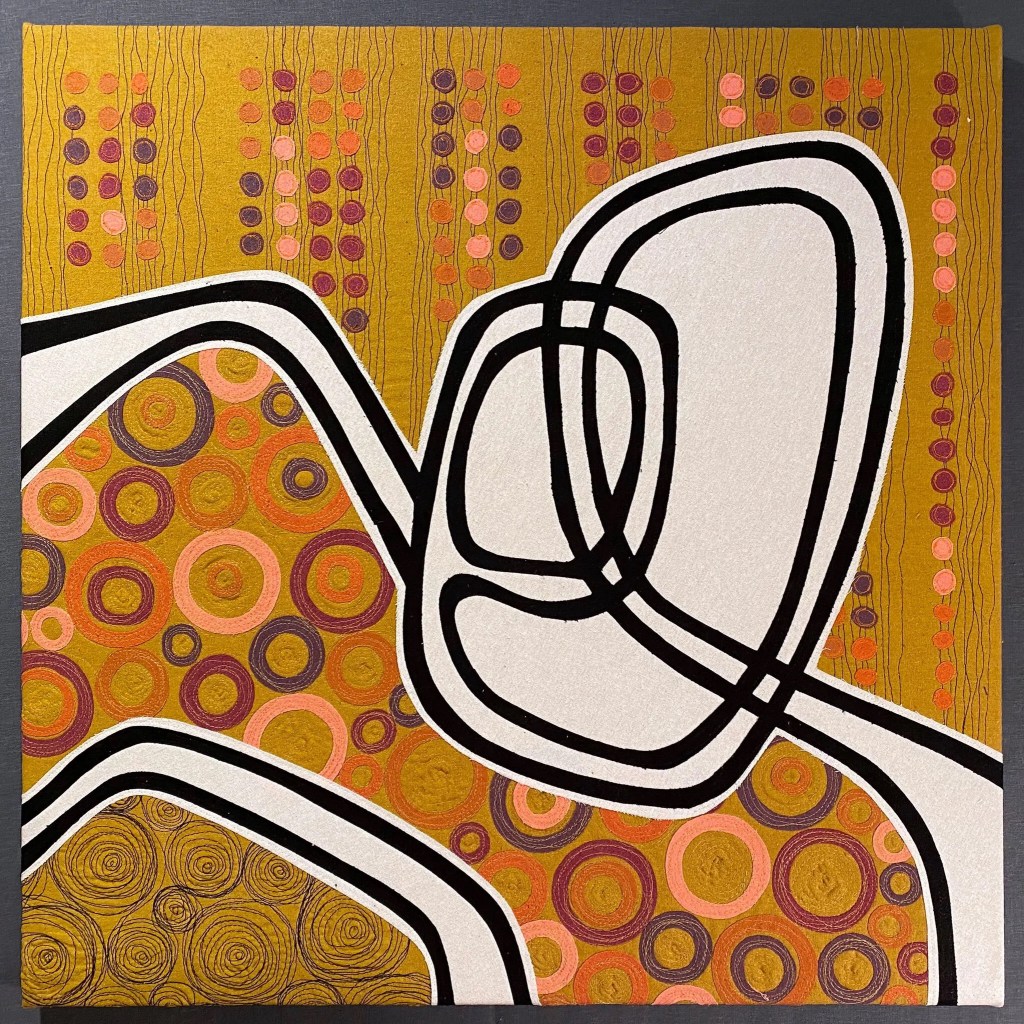
[Monica Thompson] “Threads” A selection of collages, assemblages, textiles, eco-prints and weavings created by nine Montana women who are artists, mothers and art teachers is presented here…
“The Greater the Whole” (2023) by Monica Thompson. Credit… Monica Thompson, via Yellowstone Art Museum. [New York Times caption and illustration]
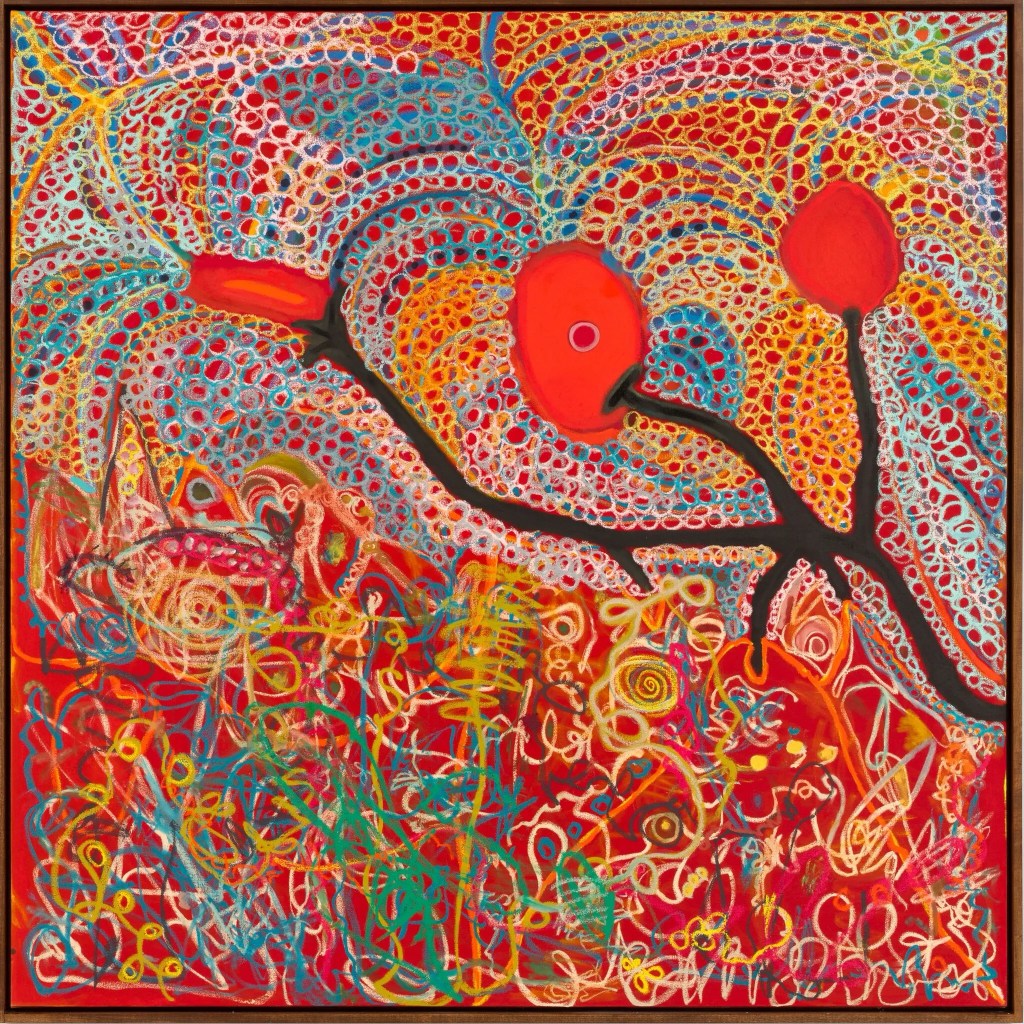
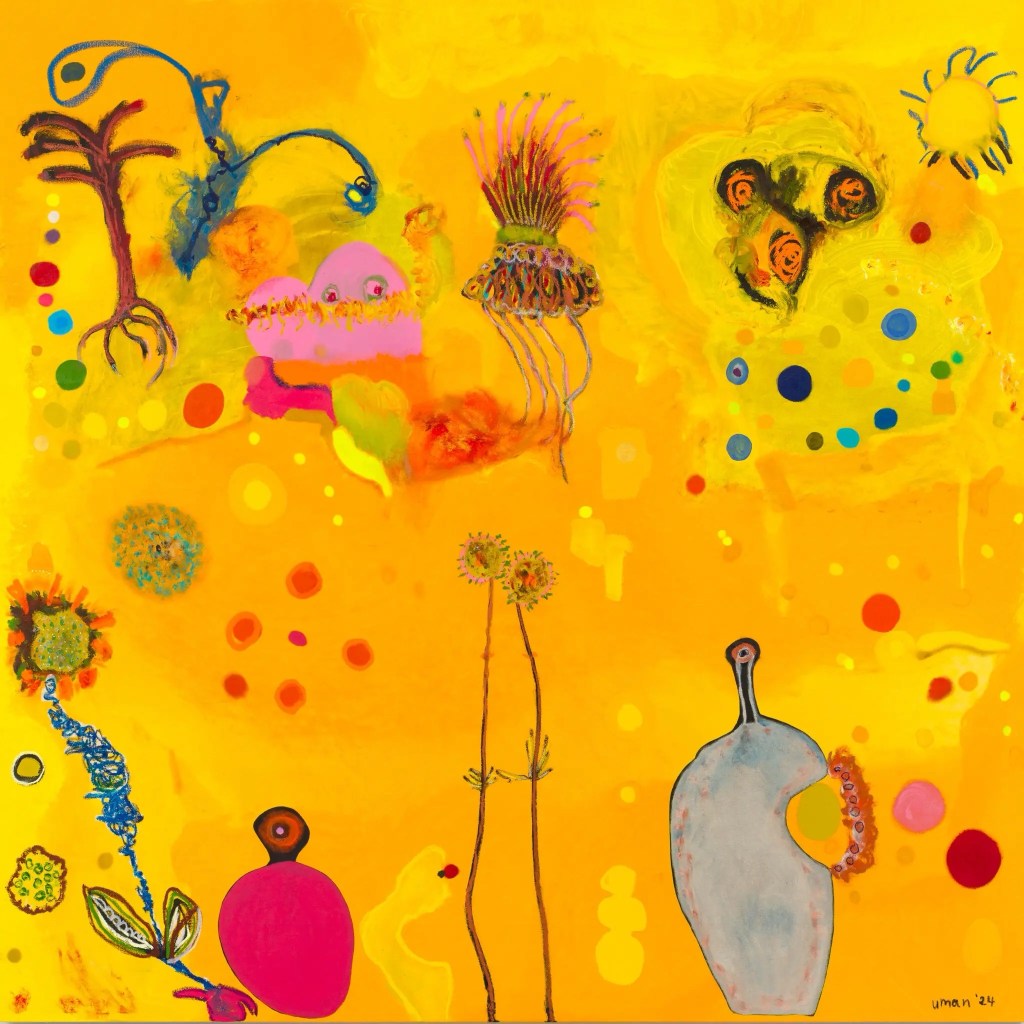
[Uman] “Uman: After all the things …” The artist Uman was born in Somalia and raised in Kenya. She spent her teenage years in Denmark and then ultimately landed in upstate New York… Her paintings, created with markings like spirals, doodles, circles and stars, evoke the fabrics worn by women in Somali bazaars, the slanted flourishes of Arabic calligraphy and the countryside of Kenya and upstate New York…
“Sumac Tree in Roseboom” (2022-23) by Uman. Credit… Lance Brewer[New York Times caption and illustration] “Eedo Kafia’s Turkana” (2024) by Uman. Credit… Lance Brewer. [New York Times caption and illustration]
All excerpts and illustrations are from Morgan Malget, “A Full Season of Art to See at Museums and Galleries Across the U.S.,” New York Times, 10-11-25.
With its loping equine cadence, amphibrachic tetrameter holds morbid fascination for the doggerel-besotted. No one knows what it is until they hear it. Then they go, “Oh yeah. There once was a girl from Nantucket.” But they’re wrong, that’s only trimeter. Keep up, people, we need four triplets.
Is there such a thing as front-rhyme? you ask. Should there be? What would it look like?
He grabs by the vitals whomever he chooses. The slabs of endeavor are redolent ruses.
There you have it: an AB front-rhymed couplet. To your untested ear is rhyme even present? Not so much, right? That’s the genius. English has long since said eff it to Nantucket. But what’s to fill the empty bucket? Say hello to head rhyme.
I grant you, the couplet is flawed. The incidental rhyming at end-of-line — chooses/ruses — is unfortunate. It has no place in the model of a new paradigm. English, like Italian, is almost impossible to versify without rhyming. Let’s try to improve the couplet…
… first, by altering line 1:
He grabs by the vitals whomever he wishes. The slabs of endeavor are redolent ruses.
Wishes and ruses are still too close to rhyming. Let’s try altering line 2:
He grabs by the vitals whomever he chooses. The slabs of endeavor are redolent mimsies.
Close enough. Do not fret over the poetic license of line 2. A “slab of endeavor” explains itself in a manner of speaking. Mimsies, plural of mimsy, may be a recherché nonce word or not. Verse allows such ambiguities. Only poetry takes them seriously.
Embrace new vistas in versifying, messieurs-dames. Where there’s a will there’s a way. Dream hard, dream big, dream on. It’s the right thing to do.
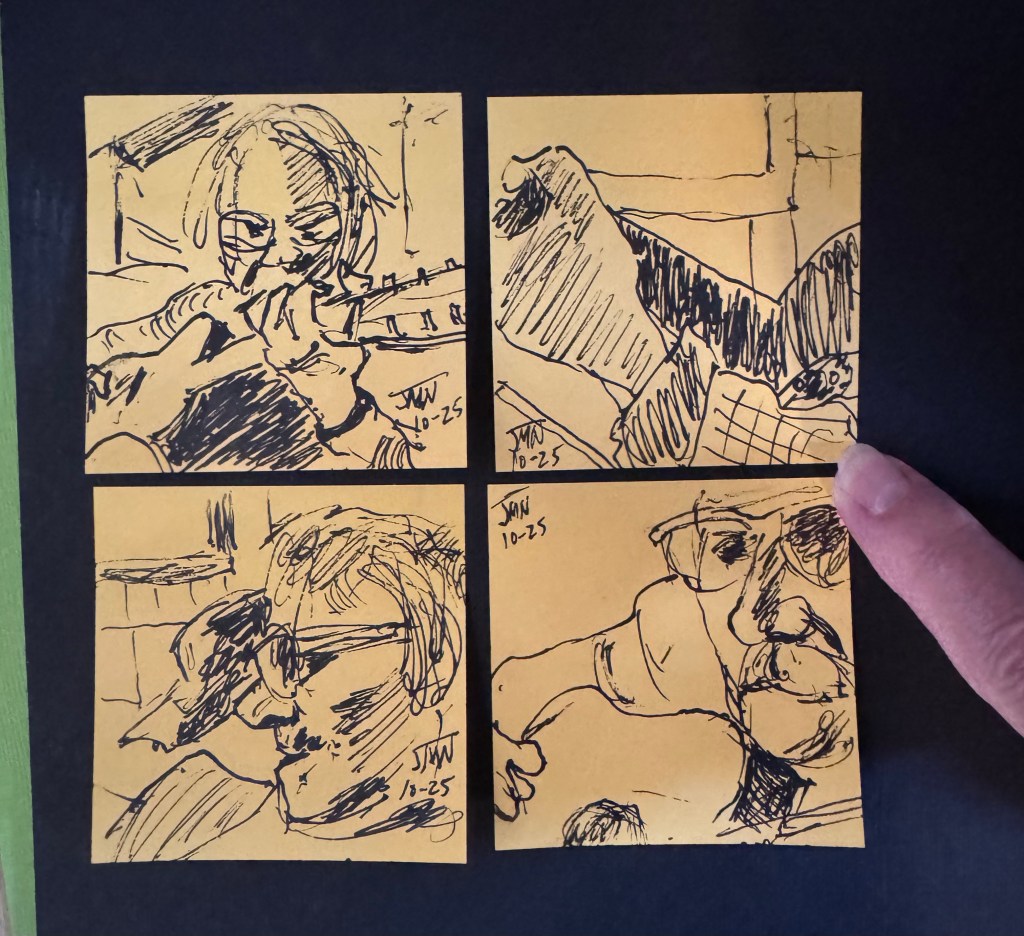
A friend I’ll nickname Stardust, avid prose reader, has remarked that relatively few people have a taste for poetry nowadays. I surmise it’s always been so, even in this or that era when <name-your-Great-Poet> flourished. The Great One would have been lionized by a coterie of fans in a populous land of nonreaders.
Poets are a few obsessives bent on strewing words just so, in a way the next person can’t, applecart-tipping and necessary. Their readers are a peculiar lot bent on stewing over those words. I like to think of doggerel, tangentially, as poetry’s running dog. Hail to thee, blithe mutt! Bird thou never wert.
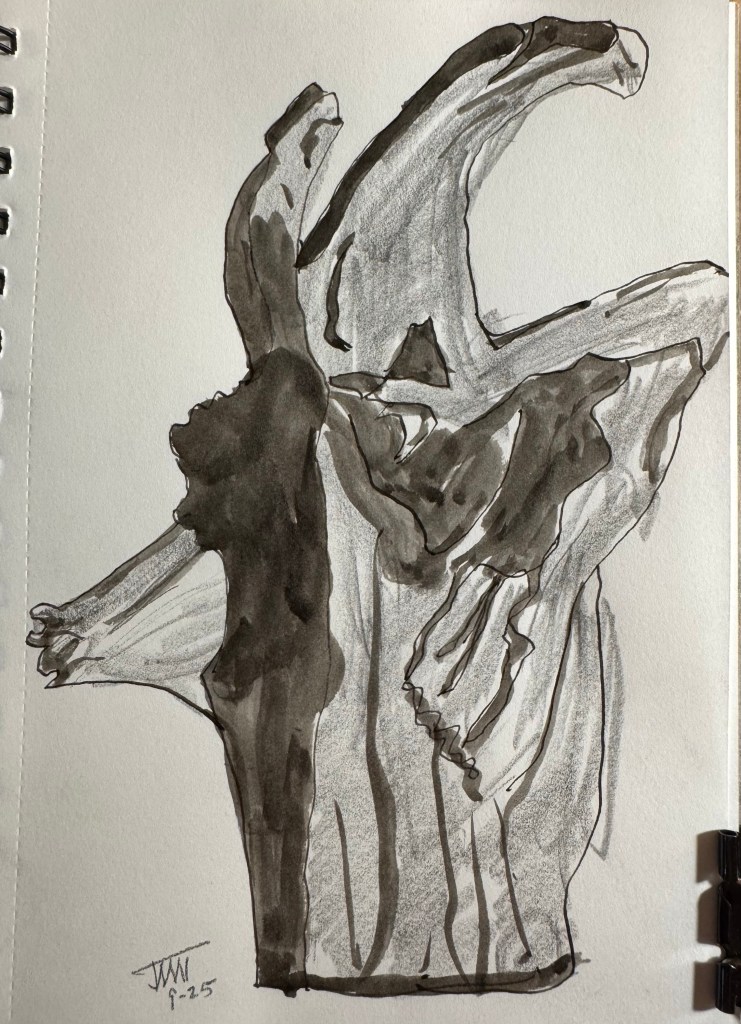
The pivot point in this spiel is that Stardust is a skilled artist who can reify in line, value and hue what a poet does in words:
I did not want / the moment to end / then stopped wanting / so I could / be, not yearn,… (Lia Purpura, from “Intersection”, Poetry, September 2025)
“Did not want… then stopped wanting… be, not yearn,” Impossible to say differently that’s better. Both Stardust and Lia Purpura can turn a flash of perception into a thing that lingers, and completes itself in the psyche of another human.
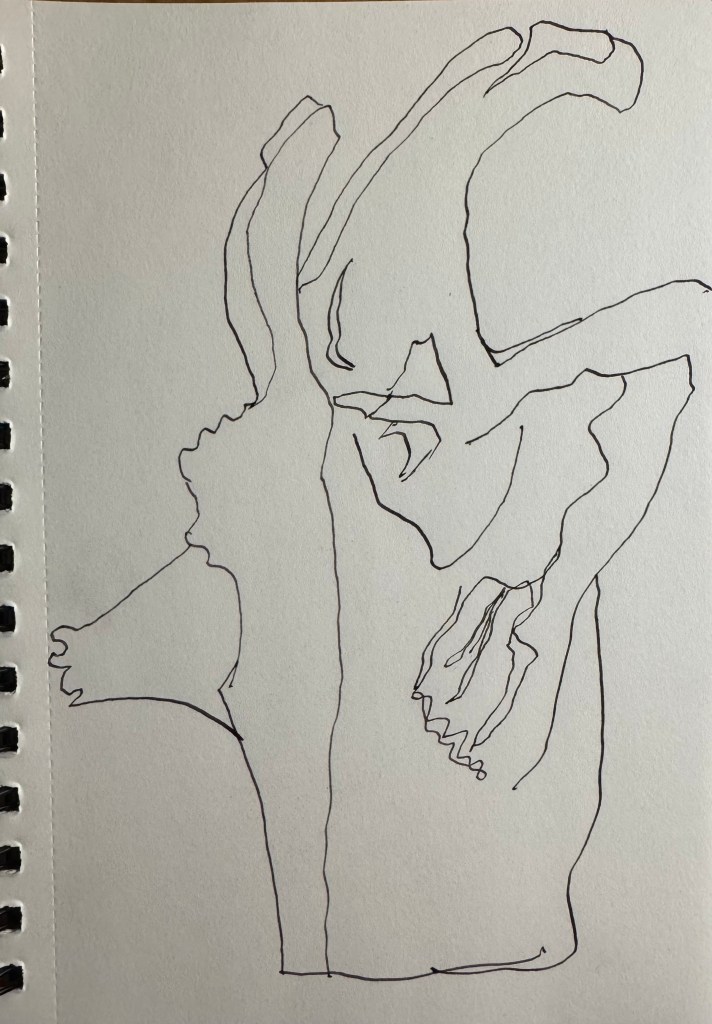
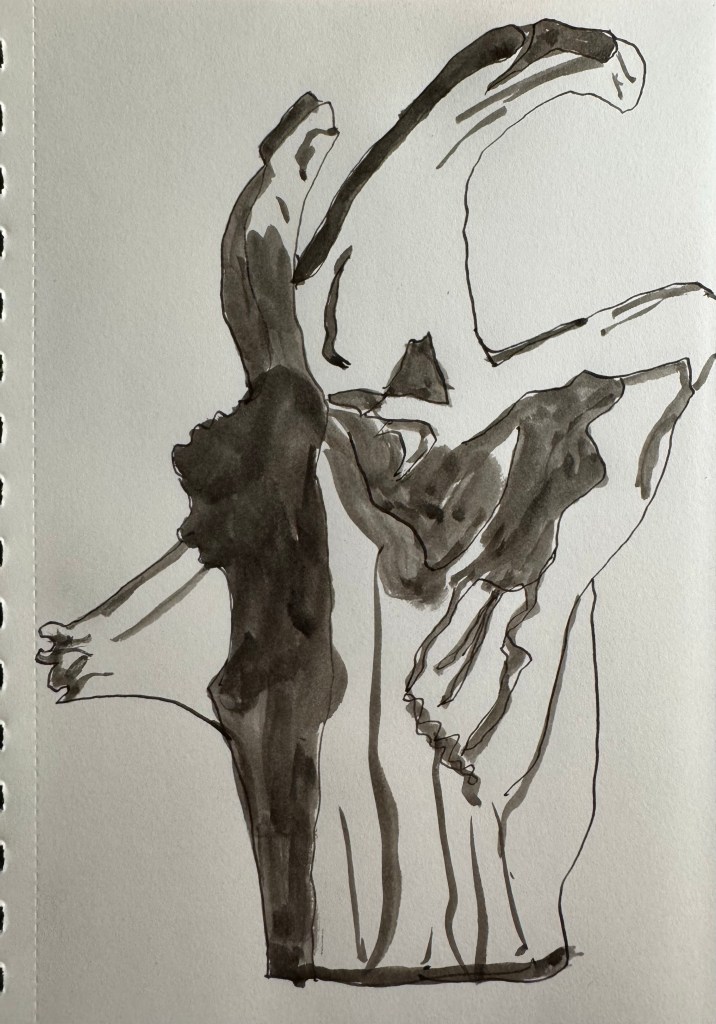
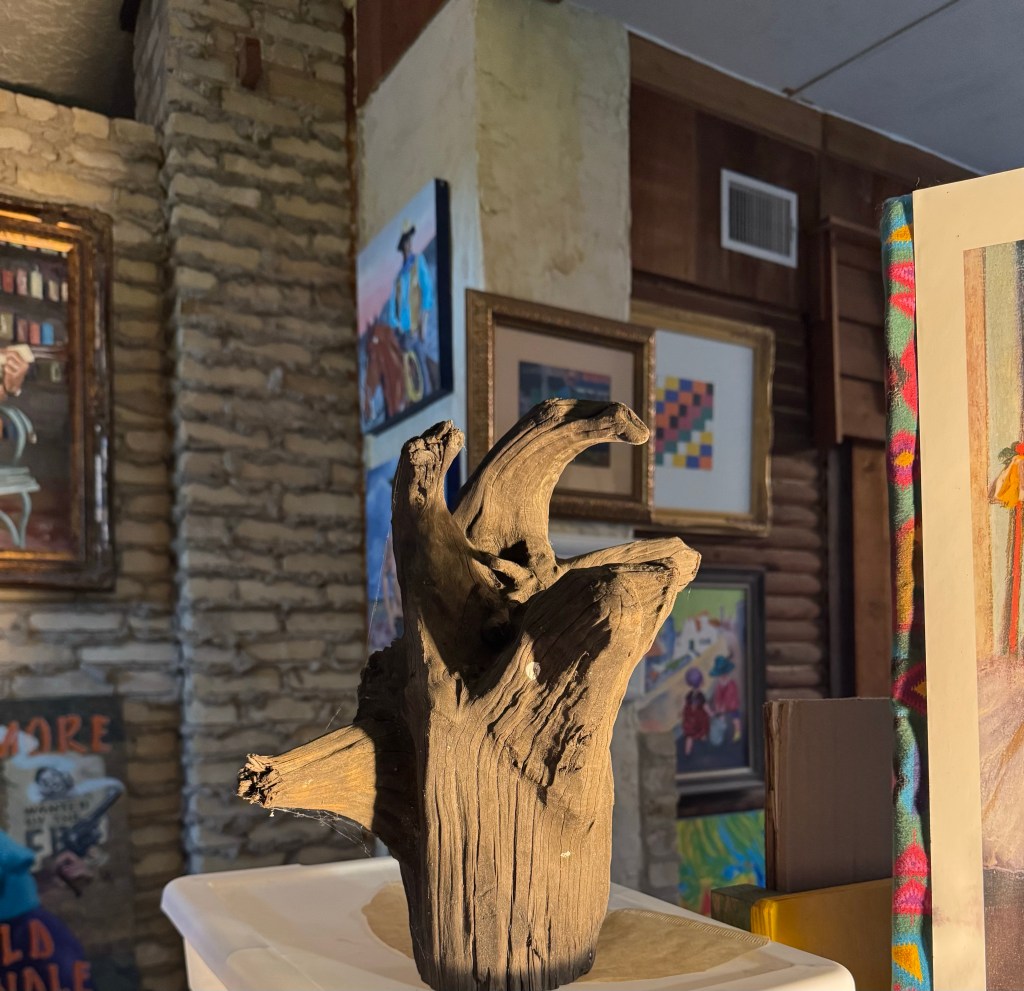
If Stardust is ever pierced by a poem-moment, and there’s no special need for that to happen from where I stand, there’s hundred’s of feet of fertile loam accrued in my friend’s delta of sensibility for it to root in. Stardust will have perceived the poem as lines, akin to a sketch that works unusually well.
*** “I hate being called poet/dramatist/translator/director. Poet covers it all for me… I want to do justice to my inwardness, my tenderness, my political rage.” (Tony Harrison) ***
*** … como una mosca espía… … like a fly on the wall… [“a spy fly”!] (From “Revuelo” by Azurea20) ***
*** … Maybe instead of building a ship somewhere in your body you just let yourself feel the pain and humiliation. No need to make it beautiful for some future reader. Just say how much you wanted to hurt someone like you got hurt. And then just watch that for a while. It’s okay to feel horribly ashamed. Best not to look away. (From “Karma Affirmation Cistern Don’t Be Afraid Keep Going Toward the Horror,” by Gabrielle Calvocoressi, Poetry, October 2025) ***
*** A month and continent away your father (a painter) steps to my side
as we admire a row of lavender & someone
en plein aire complains the scene is mis-composed
(a power-line cuts through…)
your father smiles, and gestures out — art
isn’t for capturing what’s there (From “Arles, Whidbey,” by Reed Turchi, Poetry, October 2025) ***



 EthicalDative
How Translations ‘Fail’
Lane’s entry for root q-ṣ-d spans two pages (1).
Lane’s entry for root q-ṣ-d spans two pages (2).
(Update, Oct. 26, 2025. Some time after writing what’s below I’ve encountered Mitch Teemley’s citation of Psalm 37:23. What’s a good word for how the Quran and the Bible interact? I’ve no expertise in either, but I see signs of their being in dialogue as I go. The idea of a deity “making firm” the steps of an individual “on his or her way” — “The” Way — to enlightenment has affinity with the phrase picked apart below.)
If you make it to the end of this post and are not a student of Arabic or scripture, you are an admirably straight-ahead, honor-bright, questing reader and receive my utmost doff of cap. I’m a short-form blogger. This entry breaks the mold, but I can’t make it any less than what it is if I’m to to lay bare the very marrow of the matter.
The phrase to ponder is at the beginning of a Quranic verse. Here’s my transliteration:
wa-^alā-l-lāh(i) qaṣd(u)-s-sabīl(i) […]
Here’s the full verse in Arabic:
The Bee (16:9)
وَعَلَى ٱللَّهِ قَصْدُ ٱلسَّبِيلِ وَمِنْهَا جَآئِرٌۭ ۚ وَلَوْ شَآءَ لَهَدَىٰكُمْ أَجْمَعِينَ ٩
My provisional translation of the transliterated phrase is this:
Upon God [is] the resolution of the way […]
The bolded word is the pivotal one, representing qaṣd. Here’s Wehr’s complete listing of possible equivalents for qaṣd:
endeavor, aspiration, intention, intent; design, purpose, resolution; object, goal, aim, end; frugality, thrift, economy
Which would you have chosen? Here are the translations I monitor as I read the Arabic text (my bolding):
It rests with Allah alone to show you the Right Way, even when there are many crooked ways. Had He so willed, He would have (perforce) guided you all aright.
— A. Maududi (Tafhim commentary)
Allah Se charge (d’indiquer) la direction menant à la juste voie [“Allah takes charge (of indicating) the direction leading to the right way”] dont certains s’écartent pourtant. S’Il voulait, Il vous y conduirait tous.
— Montada Islamic Foundation
A Dios le incumbe indicar el Camino [“Upon God it is incumbent to indicate the Way”], del que algunos se desvían. Si hubiera querido, os habría dirigido a todos.
— Julio Cortés, El Corán
They all alight on the notion of “showing” or “indicating” for qaṣd. I don’t find this sense satisfactorily accounted for in Wehr’s listing. Such an outcome always sets the hares running in my mind. I want to know how the experts reached their outcome, especially when they’re in agreement.
It often helps to see what the verb from which a noun derives can mean. For qaṣada Wehr lists these possible meanings:
to go or proceed straightaway, make a beeline, walk up to s.o. or s.th.; to go to see, call (on); to betake o.s., repair, go (to a place), be headed, be bound (for a place); to seek, pursue, strive, aspire, intend, have in mind; to aim; to have in view, contemplate, consider, purpose; to mean, try to say; to adopt a middle course; to be economical, frugal, thrifty, provident; to economize, save.
Here again I do not see the notion of showing and indicating satisfactorily accounted for. Wehr documents Modern Standard Arabic and solves most problems, given how conservative the language has been in its evolution from pre-Islamic times to the present. For what may be lapsed or archaic usage my last resort is the big gun: Lane’s Lexicon. Lane draws from the copious commentaries and compendiums of classic Eastern lexicographers and grammarians.
I feel I’ve really struck paydirt whenever Lane happens to cite the very verse of the Quran which I’m trying to elucidate textually. That happens to be the case here. Lane provides the following glosses of the phrase in question. (I’ve expanded its parenthetical abbreviated references to their titles as provided in the “Indications of Authorities,” p. xxxi):
Upon God it rests to show the direct, or right way, (“The Moḥkam,” El-Beydáwee’s “Exposition of the Kur-án,” The “Lisán el-‘Arab”) [or the right direction of the way] which leads to the truth, (El-Beydáwee’s “Exposition of the Kur-án”) and to invite to it by evident truths: (“The Moḥkam,” The “Lisán el-‘Arab”) or upon God it rests to make the way direct, or right, in mercy and favour: or upon God depends one’s directing his course to the [right] way. (El-Beydáwee’s “Exposition of the Kur-án”) […]
Are you still with me? I hope this sticky chase we’ve shared (remember the hares?) sheds light on my title. Have any of the proffered translations helped you understand exactly what qaṣd meant, say, to a seventh-century Arabic speaker?
Translations don’t actually or necessarily “fail”; most are useful in their way, but are often inflationary, bending in the direction of what feels like interpretive assumptions conforming to the strictures of a target language as well as to creed. This is especially true with ancient scriptures where vast temporal and cultural chasms yawn. The Montada French translation seems to me most consistently to track the Arabic in a reasonably close manner. It also manages to be graceful. Go figure! Accurate literalness is the trait I value most in a translation. My motto, for better and (!) worse, is “Not what it means, but what it says.” Is there Latin for that? Non indicare sed dicere?
Thanks for keeping me company on this little outing! Your seat is on the left. 🙂
Oil on canvas, 16×20 in. (JMN 2020).
(c) 2025 JMN — EthicalDative. All rights reserved