
It helps me read contemporary poetry to conjure the mindset of an athlete in the elite sport of pole vaulting. The bar sits there at a distanced height. I summon latency, coil with icy focus, charge the standards, launch myself on the flexing pole, soar contortedly… On a good day I clear the poem and land flushed with endorphins.
When I was half of who I am your voice came along / rewarding me with provocations. It was a fulgor as / beautiful as treasons on the outer banks on another / night. There were horses, wild ones whose thunder / abandoned earth for lattices of successive hoofbeats.
(From “Abraham Lake” by Nathan Spoon, Poetry, October 2020)
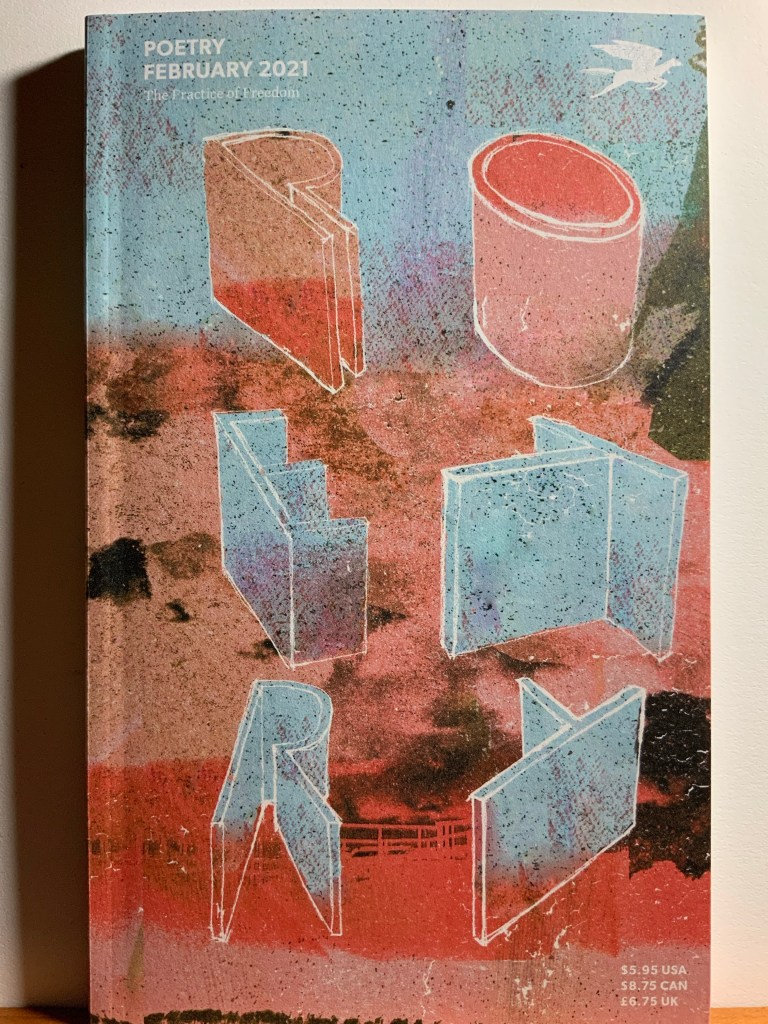
Language redolent of fulgors, beautiful treasons, and lattices of hoofbeats can be repulsive or propulsive according to the reader’s readiness and conditioning. I choose my task to be that of honing a sensibility able to submit to being reached by knowers who are worth their salt. I want good verse to affect me, and complacent satisfactions don’t go with the territory.
“As with other great poets, [Louise] Glück does not invite paraphrase.” (Robert Boyers)
“[The reader] may not get it at once but, if he is sufficiently interested, he invariably gets it. (Wallace Stevens)
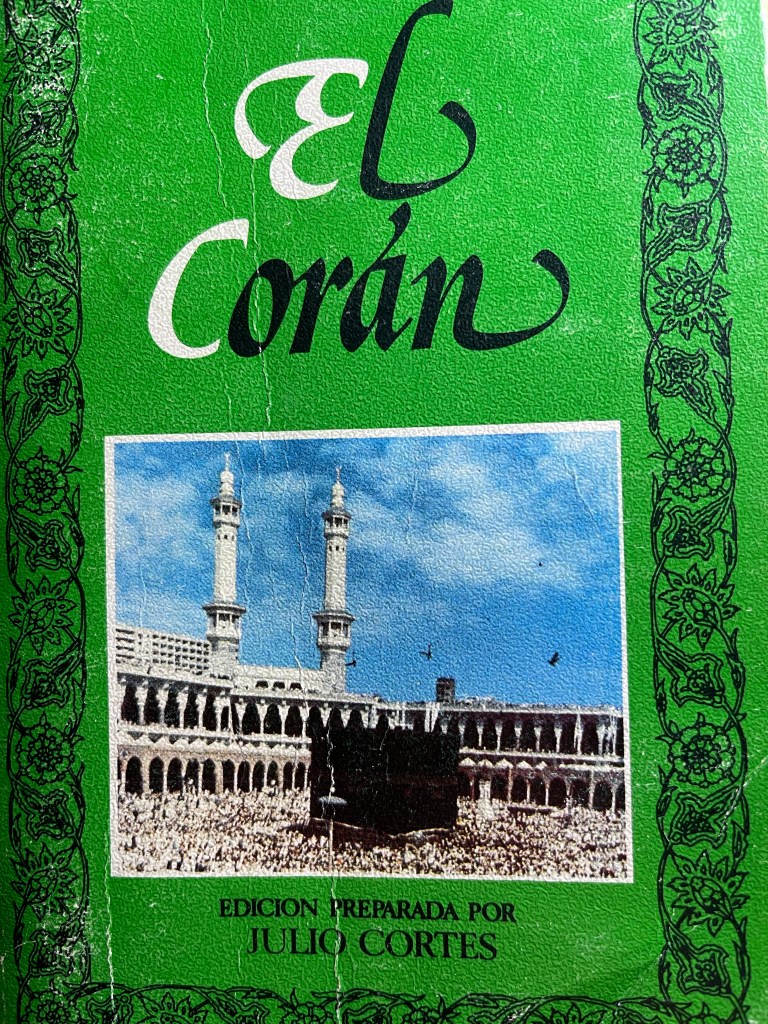
The best cue may come from my Arabic teacher’s preface to his Spanish translation of the Koran:
“Although it’s true that to translate is to interpret, we separate clearly what’s commonly called interpretation from translation, distinguishing what the Koran ‘says’ from what it ‘seems to mean.’ ”
(Julio Cortés, rest in peace — un saludo, Profesor)

Let translation follow Nathan Spoon, then, where paraphrase fears to tread:
Cuando era la mitad de quien soy llegó tu voz / premiándome con provocaciones. Era un fulgor tan / bello como traiciones en las riberas alejadas de otra / noche. Había caballos, salvajes cuyo trueno / abandonaba la tierra buscando enrejados de cascos ruidosos.
JMN
(c) 2022 JMN — EthicalDative. All rights reserved






 EthicalDative
Minefield of Rabbit Holes
In my Arabic grammar I encounter the preposition fiy- illustrated in a “relationship of comparison” (rapport de comparaison).
Blachere’s jouissance is matA( from root m-t-( meaning “to carry away” and, in derived forms, “to enjoy.” Its usages meander through enjoyment, property, and stuff. The notion of “precarious” is absent; however, the syntax example is one of many Blachère takes from the Koran. Julio Cortés points out that the immense corpus of commentary crucially supplements how Koranic terms are understood. The delights of this life are deemed ephemeral by common consent.
Here’s the exploding rabbit hole: My dictionary defines the idiom matA(u-l-mar’a, whose second word means “woman,” as cunnus. It’s tagged anat. for “anatomical.”
There’s an ancient English word for cunnus that’s cognate with French con and Spanish coño. I once mocked Western scholars born in Victorian times who resorted to Latin in citing salty medieval verses (especially those composed by women). I’m less exercised now about Roman empire slang. I confess my mother-tongue’s alternative to cunnus grates on my ear. I’m content to let sleeping Latin lie.
(c) 2022 JMN — EthicalDative. All rights reserved