Welcome, Bone-Breaker

The first bearded vulture born among the crags of Spain’s Picos de Europa mountains in 75 years has left the watchful gaze of her parents and taken to the sky.

The chick, named Bienvenida (Welcome), was born in March to Deva, a 10-year-old female, and and Casanova, a 13-year-old male.

The bird is known in Spanish as the quebrantahuesos, or bone-breaker, because of the way it drops bones from a great height so they shatter and yield their marrow.

(Sam Jones, “Rare bearded vulture chick born in Picos de Europa flies the nest,” theguardian.com, 8-6-20)

“Rare” because the bird has been hunted to near extinction, as men will do.

(c) 2020 JMN

Posted in Commentary, Quotations | Tagged , | Leave a comment

‘A Royal Poet of a Sky’

The poem is “A Gazetteer of the Backyard (In Which Pedanius Dioscorides Takes Stock”) by Sylvia Legris (Poetry, March 2020).

It’s a Pernambuco of a backyard.

Over a span of dogged spells with this rhapsody of nature-naming I hit upon the expedient of looking up and listing terms novel to me, which were legion. It was to be a praise act with which to needle the sprawl of what this is. I gave up on that, it spread me too thin. But I do admire Legris’s achievement. I do feel taken for a ride.

The poem is divided into 3 parts with uppercase titles:

PART 1. UPROOTED THE EARLY SKY
PART 2. A PERENNIAL SAGA (BEFORE THE BLUE LAKE BUSH BEANS, THE BOLERO HYBRID CARROTS, THE MAESTRO PEAS, THE RUBY QUEEN BEETS)
PART 3. ASCLEPIADS

Here’s a taste:

Perseids seed the 3b hardiness zone. A zone of zahara starlight zinnias. Double clusters and heliotropes, sunflowers under Swift-Tuttle showers. Orbits of high heaped cloudberries. A royal poet of a sky!

My rows bode bad with wode whistle, cheatgrass, bad man’s oatmeal and yolky toadflax — a blunder garden! The missteps, the false alyssum, the prolifically prolix knapweed… a pervasive invasive creep. Taproots tapping my optimism.

Gardens of orthic dark brown soil. Calcareous dark brown. Eluviated dark brown. Humic gleysols… Gardens of nearly level topography. Of topography gently sloping or roughly undulating. Moderately sloping or gently rolling. Strongly sloping or moderately rolling. Steeply sloping or strongly rolling.

What I wish you could see in this crudely rendered drawing…

A metrical line from plant to poet to the god of physicians. A geology of medicine and herb. Not companion planting but conviviality. Plants doting on stones, metals smitten with flowers.

(c) 2020 JMN

Posted in Anthology | Tagged , , , , , | 2 Comments

Boredom, Doubt and Isolation in the Arts

The Kunsthaus Bregenz in western Austria exhibits “Unprecedented Times,” comprised mostly of works produced by artists as the virus spread and they sheltered in place this year.

The only work created pre-pandemic is by the Austrian artist Markus Schinwald, who for years has modified 19th-century portrait paintings by adding accessories to their subjects — often fictional prosthetics such as fake noses, but also fabric masks. The elegantly masked “Grita” and “Meron” now seem eerily prescient.

… “Unprecedented Times” highlights the anxieties and uncertainties of life in a pandemic. Boredom, doubt, and isolation weave through the works, some of which also offer glimpses into how artists produce under pressure.

(Kimberley Bradley, “What Worried Artists in Lockdown? The Same Things as Everyone Else,” NYTimes, 8-5-20)

(c) 2020 JMN

Posted in Commentary, Quotations | Tagged , , , , | Leave a comment

‘Horrific Surrealism’

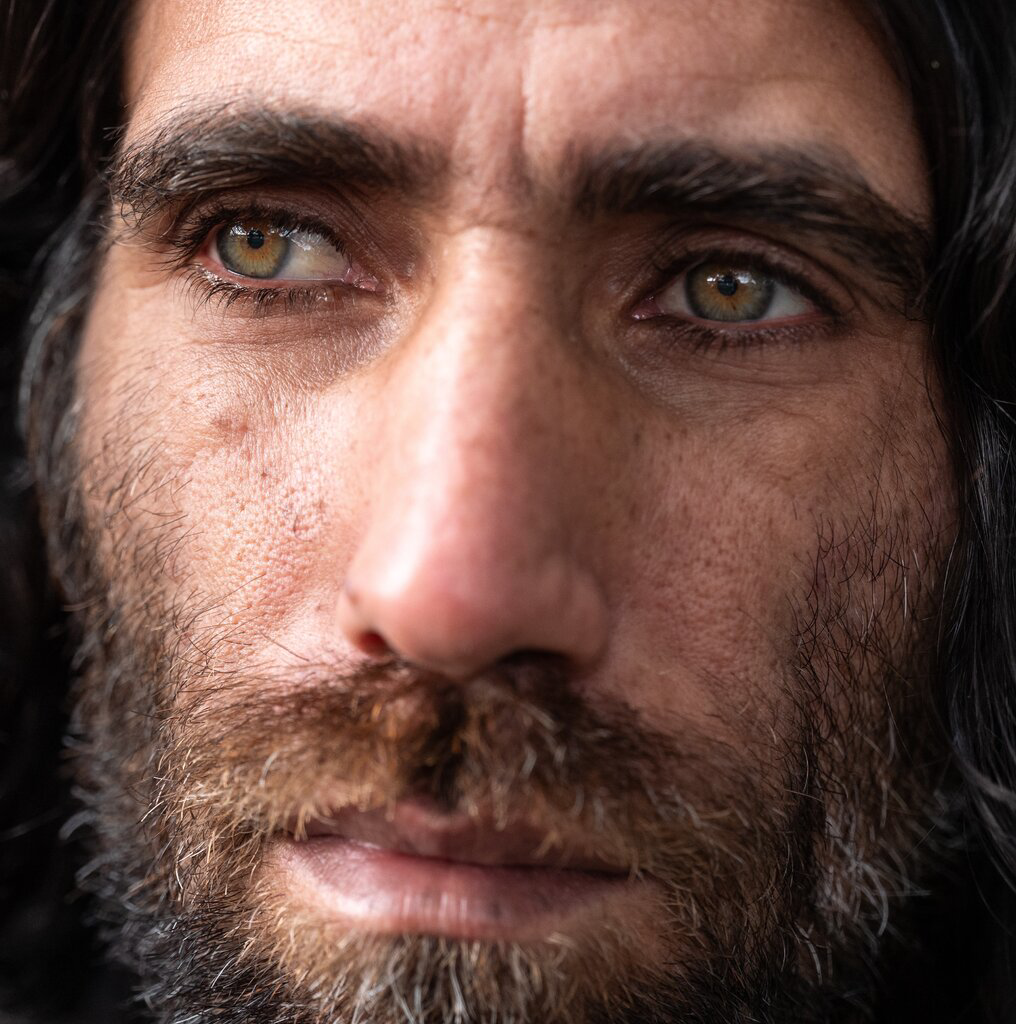
Behrouz Boochani wrote his book with desperate means from imprisonment in a brutal Australian camp for migrants. A collaborator from outside who helped assemble the book terms it a work of “horrific surrealism.”

Boochani’s book challenges readers to acknowledge that we are living in the age of camps. The camps lie scattered throughout the Middle East, cluster on Greek islands and stretch like an ugly tattoo along the U.S.-Mexican border. Camps sprawl through Bangladesh, Chad and Colombia. People are suspended in a stateless and extralegal limbo on the tiny Pacific island nation Nauru, in Guantánamo and in the Syrian town of al-Hawl. At no time since humans first drew borders have there been more migrants and refugees than today. Countless individual lives weave into a collective panorama of displacement and statelessness and detention. These truncated journeys are a defining experience of our times.

The pandemic is giving many of us — confined, restricted, bored, afraid, angry, deprived, hungry, ill, depressed, domiciled if we are lucky — the taste of a “defining experience of our times”: carceral encampment.

(Megan K. Stack, “Behrouz Boochani Just Wants to Be Free,” NYTimes, 8-4-20)

(c) 2020 JMN

Posted in Commentary, Quotations | Tagged , , , , , | Leave a comment

Multiple Choice Denial

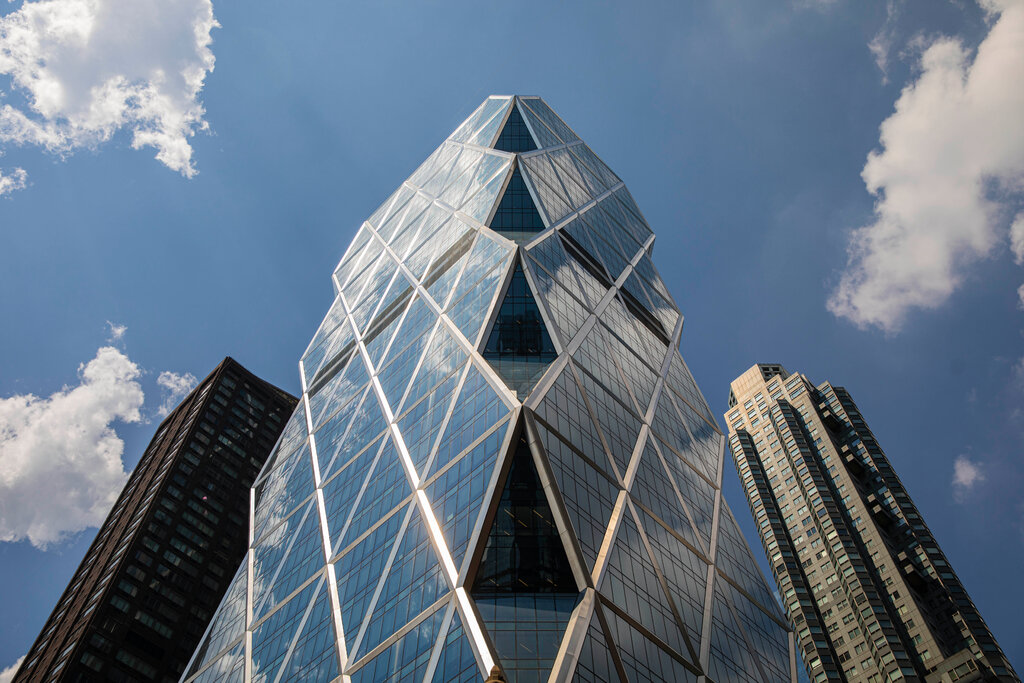
Mr. Young, who did not reply to email inquiries for this article, previously told The Times that the accusations against him were “either untrue, greatly exaggerated or taken out of context.” [My bolding]

This type of assertion is oddly chinky and incriminating. It purports to profess innocence without actually doing so — as if hoping no one will notice.

(Ben Smith, “Did Hearst’s Culture Kill Hearst’s Biggest Magazine Story?” NYTimes, 7-26-20)

(c) 2020 JMN

Posted in Commentary, Quotations | Tagged , , | Leave a comment

‘Stretched by an Unholy Desire’

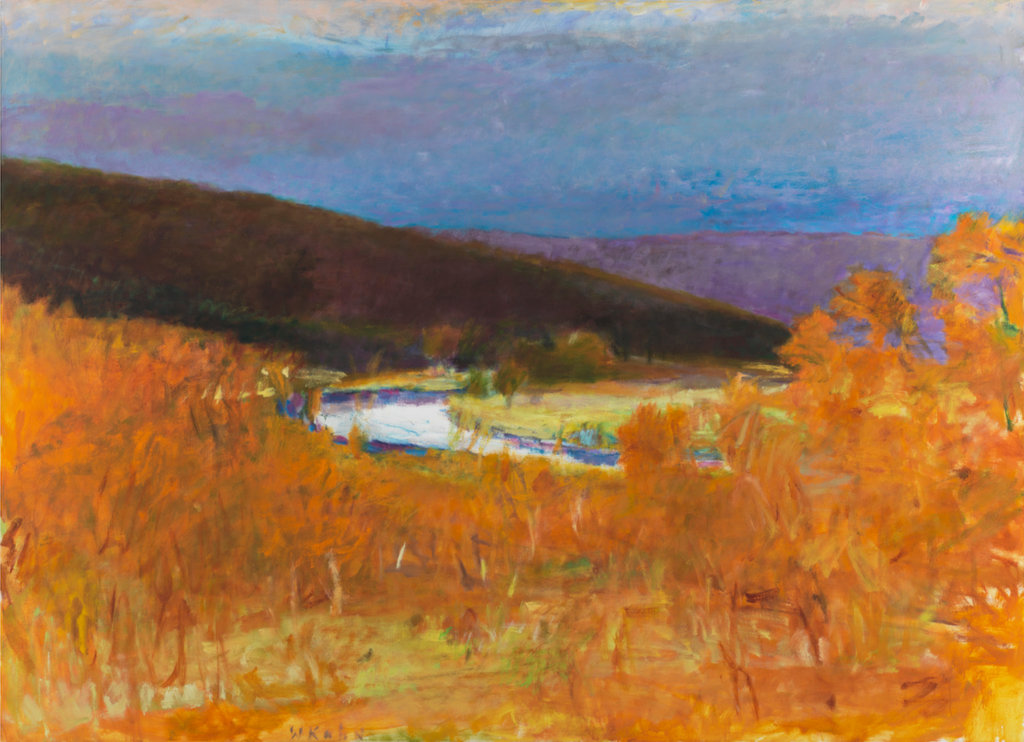
“Stretched by an unholy desire to be outrageous.” More than I care to admit, my pleasure in reading art criticism can amount to quivering at a splash of brandished lingo. I also quiver to Kahn’s paintings, which remind me of English Midlands landscape.

“These are not colors that sunlight finds in nature; they are colors that an aroused sensibility finds, with joy, in the act of painting.” (Peter Schjeldahl, quoted in the article)

“The paint spills and runs,” The New York Times wrote of [Kahn’s first solo show in 1953], “color crackles with vivacity and the brush might just as well have been guided by a tornado as by hand. Yet this is no manner for manner’s sake. Kahn is a high-spirited, lyrical artist who paints the way he does because a leonine manner seems to fit exactly his response to what he sees.”

As one who often treats the easel as a place to attack visual problems, I note the “leonine” manner that responds to the seen rather than trying to dominate it.

In an interview with the gallerist Jerald Melberg in 2011, [Kahn] described working on a painting in Italy in 1963, trying to create a modern-day version of van Gogh walking through an Italian landscape.

“I kept moving the figure,” Mr. Kahn said. “First it was here. Then it was there. And then finally I put it over here. Then finally I painted it out altogether.”

“As soon as I painted the figure out, I was happy,” he added. “Because I felt free.”

(Neil Genzlinger, “Wolf Kahn, Who Painted Vibrant Landscapes, Is Dead at 92,” NYTimes, 3-24-20)

(c) 2020 JMN

Posted in Commentary, Quotations | Tagged , , , | Leave a comment

The Romance of Aerated Water

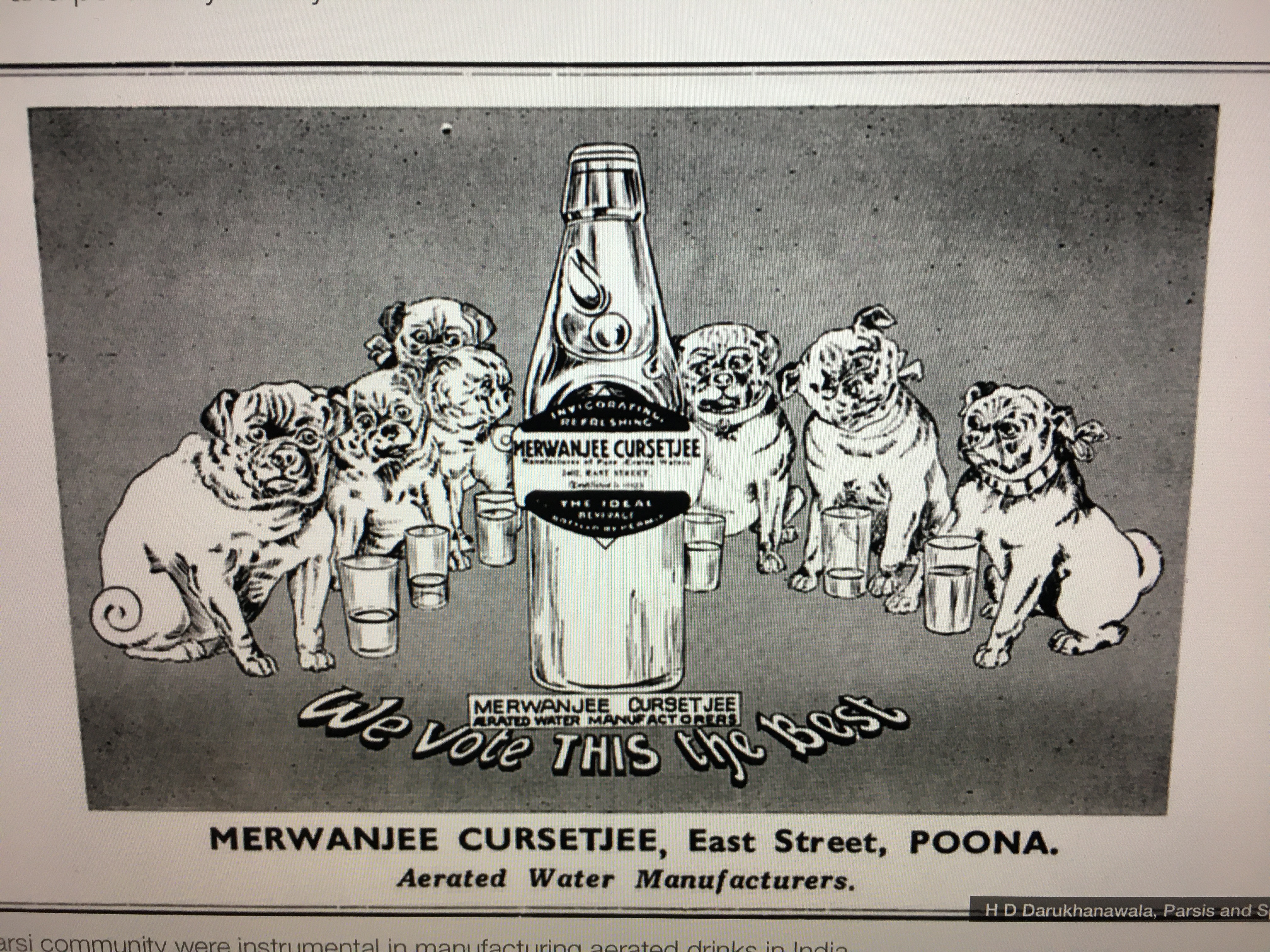
Mr. Patel, a historian, chronicles how soda pop became fiendishly soda-popular in India; or in his finer language: “how Parsis helped shape India’s taste for soft drinks.”

The Parsis, whose name means “Persians,” are descended from Persian Zoroastrians who emigrated to India.

It’s hard to realize today that sugary beverages were originally adopted for their healthful benefits.

Before Mumbai completed its modern waterworks in the late 19th Century, it relied on well water, which was filthy and potentially deadly… Drinking carbonated water could be a life-saving habit. After all, carbonic acid in soda killed bacteria and viruses.

By 1913, the city boasted more than 150 licensed soda factories. Parsis played a commanding role in this trade, as is evidenced by the surnames they adopted: Sodawaterwala, Sodawaterbottlewala, and even Sodawaterbottleopenerwala.

A major limitation was bottle supply, since glass bottles cost far more than the carbonated contents poured inside. So the Marolia family [in Nizamabad] used special round-bottom bottles which were difficult to set down on flat surfaces. These encouraged customers to drink sodas in one gulp and quickly return the bottles for reuse.

(Dinyar Patel, “Fizzy nostalgia: The origins of India’s taste for soft drinks,” bbc.com, 3-22-20)

(c) 2020 JMN

Posted in Commentary, Quotations | Tagged , , , | Leave a comment

John Lewis

[When I inserted the photograph of Mr. Lewis included in the NYTimes I triggered the above warning, so I substituted a sketch of mine for the photograph.]

Representative John Lewis died on July 17, 2020. These are the last words of the essay he wrote shortly before his death. It was published yesterday, the day of his funeral.

When historians pick up their pens to write the story of the 21st century, let them say that it was your generation who laid down the heavy burdens of hate at last and that peace finally triumphed over violence, aggression and war. So I say to you, walk with the wind, brothers and sisters, and let the spirit of peace and the power of everlasting love be your guide.

Comparable words have been spoken by others, but Mr. Lewis uttered them with his life. I hope they will haunt and displace the monstrosity wracking our polity.

(John Lewis, “Together, You Can Redeem the Soul of our Nation,” NYTimes, 7-30-20)

(c) 2020 JMN

Posted in Commentary, Quotations | Tagged , , , , , , | Leave a comment

Painted Birds

The Belgian painter Luc Tuymans, a friend of Mr. Marshall’s, noted that he is an intensely “deliberate” painter, and that Audubon’s obsessive meticulousness would naturally have appealed.

These decorative paintings of artificial flowers, flightless birds and exquisitely rendered birdhouses have an airless quality to them that stirs disturbingly.

I’m glad to pick up hints at how Mr. Marshall mixes what he calls a “fundamental” blackness that, in his words, “has volume [and] breathes.”

… Mr. Marshall painstakingly adjusts both the chroma (the warmth or coolness) and the value (the amount of light or dark) by mixing colors like raw sienna, chrome green, cobalt blue, and violet with black pigments.

(Ted Loos, “Kerry James Marshall’s Black Birds Take Flight in a New Series,” NYTimes, 7-29-20)

(c) 2020 JMN

Posted in Commentary, Quotations | Tagged , | Leave a comment

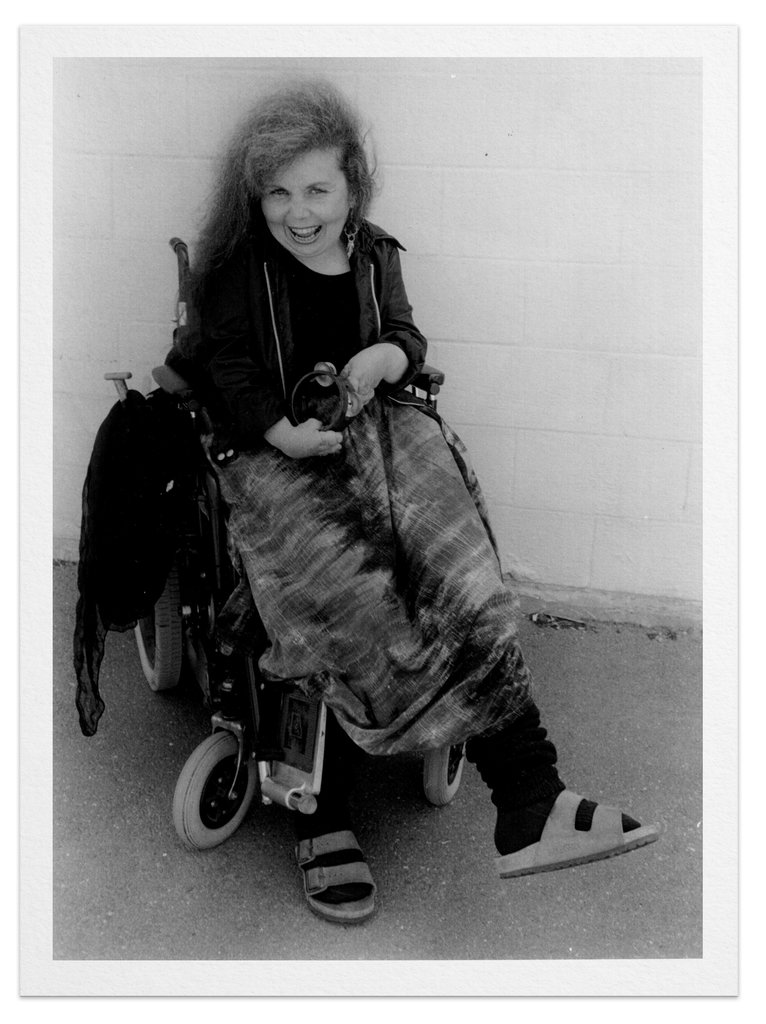
Cheryl Marie Wade

Cheryl Marie Wade died in 2013 at age 65 from complications of rheumatoid arthritis.

“She embodied and modeled disability pride before it was a thing,” Judith Smith, who worked with her in two Bay Area performance groups, Wry Crips and Axis Dance Company, said by email. “Cheryl was unapologetic, proud, complex and loud.”

“Instead of trying to fade into the nooks and crannies as good Cripples of the past were taught to do,” [Wade] wrote, “we blast down the main streets in full view, we sit slobbering at the table of your favorite restaurant, we insist on sharing your classroom, your workplace, your theater, your everything. The comfort of keeping us out of sight and out of mind behind institutional walls is being taken away. And because there is no way for good people to admit just how bloody uncomfortable they are with us, they distance themselves from their fears by devising new ways to erase us from the human landscape.”

(Neil Genzlinger, “Overlooked No More: Cheryl Marie Wade, a Performer Who Refused to Hide,” NYTimes, 7-23-20)

(c) 2020 JMN

Posted in Quotations | Tagged , , , , , , | 2 Comments