

This gallery contains 1 photo.
Memorial Day, 2020.
View from a manhole; damage dam-break; dom of dommage; taurine feces fence; chicanery chiclet; rush-to-fudge; jeerleader; freedom-loafer; warlard; crested mask-mocker; pharmacological jiggery-poker; spatchcocked eaglet; church-grade yellowcake; count no-count…
No matter how you pencil-whip it, Wharton-school it, or word-smith it, the bully virus — made great again in America — just keeps juking past every coughed-up hairball and tossed-up word-wall.
Poetry kicks in at such times — when farse alarms go off in decapitated duchies.
Build That Poem! Build That Poem! — A shield and bulwark ‘gainst the wooly bull*.
(c) 2020 JMN

In my language, the one I recall now only by closing my eyes, the word for love is Yeu.
And the word for weakness is Yếu.
How you say what you mean changes what you say.
Some call this prayer. I call it watch your mouth.
(Ocean Vuong, “Not Even This,” Poetry, April 2020)
God knows. God being, and being God, speaks something and the thing is (or was). It’s begot — by God!
God said light, and Alexander Graham Bell’s mother conceived.
Art is similar. Art says something in its medium — the chosen one — and something’s there.
Whether it’s Velasquez populating a room with his paints, or Cecil Taylor illustrating Eternity with seventeen minutes of his piano, Art is God-light.
Art and God both are light-like, are they not? Faith calls it He. I call it wash your mouth.
(c) 2020 JMN

“Great art is, by definition, complex…”
(David Zwirner, “Art Is How We Justify Our Existence,” 5-22-20)
Says who?* A thing, by definition, doesn’t define itself; its definition is a human construct — like art itself.
Religions are complex. Christianity, for example, embosoms a Trinity, an angelology with a ninefold celestial hierarchy, and persons called vaticanologists.
Is “Las Meninas” complex, or is it virtuosic — an exemplar of radical skill in the service of simplicity? Great art has a directness that can feel so massive it forces us to shift into a lower gear to pull it.
Zwirner bounces back insightfully at the end of his essay. He mentions how, during the lockdown, he has contacted many artists in their studios.
… I couldn’t shake the feeling that I was interrupting them. They had more important things to do than talk to me. They were making art.
*David Zwirner is an art dealer with galleries in New York, London, Paris, and Hong Kong.
(c) 2020 JMN

Dark matters don’t lend themselves to nosegay piety. I sniff something of my allergy to vestments and gospels in Sonny Rollins’s tolerance, at 89, for honoring the elusive there where it lies. He has, by his words, shunned the laughing gas expelled by preachers, and blown rapture out his horn, instead, for many a year.
‘Happy’ is not the word… but I am the most content I’ve ever been. I have most things figured out.
And this is going to sound funny, but my highest place musically was not about playing for a crowd. I played a couple of concerts early on where I was out in the open in the afternoon. I was able to look up in the sky, and I felt a communication; I felt that I was part of something. Not the crowd. Something bigger.
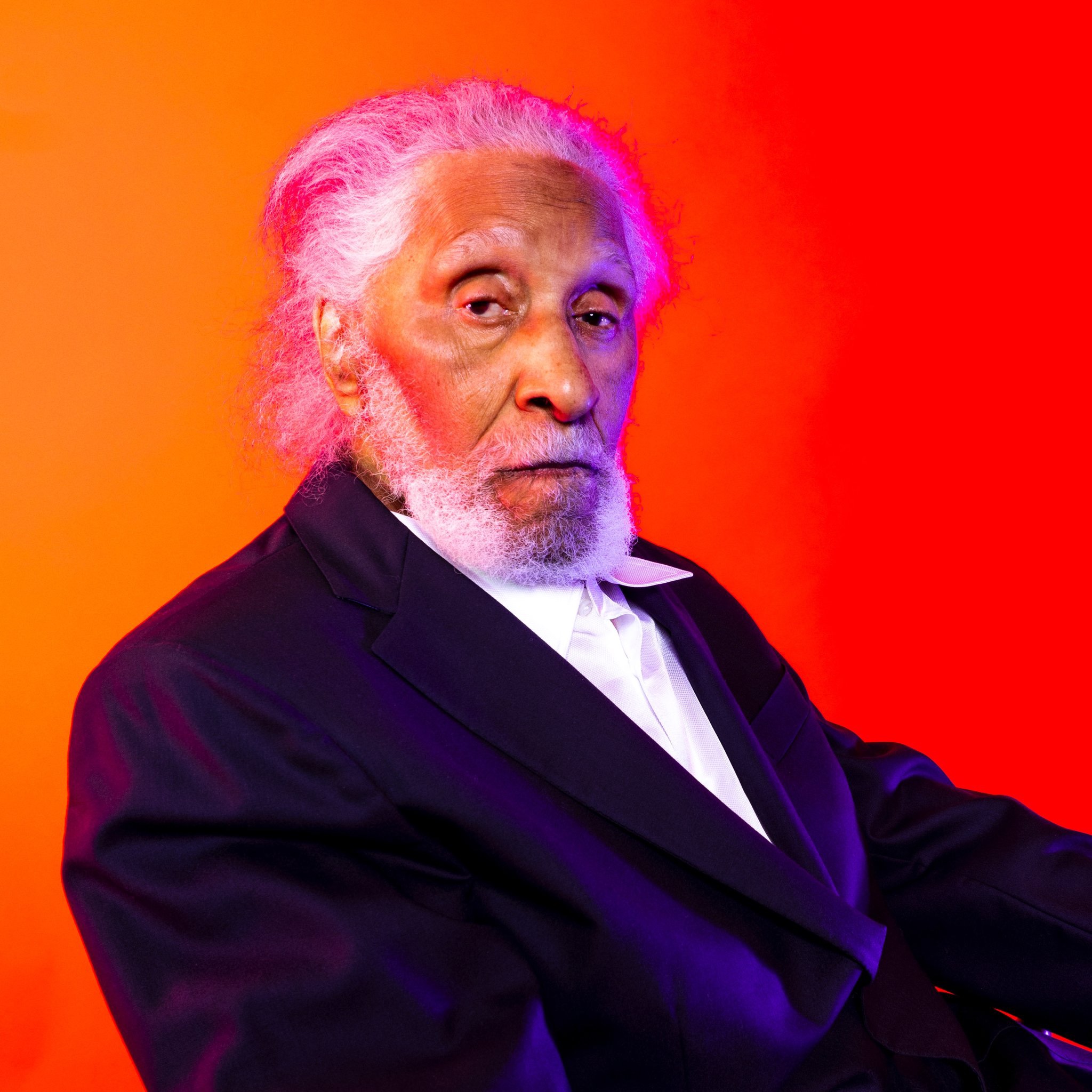
(David Marchese, “The Jazz Icon Sonny Rollins Knows Life Is a Solo Trip,” NYTimes, 2-21-20)
(c) 2020 JMN
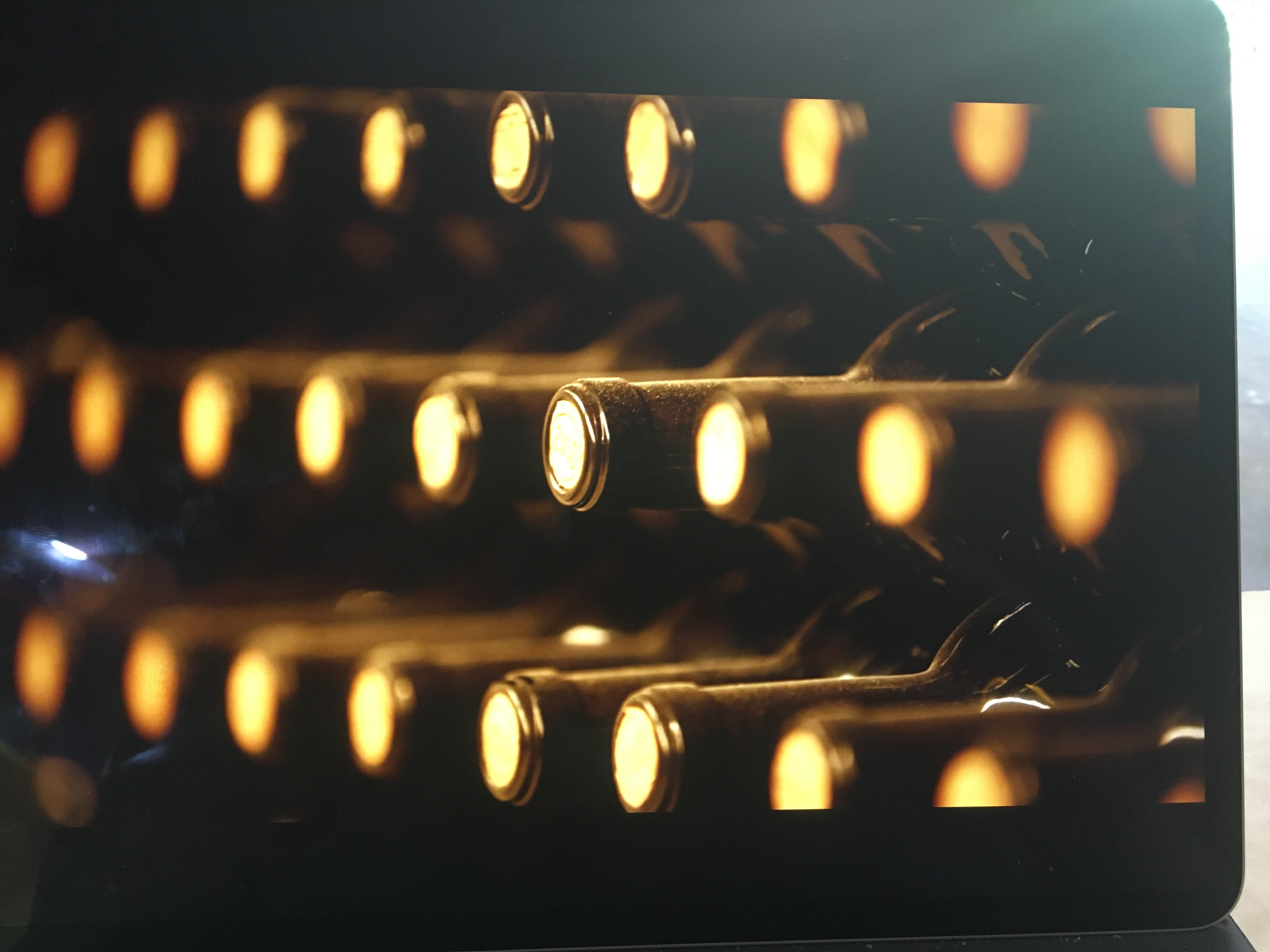
This late-February news item, which is ancient now in pandemic time, struck me as emblematic of a longer-running rhetorical contagion infecting mass communication: the incitement by vested or corrupt interests to a leap of ignorance rather than to informed prudence.
Belgian prosecutors have issued an alert over a woman who died after taking a sip of wine from a bottle suspected of being used to transport the drug MDMA… The original bottle has a black cork with the Black & Bianco logo,” the prosector said. “The bottle found had a different cork…” The owner of the company told the Dutch broadcaster Omroep Brabant there was no reason to think more bottles had been manipulated. [my bolding]
(Daniel Boffey, “Belgian woman dies after taking sip of MDMA-laced wine,” theguardian.com, 2-27-20)
Where death, literally, can be the wage of supposition, what responsible merchant urges potential consumers of his product to suppose that, out of hundreds or thousands of similar bottles, only one was manipulated?
It’s a trick question, of course. No such merchant is responsible.
(c) 2020 JMN
I turn over and savor a treasured exchange:
— “What do you need from me right now?”
— “Nothing different.”
How perfect is such an answer? What’s needed starts with nothing. I’ve aplenty of it!
“Different” turns it just so much, not into something, but over enough to glimpse the shape that nothing leaves in its custard.
The sufficiency implicit in restraint packs a wallop. I feel both affirmed and chastened.
I like knowing I can hold contrary feelings in my feelers simultaneously, all the while sustaining the flow of the same something to her.
(c) 2020 JMN
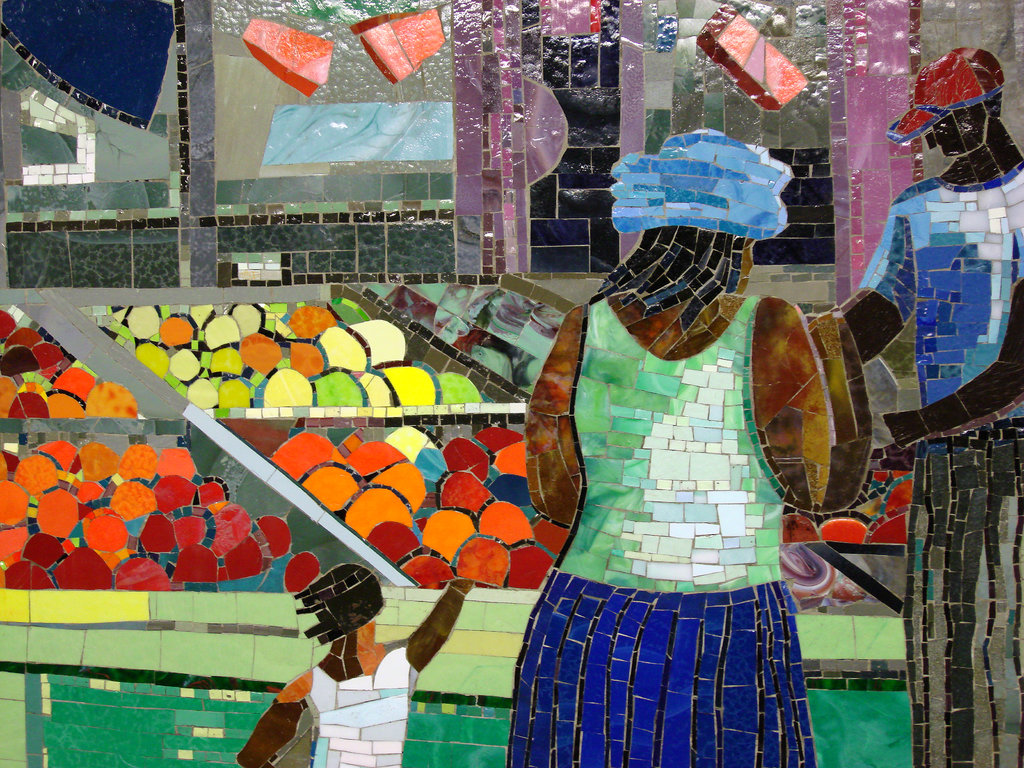
Mr. Delsarte moved out West for a time in the 1970s, painting murals in and around Laguna Beach, Calif., living on a commune and settling in Arizona…

Long after he went back East, leaving his hippie days behind him, Mr. Delsarte retained that era’s gentle optimism and earnest belief in peace and love… But unlike many fancy-free hippies, Mr. Delsarte was rigorously productive, creating a large body of work over the decades.
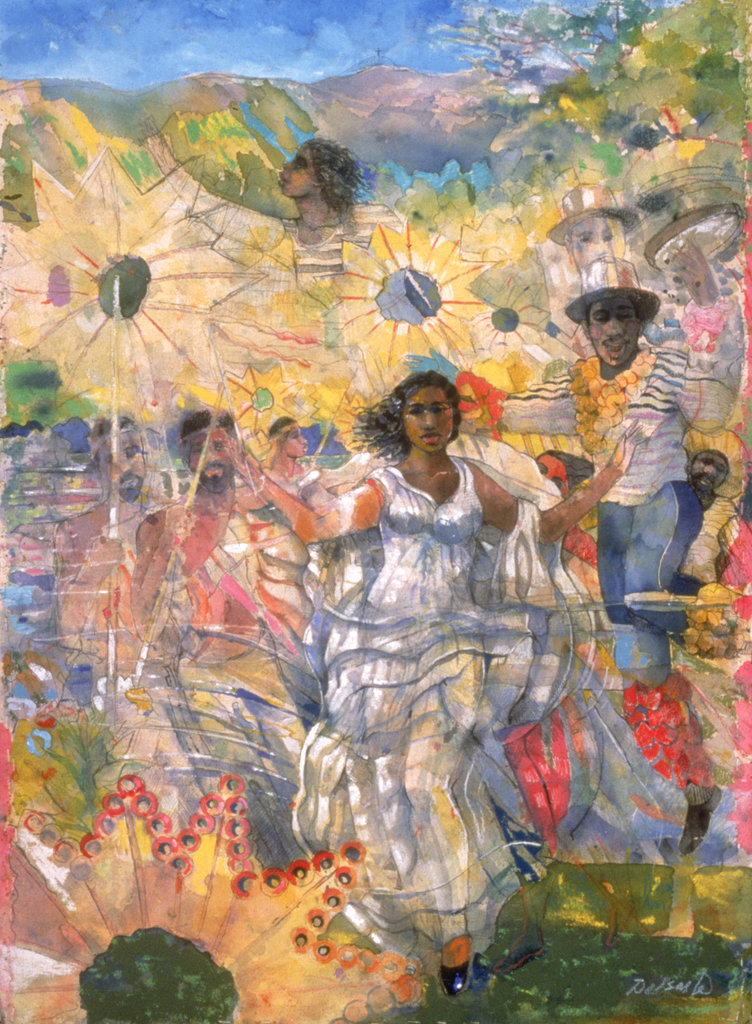
In an interview in Time magazine in 2019, Mr. Delsarte offered this self-assessment of his work: “I try to work toward peace, to say that art is the meaning of love, that living on earth is a spiritual quest…”
(Steven Kurutz, “Louis Delsarte, a Muralist of the Black Experience, Dies at 75,” NYTimes, 5-15-20)
(c) 2020 JMN
Rather than fostering some new sense of civic unity, the virus is just as likely to worsen inequality further [my bolding].
(Farhad Manjoo, “San Francisco Beat the Virus. But It’s Still Breaking My Heart,” NYTimes, 5-13-20)
Calling out infelicities of style is a chancy job. It makes a man thoughtful… and a little lonely. Some thoughts fly, some don’t. As my friend the helicopter pilot says, “It’s all a numbers game. You go up safe X times, come down safe X times. On good days X is even.”
“Worsen” repels furthering. Once worse, a thing’s augmented badness wants gauging with a different stick. Good style dictates a pivot to “increase.”
Saying the virus is just as likely to “increase” inequality works, because it introduces a spiraling potentiality for alpha-periphrasis around intensifiers such as “abysmal,” “abject,” and the ever-popular “apocalyptic.”
Wait. If inequality is trained now on apocalyptic levels, is “worsen…further” really out of bounds? I’m inclined to cut it some slack. America’s virus one-ups the rule book today.
(c) 2020 JMN


Respect for the ‘Bloody’ Irish
“You have to keep them as your friend,” [Trump] said while presenting the traditional shamrock bowl to the Irish prime minister at the White House last year. “You don’t want to fight with the Irish. It’s too tough — it’s too bloody.”
More than 33 million Americans claim Irish ancestry…
[Trump’s] campaign… is hawking Trump Luck of the Irish whiskey glasses, two for $30.
During the Iowa caucuses, Joe Biden, the great-grandson of a blind fiddler from Ireland’s Cooley Mountains… [circulated] a two-page endorsement letter handwritten by a nun.
(Shawn McCreesh, “Donald Trump, Joe Biden and the Vote of the Irish,” NYTimes, 5-25-20)
Whiskey glasses, a nun’s handwriting — these are potent symbols. However, the race may come down to which man can say “taoiseach.”
(c) 2020 JMN