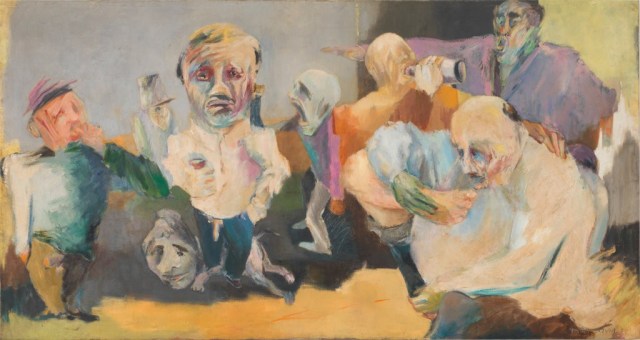
“Seven Deadly Sins” (circa 1968), the pièce de résistance of Vivian Browne’s show at Ryan Lee. Credit via Ryan Lee Gallery and Adobe Krow Archives.
In 1965, the artist, educator, and activist Vivian Browne (1929-1993) began a series titled Little Men. Considered her first major body of work, it consists of oil and acrylic paintings of white-collar middle-aged white men… They’re dressed in button-down shirts and ties, but they don’t act professionally; instead the men suck their fingers, touch themselves, dance and wail… She saw firsthand how such white men were powerful, common and utterly unexceptional. She knew they represented a societal problem beyond themselves. And she took up parody and painting to give it a form.
(Jillian Steinhauer, “New York Galleries: What to See Right Now [‘Vivian Browne’],” NYTimes, 3-14-19)
On the verge of posting this look at an appreciation of Vivian Browne’s work, I felt I should give Ms. Steinhauer’s commentary more air because something was bothering me. Here’s the commentary:
Ms. Browne’s work can look sketch-like, but it is carefully considered. As a member of the Black Emergency Cultural Coalition and the black women artists’ collective Where We At, she saw firsthand how such white men were powerful, common and utterly unexceptional. She knew they represented a societal problem beyond themselves. And she took up parody and painting to give it a form. It’s remarkable just how current this 50-year-old series feels today, as we continue to contend with “little men” who insist loudly that they are big.
Stylistically, I would have avoided using the term “pièce de résistance” (see caption above). It exudes an effete vibe, in my view, but that’s trivial. As to what Ms. Browne “saw firsthand,” what she “knew,” and why “she took up parody and painting,” I would like to have heard more of Ms. Browne’s own words in the matter.
But I agree that we white men are a huge problem in the world.
(c) 2019 JMN.





 EthicalDative
How Things Actually Appear
The stately neoclassical building that houses the Prado will be unwrapped later this year. Credit Emilio Parra Doiztua for The New York Times.
(Andrew Ferren, “A 7-Hour, 6-Mile, Round-the-Museum Tour of the Prado,” NYTimes, 3-18-19)
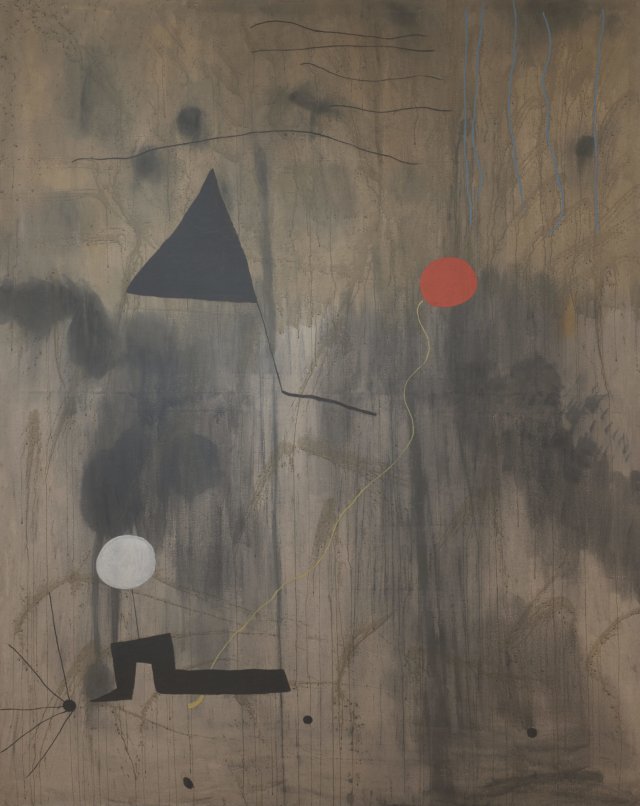
How things “actually appear” is elusive. I don’t see correctly. My sketches for painting are labored, with much overriding of mistaken perception. The painting phase involves much mixing and discarding of pigment that looked right until it touched the canvas. I don’t want to paint this way, but I have to.
It’s not just me. Our brains foist perceptual baggage onto us. Some people overcome the handicap. Most art I admire goes beyond naturalism. It lights me up with a devil-may-care attitude. I like to imagine that even a so-called realistic painting is really an infinitude of tiny abstractions rendered and assembled just so.
(c) 2019 JMN.