

2 wa-‘in huwa lam yaḥmil ^alaA-n-nafs(i) ḍaim(a)-ha | fa-laisa ‘ilaA ḥusn(i)-ṯ-ṯanā’(i) sabīl(u)
3 tu^ayyiru-nā ‘an-nā qalīl(un) ^adīd(u)-nā | fa-qultu la-hā ‘inna-l-kirām(a) qalīl(u)
4 wa-mā qalla man kānat baqāyā-hu miṯl(a)-nā | šabāb(un) tasāmā li-l-^ulā wa-kuhūl(u)
5 wa-mā ḍarra-nā ‘an-nā qalīl(un) wa-jār(u)-nā | ^azīz(un) wa-jār(u)-l-‘akṯar(īna) ḏalīl(u)
The poem starts by positing traits that support a claim to being honorable and to merit good praise. Those traits are upstanding conduct and a capacity for resisting (enduring?) personal injury. Then, responding to provocation voiced by a woman, the speaker launches into an extended glorification of his tribe which comprises the body of the poem.
The translation here is mine. The Arabic text is from A. J. Arberry, Arabic Poetry: A Primer for Students, Cambridge University Press, 1965. There are 22 verses. I’ve chosen to share my version in piecemeal fashion. Each segment will be seen to center roughly on a theme. This first segment deals with the small numbers of the speaker’s tribe.
1 When a person’s good name hasn’t been soiled from depravity, every garment he puts on is handsome.
2 And if he hasn’t borne injustice on the soul, there’s no way for him to be praised for excellence.
3 She insulted us saying we were lacking in numbers; I said to her, “The honorable are indeed few!
4 “Not trifling are those whose vestiges are the likes of us — youth which has scaled the heights, and old men, too.
5 “Tiny numbers don’t impair us when our confederate is powerful, while the confederate of most is puny.
Notes
(Unless otherwise noted, quotations are from Arberry.)
3 She insulted us: “Presumably the taunt was shouted by a woman accompanying into battle the warriors of a rival tribe.”
5 confederate: Following guidance in Lane, referenced by Arberry, I’ve settled on “confederate” in lieu of Arberry’s “kinsman” to express jār(un). The term denotes a person — relative or neighbor — with whom there exists a covenant of mutual protection.
(c) 2023 JMN — EthicalDative. All rights reserved





 EthicalDative
Foobar to Fix ‘They’
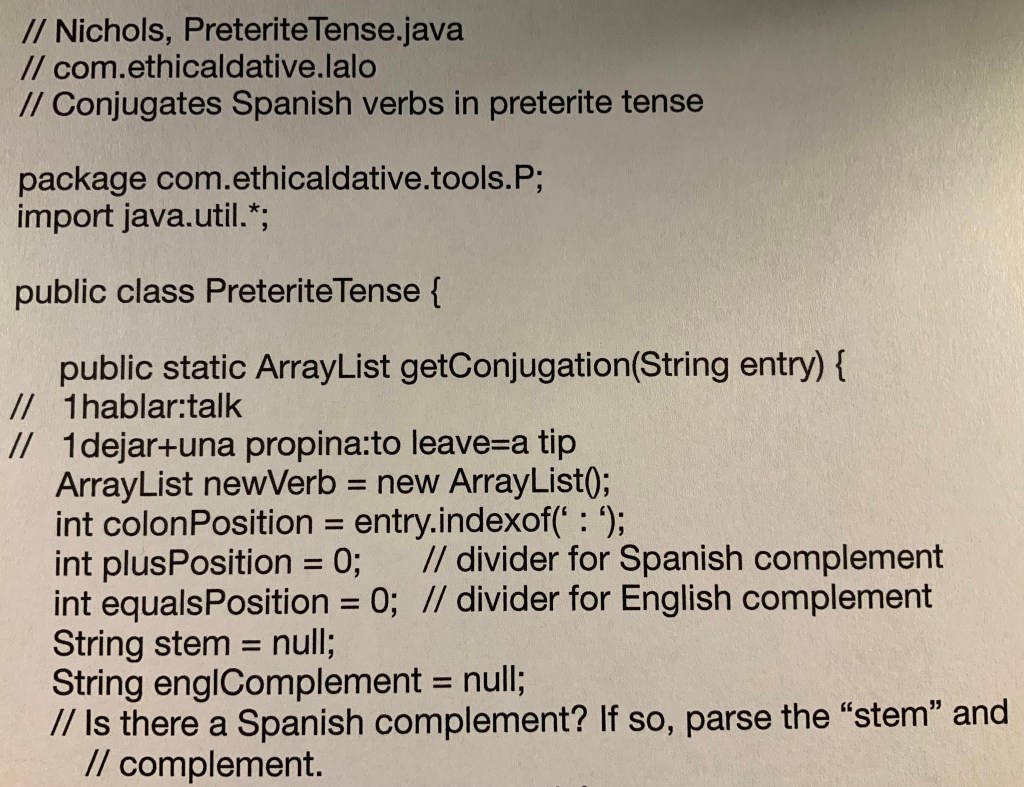
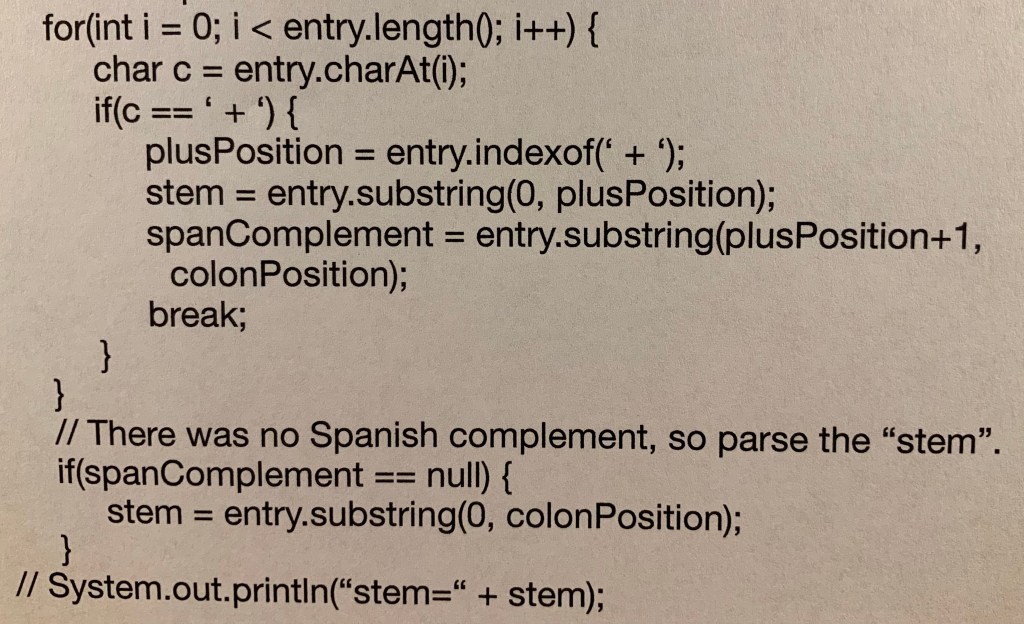
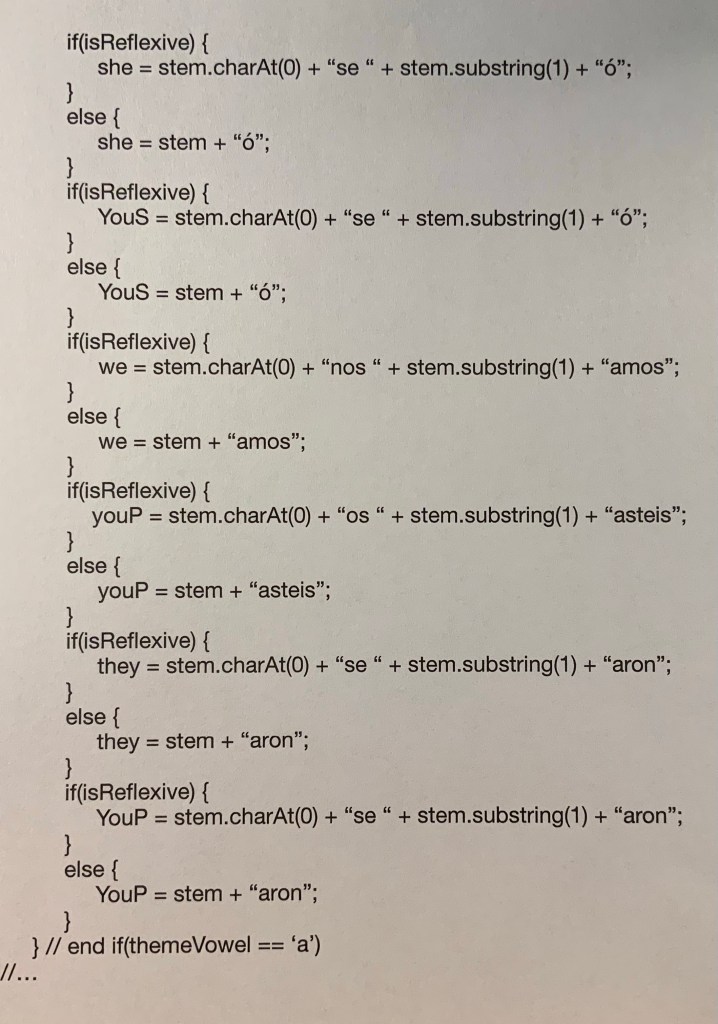
To automate Spanish verb conjugation with Java code I created variables to hold the gamut of subject pronouns available to English and Spanish. Here were the varieties of “you”:
String youS = null; // “you” singular familiar = “tú”
String YouS = null; //“you” singular polite = “usted”
String youP = null; // “you” plural familiar = “vosotros/as”
String YouP = null; // “you” plural polite = “ustedes”
Note the use of uppercase ‘Y’ for the Spanish polite forms. This suggests to me a way to handle “they” as it’s often used in contemporary discourse. Consider the following passage (my bolding):
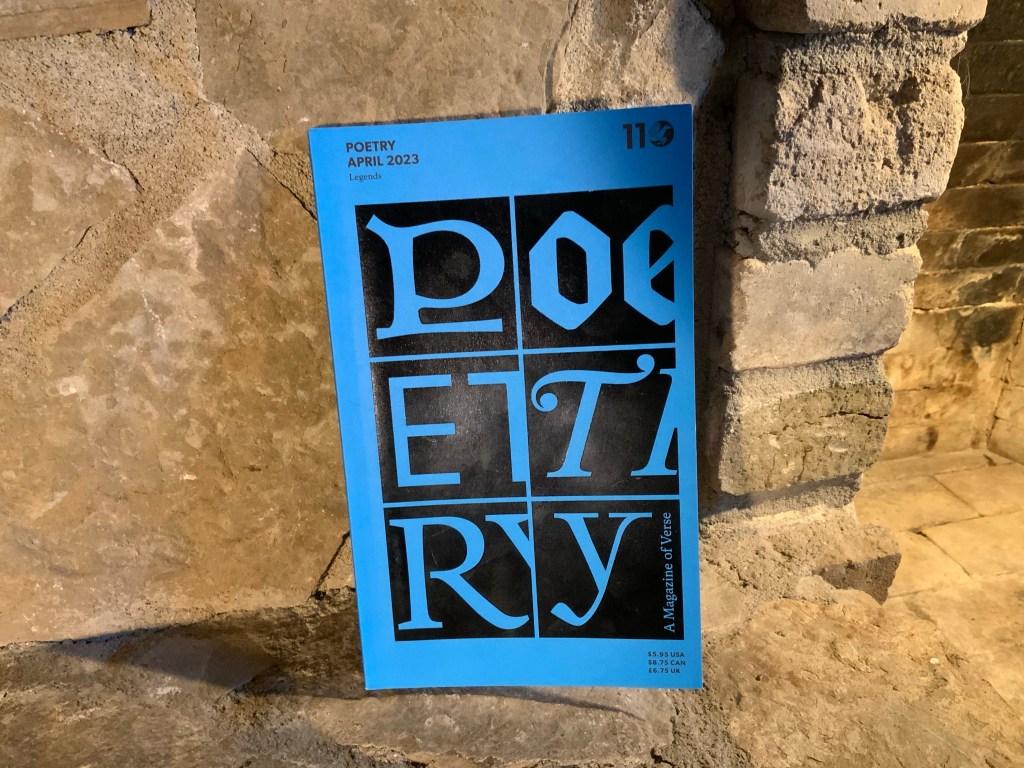
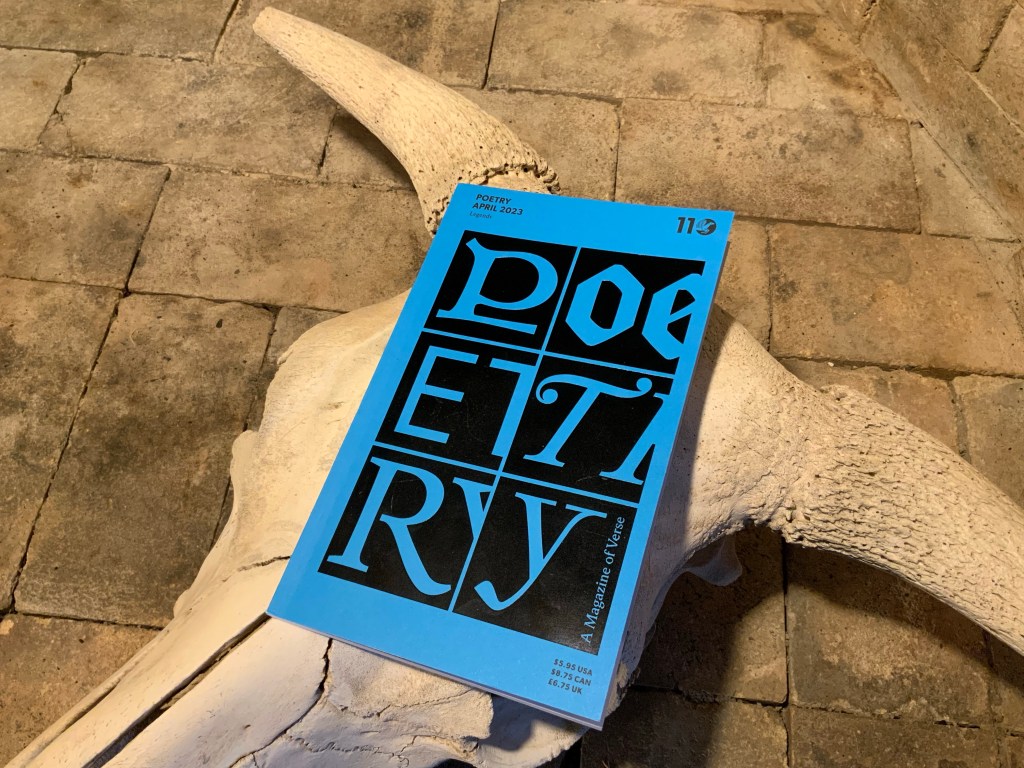
You could say that CAConrad’s practice is a form of magical studies, a practice in dialog with the ineffable. As a poet, they enact the role of Magician and HIgh Priestess at once… These were the representational figures Conrad drew in a Tarot reading I gave them as they embarked on writing While Standing in Line for Death (2017), a book they wrote when they turned to writing and ritual to cure their depression after the murder of their boyfriend Earth.
(Hoa Nguyen, “On CAConrad: Pan-Dimensional Change Agent in Vibratory Communion,” Poetry, April 2023)
Every instance of they-them-their in the passage refers to one person. Merely capitalizing the forms (as done traditionally with “I”) could let them enact their plural essence when context smiled. Reimagine the passage as reflecting a partnership:
You could say that CAConrad’s and JMNerd’s practice is a form of magical studies, a practice in dialog with the ineffable. As poets, They enact the role of Magician and HIgh Priestess at once… These were the representational figures Conrad and Nerd drew in a Tarot reading I gave Them as They embarked on writing While Standing in Line for Death (2017), a book They wrote when They turned to writing and ritual to cure Their depression after the murder of Their friend Earth.
Is there a chance my solution will be adopted? Not a ghost of one; however, blasting it into the ether is intensely satisfying — like a dialog with the ineffable.
(c) JNN — EthicalDative. All rights reserved