

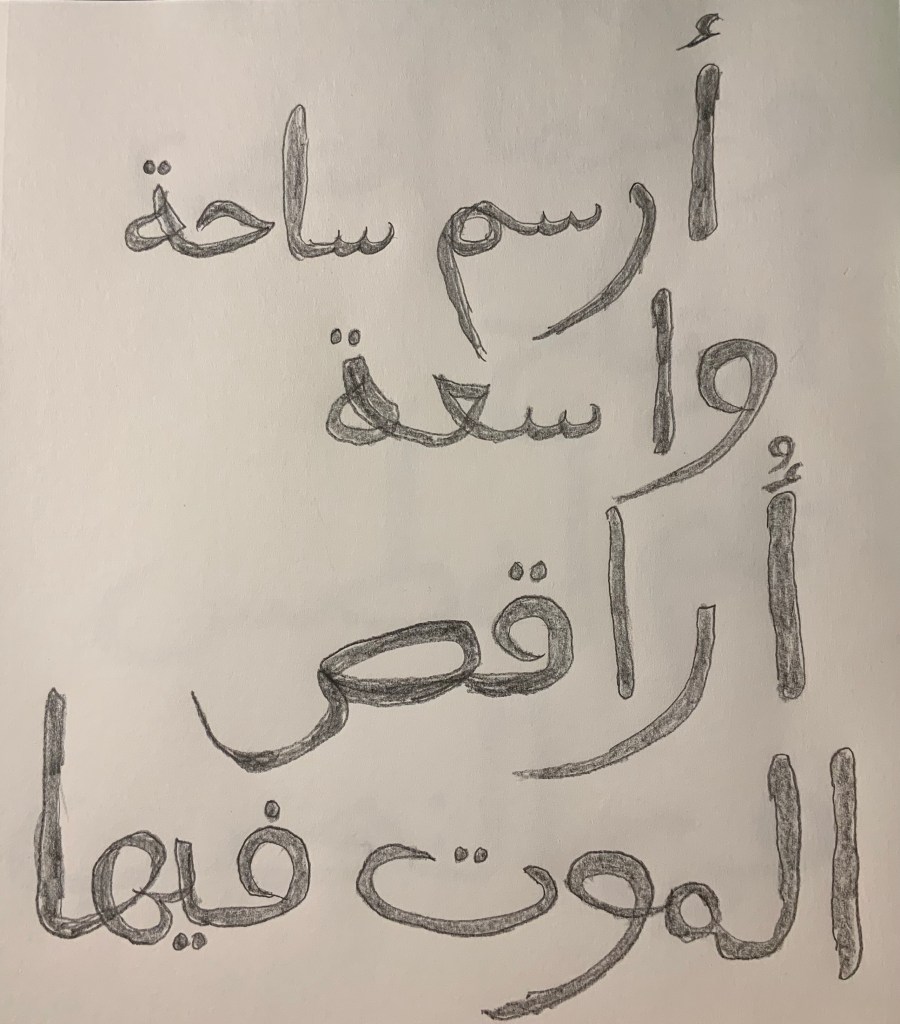
‘a^taqidu ‘anna-l-lāh(a) yabtasimu li-l-‘aṭfāl(i)-l-masākīn(i)
‘al-qamar(u) yataḥawwalu ‘ilā hilāl(in)
‘aẓunnu-s-sabab(u) ḥuzn(u)-hu ^alā suqūt(i) najmaẗ(in)
This post is continued from here.
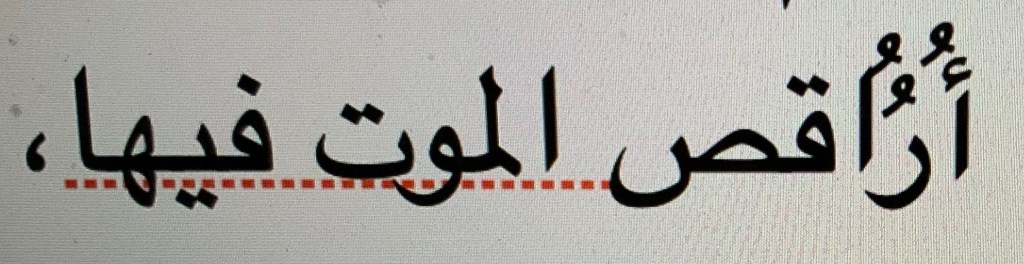
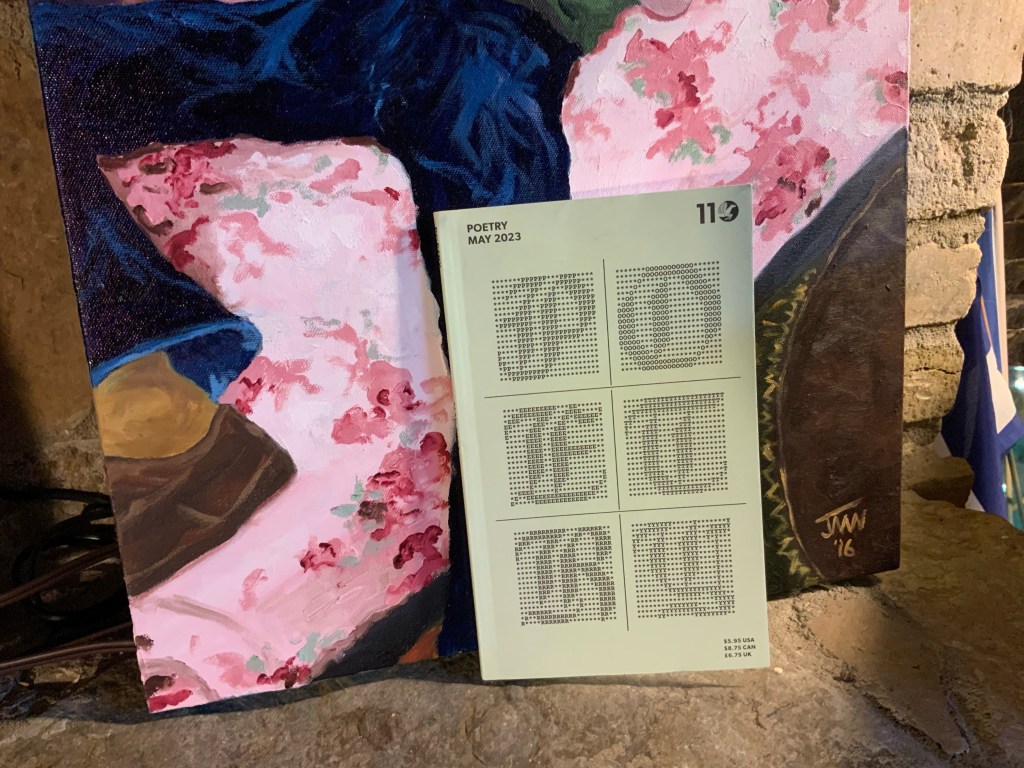
Poetry, May 2023 publishes the Arabic text of Mona Kareem’s poem Lailayāt (“Nights”) along with a translation into English by Sara Elkamel.
2
A cloud comes into view.
God smiles, it’s my belief, for the hapless little ones.
In the heavens moons a crescent.
I think what grieves it is the falling of a star.
In desert lands clouds carry the relief of rain, not gloom as in English tradition. In the poem they’re God’s smile.
A quirk of Kareem’s Arabic text is the insistent speaker-presence. Lines 2 and 4 start “I believe” and “I think.” A declaring first person interprets celestial events.
The Arabic says, “The moon is changed into a crescent.” I upend the line, adding hackneyed “heavens” for its syllables, and leaning heavily on “moon” as a verb meaning to be in melancholy reverie. Duong Tuong said, “An ideal translation should be a work in which the translator is the co-author.” This interesting doctrine sets dangerous traps for the cheeky student.
Prepositions don’t travel well. Arabic li-, usually meaning “for,” connects “smiles” to “little ones.” Resisting “on” or “upon” adds complexity to the trope of compassionate divinity. Similarly, resisting slippage into “falling star” skirts triviality, mirrors the Arabic syntax, and lends a hint of strangeness.
It seems to me, after all, that a signal trait of lyric is to speak unexpectedly. Translation presents opportunities to do so via a judicious literalness. The trick is knowing when to heed and when to ignore Duong Tuong’s advice that “clinging to the words is not loyalty but… slavery.”

(c) 2023 JMN — EthicalDative. All rights reserved





Once More Into the Breach, Dear Solons!
The country is experiencing mass mental health incidents in front yards, parking lots, retail centers, worship and entertainment venues, schools, parks, clubs, sporting events, parties — wherever 4 or more targets like to congregate.
State governments are circling around the urgent premise that serious consideration be given to the adequacy of funding allocated for feasibility studies about establishing mental health guidelines focused on potentially unstable constituencies.
Powerful committees are forming to deal with the issue, and lawmakers will read many reports as soon as they’ve remedied the immediate threats to public order, which are the scourge of transgenderism, the wokerati abomination, and rampant over-access to voting.
Persons on the edge, do not despair. The states of your nation are keeping you in their thoughts and agendas.
(c) 2023 JMN — EthicalDative. All rights reserved