When reading poetry I try to think like astronomers. They are a doughty lot, trucking with the unexpected, stalking questions that defy asking.
“What I really hope for is something we don’t expect” [John Mather, Goddard Space Flight Center, on what he’s looking forward to studying with the James Webb telescope]… “The [Webb] telescope was built to answer questions we didn’t know we had.” [Klaus Pontoppidan, astronomer with the Space Telescope Science Institute].
(Dennis Overbye, “Webb Telescope Prepares to Ascend, With an Eye Toward Our Origins,” NYTimes, 12-20-21)
“The universe is queerer than we can suppose,” said Arthur Eddington.
I encounter poetry that emits a waveform outside my sensory range. It triggers an attraction-repulsion quandary. Do I try to sharpen my sensors and orbit it to pick up signals? Or do I blow past it and keep prowling for detectible mass and gravity?
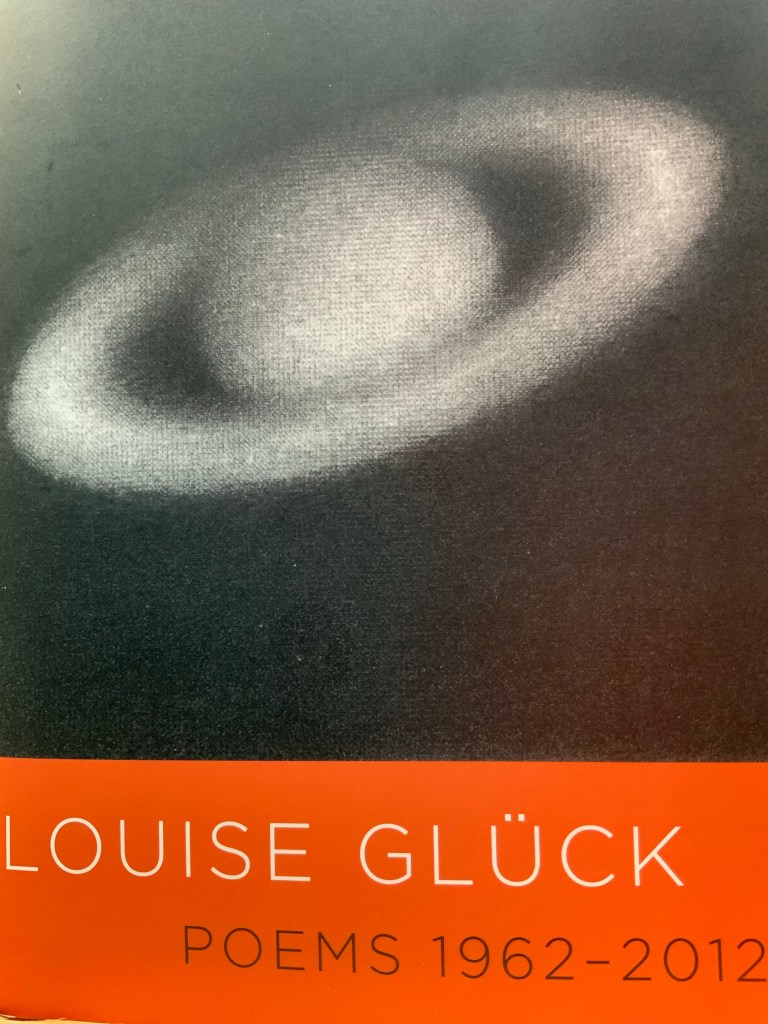
I’m currently in orbit around Louise Glück.
… Waveside, beside earth’s edge, / Before the toward-death cartwheel of the sun, / I dreamed I was afraid and through the din / Of birds, the din, the hurricane of parting sedge / Came to the danger lull. / The white weeds, white waves’ white / Scalps dissolve in the obliterating light. / And only I, Shadrach, come back alive and well.
(From “The Inlet,” in “Louise Glück: Poems 1962-2012”)
(c) 2021 JMN — EthicalDative. All rights reserved



 EthicalDative
‘Confound, Torment, Swallow Us Whole’
Thus starts Jhumpa Lahiri’s essay drawn from the afterword of her translation of “Trust” by Italian novelist Domenico Starnone. Through the prism of a translator’s eye, Lahiri noticed how frequently the Italian word invece (“instead”) appeared in the novel.
Lahiri’s wide-ranging discussion of the craft of translation includes this assessment:
(c) 2021 JMN — EthicalDative. All rights reserved