Be Paint

… [Clement] Greenberg’s organizing idea was surprisingly simple: modern painting, having ceased to be illustrative, ought to be decorative. Once all the old jobs of painting—portraying the bank president, showing off the manor house, imagining the big battle—had been turned over to photography and the movies, what was left to painting was what painting still did well, and that was to be paint.

(Adam Gopnik, “Helen Frankenthaler and the Messy Art of Life,” http://www.newyorker.com, 4-12-21)

I’m as susceptible as the next person to sweeping statements that seem to capture the essence of a thing or a moment. I’m not versed nearly enough in art crit lit to slot pronouncements informedly into the historical flow of it. It’s likely that the trope of letting paint be paint is quaint now, set aside for something in the vein of performance art, or re-entry into a militant mode of depictivism, or who knows?

What snagged me in the quotation was the adjective “decorative” and the premise that certain “old jobs” of painting were considered to have been relinquished to other media. Interesting. Is that still held to be the case about painting?

By way of postscript: It perplexes me that an article such as this in The New Yorker isn’t illustrated by a single one of Frankenthaler’s paintings. Also, when I returned to the link I had saved initially, the article was re-titled “Fluid Dynamics.”

(c) 2021 JMN

Posted in Commentary, Quotations | Tagged , , , , , , , , | Leave a comment

But Also Thank the Devil

The worst way to defeat a social or cultural ill is to declare war on it. The U.S. declares war on problems it can’t or won’t solve.

The worst way to foster a social or cultural good is to declare a recurring calendar date for it. Doing so acknowledges a thing to be perennially moribund.

So this April is the 25th anniversary of National Poetry Month. Margaret Renkl writes:

Many Americans… feel they can get along just fine without poetry. But tragedy… can change their minds about that… The poets are forever telling us to look for this kind of peace, to stuff ourselves with sweetness, to fill ourselves up with loveliness.

(Margaret Renkl, “Thank God for the Poets,” NYTimes, 5-5-21)

Bless her heart, she means well, as we say in the South. I’m sure you remember exactly where you were and what you were doing when National Poetry Month was declared. I don’t.

Poetry is a curious hubbub kicked up by a tiny few, noticed if at all by a tiny few more. Oblivion is guaranteed, and have a nice minute. Poetry’s for that. “I am not resigned,” says Edna St. Vincent Millay from the grave. Good luck with that, Ms. Millay. This world will flame out by and by. Poetry’s for that.

I simply can’t express, other than with petulance, what a downer to the impulse towards poetry a pious paean to it such as Ms. Renkl’s well-intentioned one can be.

My conviction and hope is that, if poetry lands a blow at all, it’s as much to fuck me up in my complacent brine and set me back on my heels as to nurse me through my godawful present or penultimate moments. There’s no way anyone under the age of ancient will bother to look at it if it’s in order merely to gorge on putative gobs of goodness.

Amanda Gorman’s Inaugural poem did what it had to do, which was to put a scrappy, uplifting vibe on a happy occasion. Ms. Gorman, after all, intends to run for president. The launch will stand her in good stead failing some reversal of fortune. I hope to have a chance to vote for her. The last president-poet we had was Lincoln. Perhaps we could use another. Will my grandkids revere “The Hill We Climb” like I revere the Gettysburg Address? Doubt springs eternal.

But back to National Poetry Month: don’t forget to thank the Devil for it.

(c) 2021 JMN

Posted in Commentary, Quotations | Tagged , , , , , , | Leave a comment

And the Winner Is… Loss Vegas

“The vast majority of MLMs [multi-level marketing companies like Amway and Ambit] are recruiting MLMs, in which participants must recruit aggressively to profit. Based on available data from the companies themselves, the loss rate for recruiting MLMs is approximately 99.9%; i.e., 99.9% of participants lose money after subtracting all expenses, including purchases from the company.”[64] (By comparison, skeptic Brian Dunning points out that “only 97.14% of Las Vegas gamblers lose money …. .”[65])
(Wikipedia, “Multi-level marketing”)

(c) 2021 JMN

Posted in Quotations | Tagged | Leave a comment

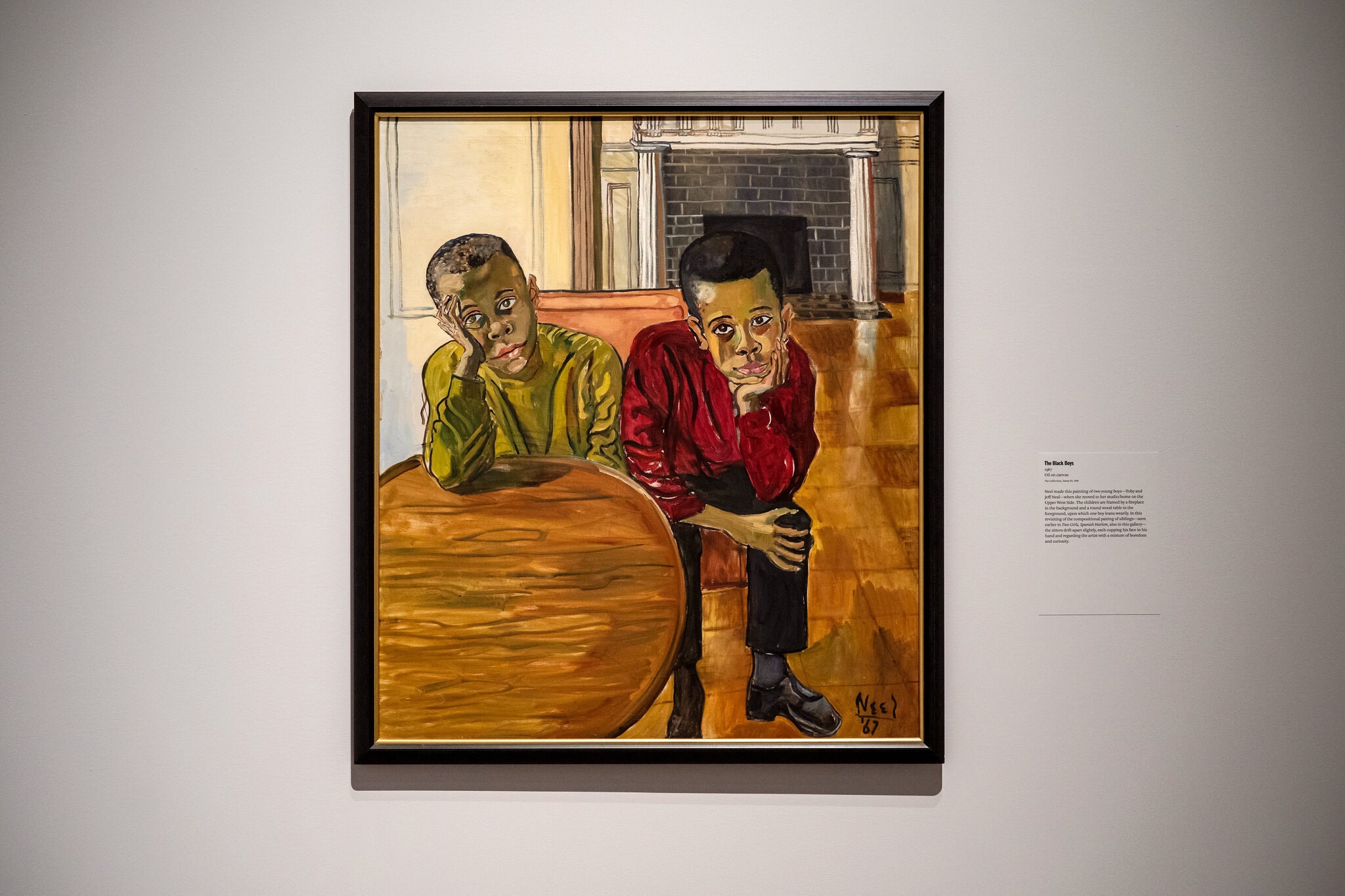
Alice Neel: ‘Collector of Souls’

“I would say she was looking at two ghetto children from uptown and bringing out the beauty in us.”
[Jeff Neal, on left in the portrait with brother Toby.]

(John Leland, “Two Brothers Posed for a Portrait. One Lived to See It in the Met.” NYTimes, 4-2-21)

(c) 2021 JMN

Posted in Quotations | Tagged | Leave a comment

A Translation

If I Should Come Upon Your House Lonely in the West Texas Desert
By Natalie Diaz. Selected by Reginald Dwayne Betts, NYTimes, 4-1-21.

[Translator’s note: The title’s ‘West Texas Desert’ is resonant and necessary. For my Spanish interpretation, however, the fact of the state’s desert lying solely west gives me pretext to skirt (nervously) the preposition wreck “el desierto del oeste de Tejas” with “el desierto de Tejas.” The alternative “el desierto de Tejas occidental” is comparably abject on top of risible. JMN]

Si anhelante me topo con tu casa en el desierto de Tejas

I will swing my lasso of headlights
across your front porch,
Echaré el lazo de mis faros
a lo ancho de tu porche delantero,

let it drop like a rope of knotted light
at your feet.
dejándolo caer como reata de luz anudada
a tus pies.

While I put the car in park,
you will tie and tighten the loop
Mientras pongo el coche en pare,
vas a atar la lazada de luz

of light around your waist —
and I will be there with the other end
apretándola por tu cintura —
y allí estaré yo con la otra punta

wrapped three times
around my hips horned with loneliness.
envolviéndome tres veces
las caderas cornudas de anhelo.

Reel me in across the glow-throbbing sea
of greenthread, bluestem prickly poppy,
Sácame como pez enrollado del mar pálpito-luciente
del té silvestre, el chicalote,

the white inflorescence of yucca bells,
up the dust-lit stairs into your arms.
la blanca inflorescencia de corolas de yuca,
subida la escalera iluminada de polvo hasta tus brazos.

If you say to me, This is not your new house
but I am your new home,
Si tú me dices, Ésta no es tu nueva casa
pero soy yo tu nuevo hogar,

I will enter the door of your throat,
hang my last lariat in the hallway,
entraré por la puerta de tu garganta,
colgaré mi lazo último en el pasillo,

build my altar of best books on your bedside table,
turn the lamp on and off, on and off, on and off.
montaré mi altar de libros favoritos sobre tu mesita de noche,
pondré la lámpara encendida y apagada, encendida y apagada, encendida y apagada.

I will lie down in you.
Eat my meals at the red table of your heart.
Me acostaré en ti.
Me alimentaré en la mesa roja de tu corazón.

Each steaming bowl will be, Just right.
I will eat it all up,
Cada tazón humeante estará, En su punto.
Me lo comeré todo,

break all your chairs to pieces.
If I try running off into the deep-purpling scrub brush,
haré pedazos de todas tus sillas.
Si intento escabullirme al profundo matorral purpurante,

you will remind me,
There is nowhere to go if you are already here,
tú me recordarás,
No hay donde irte si estás ya aquí,

and pat your hand on your lap lighted
by the topazion lux of the moon through the window,
y palmearás tu regazo iluminado
por el lux lunar topacio que arroja la ventana,

say, Here, Love, sit here — when I do,
I will say, And here I still am.
diciendo, Aquí, Amor, siéntate aquí — cuando lo hago,
yo diré, Y estoy aquí todavía yo.

Until then, Where are you? What is your address?
I am hurting. I am riding the night
Hasta entonces, ¿Dónde estás tú? ¿Cuál es tu dirección?
Estoy sufriendo. Estoy montando la noche

on a full tank of gas and my headlights
are reaching out for something.
con un depósito lleno y mis faros
se alargan en busca de algo.

(c) 2021 JMN. All rights reserved

Posted in Anthology | Tagged , , , , | Leave a comment

Un pinar y un mar.

Contrastes.

Un pinar y un mar.

Alba — camino, verde, azul, los pájaros que viven en el bosque… son palabras que ahora [now] tú reconoces [recognize].

Posted in Commentary | 1 Comment

The ‘Open-(Ahem)’

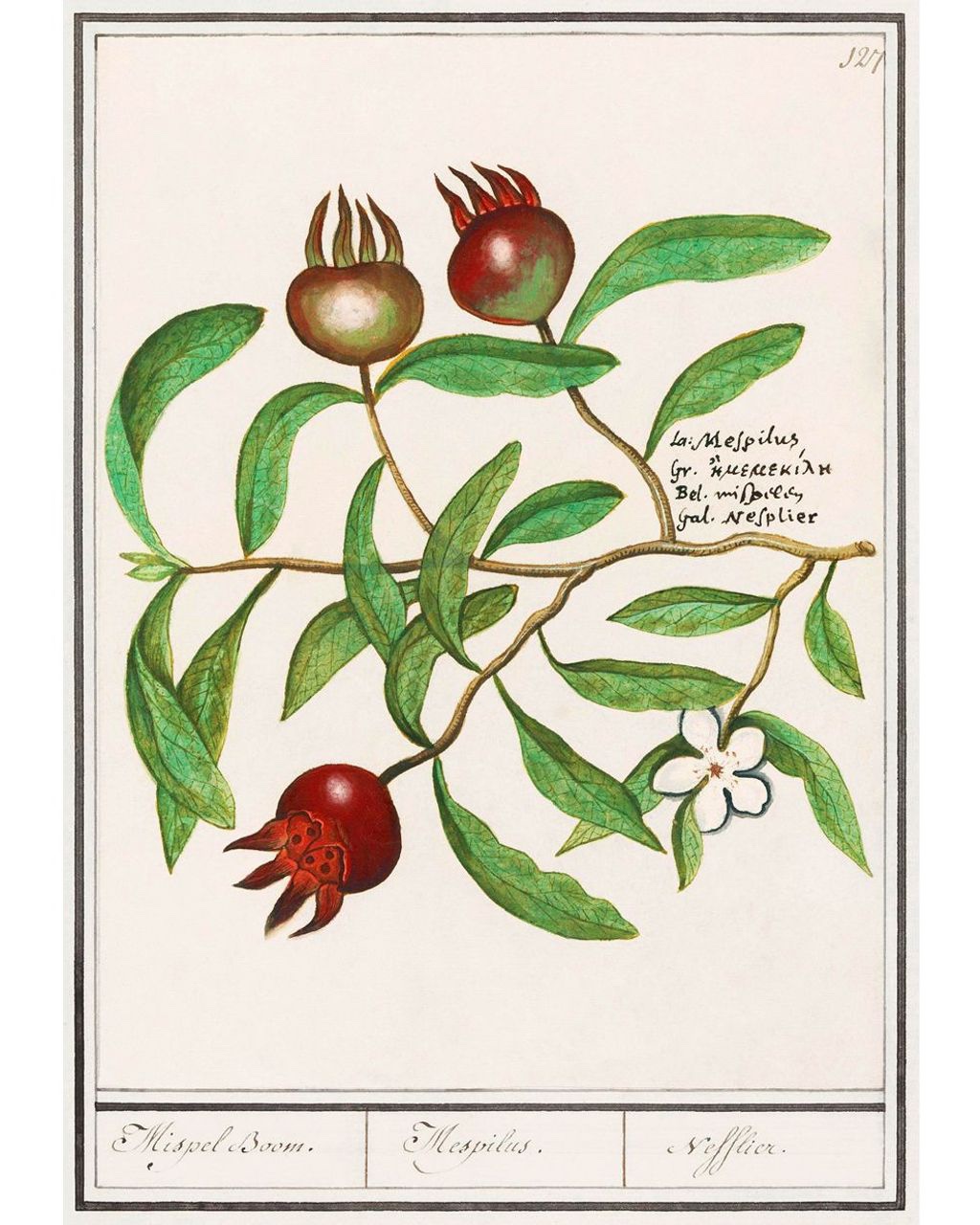
The polite, socially acceptable name by which it’s currently known is the medlar. But for the best part of 900 years, the fruit was called the “open-arse” – thought to be a reference to the appearance of its own large “calyx” or bottom. The medlar’s aliases abroad were hardly more flattering. In France, it was variously known as “la partie postérieure de ce quadrupède” (the posterior part of this quadruped), “cu d’singe” (monkey’s bottom), “cu d’ane” (donkey’s bottom), and “cul de chien” (dog’s bottom)… you get the idea.

[Translator’s note: I drew a blank upon encountering the term “medlar”; research, however, apprised me that I knew it as the “níspero,” a fruit I encountered in Spain. Hello, old friend.]

El nombre pulido y socialmente aceptable con que se conoce actualmente es el níspero. Pero durante la mayor parte de 900 años se llamaba a la fruta el “c**o-abierto” — supuestamente referido a la semblanza de su gran “cálice” o trasero. El apodo del níspero al extranjero apenas era más halagüeño. En Francia, se conocía diversamente como “la partie postérieure de ce quadrupède” (la parte posterior de este cuadrúpedo), “cu d’singe” (c**o de mono), “cu d’ane” (c**o de asno), y “cul de chien” (c**o de perro)… captas la idea. [Translated by JMN]

(Zaria Gorvett, “The forgotten medieval fruit with a vulgar name,” www.bbc.com, 3-25-21)

French “cul” and apocopated “cu” are cognate with Spanish “c**o.”

There’s much ink spilt on British “ar**” versus American “a**,” referencing “bottom.” One is less dainty than the other, or both are so, or neither is.

To be honest, the anatomical range of the posterior part extends from sunny callipygous uplands to the heart of darkness. There’s ample leeway for “bottom,” “rear,” “backside,” “keester,” “rump” and the like to cover cheek.

(c) 2021 JMN. All rights reserved

Posted in Anthology, Commentary, Quotations | Tagged , , , , , | 2 Comments

Travesía (7)

Versión castellana del poema “Crossing Brooklyn Ferry” (1856) de Walt Whitman
English text at http://www.poetryfoundation.org
Spanish Interpretation by JMN

Parts 4 and 5 in their entirety follow. Cleave to awareness there are 9 parts.

(4)
These and all else were to me the same as they are to you,
Todo esto y lo demás era lo mismo para mí que para vosotros,
I loved well those cities, loved well the stately and rapid river,
Quería bien aquellas ciudades, y bien quería el río majestuoso y raudo,
The men and women I saw were all near to me,
Los hombres y las mujeres que vi me eran todos cercanos,
Others the same—others who look back on me because I look’d forward to them,
Otros igual — los que me devuelven la mirada porque yo los vislumbré anticipadamente,
(The time will come, though I stop here to-day and to-night.)
(Vendrá la hora, aunque aquí me detengo hoy y esta noche.)

5
What is it then between us?
¿Qué es entonces lo que hay entre nosotros?
What is the count of the scores or hundreds of years between us?
¿Cuál es la suma de las veintenas o cientos de años que nos separan?

Whatever it is, it avails not—distance avails not, and place avails not,
La suma que sea, para nada sirve — no sirve la distancia, ni sirve el lugar,
I too lived, Brooklyn of ample hills was mine,
También yo viví, el Brooklyn de las amplias colinas era mía,
I too walk’d the streets of Manhattan island, and bathed in the waters around it,
También yo recorrí las calles de la isla de Manhattan, y me bañé en las aguas circundantes,
I too felt the curious abrupt questionings stir within me,
También yo sentí suscitarse en mí las interrogaciones curiosas y bruscas,
In the day among crowds of people sometimes they came upon me,
De día entre tropeles de gente a veces me sobrevenían,
In my walks home late at night or as I lay in my bed they came upon me,
En mi camino nocturno a casa o bien estirado en la cama me sobrevenían,
I too had been struck from the float forever held in solution,
También yo había sido acuñado de lo flotante guardado en solución sempiterna,
I too had receiv’d identity by my body,
También yo había recibido identidad por vía de mi cuerpo,
That I was I knew was of my body, and what I should be I knew I should be of my body.
Lo que era yo reconocía provenir de mi cuerpo, y lo que debería de ser yo reconocía deber provenir de mi cuerpo.

(c) 2021 JMN. All rights reserved

Posted in Anthology | Tagged , , , , | Leave a comment

Wide Load

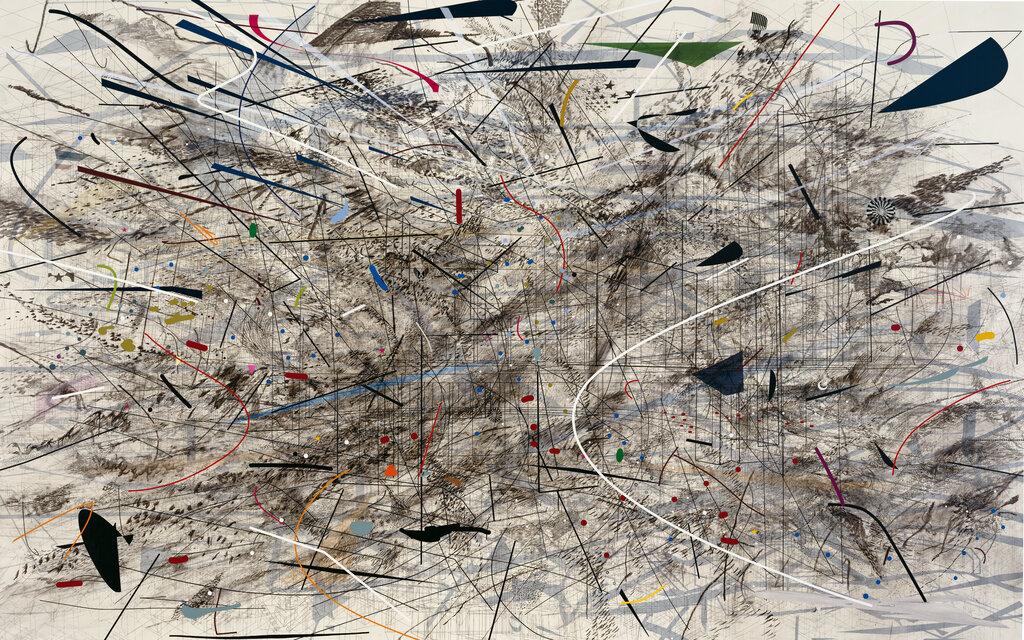
Jason Farrago lavishes a container shipload of exegetical rumination on Julie Mehretu’s paintings.

Lines accreted in an essentially radial configuration, with large arcs orbiting an absent central axis, and orthogonal spokes sprouting from the core.

(The Mehretu black line is a thing of wonder, as confident and unmistakable as Schiele’s trembling contours.) It’s as if she discovered, after years translating cities and buildings into abstract form, that whole urban systems were already embedded inside her strokes.

(Jason Farrago, “Julie Mehretu’s Long Journey Home,” NYTimes, 3-25-21)

Less talkin’, more gawkin’, sez me.

(c) 2021 JMN

Posted in Commentary, Quotations | Tagged , , , , , , , , | 7 Comments

Clarice Beckett – The Present Moment — leonieandrews — Silicon Valley Types

“roll up your catalogue and view each picture through it. … You will be rewarded with a wonderful suggestion of light and air and sufficient detail, and finish.” So said critic Percy Leason and  fellow student of Clarice Beckett (1887- 1935), of her 1931 solo exhibition *. Tea Gardens, c.1933, oil on canvas on pulpboard, […] […]

Clarice Beckett – The Present Moment — leonieandrews — Silicon Valley Types
Posted in Commentary | Tagged | Leave a comment