In a dispute with the EU, AstraZeneca’s CEO insists their contract requires only “best reasonable efforts” to meet delivery schedules.
Lawyers disagreed over the language of the E.U. contract, which was only partly made public. (Steven Erlanger and Matina Stevis-Gridneff, “E.U. Makes a Sudden and Embarrassing U-Turn on Vaccines,” NYTimes, 1-30-21)
Is the dispute over language about style or about grammar? Surely what the words actually say can’t be in contention?
Contracts, after all, are drafted with consummate clarity by highly literate lawyers. Then they are read and vetted exhaustively by all parties prior to the signing.
Of course my comments are crapulent with irony and contrariness to fact. Any agreement that includes phrases such as “best reasonable efforts” is designed (by lawyers) not to be load-bearing or fit for purpose.
For contrast, a doctor commenting on the Johnson & Johnson Covid vaccine says its promised reduction in severe disease is a powerful selling point.
“That’s what you want… You want to stay out of the hospital, and stay out of the morgue.” (Denise Grady, “Which Covid Vaccine Should You Get? Experts Cite the Effect Against Severe Disease,” NYTimes, 1-29-21)
No mention of “best reasonable efforts.” Just consummate clarity: Stay out of the morgue.
Rhetorically, a “this is that” assertion that plops two abstractions around a copulative can be a facile expedient for simulating profundity.
Nathan Heller comments that Didion’s observation about style has to do with “the burden of creative choice.” Didion’s remark was made in an essay about Georgia O’Keeffe.
Every choice one made alone—every word chosen or rejected, every brush stroke laid or not laid down—betrayed one’s character,” Didion wrote.
What Heller quotes next from Didion’s essay cuts through the gauze:
“This is a woman who in 1939 could advise her admirers that they were missing her point, that their appreciation of her famous flowers was merely sentimental… She is simply hard, a straight shooter, a woman clean of received wisdom and open to what she sees…”
It takes a writer clean of fustian who fits her own description to describe O’Keeffe with those choices of word: hard, straight shooter, open. Character maybe, but style is style, too.
(Nathan Heller, “What We Get Wrong About Joan Didion,” The New Yorker, 2-1-21 issue)
Robin Williams performs (I use the word advisedly) Pablo Neruda’s sonnet XVII in a scene from Williams’s movie “Patch Adams” (www.pocketfulofpoesy.com). “Patch” recites the poem at the grave of his dead girlfriend.
I recoil at the acting out of poetry. I long to say to the poor man:
Desist, friend. Wipe your face, go home and grieve. Recite your Neruda sonnet when you feel able to get out of the sonnet’s way. Give voice to the poem, not to yourself. It’s not your vehicle; you’re its. Be worthy, and let it’s words work.
My embarrassment at histrionic recitation of poetry is deeply unexamined. Whether it comports with informed opinion or not, that’s where I am.
Here’s my translation of sonnet XVII, while I’m here:
[XVII] No te amo como si fueras rosa de sal, topacio I don’t love you as if you were a rose of salt, topaz o flecha de claveles que propagan el fuego: or an arrow of carnations propagating fire: te amo como se aman ciertas cosas oscuras, I love you as certain obscure things are loved, secretamente, entre la sombra y el alma. secretly, between the shadow and the soul.
Te amo como la planta que no florece y lleva I love you like the plant that doesn’t bloom yet carries dentro de sí, escondida, la luz de aquellas flores, hidden in itself those flowers’ light; y gracias a tu amor vive oscuro en mi cuerpo and thanks to your love there lives dark in my body el apretado aroma que ascendió de la tierra. the squeezed aroma that rose from the soil.
Te amo sin saber cómo, ni cuándo, ni de dónde, I love you knowing neither how nor when nor whence, te amo directamente sin problemas ni orgullo: I love you directly without problems or pride: así te amo porque no sé amar de otra manera, I love you thus because I know no other way
sino así de este modo en que no soy ni eres, but this way in which I’m not me and you’re not you, tan cerca que tu mano sobre mi pecho es mía, so close that your hand on my chest is mine, tan cerca que se cierran tus ojos con mi sueño. so close the eyes I shut in my sleep are yours.
Veinte poemas de amor y una canción desesperada. Cien sonetos de amor 1924, Pablo Neruda y Herederos de Pablo Neruda 1994, Random House Mondadori Cuarta edición en U.S.A: febrero 2004
Oneis orange, the color of Sunas she sets and rises.Twois blue, a hue Sky fakesfor inattentive irises. Threeis the olivescent greenof a certain stand of tree.Fouris a dour English colour,Marmite and chocolate fudgey. Fiveis alive with unexpected yellowlike engine oil … Continue reading →
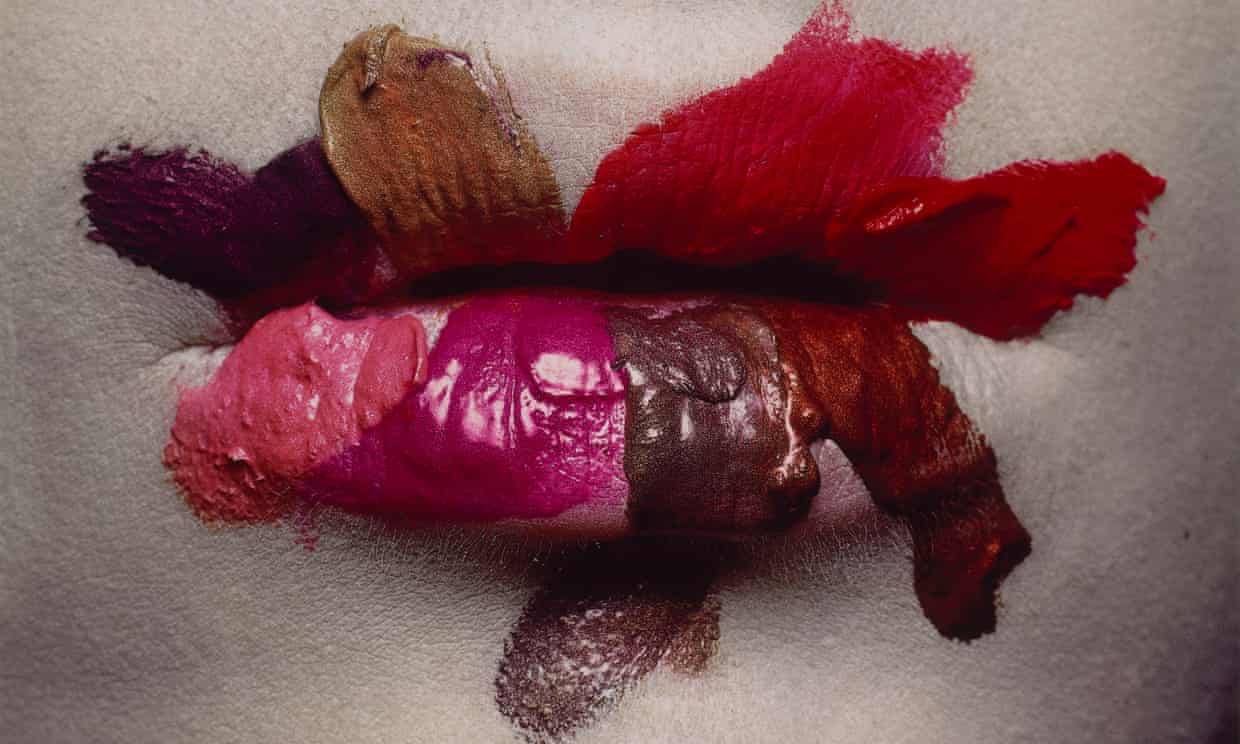
Mouth (for L’Oréal), New York, 1986. Photograph: Irving Penn/The Irving Penn Foundation.
But is “photographism” even a word? Not entirely. It is, though, a term that was coined by the photographer [Irving Penn]. It isn’t a theory, but an idea supported by sketches, notes, photographs and posters.
“It was never clearly defined what he meant by Photographism… I like to think of it as Penn’s visual signature, the flavor of his work, his aesthetic. He wasn’t one to speak at length about his work, in terms of trying to describe it. He let the work speak for itself.” (Vasilios Zatse, deputy director of the Irving Penn Foundation)
Ginkgo Leaves, New York, 1990. Photograph: The Irving Penn Foundation.
Penn died in 2009 at 92, remembered as one of the first photographers to blur the lines between commercial photography and high art.
(Nadja Sayej, “’His pictures are timeless’: celebrating the work of Irving Penn,” theguardian.com, 1-21-21)
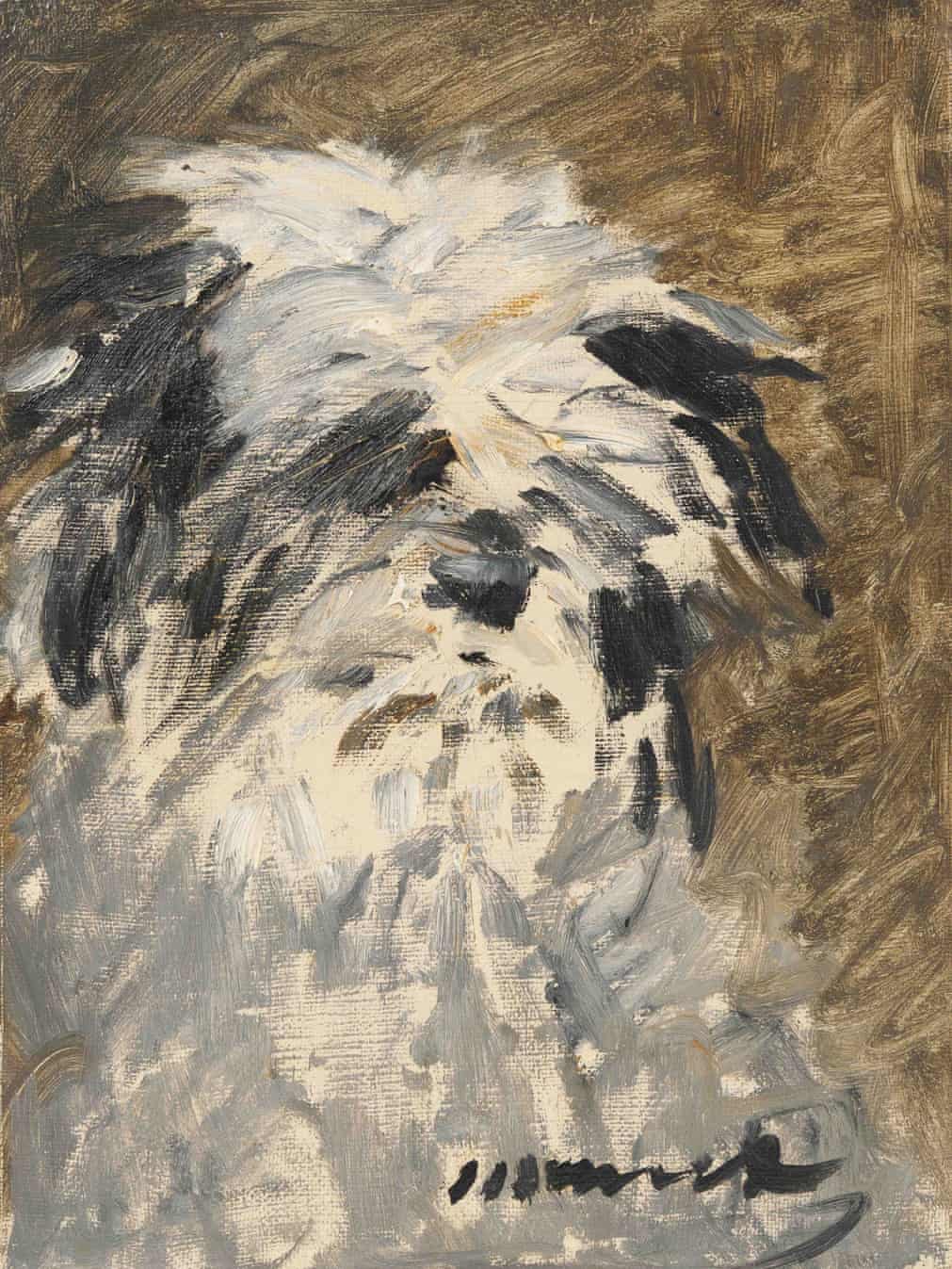
The portrait of Minnay, Marguerite Lathuille’s pet dog, is expected to sell for at least £248,000. Photograph: Drouot Estimations.
How is this doggyphile and wannabe painter not to love the rendition of a master?
The art expert Frédérick Chanoit said the painting, measuring 32.5cm by 24.5cm, had been produced in 20 minutes and is an example of Manet’s technical skill.
“It is not one of his chefs-d’œuvre [masterpieces] but it [is] a marvellous interpretation of Manet’s skill; a wonderful symphony of tufts and touches that show his pure genius,” Chanoit said.
(Kim Willsher, “Previously unseen dog painting by Manet to be sold at Paris auction,” theguardian.com, 1-21-21)
I’ve sometimes wondered what was meant by American “exceptionalism.” The term had a ring of smug superiority to it. A recent article by Adam Gopnik in The New Yorker broadened my perspective, however.
Gopnik pointed out that autocracy has been the default mode of social ordering throughout human history. That sheds enormous light on how America is not “normal.”
The ever foundering American experiment in representative government goes against the human grain. Flawed from the outset, corrupted by slavery and “manifest destiny,” perennially messy and tainted by human foible, tortured into the present by gerrymandering and civil war, the idea of America strives fitfully to be an exception to the ancient, ever-present fallback of dictatorship.
It makes it more understandable, if no less sad, that the country’s fragile experiment in liberal democracy has teetered very recently, poisoned by the likes of Cruz, on the brink of a mob’s gibbet.
“America is good at protecting itself against the last thing that happened.”
Thus wrote Annie Karni, NYTimes White House Correspondent, on January 20th, about the barbed wire shrouding the nation’s Capitol since January 6th.
The occasion was Joe Biden’s and Kamala Harris’s inauguration. The experiment will live another day, it seems. May it survive the next thing.
The Rev. Dr. Martin Luther King Jr. after being attacked in 1958 with a letter opener lodged near his heart. Vernoll Coleman/New York Daily News via Getty Images.
On Sept. 20, 1958, while signing copies of his first book “Stride Toward Freedom” in a Harlem department store, Dr. Martin Luther King was stabbed in the chest by a young woman. The weapon, a letter opener, grazed his aorta.
His attacker, Izola Ware Curry, was a mentally ill woman who believed Dr. King and others were following her.
NYPD Officer Al Romano, age 31 and on the job three years, took the call accompanied by rookie Officer Philip Romano. Their alert actions helped save Dr. King.
Dr. King spent weeks in New York City recovering. He addressed reporters from Harlem Hospital: “First let me say that I feel no ill will toward Mrs. Izola Curry and know that thoughtful people will do all in their power to see that she gets the help she apparently needs if she is to become a free and constructive member of society… A climate of hatred and bitterness so permeates areas of our nation that inevitably deeds of extreme violence must erupt.”
Al Howard, a nightclub owner and former detective with the New York Police Department, died of Covid-19 last month. A highlight of his life, rarely told, was how he helped save Dr. King. Credit… Victor J. Blue for The New York Times.
[Dr. King] later wrote a letter to thank the police. “I have long been aware of the meaning of the phrase ‘New York’s finest’ when applied to members of the N.Y. Police Department,” he wrote. “From the moment of my unfortunate accident, I have concurred, wholeheartedly, in that appellation. There are none finer.”
During a speech in Memphis in 1968, he would reflect on that day… “It came out in The New York Times the next morning that if I had merely sneezed, I would have died… I’m so happy that I didn’t sneeze”…
The following day, Dr. King was shot dead.
(Michael Wilson, “Before ‘I Have a Dream,’ Martin Luther King Almost Died. This Man Saved Him,” NYTimes, 1-14-21)







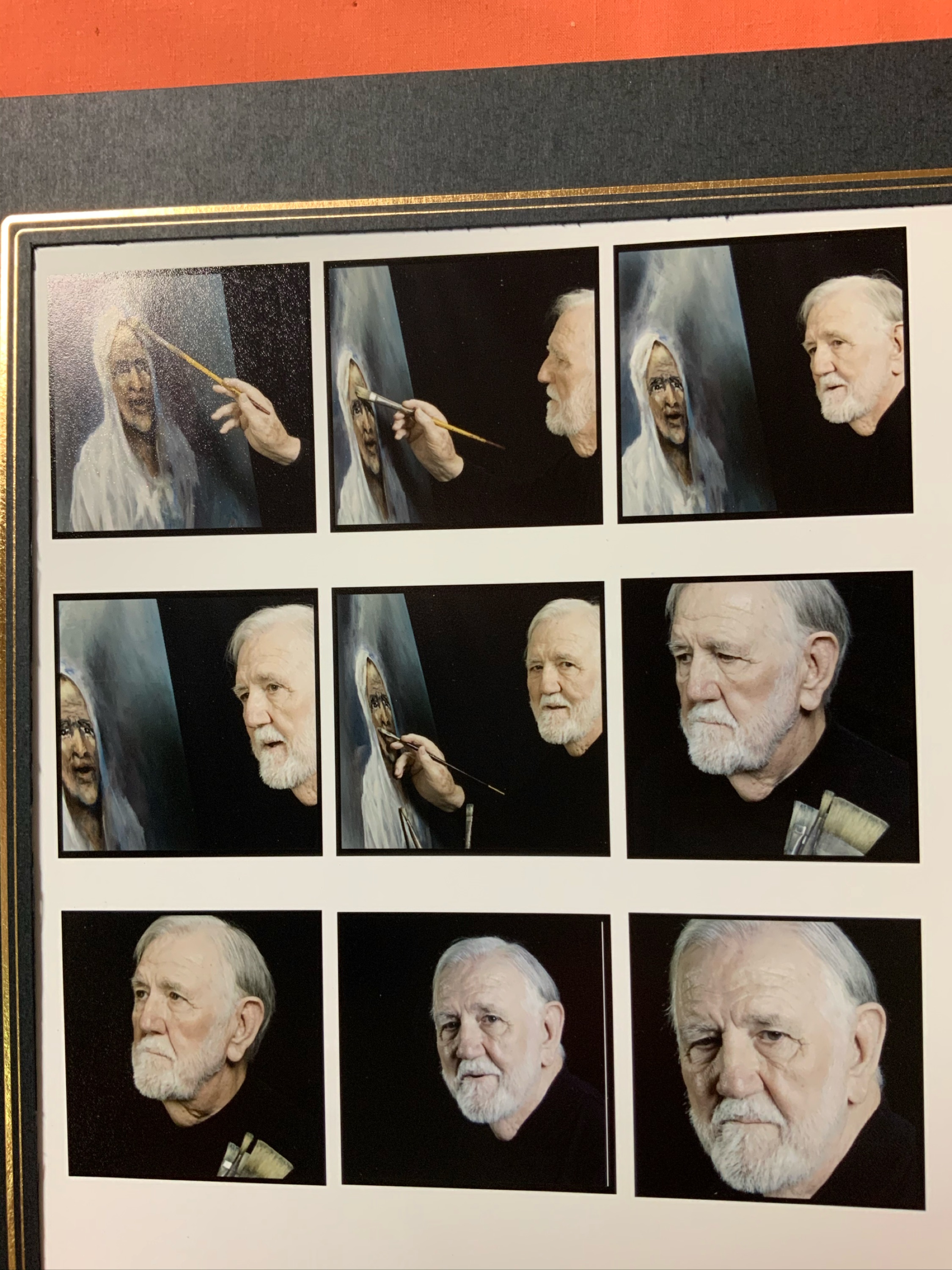 Harold Johnson Nichols, ca. 2005.

 EthicalDative
Away with Wayward Words!
In a dispute with the EU, AstraZeneca’s CEO insists their contract requires only “best reasonable efforts” to meet delivery schedules.
Lawyers disagreed over the language of the E.U. contract, which was only partly made public.
(Steven Erlanger and Matina Stevis-Gridneff, “E.U. Makes a Sudden and Embarrassing U-Turn on Vaccines,” NYTimes, 1-30-21)
Is the dispute over language about style or about grammar? Surely what the words actually say can’t be in contention?
Contracts, after all, are drafted with consummate clarity by highly literate lawyers. Then they are read and vetted exhaustively by all parties prior to the signing.
Of course my comments are crapulent with irony and contrariness to fact. Any agreement that includes phrases such as “best reasonable efforts” is designed (by lawyers) not to be load-bearing or fit for purpose.
For contrast, a doctor commenting on the Johnson & Johnson Covid vaccine says its promised reduction in severe disease is a powerful selling point.
“That’s what you want… You want to stay out of the hospital, and stay out of the morgue.”
(Denise Grady, “Which Covid Vaccine Should You Get? Experts Cite the Effect Against Severe Disease,” NYTimes, 1-29-21)
No mention of “best reasonable efforts.” Just consummate clarity: Stay out of the morgue.
(c) 2021 JMN