
Coerced Stability

Author Yi-Zheng Lian, a professor of economics at Yamanashi Gakuin University in Japan and contributing Opinion writer for the NYTimes, makes a crucial point in this article about Covid-19:

Of course, the virus isn’t Chinese, even if its origin eventually is traced back to a cave in China; nor is the disease that it causes.

It makes as little sense to attribute nationality to a virus as it does to attribute it to plankton. The corollary that Yi-Zheng Lian states is equally crucial:

Epidemics, on the other hand, are often societal or political — much like famines are usually man-made, even though droughts occur naturally.

For me the distinction he draws brings a moment of clarity amid the maelstrom of obfuscation and fault-finding that’s abroad in the world. The agency of human beings in epidemics, as in famines, must be recognized.

From here Yi-Zheng Lian proceeds to enunciate the following point about Chinese culture and support it with observations about that culture:

Punishing people who speak the truth has been a standard practice of China’s ruling elite for more than two millenniums and is an established means of coercing stability.

There are several handles to grab on this essay, prominent among them the themes of Chinese food culture and traditional medicine. Because it’s what I’ve least encountered, however, I was captured by the references to classical Chinese literature, including associated Chinese script.

Here’s a sample:

The sage [Confucius] took a page from… “The Classic of Poetry” (also known as “The Book of Songs”), a collection of songs and poems dating to the 10th century B.C. or before, and adopted a rule from it: “To Manifest the Way, First Keep Your Body Safe.” (明哲保身) That may sound innocuous enough, until you consider the fate of one of Confucius’s beloved students, Zi Lu (子路), also known as Zhong You (仲由), after he ran afoul of the precept: For trying to rebuke a usurper in a power struggle between feudal lords, he was killed and his body was minced. (It is said that Confucius never ate ground meat again.)

Others:

In the third century, the maxim took on some literary flair and a cynical didactic twist in an essay on fate by the philosopher Li Kang (李康): “The tree that grows taller than the forest will be truncated by gales” (木秀于林,風必催之). This, in turn, eventually gave rise to the more familiar modern adage, “The shot hits the bird that pokes its head out” (槍打出頭鳥).

(Yi-Zheng Lian, “Why Did the Coronavirus Outbreak Start in China?” NYTimes, 2-20-20)

(c) 2020 JMN

Posted in Commentary, Quotations | Tagged , , , | Leave a comment

The Power of Negation

The 15th Amendment to the U. S. Constitution was ratified 150 years ago, on Feb. 3, 1870. It prohibits denying or abridging the right to vote on the basis of race.

The right of citizens of the United States to vote shall not be denied or abridged by the United States or by any State on account of race, color, or previous condition of servitude.

The amendment guaranteed political equality for African-American men. (Women’s right to vote would come 50 years later with the 19th Amendment.) That guarantee was soon honored in the breach because of the collapse of Reconstruction in the South and the accession to power of white-supremacist state governments.

By the early 20th century, black voter registration in the South had fallen into the low single digits. The 15th Amendment was a dead letter in the South, and it would not be revived in a meaningful way until the Voting Rights Act of 1965.

Jesse Wegman points out that the 15th Amendment has a central flaw — and the flaw is language-based.

Its words were cast in the negative. It told the states what they could not do — “shall not be denied or abridged.” It did not tell people they had an affirmative right to vote.

And that wording has made a world of difference.

In places like North Carolina, Wisconsin, Florida and Ohio, Republican politicians pass voter-ID laws, conduct voter-roll purges and push other measures that drive down turnout among people who lean Democratic — especially black, young and lower-income voters. In the absence of an explicit constitutional right to vote, laws like these are harder to strike down…

“There are still many, many people in this country who think the right to vote should be limited in one way or another,” [Eric Foner, author of “The Second Founding”] said. “Step back, and you’ve got the Electoral College, gerrymandering, all these ways people try to hold on to power by manipulating the right to vote.”

(Jesse Wegman, “Why Voting Discrimination Haunts America,” NYTimes, 2-7-20)

(c) 2020 JMN

Posted in Commentary, Quotations | Tagged , , , | Leave a comment

Gladys Nilsson

You and Jim [Nutt] have a significant collection of work by self-taught artists, such as Martín Ramírez and Joseph Yoakum. What draws you to that kind of work?

The work that interests me is by people who have a need to explain or explore or put down what they have to get out. They aren’t stopping because they don’t have formal training. They’re following their thread without worrying about it.

(Jonathan Griffin, “She Painted With the Hairy Who. Now She’s Going Big, at 79,” NYTimes, 1-30-20)

The above response by Nilsson to the question posed is profoundly uninformative, and therein lies its charm.

Her psychedelic, cartoonish paintings grow on me entertainingly. In this one I enjoy how the two men hold the canvas for the naked painter as she airily attacks her picture with a hook shot. The fellows’ packages are blatantly apparent, and they watch the diva carefully, alert to her every evolving requirement.

In the following one I resonate to the bug-eyed intensity with which the puckishly enbosomed female surveys the tiny floating homo-tadpole.

Nilsson’s painting is cleanly of the sportive sort to me. I have no idea what to make of it other than as something at which to have a clean, bug-eyed look without worrying about it (as she might say).

(c) 2020 JMN

Posted in Commentary, Quotations | Tagged , | Leave a comment

Move Fast and Fix Things

In late January Kara Swisher paid tribute to Clay Christensen, who died that month at age 67. Christensen was a Harvard professor of management whose seminal book “The Innovator’s Dilemma” appeared in 1997. His ideas on “disruptive” technologies influenced the founders of many legendary startups in Silicon Valley.

Swisher writes that Professor Christensen’s innovative thinking “took a turn for the worse in tech.”

Silicon Valley failed to marry disruption with a concept of corporate responsibility, and growth at all costs became its motto.

Swisher sees the notion of destructive innovation crystallized in Facebook’s famous slogan: “Move Fast and Break Things.”

I have always wondered why the company chose those words. I have no problem with “move fast,” which Professor Christensen would not have quibbled with, since being nimble was a core competency that he touted. It was the word “break” that stuck in my head like a bad migraine.

Why use a violent and thoughtless word like “break” and not one more hopeful, like “change” or “transform” or “invent”? And, if “break” was to be the choice, what would happen after the breaking? Would there be fixing? Could there be any fixing after the breaking? “Break” sounded painful.

Christensen could inspire with snappy quotables. Swisher cites these:

“It’s easier to hold your principles 100 percent of the time than it is to hold them 98 percent of the time.”

“Decide what you stand for. And then stand for it all the time.”

(Kara Swisher, “Tech Loses a Prophet. Just When It Needs One,” NYTimes, 1-29-20)

(c) 2020 JMN

Posted in Commentary, Quotations | Tagged , , , | Leave a comment

The Latest Thump

This article by David Quammen appeared on January 28, 2020, in the NYTimes. That seems a long time ago in light of what has transpired in February, March, and half of April; however, the article has aged well.

Quammen is the author of “Spillover: Animal Infections and the Next Human Pandemic.” He offers glancing insights into the predicament of scientists whose work begs for the attention of what seems a resolutely heedless world.

That the virus emerged from a nonhuman animal, probably a bat, and possibly after passing through another creature, may seem spooky, yet it is utterly unsurprising to scientists who study these things…

One such scientist is Zheng-Li Shi, of the Wuhan Institute of Virology… It was Ms. Shi and her collaborators who, back in 2005, showed that the SARS pathogen was a bat virus that had spilled over into people. Ms. Shi and colleagues have been tracing coronaviruses in bats since then, warning that some of them are uniquely suited to cause human pandemics.

“We’ve been raising the flag on these viruses for 15 years… Ever since SARS.” (Peter Daszak, one of Ms. Shi’s longtime partners.)

The list of such viruses emerging into humans sounds like a grim drumbeat: Machupo, Bolivia, 1961; Marburg, Germany, 1967; Ebola, Zaire and Sudan, 1976; H.I.V., recognized in New York and California, 1981; a form of Hanta (now known as Sin Nombre), southwestern United States, 1993; Hendra, Australia, 1994; bird flu, Hong Kong, 1997; Nipah, Malaysia, 1998; West Nile, New York, 1999; SARS, China, 2002-3; MERS, Saudi Arabia, 2012; Ebola again, West Africa, 2014. And that’s just a selection. Now we have nCoV-2019, the latest thump on the drum.

(David Quammen, “We Made the Coronavirus Epidemic,” NYTimes, 1-28-20).

(c) 2020 JMN

Posted in Commentary, Quotations | Tagged | Leave a comment

What Winning Looks Like

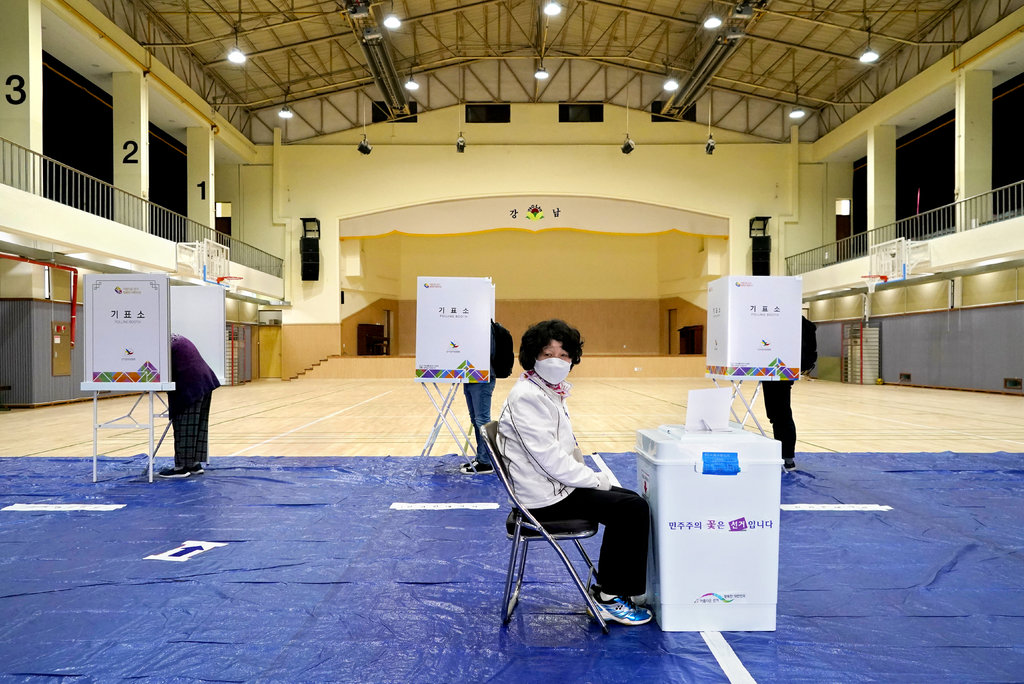
South Korea is steadily dropping in the rankings of countries worst-hit by the pandemic. Once second only to China (population: about 1.4 billion), South Korea (population: 51.6 million) is now recording fewer total cases than Ireland (population: 4.9 million) and fewer deaths than the state of Colorado (population: 5.7 million).

… As early as late January, public health officials greenlighted efforts by the private sector to build up capacity for widespread testing for the coronavirus… As those test results came in, the Korea Centers for Disease Control and Prevention and the Ministry of Public Health and Welfare made sure the information was passed on swiftly and systematically to those who needed it: the general public… Contact tracing and public data-sharing of the kind just beginning in hard-hit states like Massachusetts has been a standard feature of daily life here.

... South Korea has drawn on its strengths as a liberal society to address the public health crisis — and this week its people doubled-down on democracy by turning out in droves to re-elect its leadership… Mr. Moon now has wind in his sails as he enters his last two years in office. For the foreseeable future, his focus, like that of every head of state across the planet, will be pandemic management. [my bolding]

(John Delury, “How Democracy Won the World’s First Coronavirus Election,” NYTimes, 4-16-2020)

One hopes.

(c) 2020 JMN

Posted in Commentary, Quotations | Tagged , | Leave a comment

“Forebode”? Verboten!

But some religious authorities, too, have acted with anti-adaptive zeal. In my own Catholicism, the diocese of Raleigh, N.C., didn’t just cancel Masses and close churches; it forebode [my bolding] its priests to attempt experiments like drive-through confessions that might make social distancing and the sacraments compatible.

(Ross Douthat, “When Coronavirus Lockdowns Go Too Far,” NYTimes, 4-14,20)

The past tense of “forbid” is “forbade.”

The past tense of archaic “forebode” is “foreboded.”

Right is right, until it isn’t.

(c) 2020 JMN

Posted in Commentary, Quotations | Tagged , , , , , , | Leave a comment

Plaited Thorns

Before reading the article I scanned this painting as a king and courtier munching a corona-bat monster that has been spitted and roasted. The courtier picks his teeth and licks his fingers while the king gnaws a bone ruminatively and ponders where he will take his next bite from.

The article mentions the painting as follows:

His brutal “Crucifixion” (1959), purchased by the Tate in 1993, showed a black, jagged-edged Christ, “scourged and dripping, with matted hair tangled in plaited thorns,” as Souza described it in his collection “Words and Lines” (1959).

I got the “brutal” more or less right in my first impression. Then there’s this:

“With a few slashing lines and a raw, expressive energy, Francis Newton Souza stripped away all subterfuge,” The Times of India wrote in a 2010 review of a retrospective of his work at the Dhoomimal Gallery in New Delhi. “Be it the sluts or the suits, the seamy side of life or the steamy, the gnomish, pox-scarred boy from Goa who went on to become one of the first Indian artists to be feted in the salons of Europe, laid it bare.”

(William Grimes, “Overlooked No More: F. N. Souza, India’s Anti-Establishment Artist,” NYTimes, 4-9-20)

(c) 2020 JMN

Posted in Commentary, Quotations | Tagged , , , | 1 Comment

Aerosolized Precarity

Having been involved with languages, both natural and programming, for a time, I always experience a moment of pleasurable surprise when I meet a word I feel I should have met before.

Today’s new friend is “precariat.” It comes to me from Viet Thanh Nguyen, a writer who teaches English at the University of Southern California; author, most recently, of “The Refugees” and editor of “The Displaced: Refugee Writers on Refugee Lives.”

A precariat is a person from a class that lives in a state of precarity, whose employment and income are insecure, whose existence lacks predictability as well as security.

The word has the added attraction of (a) being British, and (b) being a portmanteau word built from “precarious” and “proletariat.” What’s not to like? — as it says on the wall of my favorite Jewish deli.

Here’s how Mr. Nguyen uses “precariat”:

If the illusion of invincibility is shredded for any patient who survives a near-fatal experience, then what might die after Covid-19 is the myth that we are the best country on earth, a belief common even among the poor, the marginal, the precariat, who must believe in their own Americanness if in nothing else.

His essay points to the root of our precarity:

What this crisis has revealed is that, while almost all of us can become vulnerable — even corporations and the wealthy — our government prioritizes the protection of the least vulnerable.

(Viet Thanh Nguyen, “The Ideas That Won’t Survive the Coronavirus,” NYTimes, 4-10-20)

(c) 2020 JMN

Posted in Commentary, Quotations | Tagged , | Leave a comment

¡Viva el pinche Franglaisismo!

Mixing English and French with artistic abandon “irks some purists.” The irking of purists is always and never a good sign for those who straddle irkdom.

FouKi, a popular Quebec rapper whose real name is Léo Fougères, observed that Franglais rapping didn’t just irritate those determined to preserve French.

“My father will hear my raps and say to me, ‘Isn’t there a word for that in French?’” he said. “But other older people say to me, I don’t understand anything you say.”

(Dan Filefsky, ‘What Rhymes With Purell?’ Franglais Rappers Push Language Boundaries in Quebec,” NYTimes, 4-7-20)

I can almost identify with older people, although at a venue near me where youth gather the Saxonized Anglo locution “motherfucker” makes itself persistently heard on Pocho-inflected, hip-hop breezes, so not all gets by me.

Mathieu Bock-Côté, a sociologist and influential columnist, has pointed out the ghastly consequences of young Québécois “turning to English as a default to show emotion and express themselves”:

“Without French, Montreal would be Pittsburgh.”

(c) 2020 JMN

Posted in Commentary, Quotations | Tagged , , , , , , | Leave a comment